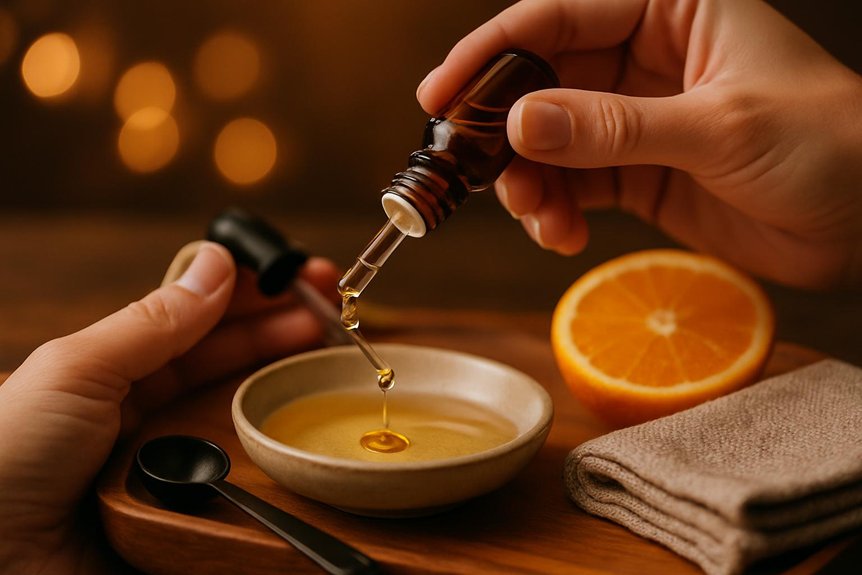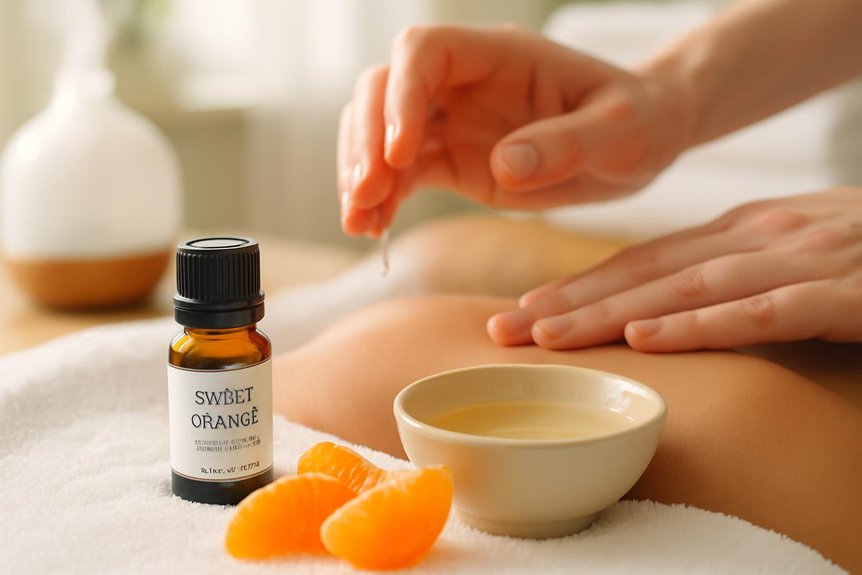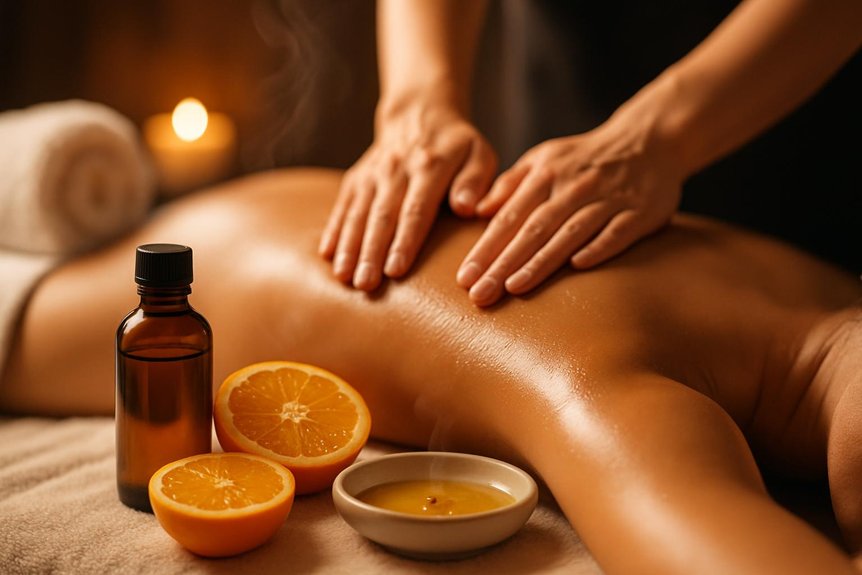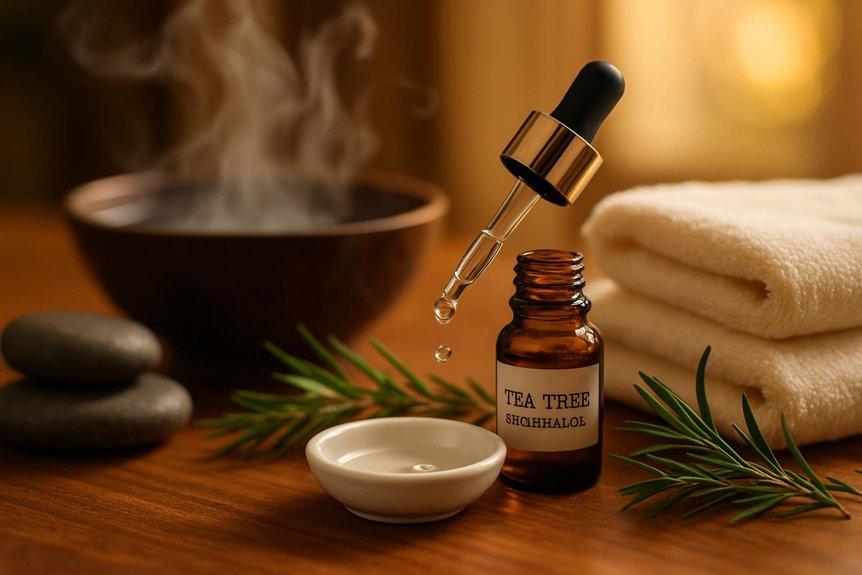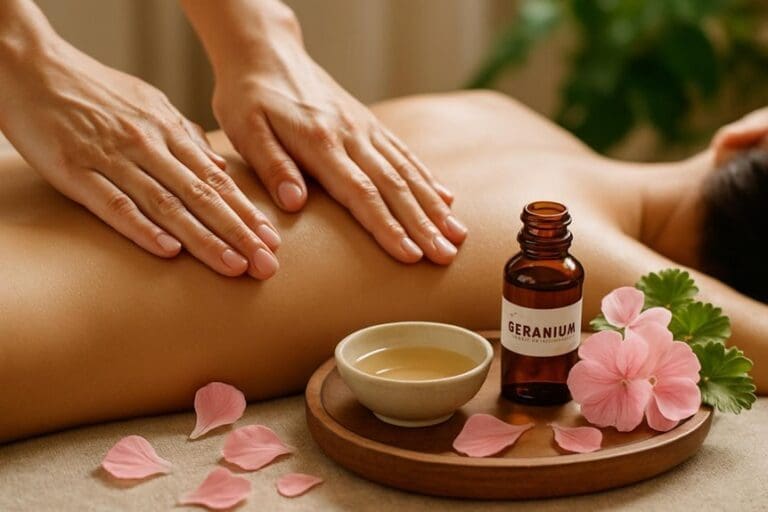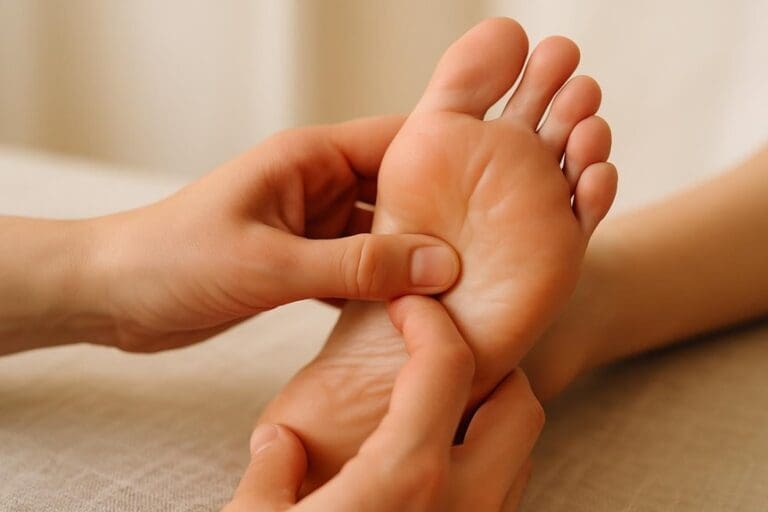
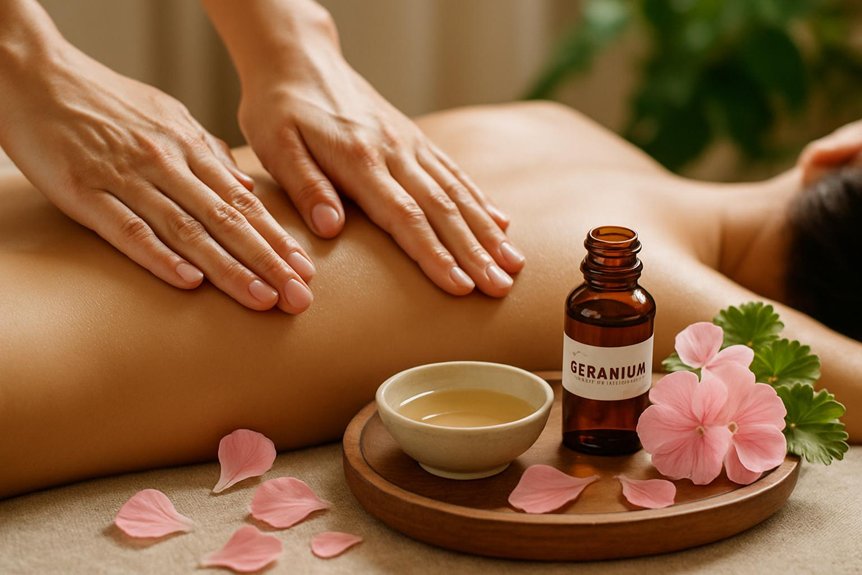
Geranium essential oil in essential oil massage is used at low dilution in a neutral carrier to provide a soft rosy-green aroma and gentle skin-supportive effects. It is introduced near the breathing zone to encourage slow nasal breathing and parasympathetic settling, while minimal room diffusion protects sensitive airways. Applied with steady effleurage and measured pressure, it can support relaxation and comfort in mildly sore tissues. Ongoing screening, patch-testing, and symptom monitoring guide safe use. Further details outline indications, contraindications, and aftercare.
What Does Geranium Oil Add to Massage?
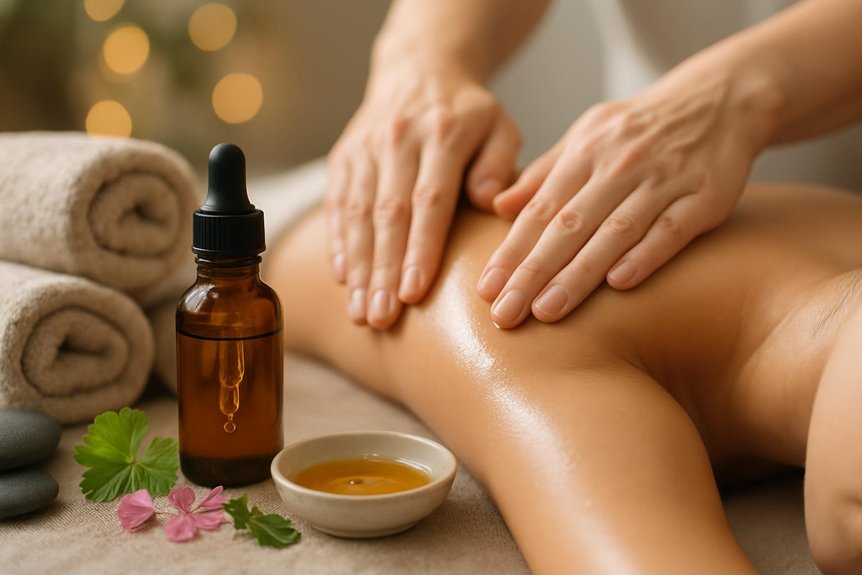
In aromatic massage, geranium essential oil is primarily used to modify both the sensory profile and the functional intent of a treatment. Its rosy, green aroma helps create a softly intimate atmosphere while maintaining a professional, therapeutic frame. In Spa & Massage clinics, therapists select low dilutions in a carrier oil and integrate it during effleurage to support even glide and sustained, skin-warming contact. For clients aiming to relax, it can be paired with aromatherapy massage tips to reinforce a calm, restorative session flow.
Functionally, geranium is chosen to complement balancing, skin-focused sessions, particularly when dryness or sensitivity is a concern. Application is kept away from mucous membranes, and therapists monitor for irritation, adjusting pressure and product load to maintain comfort. A patch-check approach is used for reactive clients, and it is avoided where contraindicated in pregnancy or with known fragrance allergy.
How Does Geranium Oil Massage Ease Stress?
How does a geranium-oil aromatic massage reduce perceived stress? At Spa & Massage clinics across London, therapists combine controlled inhalation of geranium’s rosy aroma with slow, grounding strokes to support relaxation.
The scent is introduced close to the client’s breathing zone, while effleurage and gentle kneading along the back, neck, and shoulders reduce muscular guarding. Measured pressure, consistent rhythm, and warm hands help downshift the nervous system and invite a calmer, more connected body awareness—often experienced as safe, soothing intimacy without over-stimulation.
For safety, geranium essential oil is always diluted in a carrier oil and patch-testing is advised for sensitive clients. Therapists avoid broken skin and adjust pressure for pregnancy, migraines, or asthma, and encourage slow nasal breathing throughout.
Geranium Oil Massage for Balanced, Clearer Skin
Beyond calming the nervous system, geranium oil in aromatic massage is often selected to support skin that looks imbalanced—prone to dryness in some areas and congestion in others.
At Spa & Massage clinics, therapists typically dilute it in a light carrier and use slow, even effleurage to encourage circulation without over-stimulating sensitive tissue.
For the face, only specialist facial protocols are used: minimal pressure, outward strokes, and strict avoidance of eyes and mucosa. Clients are advised to disclose acne medication, rosacea, eczema, or recent peels, as these increase reactivity. Patch testing is recommended for first-time use.
After treatment, the skin is kept clean, lightly hydrated, and protected from heat, saunas, and active skincare for 24 hours to maintain a clearer look.
Can Geranium Oil Massage Ease Sore Muscles?
Geranium essential oil may support comfort in sore muscles by providing mild anti-inflammatory support when correctly diluted in a carrier oil and applied with controlled pressure.
In Spa & Massage clinics, therapists typically combine slow effleurage with targeted kneading to encourage local circulation, which can assist recovery after training or prolonged sitting.
Patch testing, appropriate dilution, and avoidance on irritated skin are standard precautions to reduce the risk of sensitisation during aromatic massage.
Anti-Inflammatory Support
In post-exercise muscle soreness, a geranium-oil aromatic massage may provide supportive anti-inflammatory and analgesic effects by combining gentle tissue warming with controlled circulatory stimulation.
At Spa & Massage clinics, therapists typically dilute geranium essential oil into a neutral carrier and apply slow, close-contact effleurage followed by light petrissage over tender muscle groups, keeping pressure within a “comfortably deep” range.
This technique aims to calm local sensitivity while reducing protective guarding around trigger points.
For safety, treatment is avoided over acute swelling, bruising, heat, or suspected tear, and clients are screened for pregnancy, asthma sensitivity, and skin reactivity. A patch test and fragrance check may be advised.
Aftercare emphasises rest, hydration, and heat only if soothing.
Circulation And Recovery
Reduced tenderness is often paired with the need to restore local circulation to support recovery after exertion.
In Spa & Massage clinics, geranium essential oil is used only when properly diluted in a carrier and applied with slow, warming effleurage to encourage superficial blood flow and lymphatic return around tired areas.
For sore muscles, therapists may blend it into a sports or aromatherapy session and alternate broad strokes with gentle kneading, keeping pressure within the client’s comfort to maintain a calm, intimate sense of safety.
It is not positioned as a cure for injury; persistent pain, swelling, or loss of function warrants medical assessment.
Patch testing, avoiding broken skin, and extra caution in pregnancy are standard.
Aftercare includes hydration and light movement.
Geranium Oil Massage for Bloating and Puffiness
For clients presenting with bloating or soft-tissue puffiness, Spa & Massage therapists may use a low-dilution geranium oil blend alongside light, rhythmic strokes intended to support lymphatic flow, with strict attention to contraindications (e.g., acute infection, thrombosis, uncontrolled cardiac or renal oedema).
Technique typically prioritises proximal-to-distal clearing and gentle abdominal work following the direction of the colon, maintaining minimal pressure and monitoring for discomfort at all times.
Aftercare is positioned as essential to reduce rebound swelling, with guidance on hydration, light movement, and avoiding heat or alcohol immediately post-treatment.
Lymphatic Support Benefits
Within aromatic massage practice, geranium oil is frequently selected to support lymphatic flow when clients present with transient bloating or facial/limb puffiness. At Spa & Massage clinics, therapists dilute it conservatively in a neutral carrier to promote comfort and minimise sensitisation risk.
The aroma is used to encourage slow breathing and parasympathetic settling, which may assist fluid balance and reduce the sense of heaviness. Clients often report a softer, less “tight” feeling in the abdomen or around the eyes after treatment, consistent with improved superficial drainage.
Safety screening remains essential: unexplained swelling, sudden weight gain, infection, fever, thrombosis risk, kidney or heart conditions, pregnancy considerations, or recent surgery require medical clearance or referral. Patch testing may be advised for sensitive skin.
Bloating Massage Techniques
With appropriate screening completed, geranium oil may be incorporated into aromatic massage protocols aimed at transient bloating and mild puffiness by pairing conservative dilution with gentle, drainage-oriented techniques. In Spa & Massage clinics, therapists typically use a low dilution (about 1%) in a neutral carrier, avoiding broken skin and stopping if irritation occurs.
Technique prioritises comfort: slow, light effleurage begins at the supraclavicular fossae, then follows proximal-to-distal and returns distal-to-proximal along inguinal nodes, abdomen, and flanks to support lymphatic flow. Abdominal work remains superficial—clockwise circles and soft “scooping” strokes, with pressure kept below pain and away from the rib margins.
Clients are positioned with knees supported and draping close, fostering a calm, held sense of privacy and safety throughout.
Aftercare To Reduce Puffiness
After a geranium-oil aromatic massage aimed at transient bloating or mild puffiness, aftercare should prioritise hydration, gentle movement, and skin monitoring to support ongoing fluid turnover and minimise the risk of irritation.
At Spa & Massage clinics, therapists advise sipping water over 2–3 hours and avoiding alcohol or very salty meals that may promote fluid retention.
Light walking and slow diaphragmatic breathing support abdominal comfort without provoking rebound swelling.
For continued drainage, clients can repeat feather-light strokes toward the groin and underarms, keeping pressure minimal and pace unhurried.
The skin should be checked for warmth, itching, or redness; any reaction warrants washing the area with mild soap and discontinuing oil use.
Heat packs are avoided; cool compresses may soothe.
Seek medical review for sudden, painful, one-sided swelling.
Who Should Avoid Geranium Oil Massage?
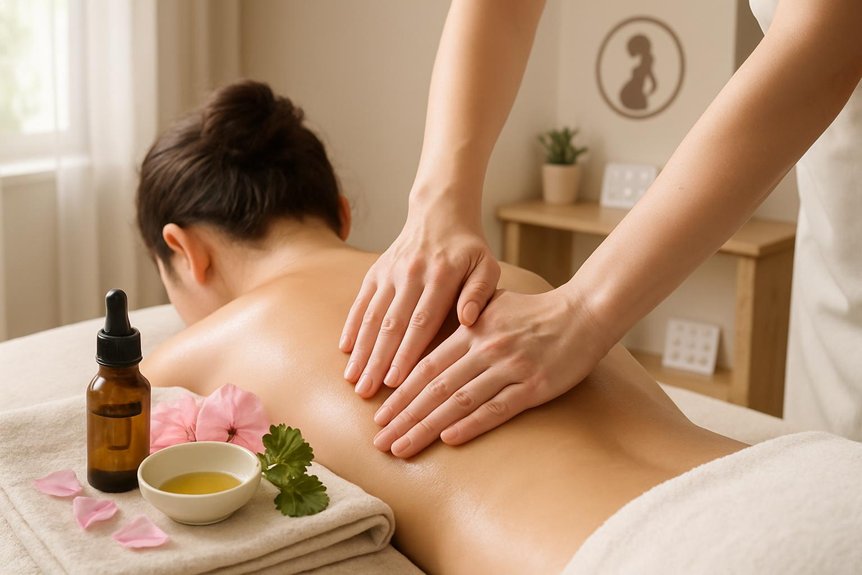
For safety and skin tolerance, geranium oil aromatic massage should be avoided—or used only under strict therapist screening—in clients who are pregnant (especially in the first trimester), have a known sensitivity to essential oils or fragrance, have eczema/dermatitis, broken or recently shaved skin, or a history of allergic reactions.
Caution is also advised for asthma, migraines triggered by scent, and those taking anticoagulants or undergoing active cancer treatment, where fragrance and pressure should be tightly controlled.
At Spa & Massage, therapists would delay use until a patch test is tolerated and the client can breathe comfortably throughout close, full-body work.
If redness, itching, heat, wheeze, or nausea appears, oil contact should be removed immediately and the session converted to unscented, lighter-touch techniques to maintain comfort and privacy.
How We Use Geranium Oil in Our Clinics
In Spa & Massage clinics across London, geranium essential oil is introduced as an optional aromatherapy component only after a brief consultation and contraindication screen.
Therapists confirm sensitivities, current medications, pregnancy status, and skin conditions, then document the client’s scent preference and desired emotional tone.
For use, geranium is diluted into a neutral carrier at a conservative concentration, patch-checked when indicated, and applied with slow, grounding effleurage to encourage breath regulation and a sense of safe closeness.
Pressure and pacing are matched to the treatment type—lighter in aromatherapy sessions, more structured around trigger points in combined deep tissue work—while avoiding mucous membranes and recently shaved or irritated areas.
Room diffusion is kept minimal to protect airways and consent.
Aftercare Tips After a Geranium Oil Massage
Geranium oil is typically applied in Spa & Massage clinics at a conservative dilution with consent-led exposure, and the same risk-aware approach should continue once the session ends.
Clients should leave the oil on for 2–4 hours, then cleanse with lukewarm water and a mild, fragrance-free wash to reduce irritation.
Hydration and a light meal support circulatory settling; alcohol and intense exercise are best avoided for 12 hours.
If intimacy follows, partners should avoid direct skin-to-skin transfer: shower first or cover treated areas, and keep oil away from mucous membranes.
Use breathable clothing, and delay hot baths, saunas, or sun exposure to minimise sensitisation.
Any itching, headache, or nausea warrants rinsing, ventilation, and clinic advice.
Conclusion
Geranium oil in aromatic massage offers a softly scented, steadying support for mind and body. When correctly diluted and delivered with slow, symmetrical strokes and settled pacing, it may encourage calmer breathing, comfort tense tissue, and a more balanced skin feel. Its role is best viewed as complementary, not curative. Patch testing, pregnancy and allergy screening, and avoidance on broken skin remain standard safeguards. Post‑treatment, promote hydration, gentle movement, and minimal sensory load.