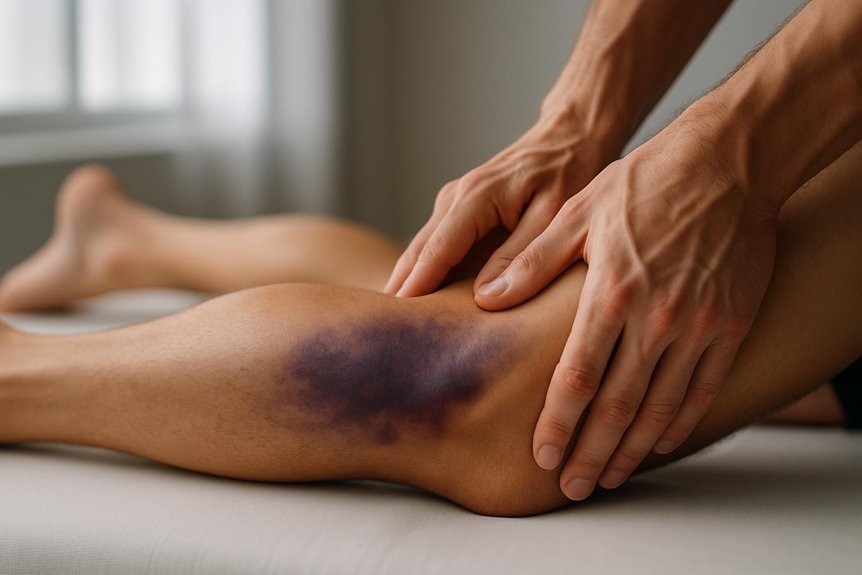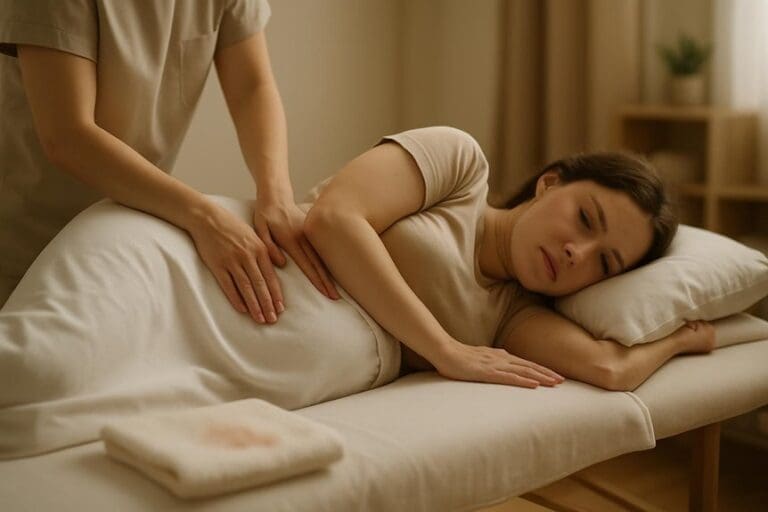
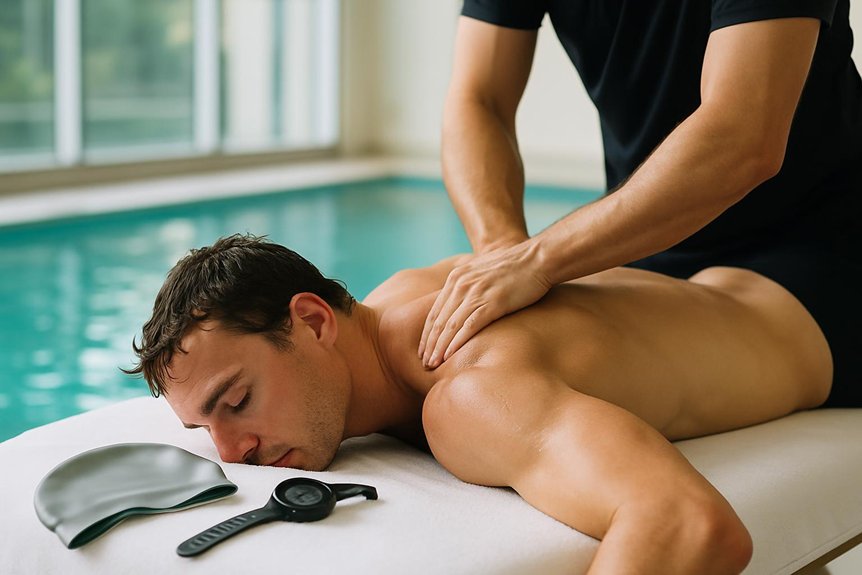
Most swimmers do well with a performance massage every 1–3 weeks, adjusted to training load and recovery markers like soreness, sleep, and range of motion. During heavy blocks (6–10 swim sessions plus strength), weekly or every 7–14 days helps manage shoulder internal‑rotation stress and hip tightness. Moderate weeks often suit every 2–3 weeks, while lighter weeks may only need every 3–4 weeks. Book it 24–48 hours after the hardest set; more guidance follows.
How Often Should Swimmers Get Sports Massage?
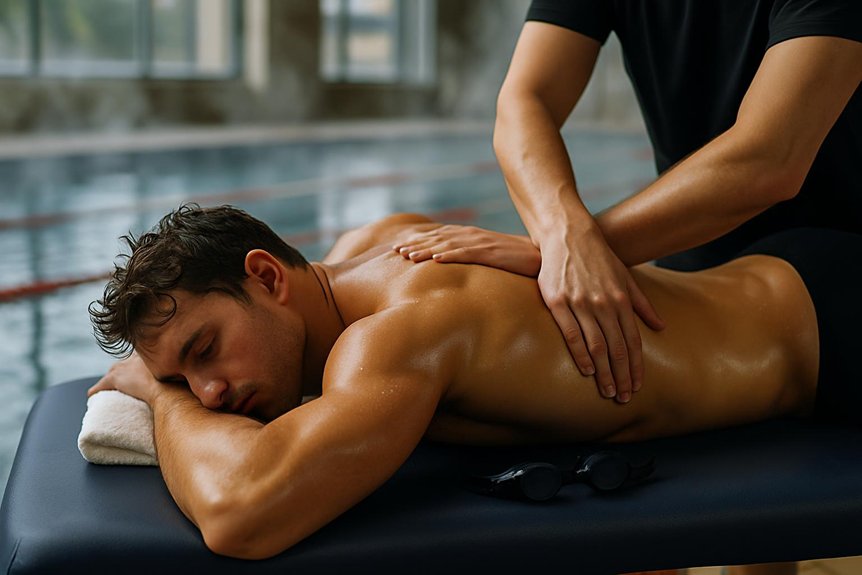
Often, swimmers benefit most from performance massage when it is scheduled to match training load and competition demands rather than used sporadically. Evidence from sports recovery practice supports regular, moderate-pressure work to reduce perceived soreness and support range of motion without blunting training adaptation. For most swimmers, a consistent rhythm—such as weekly or fortnightly sessions—fits well alongside pool mileage and gym work, with lighter sessions in deload weeks. It is widely used for athlete recovery to help maintain performance and manage training stress.
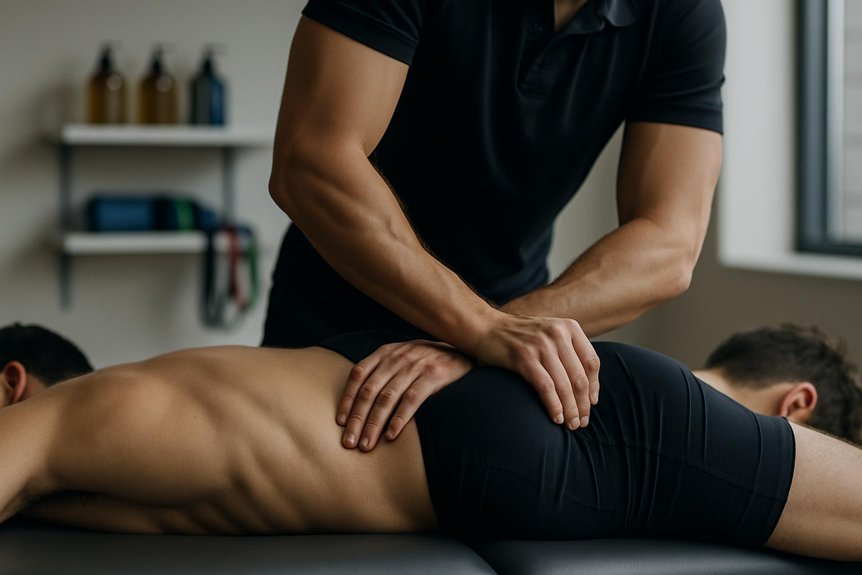
At Spa & Massage clinics across London, therapists commonly focus on swim-dominant areas: lats, pecs, rotator cuff, upper back, hip flexors, and calves, using deep tissue and sports techniques paced to breathing and comfort. Many clients prefer 45–60 minutes, followed by hydration, gentle mobility, and an early night for deeper recovery.
What Your Ideal Frequency Depends On (Volume, Goals, Pain)
An ideal performance massage frequency for swimmers varies with training volume and load, because higher weekly yardage and added dryland work typically increase tissue stress in the shoulders, lats, hips, and calves.
It also depends on goals—whether maintaining mobility in-season, supporting taper, or addressing a specific technical limitation—so treatment timing can align with key sessions and meets.
Pain signals and overall recovery markers (sleep, soreness, range of motion, and stroke comfort) should guide whether sessions are lighter and more frequent or less frequent but more targeted, as used by Spa & Massage therapists in London clinics.
Training Volume And Load
In swimming, the ideal performance massage frequency depends primarily on training volume and load: higher weekly yardage, more race-pace sets, and increased dryland strength work typically create greater cumulative tissue stress and fatigue.
As load rises, a consistent cadence of treatment helps manage shoulder internal-rotation demand, lat and pec tightness, and forearm and calf overuse from pull and kick sets.
During heavy blocks, many swimmers benefit from weekly performance massage; moderate training often suits every 2–3 weeks; lighter phases may only need monthly maintenance.
At Spa & Massage clinics across London, therapists match pressure and pacing to the week’s plan, combining deep tissue and targeted sports techniques to support range of motion and stroke mechanics without leaving the body feeling “worked over” for the next session.
Goals, Pain, And Recovery
How frequently a swimmer should book performance massage depends as much on goals, pain signals, and recovery capacity as it does on weekly metres: athletes targeting peak performance typically schedule more regular sessions to preserve shoulder and thoracic range, maintain lat/pec extensibility, and reduce stroke-compensations, while those managing persistent niggles (e.g., anterior shoulder ache, biceps tendon irritation, low-back tightness from dolphin kick) may need a shorter interval until symptoms stabilise.
Evidence suggests massage can support perceived soreness and readiness; frequency is thus guided by how quickly fatigue and stiffness return. A swimmer racing soon may book weekly in the final build, then taper to a lighter pre-meet session.
If pain alters catch or breathing, Spa & Massage therapists prioritize symptom-calming work, then extend to 2–4 weekly maintenance. Better sleep, settled tenderness, and easier rotation indicate spacing can widen.
What It Does for Swimmers (Recovery + Mobility)
For swimmers, performance massage is commonly used to support faster recovery by improving local circulation, reducing post-session soreness, and helping tissues tolerate high training loads.
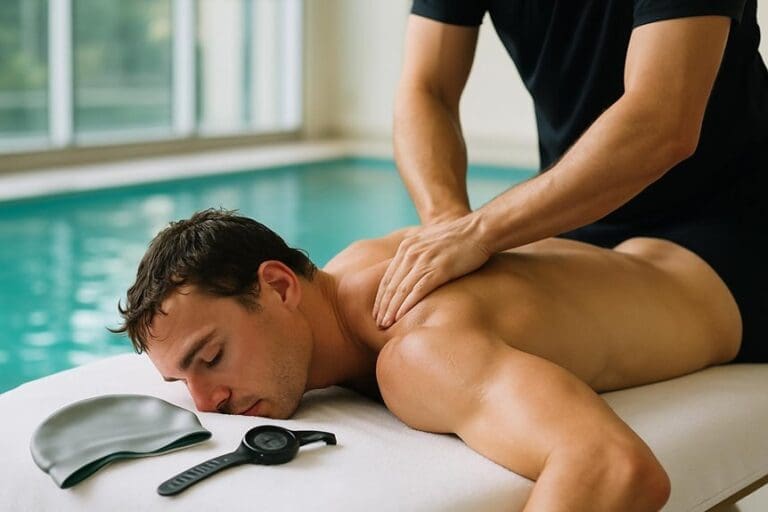
It can also improve shoulder mobility by addressing tightness in the lats, pecs, and rotator cuff that may limit overhead range and alter stroke mechanics.
At Spa & Massage clinics across London, therapists focus on reducing overuse tension in the shoulders, upper back, hips, and calves to help maintain efficient movement between sessions.
Speeds Muscle Recovery
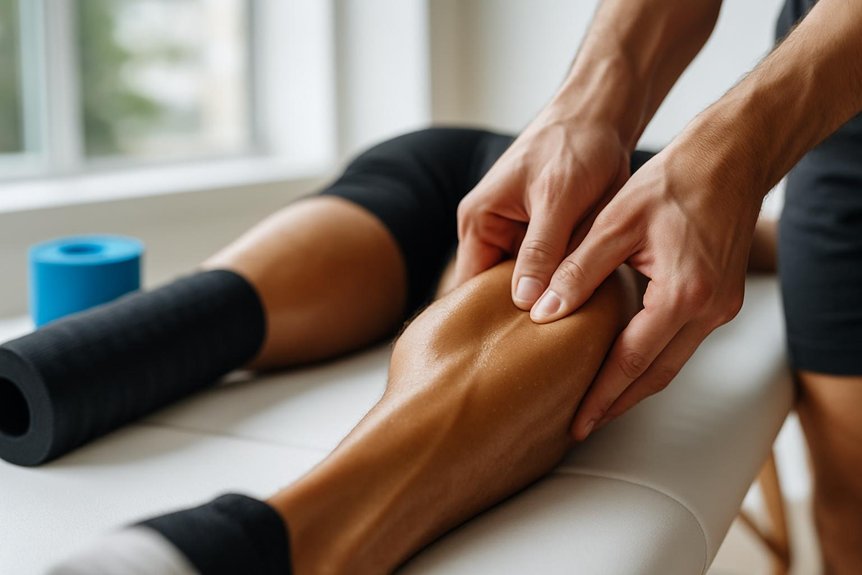
Accelerate post‑swim recovery by targeting the muscle groups that take the highest repetitive load in the water—lats and rotator cuff, pecs and biceps, hip flexors, glutes, and calves.
It supports faster return to quality training by reducing post‑session soreness and perceived fatigue, improving local circulation, and down‑regulating an overworked nervous system.
Evidence suggests massage can lessen DOMS and restore comfort without blunting adaptation, which matters during high‑volume swim weeks.
At Spa & Massage clinics across London, therapists use swim‑specific deep tissue and compression‑flush work, then slower, calming strokes to help breathing settle and sleep deepen.
Many swimmers find the body feels “held together” again—warm, loose, and ready—especially when booked within 24–48 hours after hard sets.
Hydration and light movement are advised.
Improves Shoulder Mobility
Faster recovery is only part of the equation; shoulder mobility often determines how well a swimmer can return to efficient, pain-free stroke mechanics in the next session.
In swimming, limited overhead range can shorten the catch, disrupt body line, and reduce propulsion across freestyle, butterfly, and backstroke.
It can support mobility by improving soft‑tissue glide around the rotator cuff, lats, pecs, and thoracic spine, helping the arm travel smoothly through recovery and entry.
At Spa & Massage clinics in London, therapists commonly pair targeted work with gentle, coach‑friendly mobility checks and home stretches to reinforce gains between sessions.
Many swimmers report a looser, more connected reach and easier breathing rotation—subtle changes that keep training quality high without forcing compensations.
Reduces Overuse Tension
Repetitive laps load the same tissues thousands of times, so overuse tension commonly builds in the lats, pec minor, upper traps, forearms, and hip flexors, gradually tightening stroke mechanics and increasing strain on the shoulder and neck. It helps by improving local circulation, reducing protective muscle guarding, and restoring tissue glide between muscle and fascia—key for a longer reach, cleaner catch, and easier breathing rotation.
At Spa & Massage clinics in London, therapists use targeted deep-tissue and myofascial techniques around the scapula, ribs, and anterior shoulder, then reassess range and tenderness to keep pressure productive, not aggressive. Many swimmers feel their arm recovery becomes smoother and their kick less cramped. Aftercare typically includes hydration and gentle mobility work to maintain the softened tone.
Best Performance Massage Schedule by Training Load
Often, the most effective performance massage schedule for swimmers is the one that matches the weekly training load and recovery window, rather than following a fixed calendar.
For lighter weeks (2–3 pool sessions), one session every 3–4 weeks often supports shoulder and hip mobility without over-treating tissue.
With moderate loads (4–6 sessions plus some gym), a massage every 2–3 weeks can help settle lat, pec, rotator cuff, and forearm tone, while easing kick-driven calf and hip-flexor tightness.
After races or time-trials, a gentler flush within 24–72 hours may reduce soreness and restore range.
In Spa & Massage clinics, therapists adjust depth and tempo to how the body feels on the table, keeping recovery calm and personal.
Peak Season: Performance Massage Frequency for Heavy Blocks
Typically, during peak-season heavy blocks (6–10 swim sessions per week plus strength work), swimmers benefit most from shorter, more frequent performance massage—around every 7–14 days—to manage accumulating shoulder and hip load without compromising training adaptation.
Sessions are often 30–45 minutes, prioritising rotator cuff, lats, pec minor, thoracic mobility, hip flexors, glutes, and calves, with pressure kept tolerable to avoid excessive post-treatment soreness.
Evidence supports massage for short-term pain modulation, perceived recovery, and range-of-motion gains—useful when repetitive overhead strokes and kick volume elevate tissue sensitivity.
At Spa & Massage clinics, therapists reassess weekly training notes, stroke type, and niggles, then blend deep tissue and sports techniques with slower, calming pacing.
Swimmers are advised to book 24–48 hours after the hardest set, hydrate, and keep easy movement afterwards.
Taper Week and Race Week: When to Book (and When Not To)
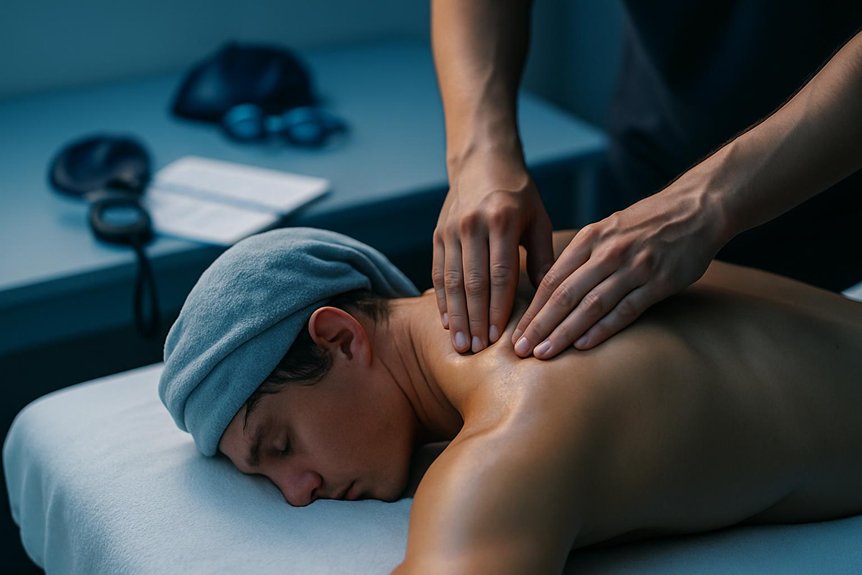
During taper and race week, performance massage should shift from “fixing” tissue to optimising readiness—reducing tone, maintaining shoulder and hip range, and supporting calm, pain-free movement without provoking soreness.
Evidence suggests lighter, shorter sessions 5–7 days out can support perceived recovery without adding fatigue; many swimmers book a 30–45 minute tune-up focused on lats, pecs, rotator cuff, forearms, glutes, and calves, with gentle flushing and compressions rather than heavy stripping.
Within 48 hours of racing, most benefit from either no massage or a very light 15–25 minute relaxation-focused session, avoiding deep pressure and new techniques.
At Spa & Massage clinics across London, therapists keep touch slow, reassuring, and swim-specific, and recommend hydration, early bedtime, and easy mobility after.
Shoulder or Hip Niggles: When to Increase Sessions
Early shoulder or hip “niggles” in swimmers—such as a pinchy catch, posterior shoulder ache, or anterior hip tightness—tend to respond best when performance massage frequency is increased before compensations harden into pain-limited stroke mechanics.
In practice, Spa & Massage often sees best results when a swimmer moves from a maintenance cadence to 1–2 sessions weekly for 2–3 weeks, then tapers back as symptoms settle and stroke feel normalises.
Escalation is most appropriate when discomfort lasts beyond 48 hours, worsens after paddles, kick sets, or turns, or subtly changes breathing timing and hip rotation.
Sessions should pair with reduced load, careful warm-ups, and sleep.
If pain is sharp, night-waking, or radiating, clinical assessment is advised promptly.
Which Performance Massage Techniques Suit Your Swim Goals?
For swimmers, the most effective performance massage technique depends on the training phase and the specific performance goal—mobility, power output, or faster recovery between sessions.
For mobility, therapists often use myofascial release and gentle trigger-point work to soften tight lats, pecs, and hip flexors, supporting cleaner catch and kick range.
For power, deeper tissue and friction across rotator-cuff tendons, glute medius, and thoracic extensors can improve tissue tolerance and force transfer, kept within “good pain” limits.
For recovery, lighter effleurage and flushing strokes help downshift the nervous system and reduce perceived soreness after hard sets.
At Spa & Massage clinics across London, pressure and pacing are matched to stroke, volume, and symptoms, with calm breath-led aftercare and hydration guidance.
Conclusion
Performance massage for swimmers is best scheduled like pit stops in a long relay: frequent enough to prevent breakdown, timed to protect speed. Evidence-informed practice supports maintenance sessions during heavy training blocks to manage tissue load, improve shoulder and hip mobility, and reduce compensatory patterns. Frequency should rise with volume, pain, or past injury, and ease during taper to avoid soreness. The most effective plan remains individual—guided by training demands, symptoms, and recovery markers.