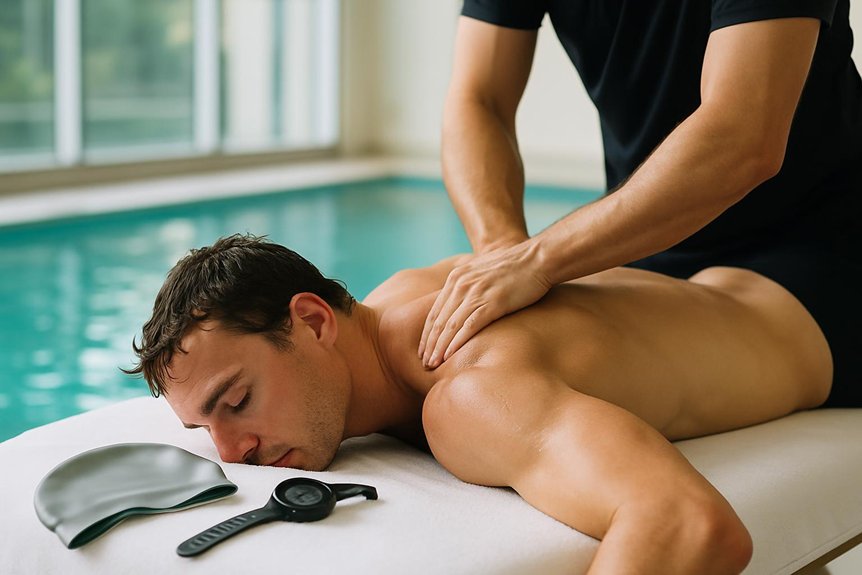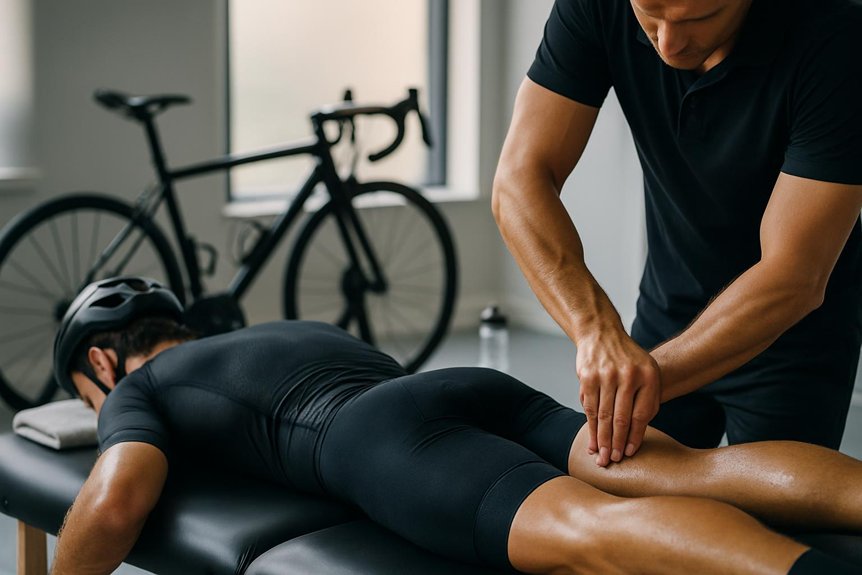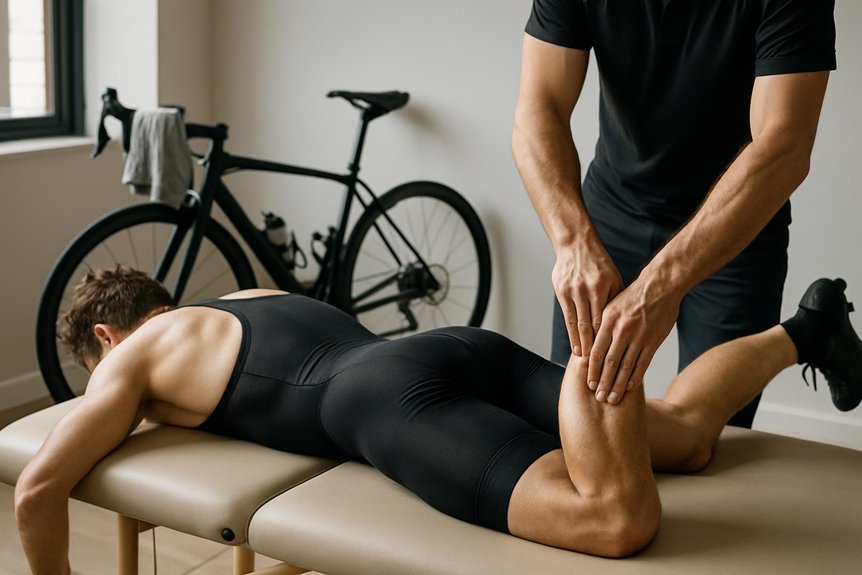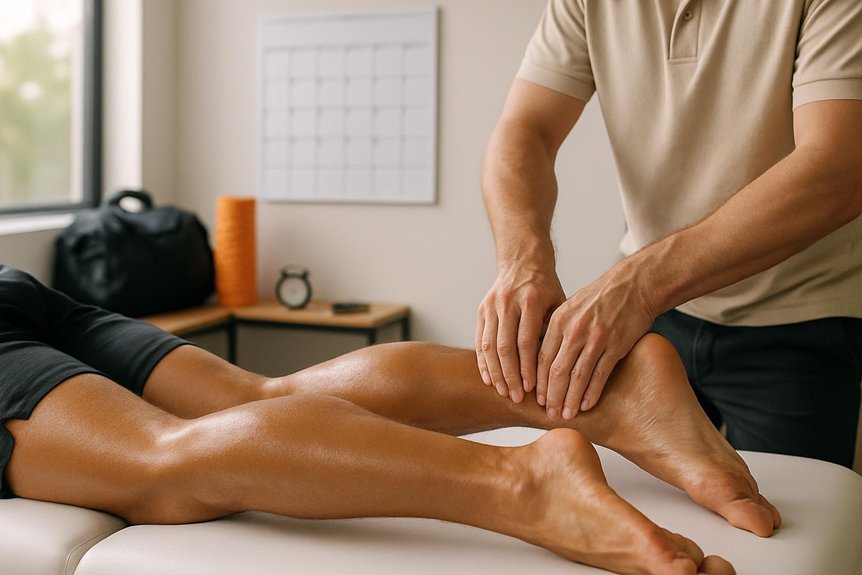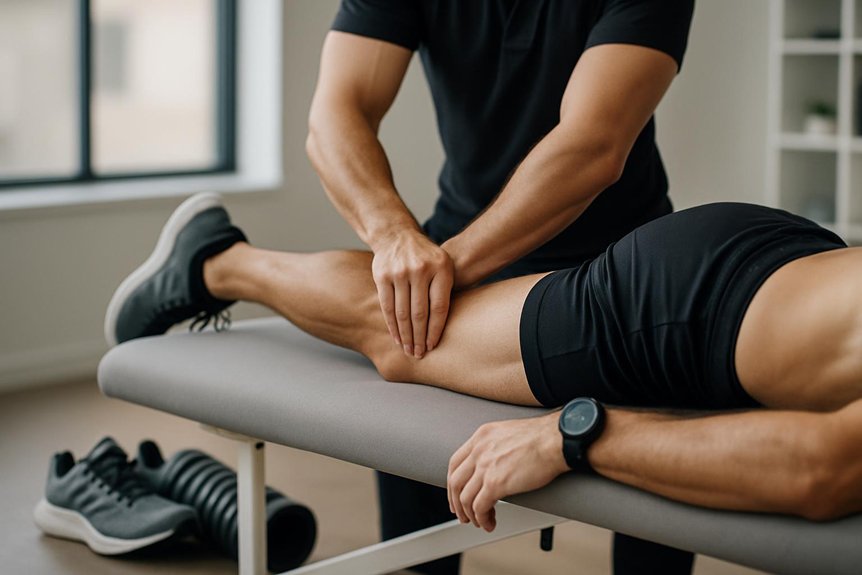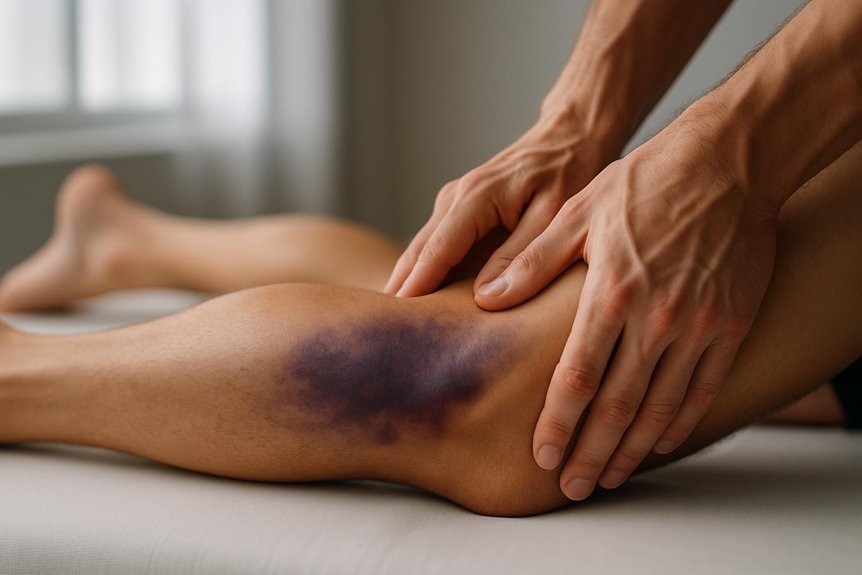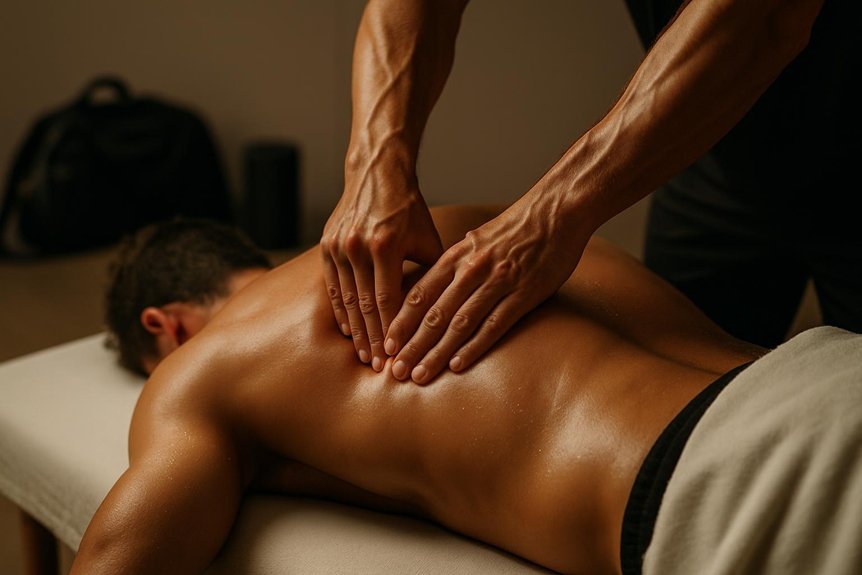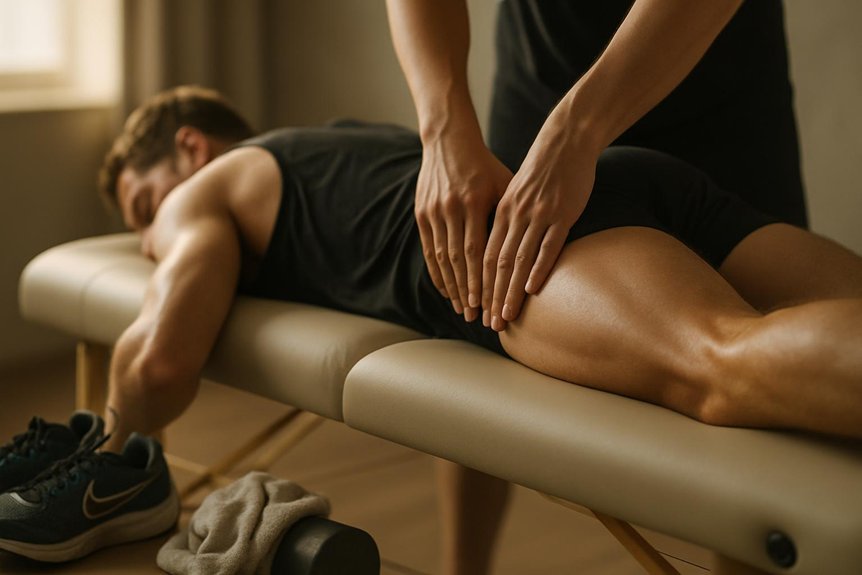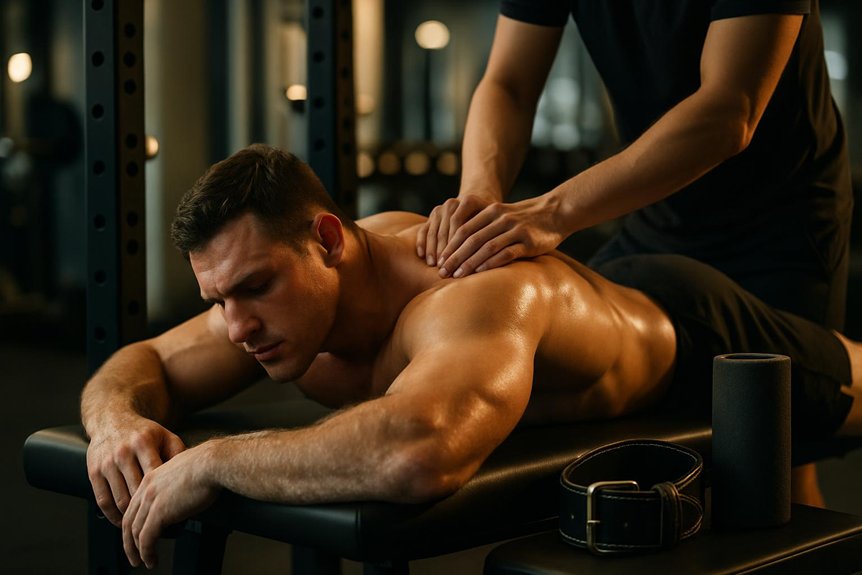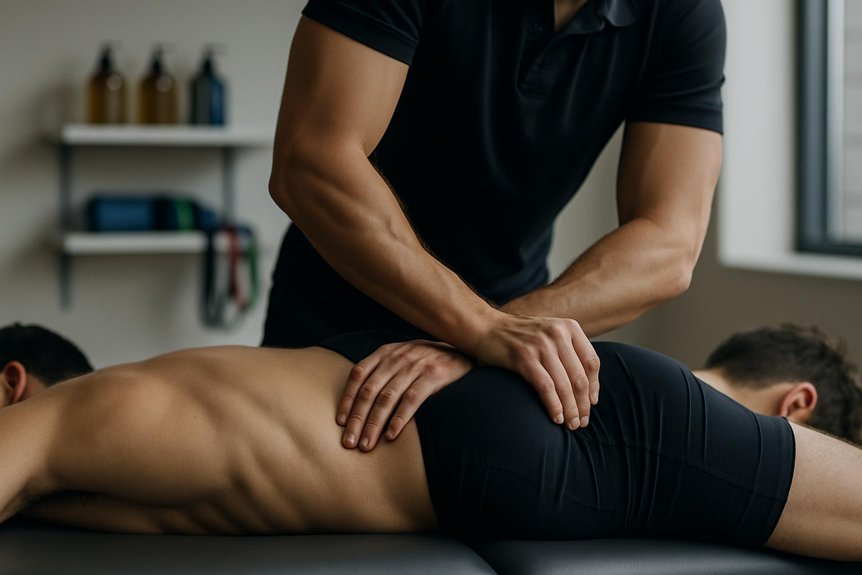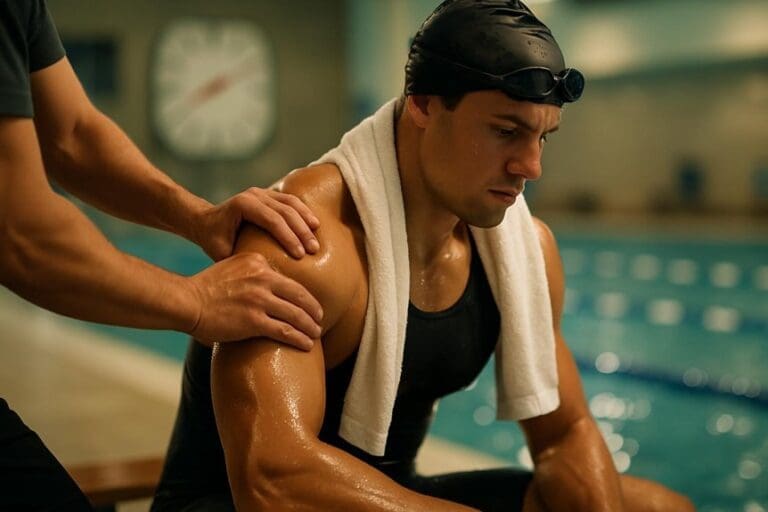
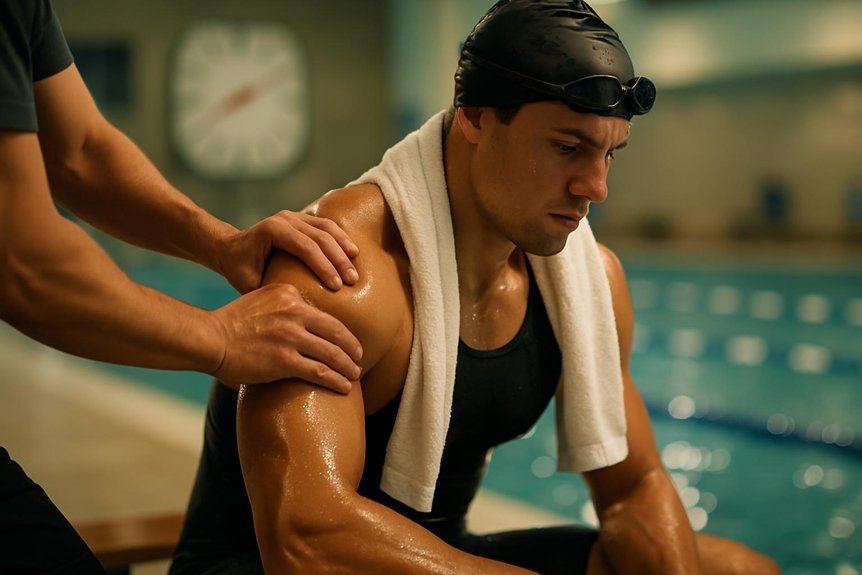
Swimmers time performance massage around performance goals. Pre‑swim work is best kept brief (10–20 minutes) and stimulating, using light–moderate effleurage, compressions, and dynamic mobilisation to lats, pecs, rotator cuff, hip flexors, and calves while avoiding deep trigger pressure. Post‑swim sessions can run 30–60 minutes with slower, deeper strokes for shoulders, forearms, thoracic spine, glutes, and calves. Deeper work sits 24–48 hours from race‑pace sets, with race‑week sessions 3–5 days out; more practical scheduling follows.
Performance Massage Timing for Swimmers (Quick Guide)
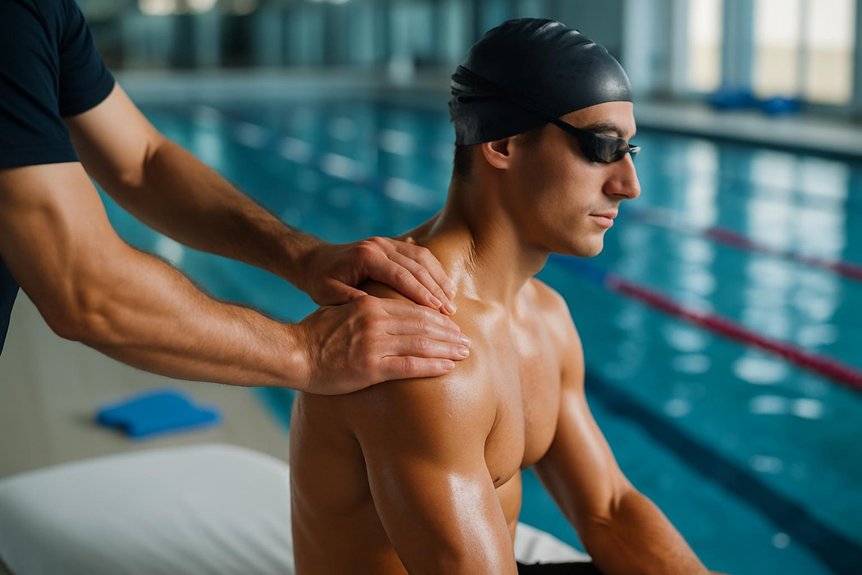
Before a hard swim set, the most effective sports-massage timing depends on the session goal: pre-training work should be brief (about 10–20 minutes) and stimulating to increase tissue temperature and neuromuscular readiness, while deeper, longer treatment is better placed after key sessions or on rest days to reduce delayed-onset soreness and restore shoulder, lat, and hip mobility without blunting power output.
For swimmers, a simple weekly rhythm works: schedule deeper performance massage 24–48 hours away from race-pace sets, and use short tune-ups on high-volume days. In Spa & Massage clinics, therapists prioritise scapular control, pec minor length, thoracic extension, and hip internal rotation—key for catch mechanics and kick efficiency. Pressure stays within “good pain,” with slow strokes and targeted compression, then easy, close breathing and warm hydration. Regular sessions also highlight the broader Benefits of Sports Massage for athletes by supporting recovery and maintaining training consistency.
Performance Massage Before vs After Swim Sessions
Performance massage can either prime a swimmer for quality work in the pool or accelerate recovery afterwards, and the difference comes down to intent, duration, and depth.
Pre‑swim work should be brief (10–20 minutes), light‑to‑moderate, and rhythmical: effleurage, compressions, and dynamic mobilisations to lats, pecs, rotator cuff, hip flexors, and calves, supporting stroke length and kick timing without reducing power.
Deeper stripping or sustained trigger‑point pressure is avoided so tissues stay springy and neural drive remains high.
Post‑swim massage can be longer (30–60 minutes) and deeper, targeting forearms, shoulders, thoracic spine, glutes, and calves to downshift tone and ease DOMS.
In Spa & Massage clinics, therapists finish with slow strokes and hydration advice.
Performance Massage in High-Volume Swim Weeks
During high‑volume swim weeks—when yardage and intensity compress recovery windows—massage is best scheduled and dosed like any other training input.
At Spa & Massage, therapists typically keep sessions shorter (30–45 minutes) and targeted: lats, pec minor, rotator cuff, forearms, hip flexors, and calves, supporting catch mechanics, streamline, and kick.
Evidence suggests massage can reduce perceived soreness and improve range of motion; in heavy blocks, that means lighter pressure, slower strokes, and fewer provocative techniques, avoiding next‑day “dead arms.”
Many clients book 24–48 hours after the hardest set, or on a double‑session day between swims, to restore tissue glide without blunting training readiness.
Aftercare includes hydration, gentle band work, and a warm shower.
How Close to a Race Should You Book?
In the final 7–10 days leading into a swim meet, race‑week massage is best treated as a taper tool: sessions should prioritise restoring shoulder and thoracic range (lats, pec minor, posterior cuff), reducing perceived soreness, and maintaining tissue glide without provoking delayed-onset tenderness.
For most swimmers, booking 3–5 days out offers the best balance—enough time for neuromuscular settling, yet close enough to feel “switched on” in the water. Within 24–48 hours, pressure should be light–moderate, with slower effleurage, targeted myofascial release, and brief trigger work only if it does not reproduce ache.
At Spa & Massage clinics, therapists keep strokes swim‑specific, focusing on scapular mechanics and breathing side restrictions. Any new technique is avoided race week.
Performance Massage After Galas for Recovery
Once the meet is over, the timing priorities shift from tapering to down‑regulating post‑race tone and restoring shoulder and hip mechanics for the next training block.
At Spa & Massage, therapists typically target pec minor, lats, rotator cuff, and forearm flexors to ease “catch” tightness, then address hip flexors, adductors, and calves for kick symmetry.
Evidence supports massage for perceived soreness reduction and short‑term range‑of‑motion gains; pressure is kept moderate, with slow, anchored strokes and focused friction around scapular borders, never provoking sharp pain.
A short flush of the thoracic paraspinals and diaphragm work can help breathing feel smoother.
Aftercare emphasises hydration, gentle shoulder circles, light band external rotations, and sleep to consolidate recovery.
How Often Should Swimmers Get Performance Massage?
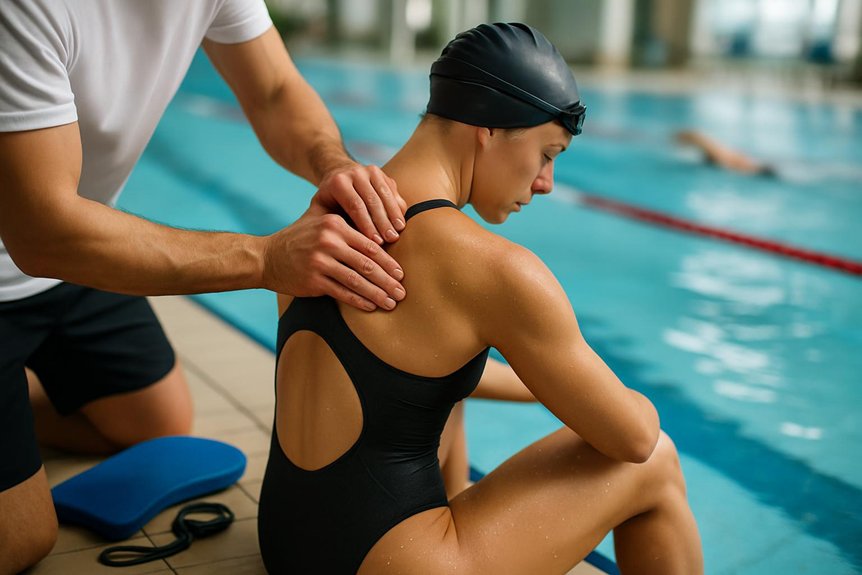
Most swimmers benefit from performance massage on a cadence that matches weekly load and tissue irritability rather than a fixed calendar schedule.
In heavy swim blocks (high-volume sets, paddles, hard kick), many do best with 1 session weekly or fortnightly; in lighter phases, every 3–4 weeks maintains shoulder, lat, pec, hip-flexor, and calf compliance.
Evidence supports massage for short-term soreness reduction and perceived recovery, so frequency should track DOMS, sleep quality, stroke mechanics, and pain-free range rather than chasing “more pressure.”
At Spa & Massage clinics in London, therapists reassess each visit and dose work: longer flushing strokes pre-race, targeted deep tissue and trigger point work post-load, and gentler myofascial release when tissues feel guarded.
Aftercare includes hydration, easy swimming, and heat if comfortable.
Conclusion
Prime performance massage timing for swimmers is load-dependent: lighter, circulation-focused work fits 24–48 hours pre key sets, while deeper tissue is best 24–72 hours post high-volume or strength blocks to avoid transient soreness. Importantly, shoulder pain affects up to 91% of competitive swimmers, making proactive scheduling—especially during peak weeks and after galas—more protective than reactive care.