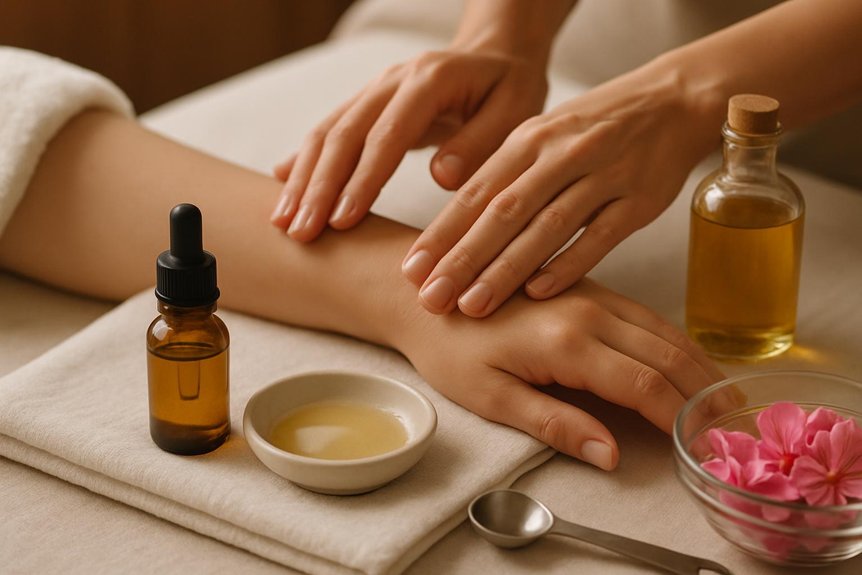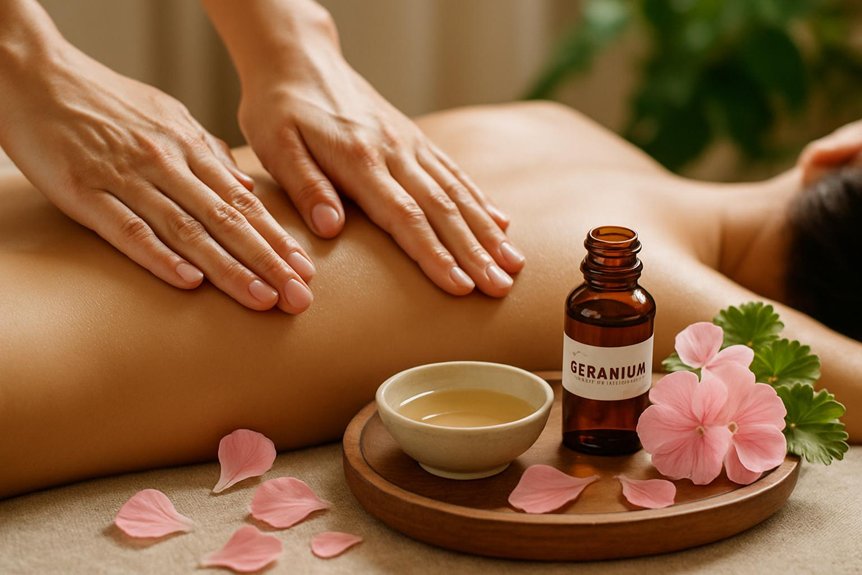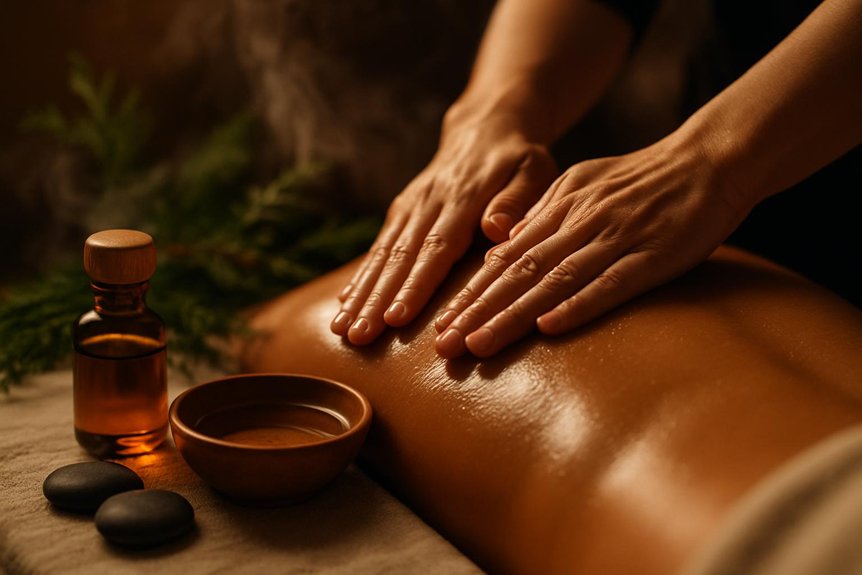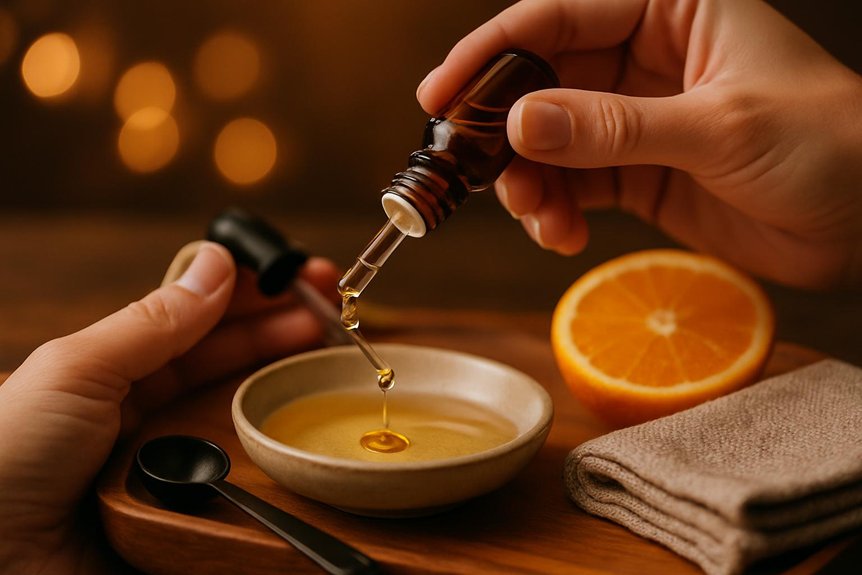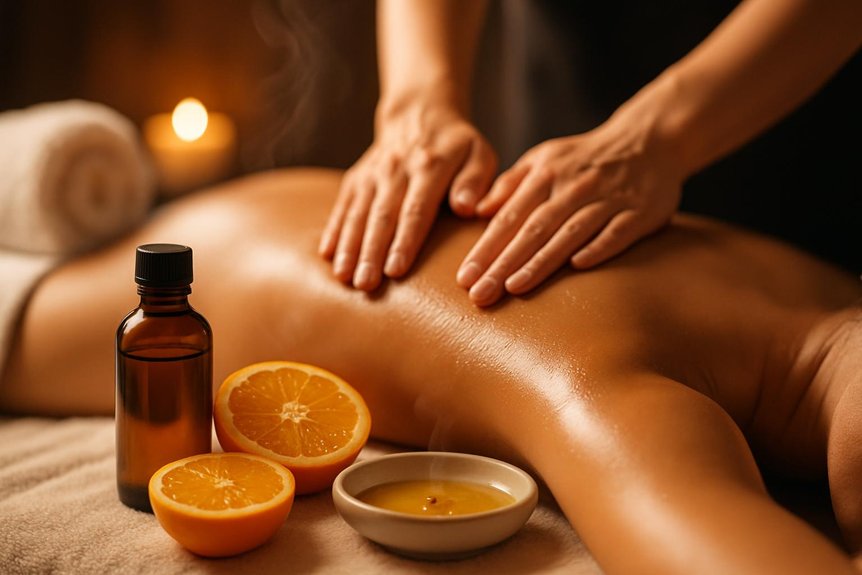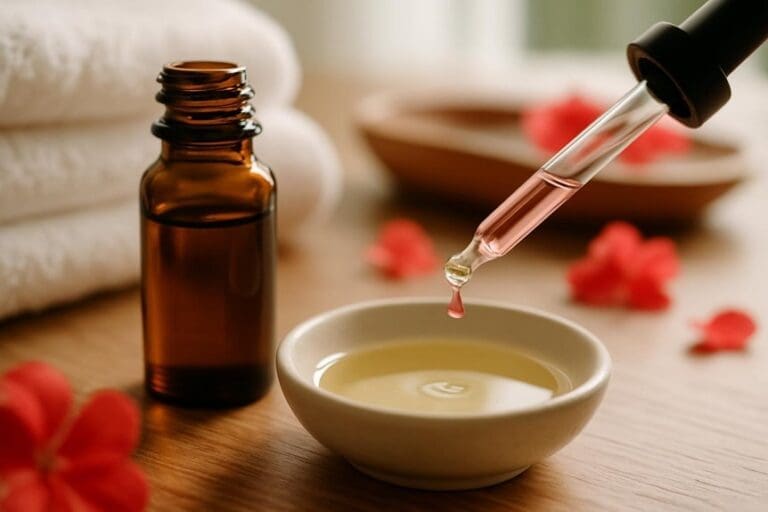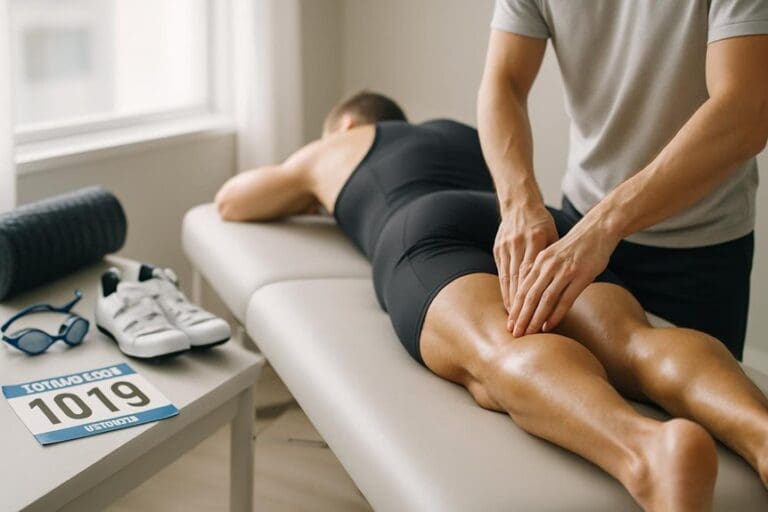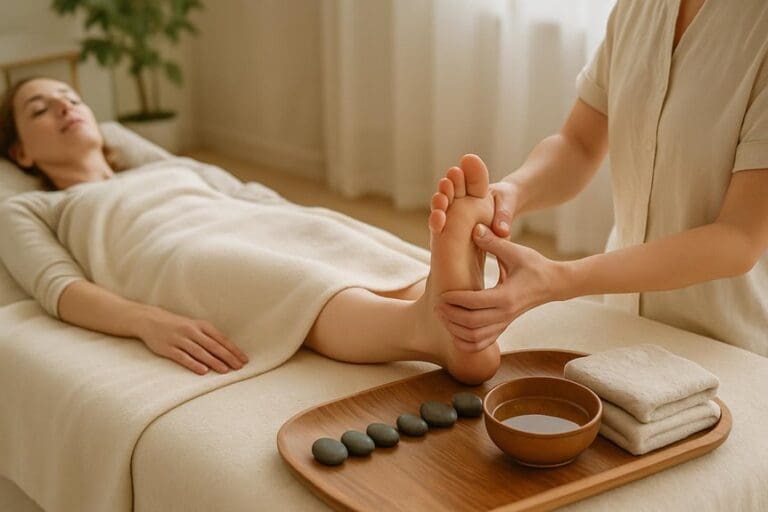
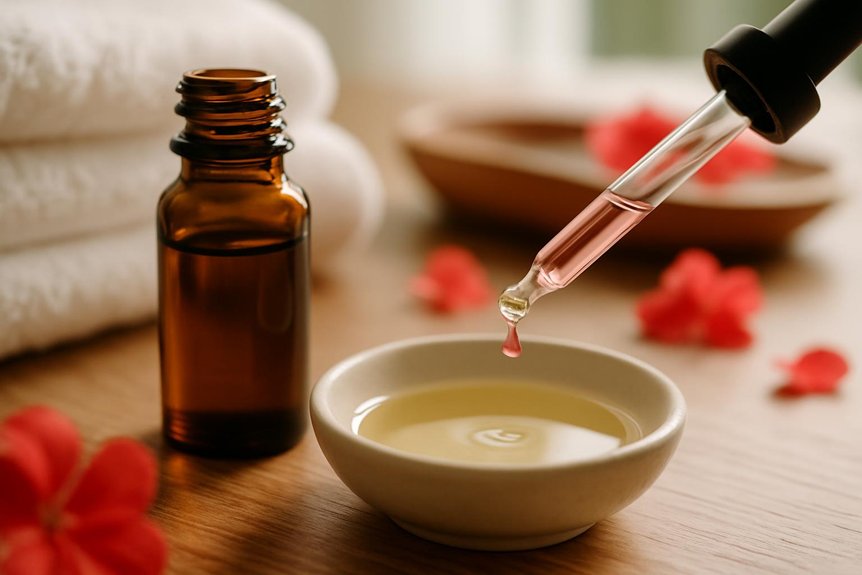
For essential oil massage, geranium essential oil is typically diluted to 1% for full-body relaxation (about 6 drops per 30 ml carrier) and up to 2% only for experienced users with resilient skin (12 drops per 30 ml). A common guide is 1 drop per 5 ml at 1% and 2 drops per 5 ml at 2%, avoiding delicate or irritated skin. Patch test for 24 hours, and use extra caution in pregnancy, breastfeeding, or hormone-sensitive conditions. Further guidance covers body areas, carriers, and aftercare.
Geranium Oil Dilution for Massage (Quick Ratios)
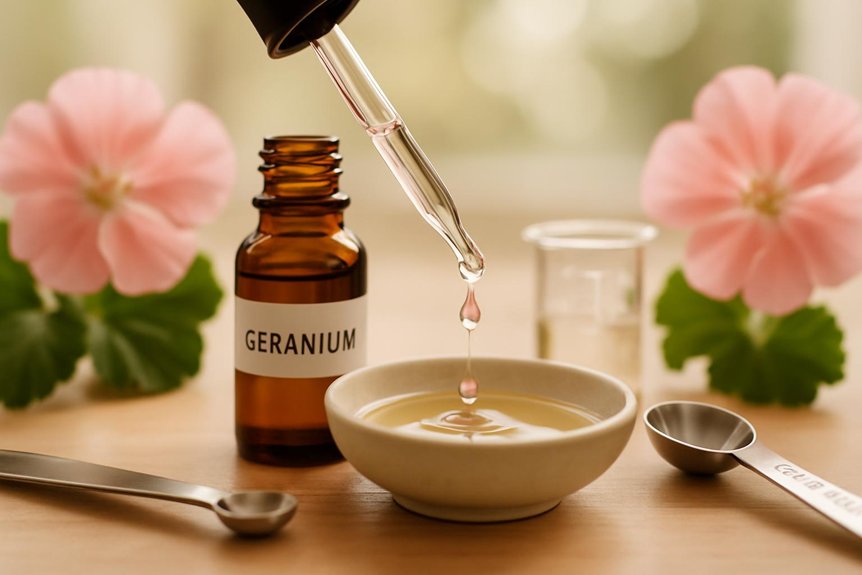
For most adults, geranium essential oil should be diluted to a low, measured concentration before any essential oil massage to reduce the risk of skin irritation or sensitisation.
Spa & Massage typically keeps full-body massage blends at 1% for routine relaxation and at 2% only when a client is accustomed to essential oils and the skin is resilient.
Quick ratios: 1% equals 1 drop per 5 ml carrier oil (or 6 drops per 30 ml). 2% equals 2 drops per 5 ml (or 12 drops per 30 ml).
For a small, intimate back, neck, or shoulder focus, 1–2% is usually sufficient; for longer sessions, 1% helps maintain comfort.
Oils should be mixed thoroughly and patch-tested when unsure.
A gentle aromatherapy approach can help you relax and unwind with aromatherapy massage during your session.
Safety First: Who Should Avoid Geranium Oil?
Safety screening matters with geranium oil, as some clients should avoid it or use it only under professional guidance.
At Spa & Massage, therapists take extra caution with pregnancy and breastfeeding, hormone‑sensitive conditions, and with children or anyone prone to sensitive skin, where reactions can be more likely.
A brief consultation and patch test help make certain the chosen dilution is appropriate before any essential oil massage proceeds.
Pregnancy And Breastfeeding
Although geranium essential oil is generally well tolerated when properly diluted, pregnancy and breastfeeding warrant extra caution because hormonal shifts and increased skin sensitivity can change how the body responds to aromatherapy.
Evidence for essential-oil safety in these stages is limited, so a conservative approach is recommended.
At Spa & Massage, therapists avoid using geranium oil in the first trimester, and later in pregnancy they use only pregnancy-appropriate blends at very low dilution, with brief exposure and careful monitoring.
Breastfeeding clients are advised to avoid applying geranium blends on or near the chest, as residue could transfer during skin-to-skin contact.
Patch testing and fragrance-free options are offered for those with nausea or sensitisation.
Clients should consult their midwife or GP before any essential oil massage.
Hormone-Sensitive Conditions
Similar caution applies beyond pregnancy and breastfeeding, particularly for people with hormone‑sensitive conditions.
Geranium essential oil is sometimes described as “balancing,” yet evidence for hormone effects is limited and individual responses vary. For clients with a history of oestrogen‑sensitive cancers, endometriosis, fibroids, or those taking hormone therapies, Spa & Massage advises avoiding geranium in massage blends unless a GP or specialist has confirmed it is appropriate.
If approval is given, therapists should keep dilution conservative, use short exposure times, and avoid applying near the chest or lower abdomen. A patch test and a clear consent conversation help protect comfort, boundaries, and trust.
Any new symptoms—breast tenderness, headache, nausea, or skin irritation—should prompt immediate discontinuation.
Children And Sensitive Skin
Two groups need particular caution with geranium essential oil in massage blends: children and anyone with sensitive or reactive skin.
For children, professional guidance is advised because developing skin absorbs more readily and irritation can be harder to spot; many therapists prefer avoiding geranium altogether or using very low dilutions and short exposure.
Patch testing is essential: apply a properly diluted blend to a small area, wait 24 hours, and stop if redness, stinging, or itching appears.
Clients with eczema, rosacea, dermatitis, or fragrance allergy should avoid geranium or choose unscented carrier oils.
In Spa & Massage clinics, therapists take a full consultation, select gentle alternatives, and prioritise comfort, consent, and a calm, close-to-the-skin experience.
Choose a Carrier Oil for Geranium Massage
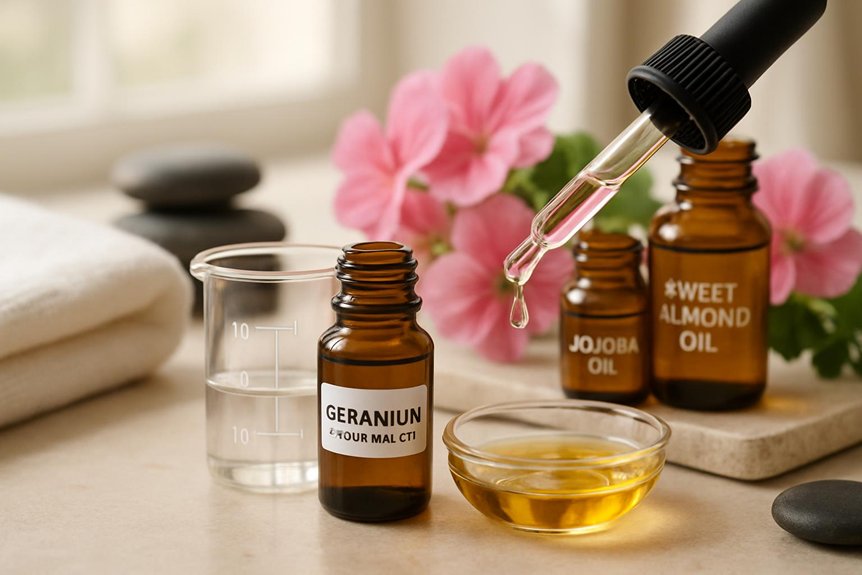
For a safe, skin-friendly geranium essential oil massage, the carrier oil should be chosen first because it controls how strongly the essential oil contacts the skin and how the massage feels.
At Spa & Massage clinics, therapists select carriers for glide, absorption, and comfort, prioritising oils with a low irritation profile and minimal fragrance to keep geranium’s scent clear.
Light options suit a silky, close-contact massage without heaviness; richer oils can create a slower, cocooning pace for longer strokes.
Cold-pressed, fresh oils in dark bottles are preferred to reduce oxidation, which can increase sensitisation risk.
A patch test and clear ingredient review support clients with allergies.
Pregnant clients should be advised to consult their midwife before aromatherapy.
Geranium Dilution by Body Area and Skin Type
Once a suitable carrier oil has been selected, the next safety step is setting a geranium dilution that matches both the body area and the client’s skin type, as absorption and irritation risk vary widely across the body.
More delicate zones—face, neck, décolletage, inner arms, and groin—generally call for the lowest dilution, while broader, thicker-skinned areas such as back, shoulders, thighs, and feet typically tolerate slightly more.
Compromised barriers (eczema, dermatitis, sunburn, recent shaving/waxing, or retinoid use) warrant extra caution or avoidance.
For sensitive, reactive, or pregnancy clients, Spa & Massage therapists favour gentler blends and shorter exposure times, prioritising comfort and consent.
A small patch test and close feedback during the massage help keep the experience both safe and sensually calming.
Drop-to-ml Dilution Chart (Measure Accurately)
In practice, accurate drop-to-ml measuring is the simplest way to keep geranium oil within a safe dilution range, because “drops” vary by bottle insert, oil viscosity, and room temperature.
At Spa & Massage clinics, therapists treat 20 drops as approximately 1 ml for standard essential-oil droppers, then verify with a syringe or measuring spoon when precision matters.
Quick chart (approx.): 0.5 ml = 10 drops; 1 ml = 20 drops; 2 ml = 40 drops.
For carrier volumes: 10 ml at 1% = 2 drops; 10 ml at 2% = 4 drops; 30 ml at 1% = 6 drops; 30 ml at 2% = 12 drops; 50 ml at 1% = 10 drops.
Patch-test first when intimacy is planned.
Aftercare for Geranium Aromatic Massage Blends
After a geranium essential oil massage, aftercare should prioritise skin comfort, hydration, and adequate rest to support recovery and reduce the chance of irritation.
At Spa & Massage clinics, therapists typically advise keeping the skin gently cleansed, avoiding hot showers, saunas, and active exfoliation for several hours, and monitoring for any redness or itching—especially for sensitive or allergy-prone clients.
Many clients are also encouraged to drink water, eat a light meal if needed, and plan a calm evening with early sleep to help the body settle after treatment.
Post-Massage Skin Care
Later in the day, skin that has been massaged with a geranium aromatherapy blend benefits from simple, protective aftercare to reduce irritation and support the skin barrier.
At Spa & Massage clinics, therapists advise keeping the area clean and calm: avoid hot showers, saunas, vigorous exfoliation, and fragranced body products for 12–24 hours, as warmed or sensitised skin can react more easily.
If any tightness appears, a thin layer of an unscented, ceramide-rich moisturiser can help reinforce the barrier without competing aromas.
Sun exposure should be limited on freshly treated areas; cover the skin or use a gentle, fragrance-free sunscreen.
Redness, itching, or a rash warrants stopping all products and seeking medical advice.
Hydration And Rest Tips
Recovery is supported by steady hydration and unhurried rest, particularly when the body has been treated with a geranium aromatherapy blend.
After massage, adequate fluids help maintain circulation and support normal lymphatic movement; water is preferred, while alcohol is best avoided for the rest of the day.
In Spa & Massage clinics across London, therapists suggest sipping little and often, especially after deep tissue or sports work, and watching for lightheadedness as a cue to drink and pause.
Rest allows the nervous system to settle and the tissues to adapt.
A quiet evening, a warm (not hot) shower, and early sleep can deepen the sense of closeness and calm.
If headache, nausea, or dizziness persists, medical advice should be sought promptly.
Conclusion
Diluting geranium essential oil for massage demands measured, mindful mixing: a suitable carrier, sensible strengths, and spot-check patch testing. A client-centred approach considers skin sensitivity, body area, allergies, medications, and pregnancy, adjusting percentages accordingly. Accurate drop-to-millilitre calculations help keep blends consistent and controlled, reducing irritation risk while preserving aroma. Aftercare—observing redness, dryness, or delayed reactions—supports safer use. When in doubt, professional guidance guarantees a calm, comfortable treatment.