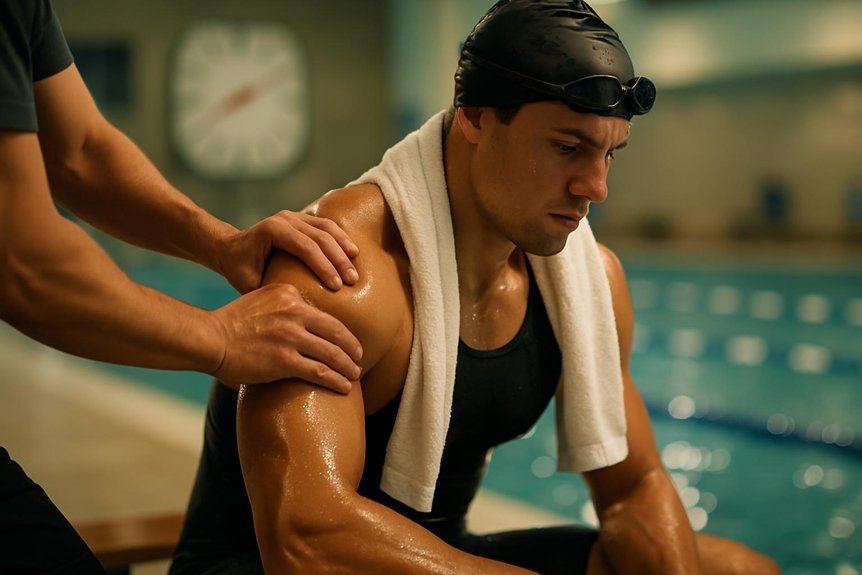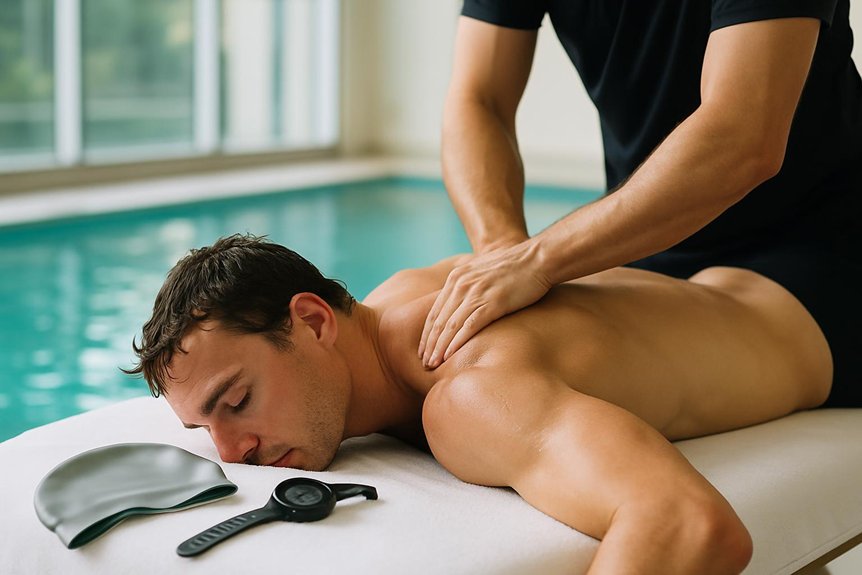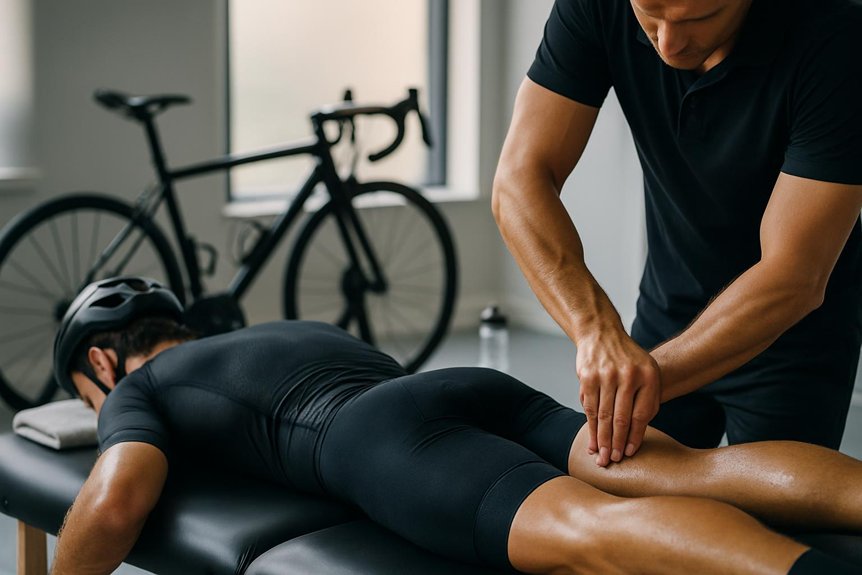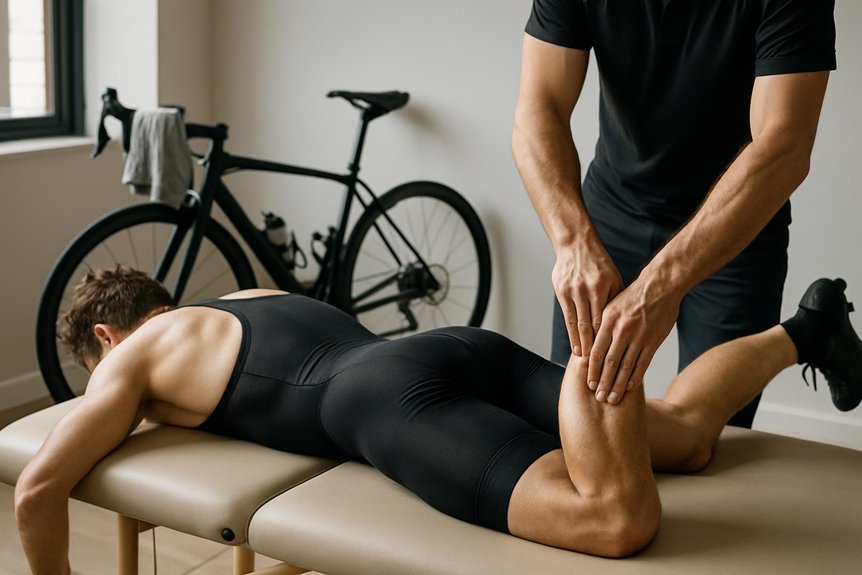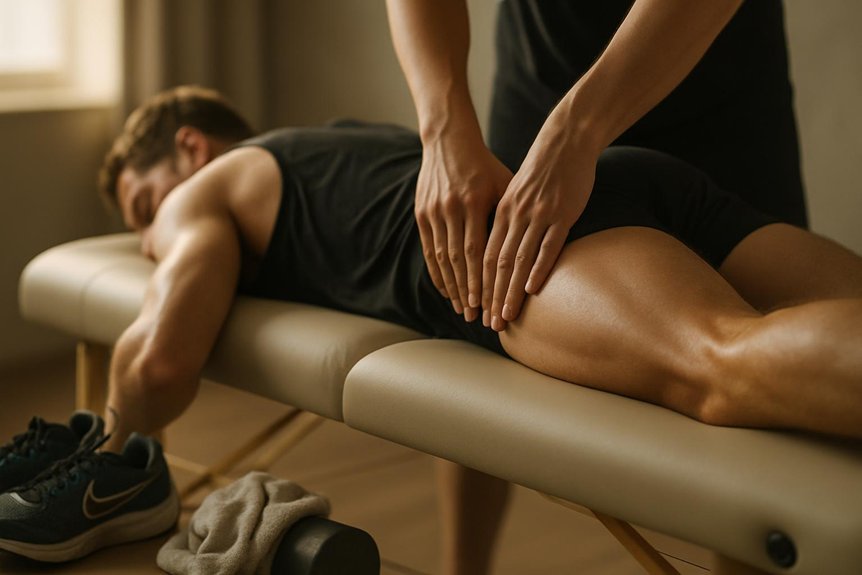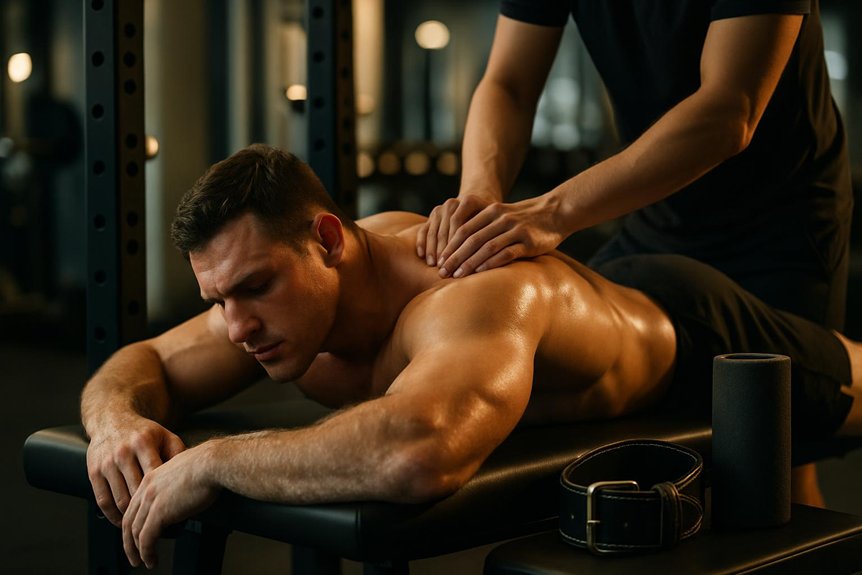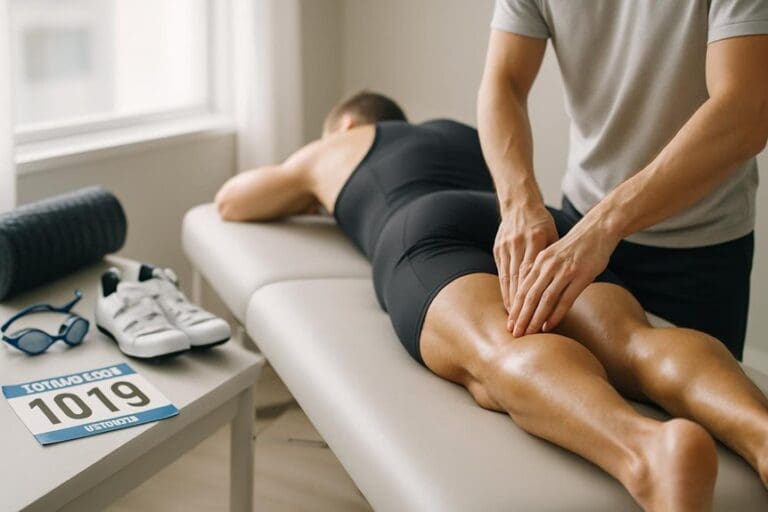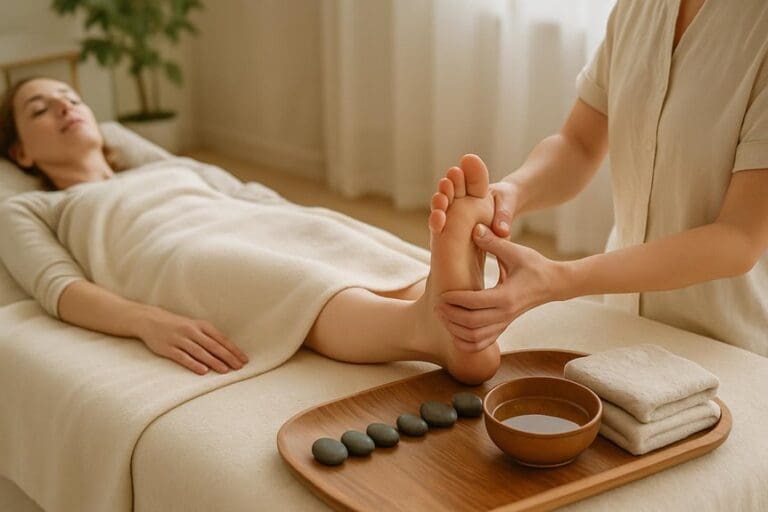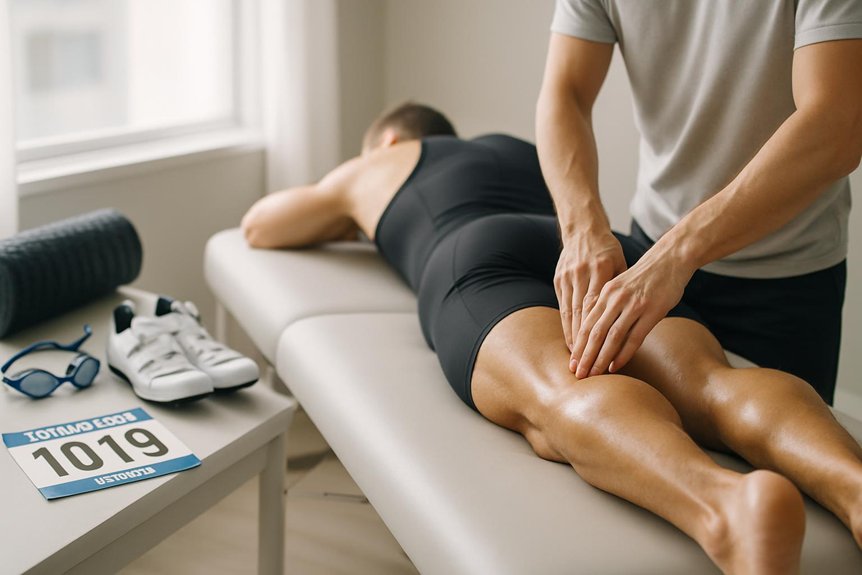
Triathletes generally benefit most from performance massage when it is periodised to match training load, rather than booked on fixed intervals. A practical starting point is one session every 2–4 weeks, shifting to every 3–4 weeks in base, every 2–3 weeks in build, and lighter work during peak or taper. In heavy weeks, schedule it 24–72 hours before maximal efforts and avoid aggressive pressure. Race week often suits a session 5–7 days out, with more detail on timing ahead.
How Often Should Triathletes Get a Performance Massage?
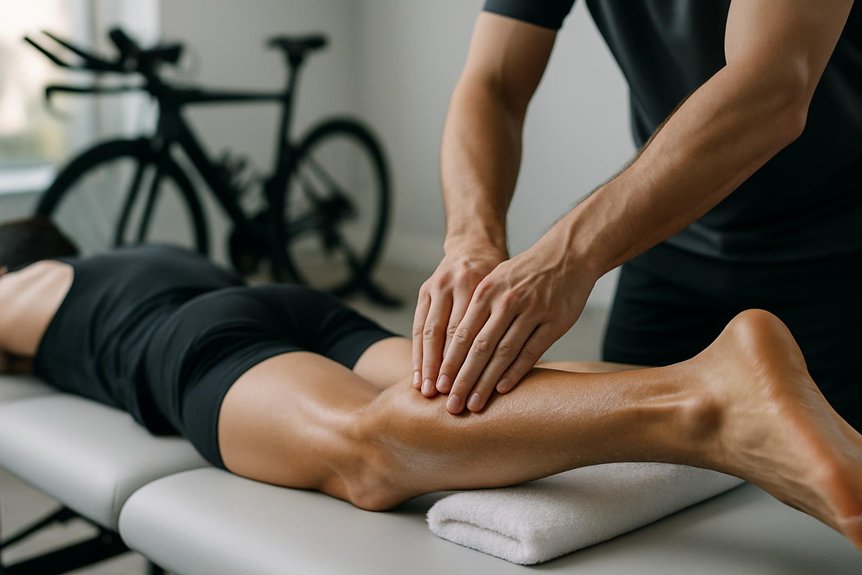
Often, triathletes benefit most from performance massage when it is periodised alongside their training load rather than booked at a fixed interval. Evidence suggests targeted soft-tissue work can reduce perceived soreness, support range of motion, and maintain training quality when timed around harder blocks and key sessions.
A practical starting point is one session every 2–4 weeks, adjusted to volume, intensity, sleep, and niggles. During heavy weeks, athletes may book closer to demanding swims, rides, or runs, then allow 24–72 hours before maximal efforts to avoid residual tenderness. Lighter weeks suit shorter “maintenance” work.
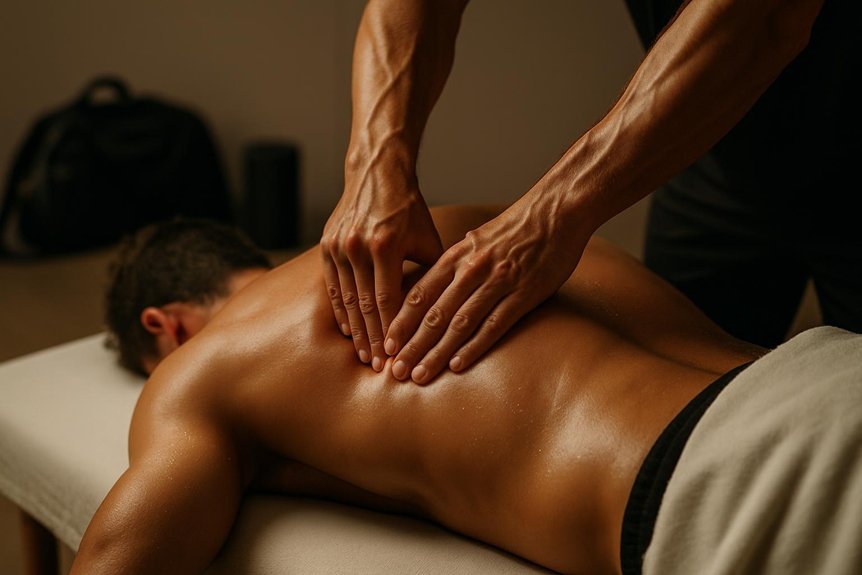
Beyond easing post-session tightness, sports massage can help athletes stay consistent by supporting recovery between key swim, bike, and run sessions.
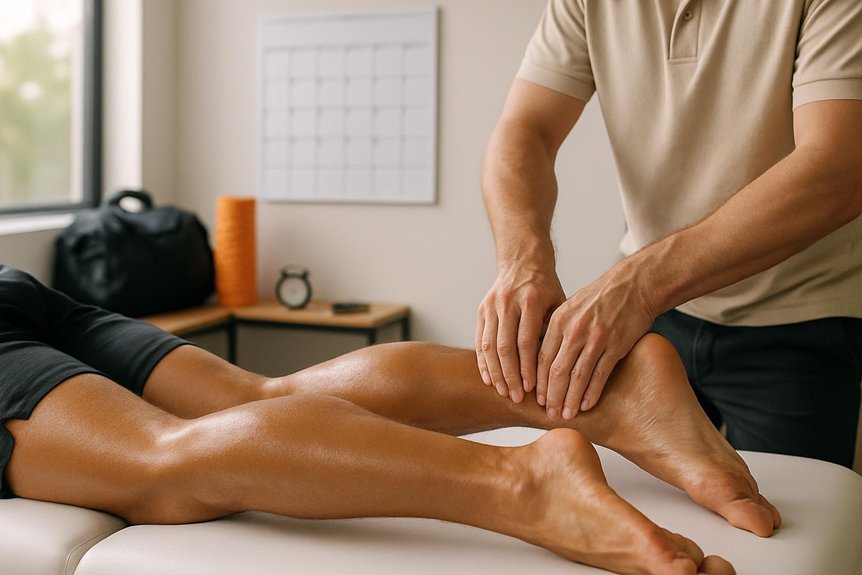
At Spa & Massage clinics across London, therapists tailor pressure, duration, and focus (calves, hip flexors, thoracic spine) after discussing the week’s plan, creating calm, close care without derailing performance.
How Often in Base, Build, and Peak Phases?
Generally, performance massage frequency for triathletes should shift with the base–build–peak cycle, increasing as training stress rises and then tapering to protect freshness while maintaining tissue quality.
In base phase, a session every 3–4 weeks supports adaptation, addressing niggles early while preserving gentle soreness thresholds. In build phase, every 2–3 weeks is often appropriate, as higher intensity and volume elevate muscle tone and trigger-point sensitivity; targeted work can improve comfort and range of motion.
In peak phase, frequency typically reduces to every 3–4 weeks or a light session 7–10 days pre‑race, prioritising calm, supple tissue rather than heavy pressure.
At Spa & Massage London clinics, therapists modulate depth and pace, keeping treatment close, respectful, and performance‑focused.
How to Adjust Performance Massage to Weekly Training Load
Beyond the broad base–build–peak framework, performance massage for triathletes is best adjusted week by week according to training load, intensity distribution, and recovery markers.
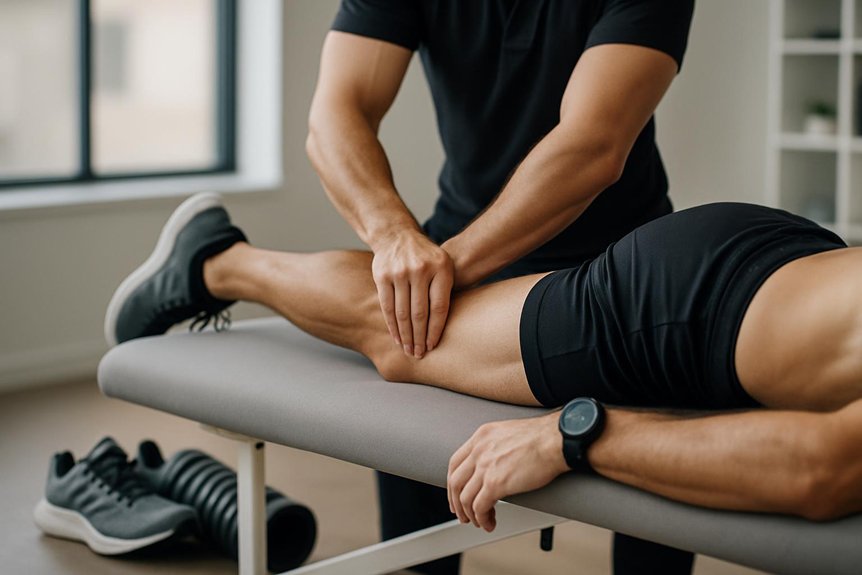
In higher-volume or higher-intensity weeks, one focused performance massage can target the primary stress points (calves/Achilles for run load, hip flexors and glutes for bike, lats and pecs for swim) while avoiding aggressive work that amplifies soreness.
In lighter or recovery weeks, shorter sessions can shift toward down-regulating the nervous system, improving tissue glide, and restoring comfortable range of motion.
At Spa & Massage clinics in London, therapists match pressure to readiness signs—sleep quality, lingering DOMS, resting heart rate trends, and perceived fatigue—and reassess in-session so the body feels cared for, not “beaten up” afterward.
When to Book Around Race Week and After Race Day
In the 7–10 days before a triathlon, performance massage is best scheduled to support tapering—maintaining tissue mobility and neuromuscular readiness—without creating residual soreness. At Spa & Massage, therapists typically keep pressure moderate, focus on calves, hip flexors, glutes, lats, and forearms, and use slow, reassuring strokes with minimal deep stripping. Many athletes book this 5–7 days out, then choose a brief 20–30 minute flush 48–72 hours pre-race to settle the body and sharpen proprioception.
On race week, sessions are timed after key sessions, not before.
After race day, a gentle recovery massage is usually booked 24–72 hours later to ease congestion and restore range. Deeper work fits 5–10 days post-race, aligned with return-to-training.
When to Reduce or Avoid Performance Massage (Red Flags)
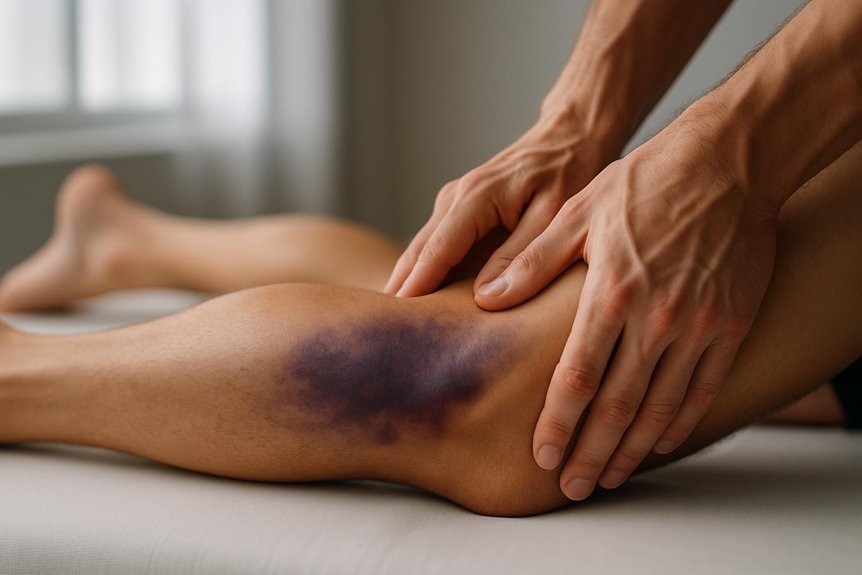
When should a triathlete scale back—or skip—performance massage altogether? When the body signals threat, not training stress: fever, acute infection, new swelling, unexplained bruising, suspected DVT, or a fresh tear or fracture.
Sharp, localised pain, nerve symptoms (numbness, tingling, radiating pain), or sudden loss of function should trigger medical assessment before hands-on work.
In deload weeks and taper, pressure should also reduce; deep tissue too close to key sessions can amplify soreness and blunt readiness.
At Spa & Massage, therapists screen, check load history, and choose lighter, circulation-focused techniques, or pause treatment entirely.
Pregnancy, anticoagulants, uncontrolled hypertension, and post-surgical timelines require modified plans and explicit clearance first.
Any discomfort should stay “good pain,” never protective guarding responses.
Conclusion
The idea that “more massage equals faster gains” sounds plausible, but evidence suggests the real benefit is consistency: better perceived recovery, short-term soreness reduction, and maintained range of motion—without replacing sleep, nutrition, and smart loading. For triathletes, frequency is best periodised: lighter maintenance in base, more targeted work in build/peak, and cautious timing near races. When tissue is irritable, bruised, or performance drops, less hands-on work—not more—may be the smarter call.