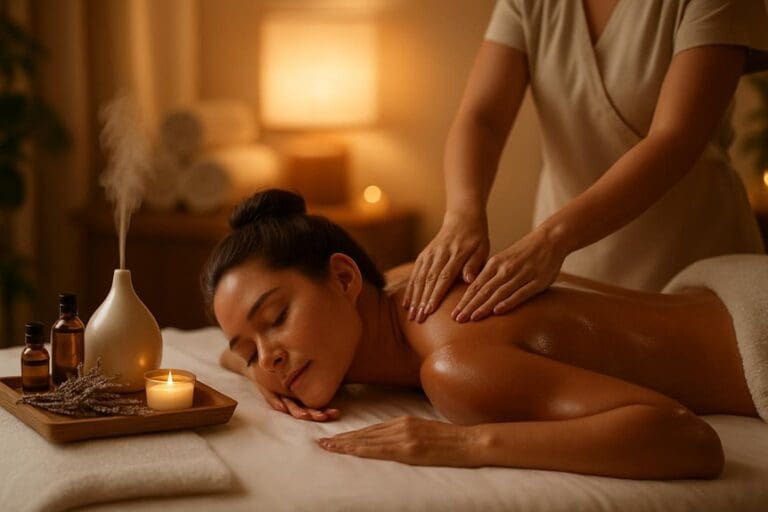
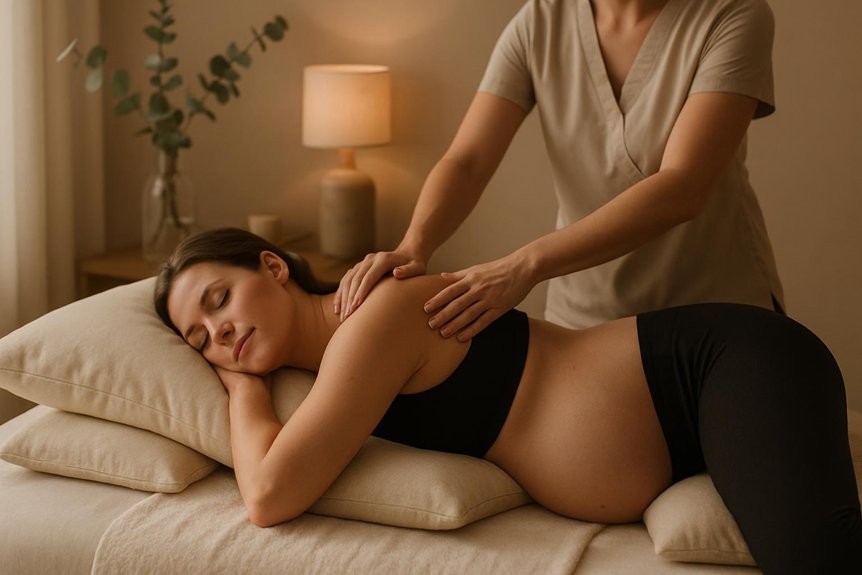
Prenatal massage is generally considered safe at 16 weeks when provided by a suitably trained therapist and adapted for pregnancy comfort and circulation, typically using side-lying positioning and supportive bolsters. Pressure is kept light to moderate, with slow, grounding strokes and no deep abdominal work. It should be postponed with vaginal bleeding, leaking fluid, fever, dizziness, severe abdominal pain, or infection, and medical clearance is advised for high-risk histories. More guidance follows.
Is Prenatal Massage Safe at 16 Weeks?
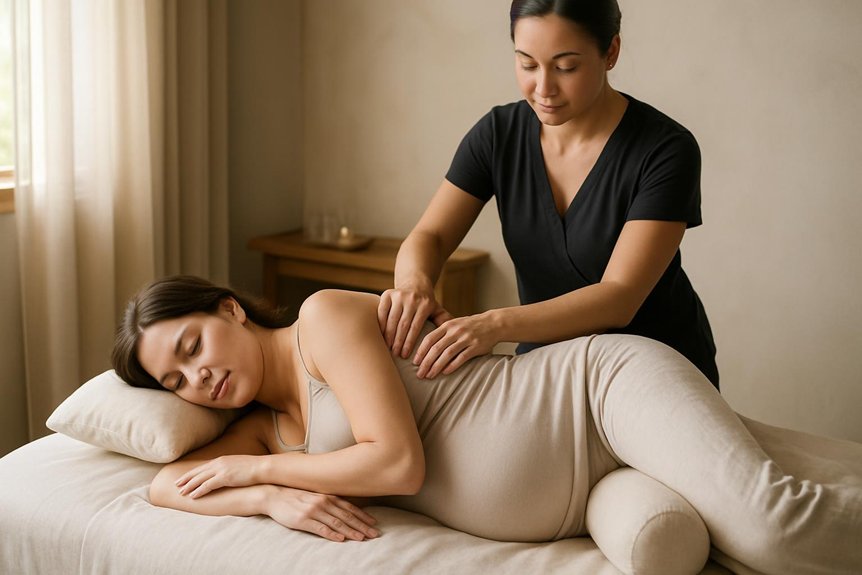
At 16 weeks, prenatal massage is generally considered safe for most pregnancies when it is performed by a suitably trained therapist and there are no medical contraindications. In the second trimester, many people find massage helps ease back, hip, and shoulder tension, supports sleep, and softens stress, with a calming effect on the nervous system. Pregnancy massage is also valued for its stress reduction benefits for expecting mothers.
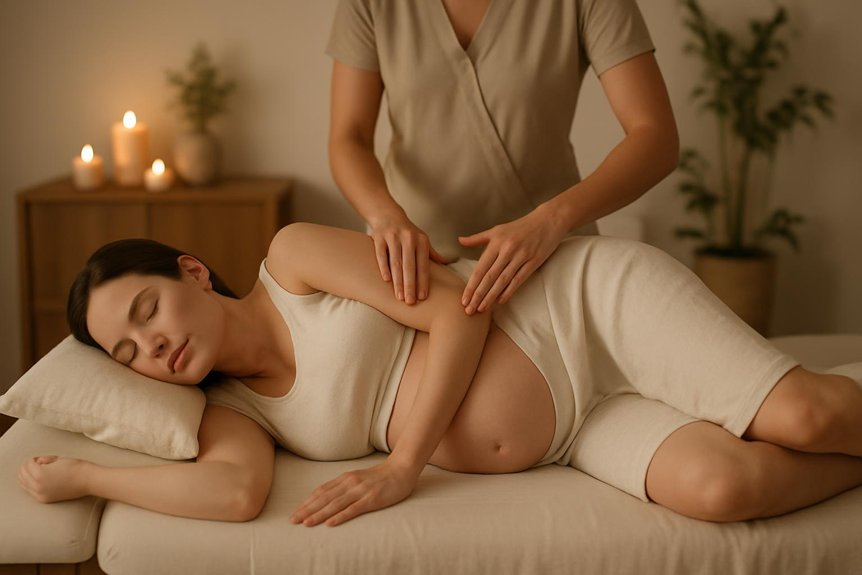
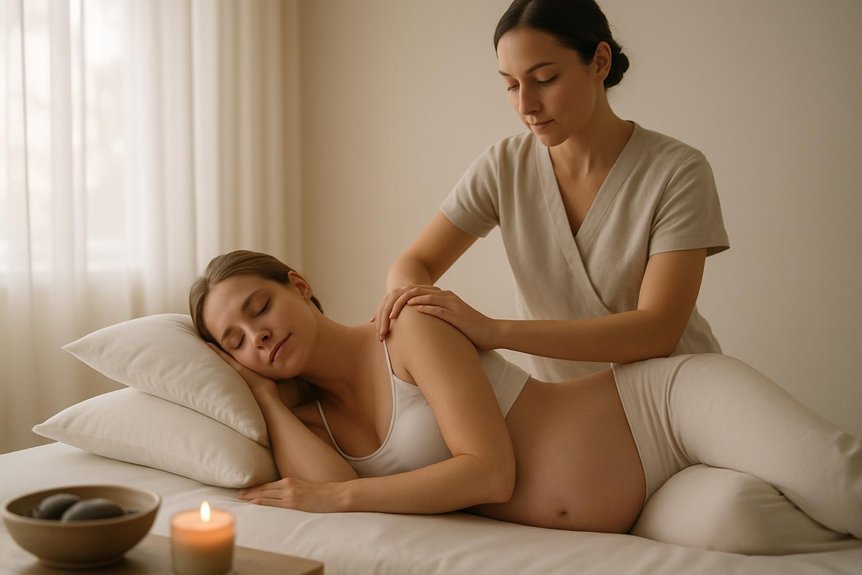
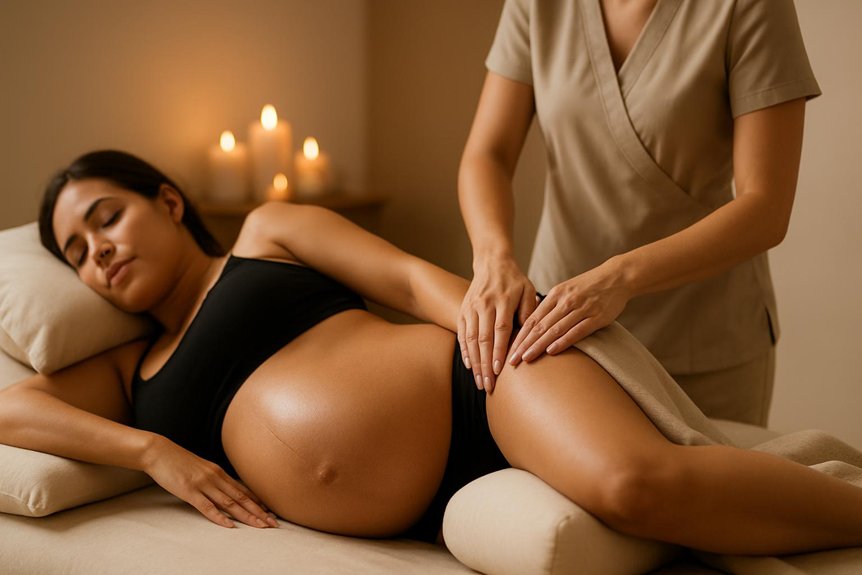
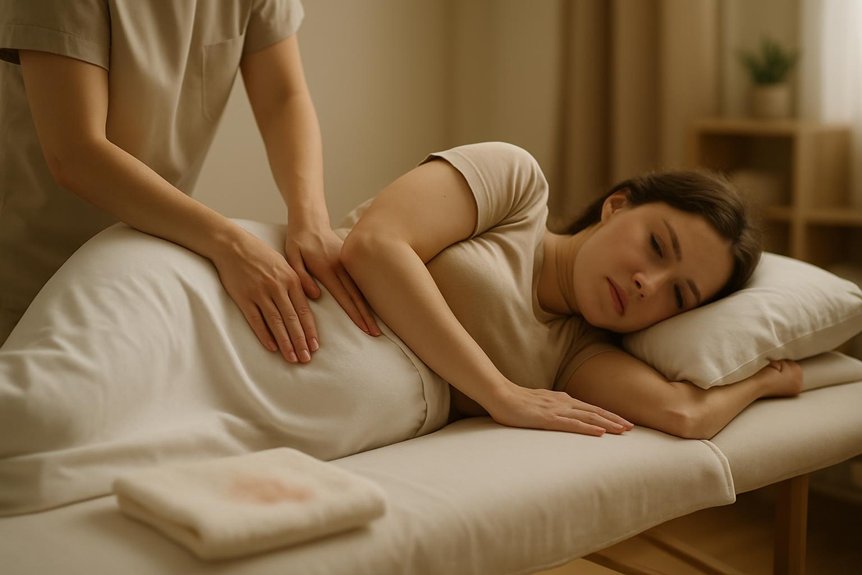
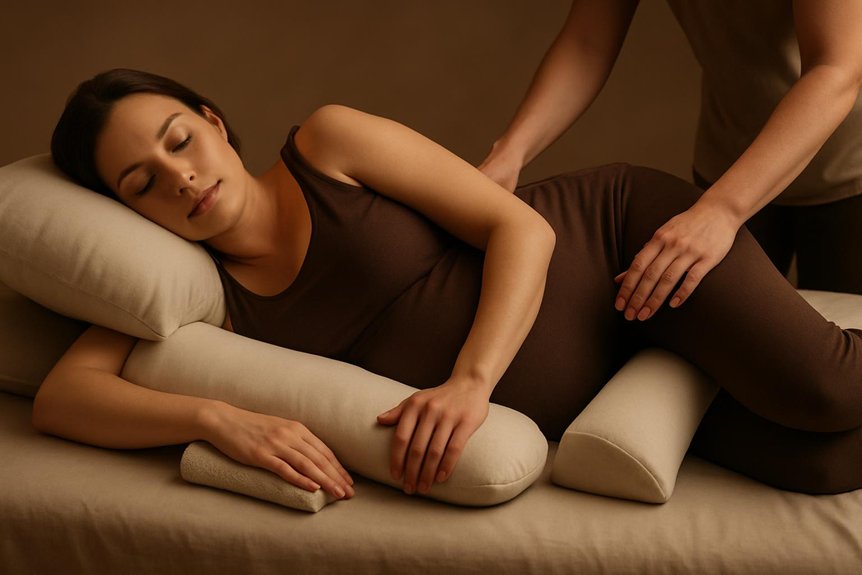
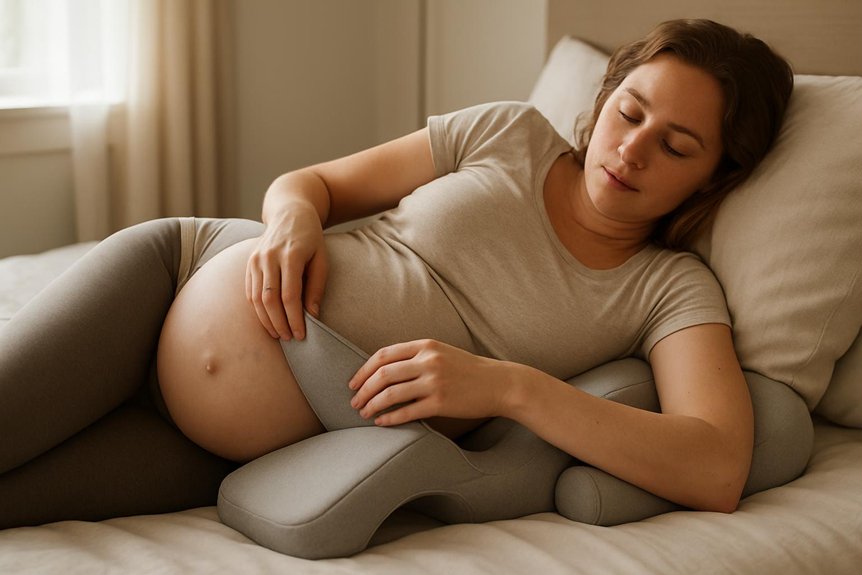
At Spa & Massage, therapists adapt positioning, usually side-lying with supportive bolsters, and keep pressure comfortable rather than intense. Sessions favour slow, grounding strokes, gentle work for legs and lower back, and careful attention to hydration and temperature.
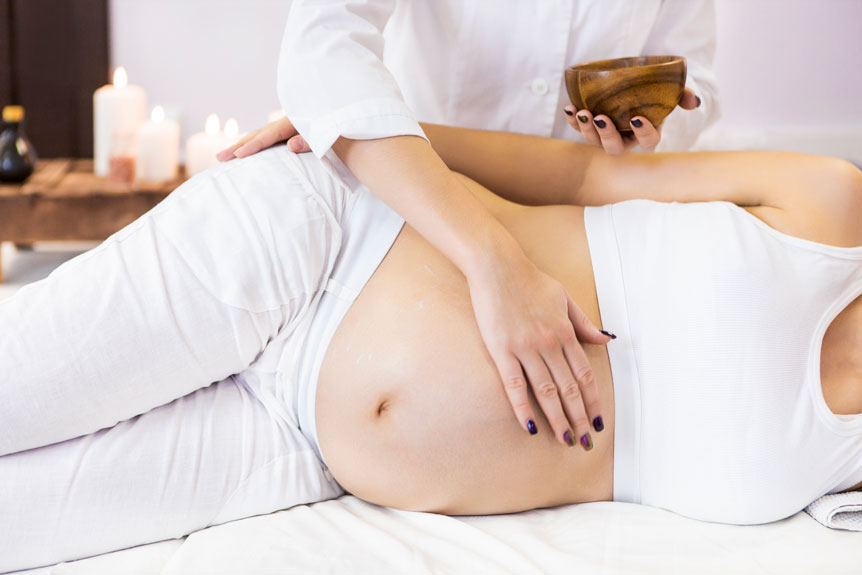
Unscented or pregnancy-appropriate oils are used when desired, and clients are encouraged to share sensations and boundaries throughout. A brief consultation checks comfort and wellbeing, fostering reassurance and closeness.
When Should You Avoid Prenatal Massage at 16 Weeks?
Even when prenatal massage is typically well tolerated in the second trimester, there are clear situations at 16 weeks when it should be postponed or avoided until a midwife or obstetrician confirms it is appropriate.
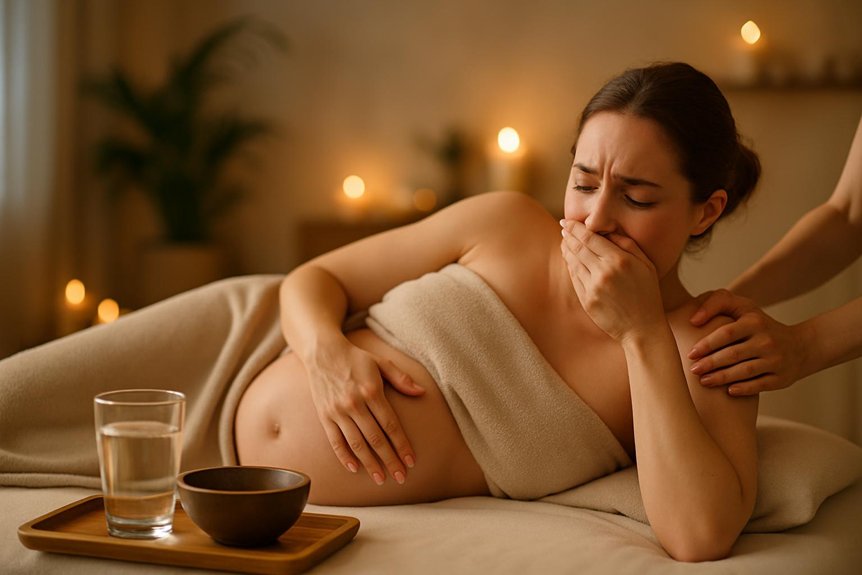
It should be deferred with vaginal bleeding, leaking fluid, fever, new severe abdominal or pelvic pain, dizziness or fainting, reduced wellbeing, or signs of infection.
Caution is also advised with a history of recurrent miscarriage, placenta complications, pre‑eclampsia risk, uncontrolled hypertension, clotting disorders, DVT symptoms (one‑sided calf pain/swelling), or significant swelling and sudden headaches.
At Spa & Massage, therapists will not treat anyone who feels unwell or has new, unexplained symptoms, and they will ask for medical clearance when risks are present, prioritising calm, secure care.
Benefits of Prenatal Massage at 16 Weeks
For many people, 16 weeks can be a particularly receptive point in pregnancy to use a properly adapted prenatal massage to support comfort and everyday function.
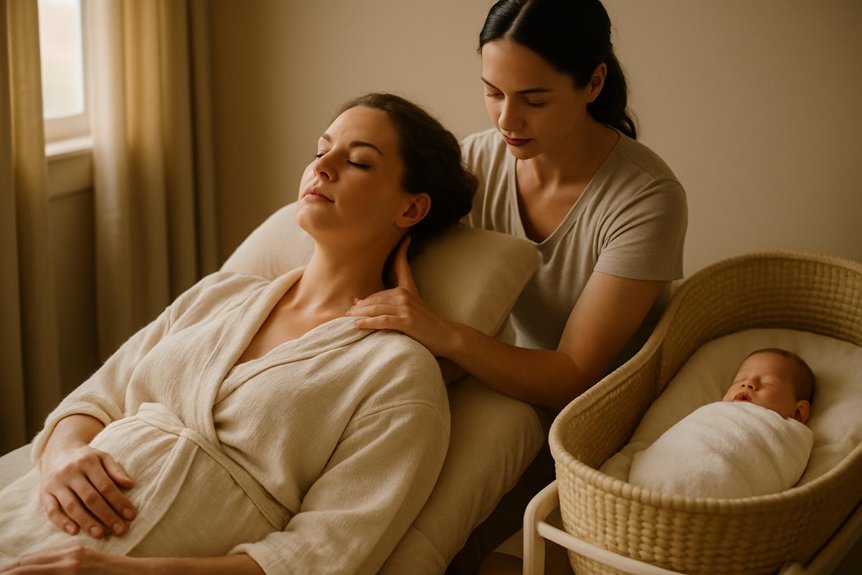
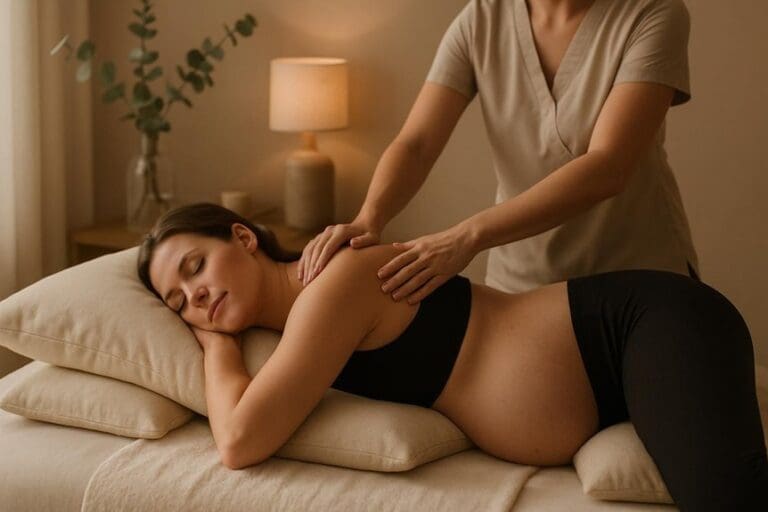
When cleared by a midwife or GP, gentle, side-lying work may ease common second-trimester tension in the lower back, hips, and shoulders, helping the body adapt to postural change and breast growth.
Many clients also report improved sleep quality and a calmer mood, likely linked to reduced stress physiology and supportive touch.
In Spa & Massage clinics across London, therapists prioritise slow pacing and clear consent, which can foster a sense of safety, closeness, and being cared for.
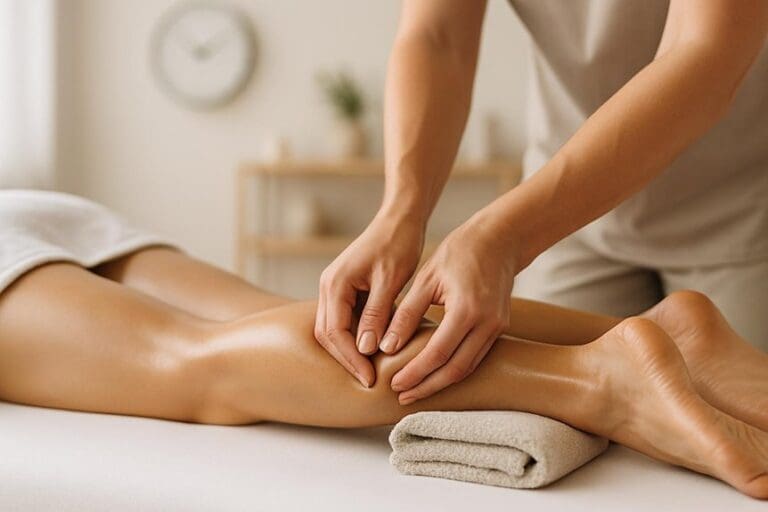
Light lymphatic-style strokes may support mild swelling, and targeted release can reduce headache triggers.
What Happens in a 16-Week Prenatal Massage Session?
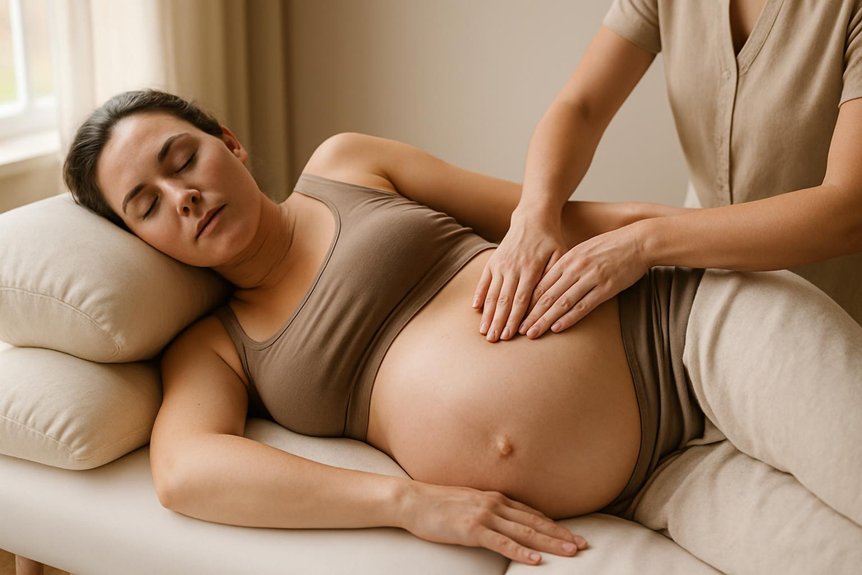
A typical 16-week prenatal massage session at Spa & Massage begins with a brief, safety-led consultation to confirm gestational age, current symptoms, any medical guidance from a GP or midwife, and comfort preferences, before positioning is set up for side-lying support with pillows to protect circulation and reduce strain.
The therapist then uses slow, nurturing strokes with light-to-moderate pressure, avoiding deep work on the abdomen and any techniques that may aggravate varicose veins, swelling, or tenderness.
Unscented or pregnancy-appropriate oils are used in Spa & Massage clinics, with consent checked throughout.
Attention is often given to the lower back, hips, neck, and shoulders, with gentle mobilisations if appropriate. The pace stays unhurried, encouraging relaxed breathing and a sense of calm.
The session ends with gradual re-positioning, hydration advice, and guidance to monitor any unusual symptoms.
How to Book Prenatal Massage in London
With pregnancy comfort and clinical safety in mind, prenatal massage in London is best booked through a clinic that confirms gestational age, current symptoms, and any guidance from a GP or midwife before the appointment.
At Spa & Massage, bookings can be made online or by phone, with clinics across Crouch End, Bayswater, Chiswick, Earl’s Court, Belsize Park, and Richmond.
They should request a brief health screening, including blood pressure concerns, bleeding, pre-eclampsia risk, DVT history, or unexplained pain, and advise postponement if warning signs are present.
Clients can note preferred pressure, areas needing tenderness, and scent sensitivities; therapists can use gentle, pregnancy-appropriate oils.
Appointment reminders should encourage hydration, slow position changes, and leaving time afterward for a calm return home.
Conclusion
At 16 weeks, prenatal massage is often considered suitable for many pregnancies when delivered by a trained therapist using side‑lying support and pregnancy‑appropriate pressure. However, individual risk factors matter, so advice from a midwife or GP should guide decisions—especially with bleeding, pain, fever, high blood pressure, or a history of complications. Why endure growing tension and poor sleep without exploring safe support? With clear screening, informed consent, and careful technique, massage can offer calm, comfort, and practical relief.