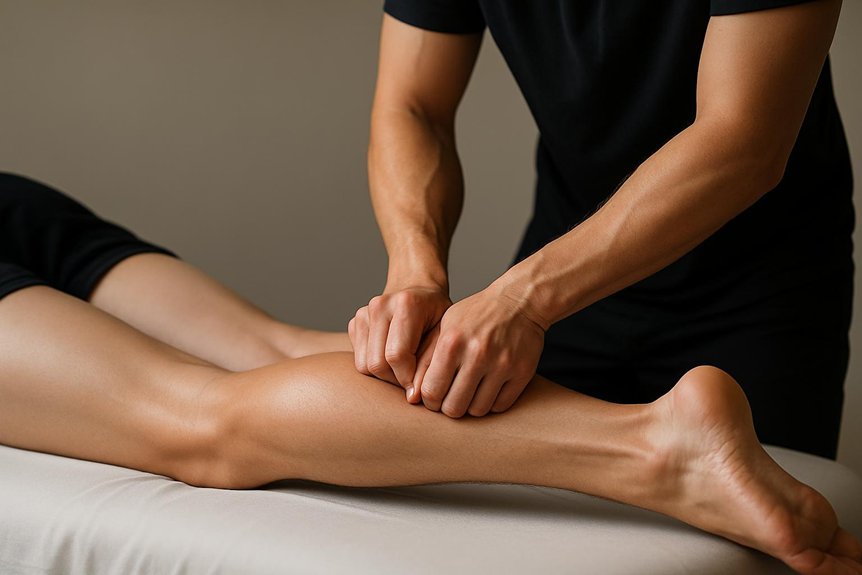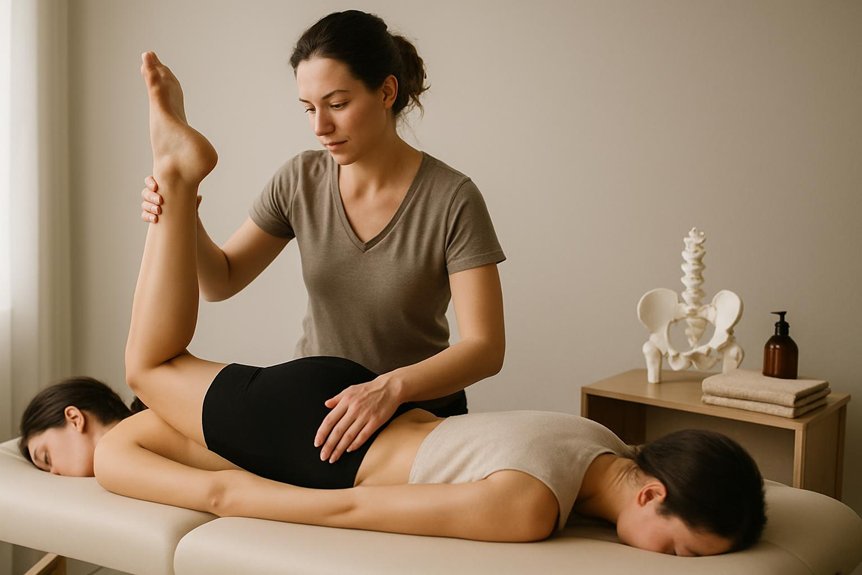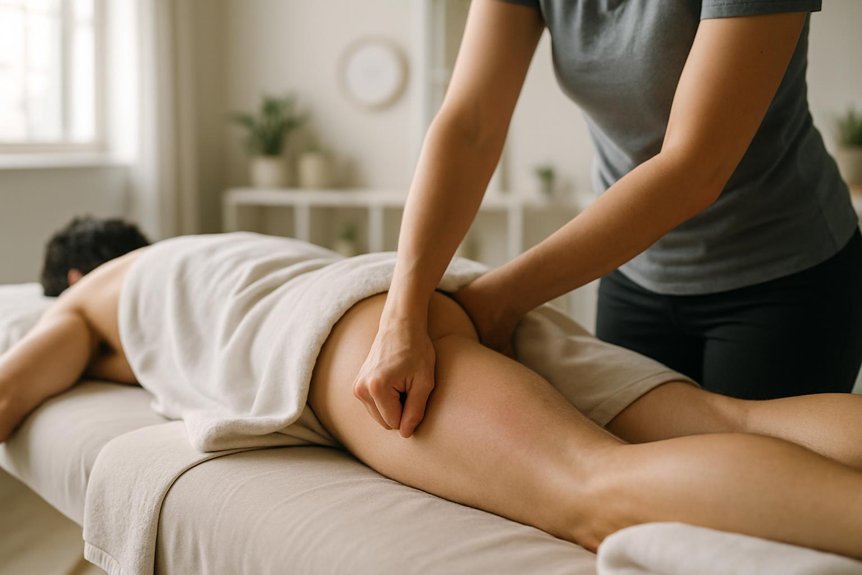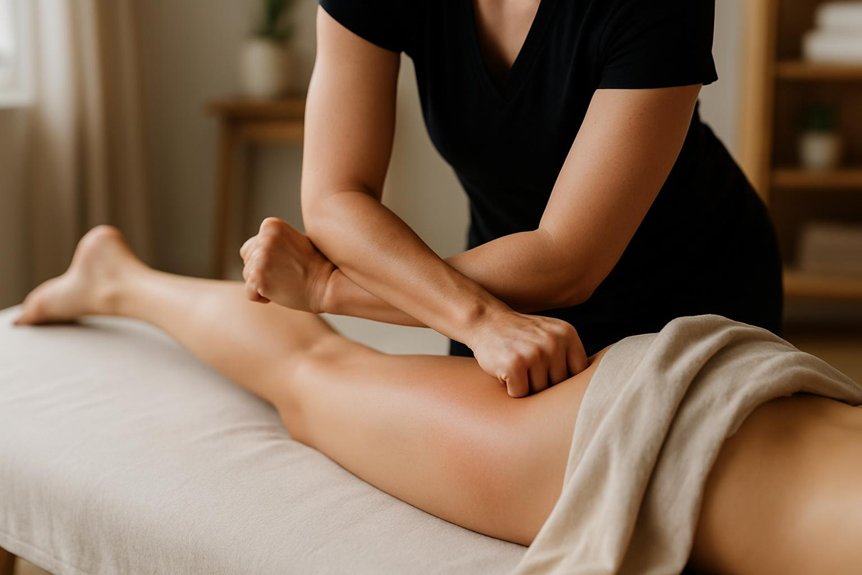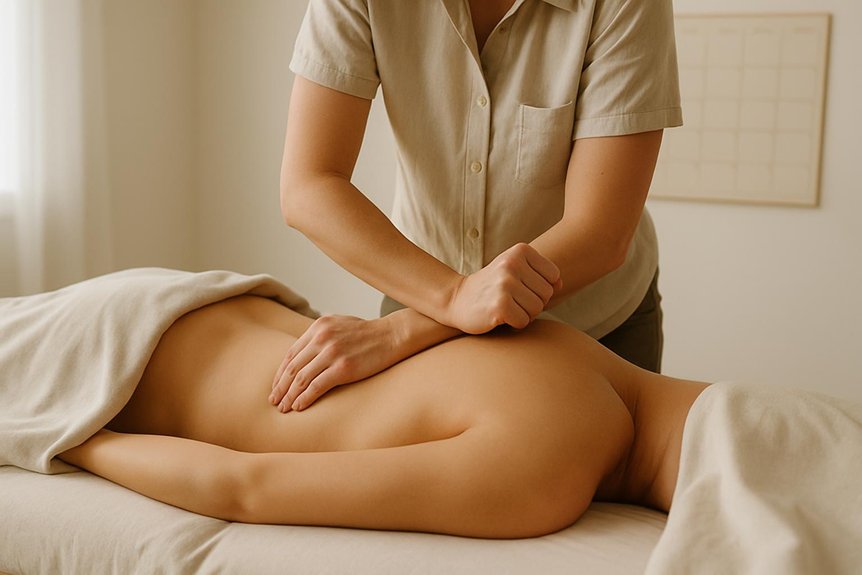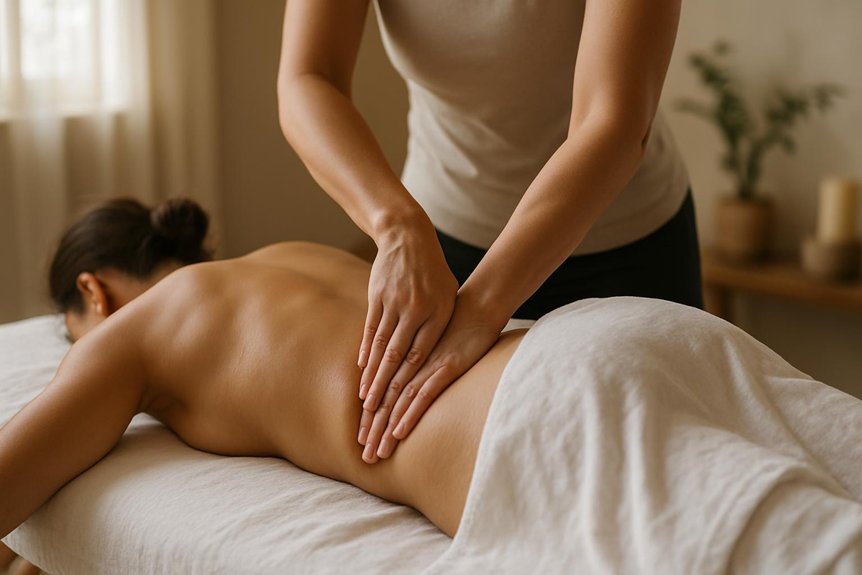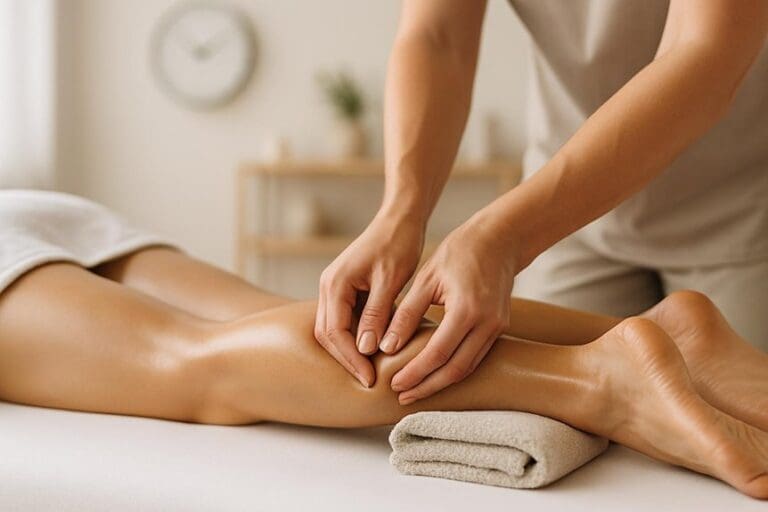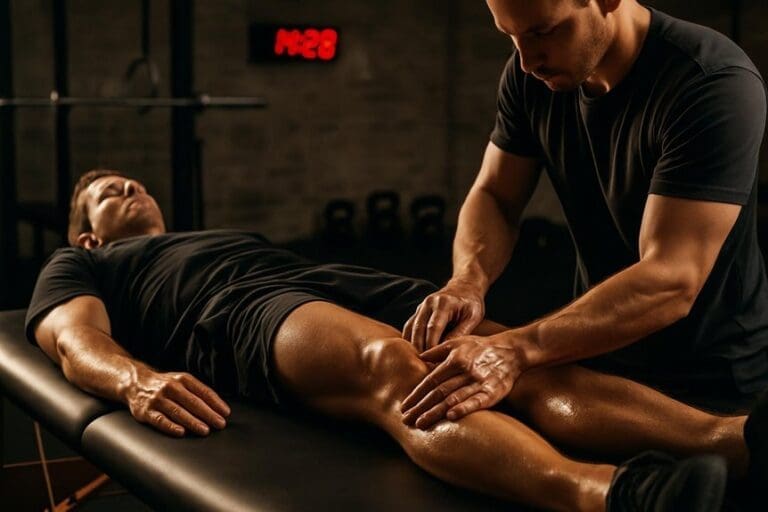
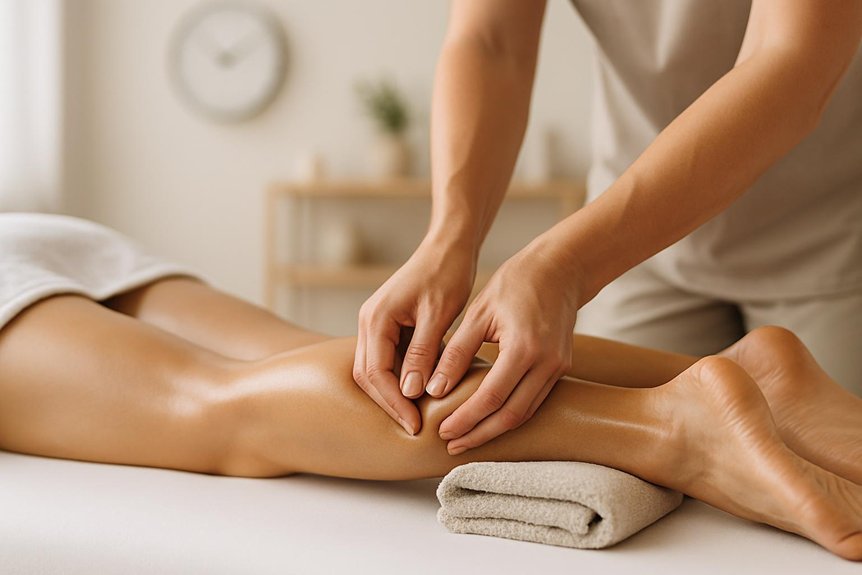
Most people with tight calves benefit from deep tissue massage once weekly for 2–4 weeks when tightness limits comfort or movement, then tapering to every 2–4 weeks for maintenance based on symptoms and training load. Runners often schedule sessions every 1–2 weeks during high-volume phases, ideally 48–72 hours after long runs. If soreness lasts beyond 48–72 hours, bruising appears, or performance drops, sessions should be spaced out or pressure reduced. Further guidance helps tailor timing.
How Often for Deep Tissue Calf Massage?
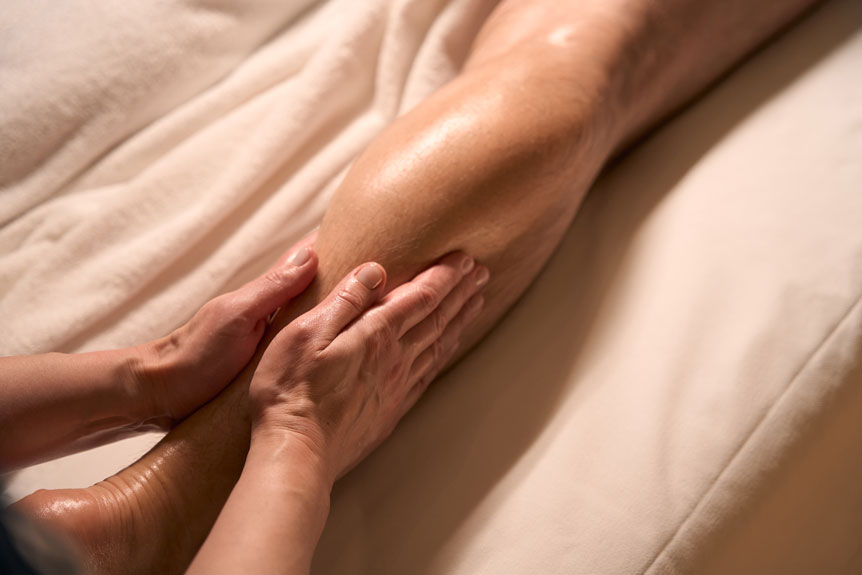
Often, an appropriate frequency for deep tissue calf massage depends on symptom severity, training load, and tissue irritability.
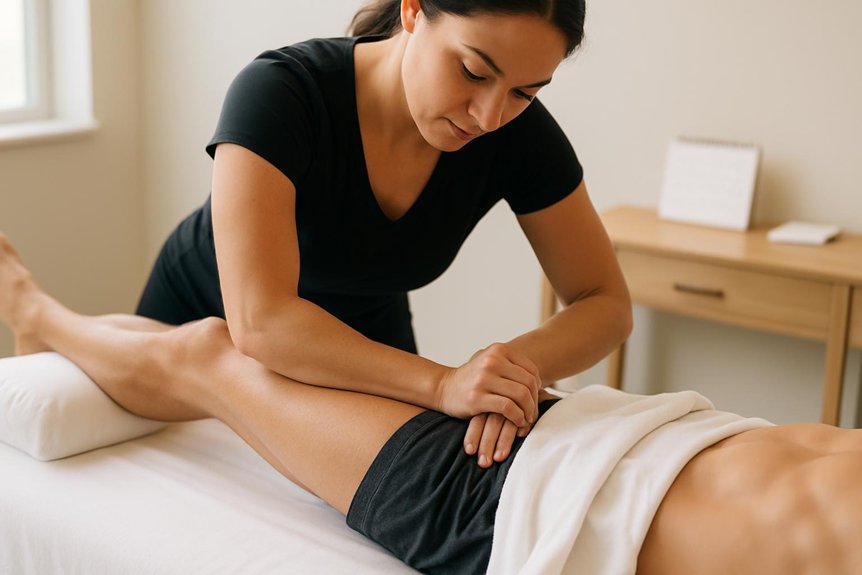
At Spa & Massage, therapists typically recommend 1 session weekly for 2–4 weeks when tightness is limiting comfort or movement, then taper to every 2–4 weeks for maintenance. For active clients with heavy training blocks, a weekly or fortnightly rhythm may help support recovery, while sensitive calves may respond better to shorter sessions spaced 7–10 days apart. Between appointments, gentle calf stretching and light self-massage can extend results without overloading the tissue. Deep tissue work can be especially helpful for addressing chronic muscle tension when applied with appropriate pressure and technique.
Frequency should remain flexible: soreness lasting beyond 48 hours, bruising, or increasing tenderness suggests reducing pressure or extending intervals. Progress is reviewed each visit, with consent-led depth and pace.
Why Your Calves Keep Tightening Up (Common Causes)
Repeated calf tightness typically reflects a mismatch between load, tissue capacity, and recovery rather than a single “tight muscle.”
Common contributors include sudden increases in walking, running, hills, or strength work; restricted ankle dorsiflexion from stiff soleus/Achilles complex; altered foot mechanics (e.g., overpronation) or footwear changes; prolonged sitting or standing that reduces calf pump circulation; and compensatory overuse when hip or glute strength is limited.
Additional drivers include dehydration or low electrolyte intake, poor sleep, and high stress, which can raise resting muscle tone. Previous ankle sprains may leave protective guarding and reduced mobility. Nerve sensitivity from the lower back can also refer tightness into the calf.
At Spa & Massage clinics across London, therapists assess tenderness, range, and tissue tone, then tailor deep tissue or sports massage to calm irritability and restore glide—while keeping care respectful, close, and comfortable.
How Often for Everyday Calf Tightness?
For everyday calf tightness, a weekly deep tissue or sports massage session is typically sufficient to reduce baseline tone and improve tissue glide, with short-term frequency increased to twice weekly for 2–3 weeks during flare-ups or training spikes.
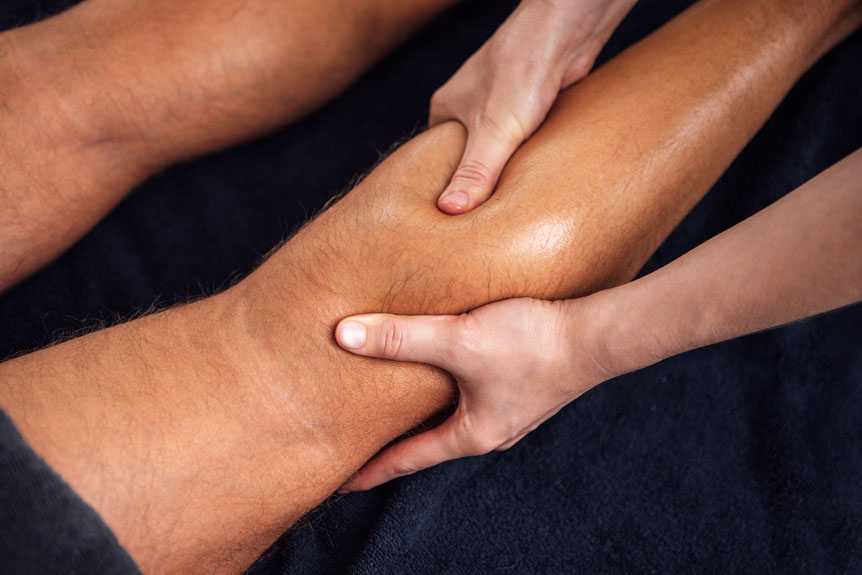
At Spa & Massage clinics across London, therapists adjust pressure and pace to client comfort, focusing on gastrocnemius, soleus, and Achilles-adjacent tissues without provoking protective guarding.
If tightness returns within 48–72 hours, frequency may be briefly increased, then tapered as tenderness resolves and range improves.
Many clients benefit from combining massage with daily calf mobility, gentle eccentric heel drops, and hydration.
Aftercare emphasises warmth, light walking, and avoiding aggressive stretching for 24 hours.
A 60-minute session suits diffuse tightness; 30 minutes can maintain between visits.
How Often for Runners (Deep Tissue vs Sports Massage)?
For runners, massage frequency is typically guided by weekly mileage, recent changes in training load, and symptoms such as calf tightness, reduced ankle range of motion, or post-run soreness.
In Spa & Massage clinics, intensive tissue massage is generally selected for persistent myofascial restriction and tone, while sports massage is more often used around key sessions or events to support recovery and manage acute overload.
A practical starting point is every 1–2 weeks during high-volume blocks, adjusting based on response, race schedule, and clinician assessment.
Runner Massage Frequency
Often, the ideal massage frequency for runners depends on weekly mileage, recent changes in training load, calf tightness severity, and injury history; in clinical practice, Spa & Massage therapists typically schedule sports massage every 1–2 weeks during high-volume or race-prep phases to support recovery and tissue resilience, while intensive tissue massage is used more selectively—commonly every 2–4 weeks or as a short focused series—to address persistent calf restrictions without adding excessive post-treatment soreness that could interfere with key sessions.
For lower-mileage runners or stable training blocks, sessions may be spaced to every 3–6 weeks, guided by symptoms and performance markers. Many clients benefit from booking 48–72 hours after long runs, then tapering closer to race day.
In Spa & Massage clinics, therapists reassess tone, tenderness, and ankle mobility each visit, adjusting pressure and duration for comfort.
Deep Tissue Vs Sports
Although intensive tissue massage and sports massage can both relieve calf tightness in runners, their ideal scheduling differs based on training demands and expected post-treatment recovery.
Deep tissue work targets chronic adhesions and sustained hypertonicity; because it may create short-term soreness, many runners schedule it every 2–4 weeks, or in lighter training weeks, allowing 48–72 hours before key sessions.
Sports massage is typically more training-adjacent, using brisk flushing, compression, and targeted release to support circulation and neuromuscular readiness; it may be booked weekly or fortnightly during high mileage, and 24–48 hours pre-race when kept moderate.
At Spa & Massage clinics across London, therapists adjust pressure and tempo to protect performance, encourage relaxed breathing, and maintain comfortable, close communication throughout.
How Sore Is Normal After Deep Tissue Calves?
After a deep tissue calf massage, mild to moderate tenderness or “good soreness” for 24–72 hours can be expected, particularly when the calves are chronically tight or heavily trained.
Pain that is sharp, worsening, associated with significant swelling, bruising, numbness, or difficulty walking is not typical and should prompt medical review and a discussion with the therapist.
At Spa & Massage, therapists advise evidence-based aftercare—hydration, gentle calf stretching, light walking, and heat or cold as appropriate—to ease tenderness and support recovery.
Normal Post-Massage Soreness
Typically, mild-to-moderate tenderness in the calves for 24–72 hours is considered a normal response to an intensive tissue massage, reflecting temporary local inflammation and neuromuscular adaptation to sustained pressure and stretching.
Sensations may feel like post-exercise soreness, with warmth, heaviness, or a bruised quality when pressing the muscle, yet daily movement remains comfortable. At Spa & Massage clinics across London, therapists explain that deeper work can temporarily heighten tissue sensitivity as tight fibres release and circulation increases.
Clients often report improved ankle range and easier walking within one to three days. Supportive aftercare includes gentle calf stretching, light walking, adequate hydration, and a warm shower or bath.
If tenderness peaks the next day and then steadily fades, this pattern typically aligns with expected recovery.
Warning Signs To Watch
How can a client tell the difference between expected post-massage tenderness and a problem that needs attention?
Mild, symmetrical aching in the calves for 24–72 hours, easing daily and improving with gentle walking, is commonly expected after deep tissue work.
Concern rises when pain is sharp, worsening, one-sided, or limits weight-bearing. Warning signs include marked swelling, warmth, redness, new bruising that spreads rapidly, numbness, tingling, or weakness in the foot.
Systemic symptoms—fever, chills, nausea, or feeling unwell—also warrant prompt advice.
Any calf pain with sudden shortness of breath or chest pain requires urgent emergency care due to possible clot risk.
At Spa & Massage clinics, therapists advise clients to contact the clinic promptly if symptoms persist beyond 72 hours or escalate.
Easing Calf Tenderness
In the 24–72 hours following deep tissue work on the calves, mild to moderate, symmetrical tenderness—similar to delayed-onset muscle soreness—can be considered a normal response to targeted pressure and tissue loading.
Symptoms should steadily ease; discomfort that escalates, becomes sharp, unilateral, or is paired with swelling, bruising, heat, numbness, or calf pain on walking warrants clinical review.
To ease tenderness, Spa & Massage therapists advise gentle calf pumping, short walks, and light stretching within a comfortable range.
Hydration and warm showers may support circulation; some clients prefer alternating warmth and brief cool exposure.
Training intensity is best reduced for 24–48 hours, then reintroduced gradually.
In clinic, pressure is adjusted session to session to keep the work effective yet closely comfortable.
Signs You Should Reduce Deep Tissue Frequency
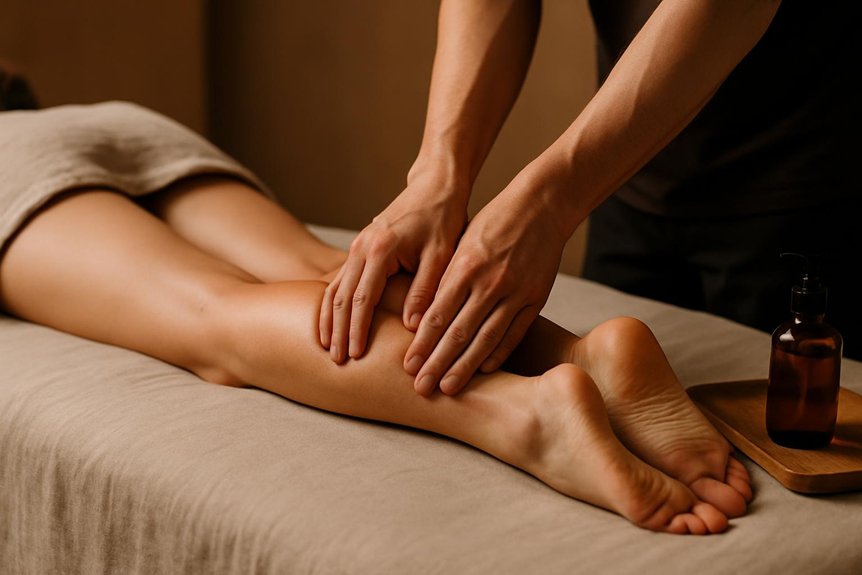
Often, the clearest indication that deep tissue work on tight calves is being scheduled too frequently is when recovery starts to worsen rather than improve.
Persistent soreness beyond 48–72 hours, bruising, or escalating tenderness during normal walking suggests excessive tissue load.
Reduced training performance, new cramping, or increased stiffness the day after treatment can indicate the calves are not adapting between sessions.
Heightened sensitivity to pressure, sharp “protective” guarding, or pain that radiates toward the Achilles should prompt longer intervals and reassessment.
In Spa & Massage clinics across London, therapists also watch for disrupted sleep, headache, or fatigue after sessions, which may reflect systemic stress responses.
If swelling, heat, or numbness occurs, deep work should pause and clinical review is advised.
Aftercare to Keep Calves Loose (Stretching + Hydration)
Reducing deep tissue frequency is only part of preventing calf tightness from rebounding; the results hold best when post-treatment care supports tissue recovery and normal muscle tone. At Spa & Massage clinics, therapists advise a simple, consistent aftercare plan that keeps the calf complex supple and comfortable.
Within 24 hours, gentle stretching is preferred over aggressive loading: a straight-knee gastrocnemius stretch and a bent-knee soleus stretch, 30–45 seconds each, 2–3 rounds, staying below sharp pain. Light walking between stretches supports circulation and reduces post-treatment guarding. Hydration should be steady rather than excessive; clients are encouraged to sip water regularly and include electrolytes if sweating or training, as fluid balance influences cramp risk and perceived tightness. Warm showers may help; prolonged heat should be avoided if soreness escalates.
Conclusion
It can help persistent calf tightness, but frequency should match the driver: posture, training load, footwear, or past injury. For many, a short course of weekly sessions, then spacing to every 2–4 weeks, balances tissue adaptation with recovery; athletes may need closer scheduling during peak training. Post-treatment soreness should be mild and short-lived. If pain escalates or function declines, reduce intensity or frequency. Used well, massage is a reset button—effective only alongside stretching, hydration, and load management.