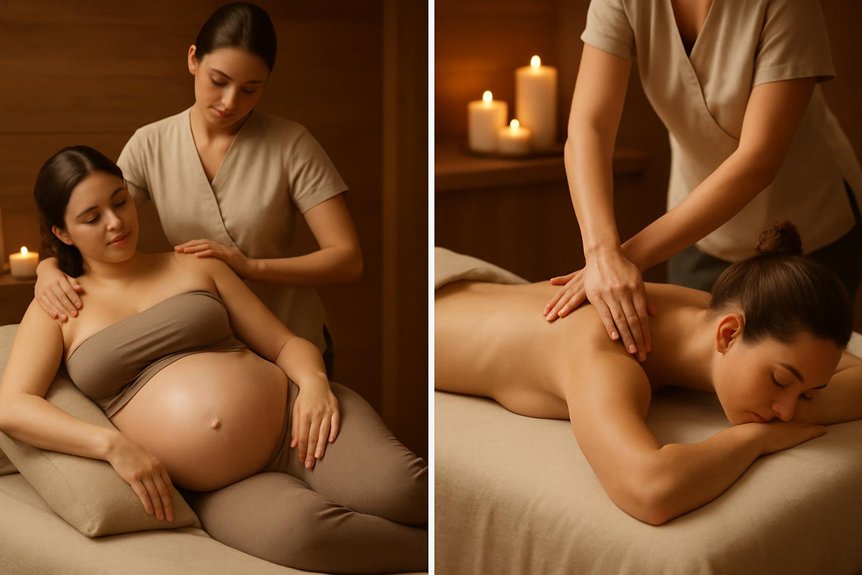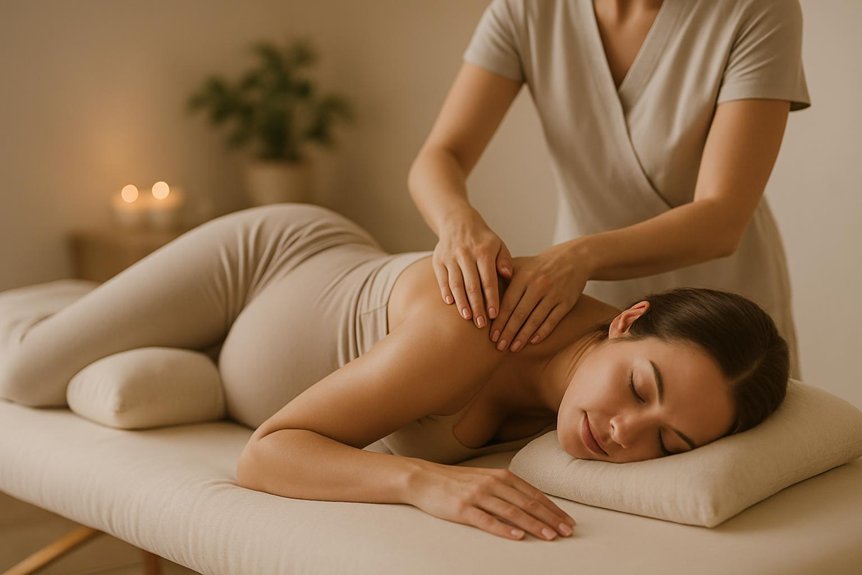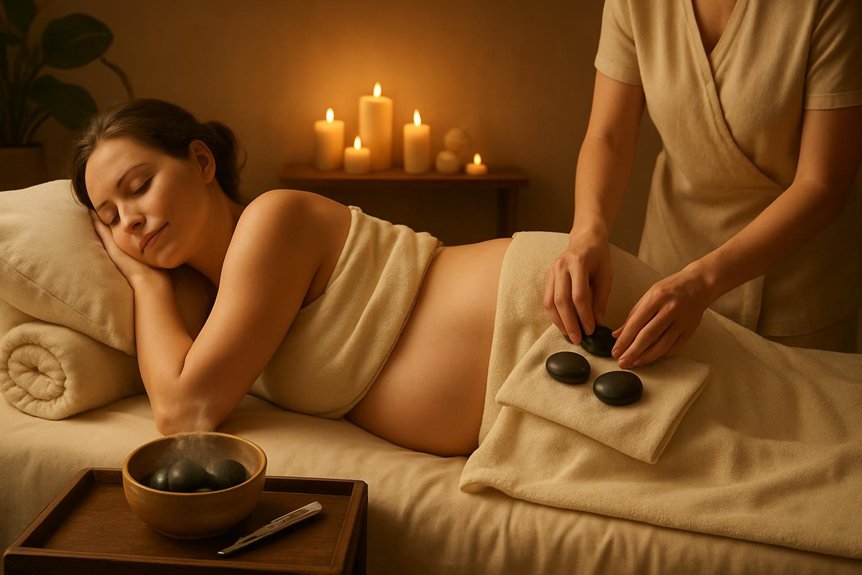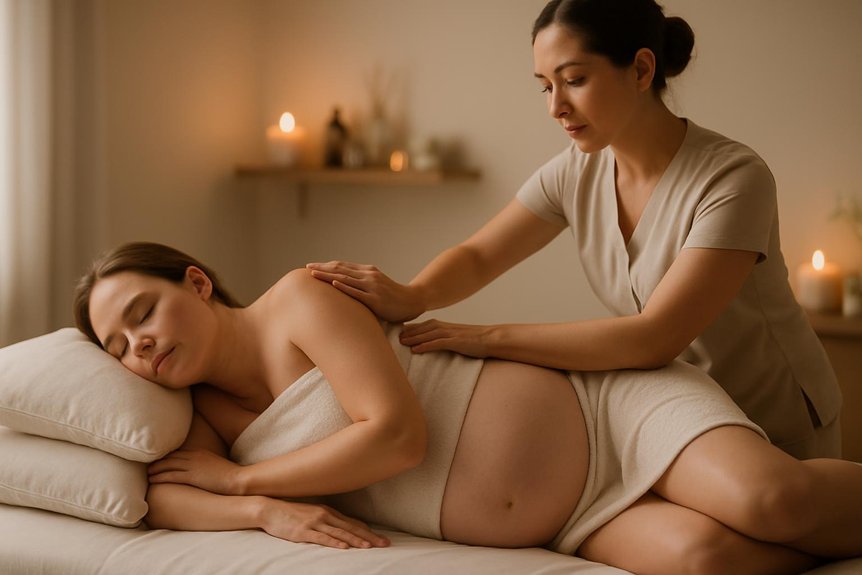
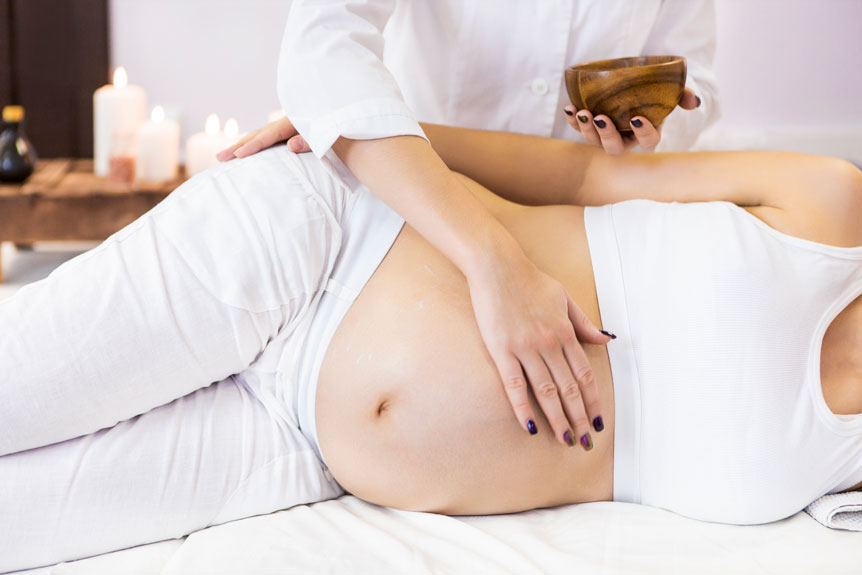
Prenatal massage can help ease pubic symphysis pain (SPD) by reducing protective muscle guarding and soft-tissue tension in the adductors, hip flexors, gluteals, and lower back, which can otherwise tug on the pelvic ring. It is not aimed at mobilising the pubic joint and should avoid deep pressure over the symphysis. With side-lying support, light sustained strokes, and consent-led pacing, many find walking and sleep more comfortable. Further detail explains safety screening and positioning.
Can Prenatal Massage Help Pubic Symphysis Pain (SPD)?
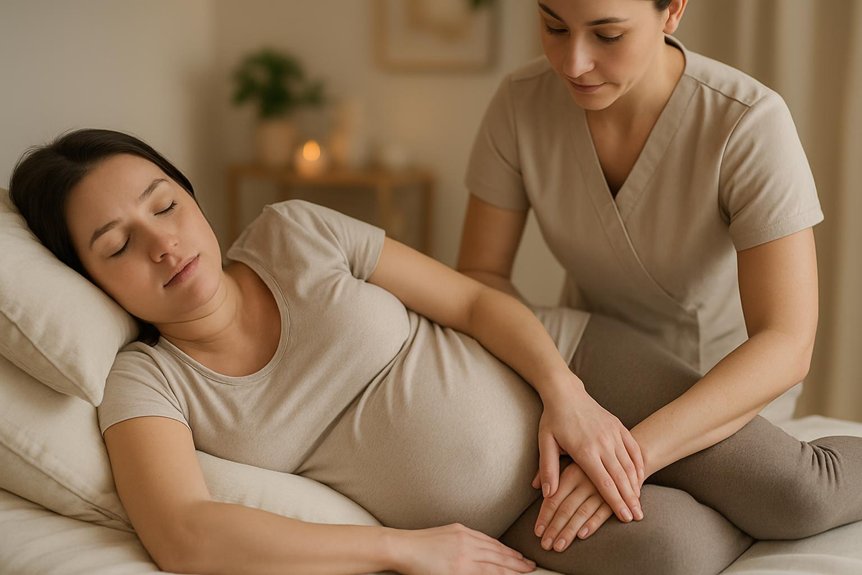
Ease pubic symphysis pain in pregnancy by targeting the surrounding muscular and fascial tension rather than the joint itself: prenatal massage can often help reduce SPD symptoms by down‑regulating protective muscle guarding around the pelvis, improving local circulation, and supporting more comfortable movement.
At Spa & Massage, therapists focus on tissues that commonly overload with SPD—adductors, hip flexors, pelvic floor interfaces, gluteals, and the thoracolumbar fascia—so the pelvis feels more evenly supported.
Gentle myofascial work and side‑lying positioning can reduce pulling at the front of the pubic bone, while breath-led, slow pressure helps the nervous system release bracing.
As part of the broader benefits of pregnancy massage, many expecting mothers find sessions help them feel more relaxed and physically supported throughout pregnancy.
Many clients report easier rolling in bed, less pain on stairs, and improved comfort during walking when treatments are paired with simple home heat and mobility advice.
Is Prenatal Massage Safe for SPD: and for Who?
It can be safe for pubic symphysis pain (SPD) when it is adapted to pregnancy physiology and to the mechanics of pelvic girdle pain, with the emphasis kept on reducing overload in surrounding soft tissues rather than mobilising the pubic symphysis itself.
It is generally appropriate for uncomplicated pregnancies, especially when tenderness is driven by adductors, hip flexors, gluteals, and pelvic-floor co‑contraction.
At Spa & Massage clinics, therapists screen for red flags and liaise with medical guidance when needed.
Massage may be unsuitable, delayed, or modified for people with bleeding, suspected preterm labour, severe pre‑eclampsia, DVT risk, fever, or significant abdominal pain.
Positioning is key: side‑lying support, gentle pressure, and consent-led pacing help clients feel held, safe, and respected.
Why Pubic Symphysis Pain (SPD) Happens in Pregnancy
Often, pubic symphysis pain (SPD) arises in pregnancy because normal hormonal and mechanical changes alter how load is transferred through the pelvic ring: relaxin‑related ligament laxity can reduce passive stability at the pubic symphysis and sacroiliac joints, while a growing uterus shifts centre of mass and increases shear forces during everyday movements such as walking, rolling in bed, and single‑leg tasks (stairs, getting dressed).
When stabilising muscles (transversus abdominis, pelvic floor, deep hip rotators, gluteals) fatigue or cannot coordinate quickly, the joint surfaces may become irritated and local tissues sensitised.
Pain can radiate into inner thighs, groin, or lower abdomen, and may feel sharp, catching, or aching.
Prior pelvic injury, hypermobility, high activity demands, or carrying multiples can increase risk.
Compassionate assessment helps normalise symptoms.
How Prenatal Massage Can Ease SPD Discomfort
With pubic symphysis pain linked to ligament laxity, altered load transfer, and overworked pelvic stabilisers, carefully adapted massage can help by reducing protective muscle guarding and supporting more comfortable movement.
At Spa & Massage, therapists focus on tissues that commonly compensate for pelvic instability: adductors, hip flexors, gluteals, quadratus lumborum, and pelvic floor-related fascial lines.
Gentle, pregnancy-safe techniques can downshift the nervous system, easing nociceptive input and improving tolerance to daily tasks such as rolling in bed or standing from a chair.
Addressing trigger points and fascial restriction around the inner thigh and sacroiliac region may reduce tugging forces across the pubic symphysis.
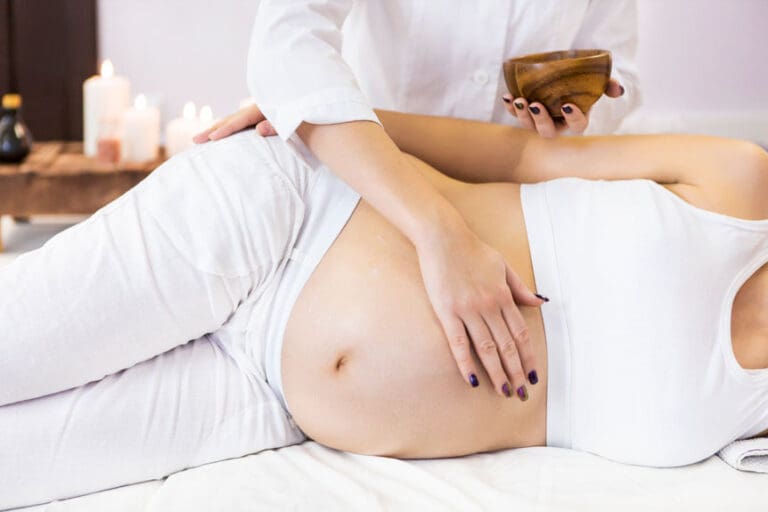
Light aromatherapy oils used in-clinic can further support relaxation and body trust.
What to Expect in an SPD Prenatal Massage Session
In an SPD-focused prenatal massage session, assessment and positioning come first to minimise strain across the pubic symphysis and sacroiliac joints. The therapist reviews pain triggers, gait changes, sleep positions, and any medical guidance, then checks tenderness in adductors, hip flexors, gluteals, and pelvic-floor related referral patterns to map likely sources of joint stress.
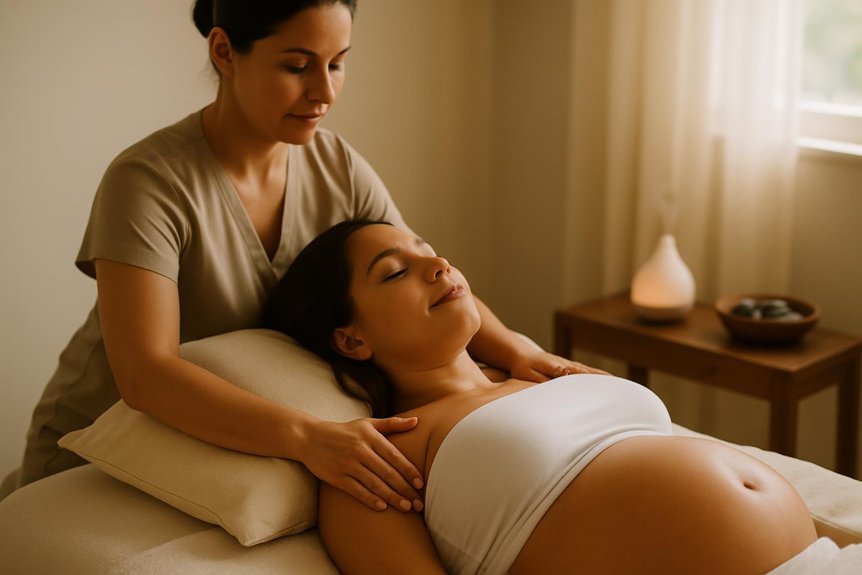
At Spa & Massage London clinics, treatment is then tailored to reduce tone in surrounding myofascial tissues, ease protective spasm, and support circulation without provoking pelvic shearing. Pressure is adjusted continuously, with clear consent and quiet check-ins so the client feels held, safe, and listened to. Many sessions include breath-led relaxation to downshift the nervous system, plus simple home cues for pacing, heat, and hydration between visits.
Safe Positions and Techniques for SPD Massage
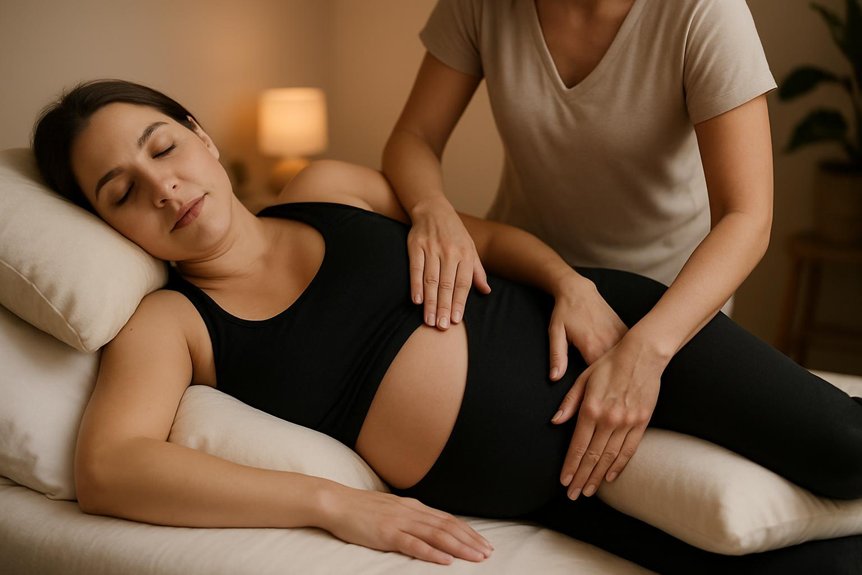
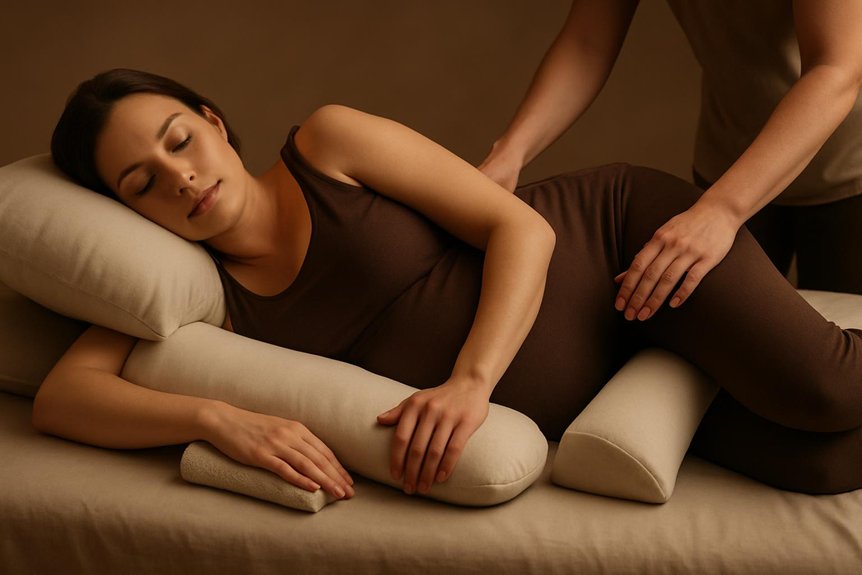
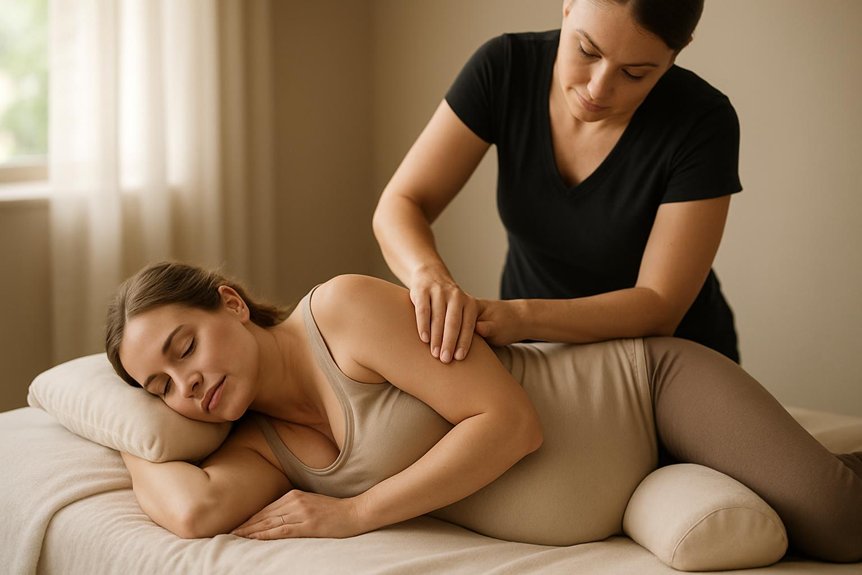
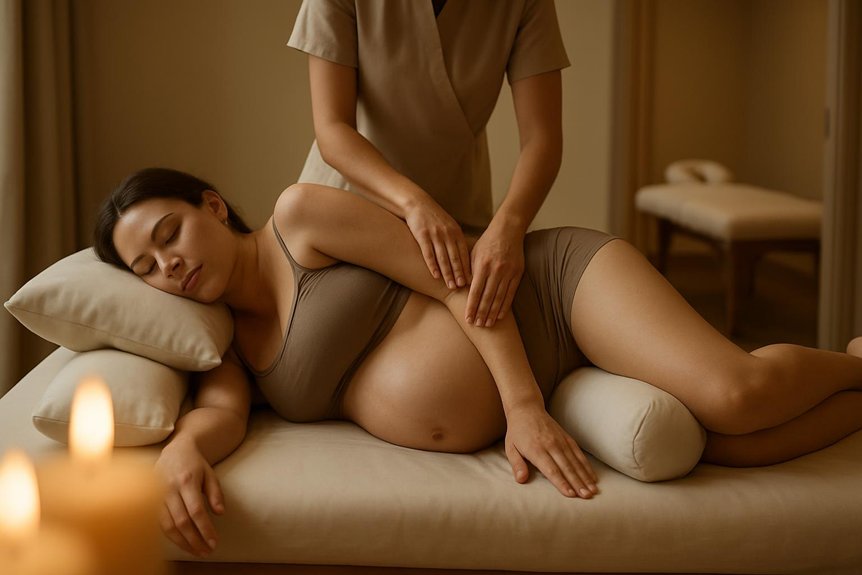
For pubic symphysis pain (SPD), safer massage positioning typically prioritises side-lying support with pillows to keep the pelvis neutral and reduce shear forces across the symphysis.
At Spa & Massage, therapists use gentle pelvic-stabilising techniques focused on the surrounding soft tissues—such as the adductors, gluteals, and pelvic floor-related structures—rather than direct pressure over the pubic joint.
Comfort-first pressure and pacing guide the session, with slow, light-to-moderate work and frequent check-ins to avoid provoking pain and support calm neuromuscular tone.
Side-Lying Support Positions
As pubic symphysis pain (SPD) is often aggravated by uneven load through the pelvis, side-lying support positions are typically the safest starting point for prenatal massage.
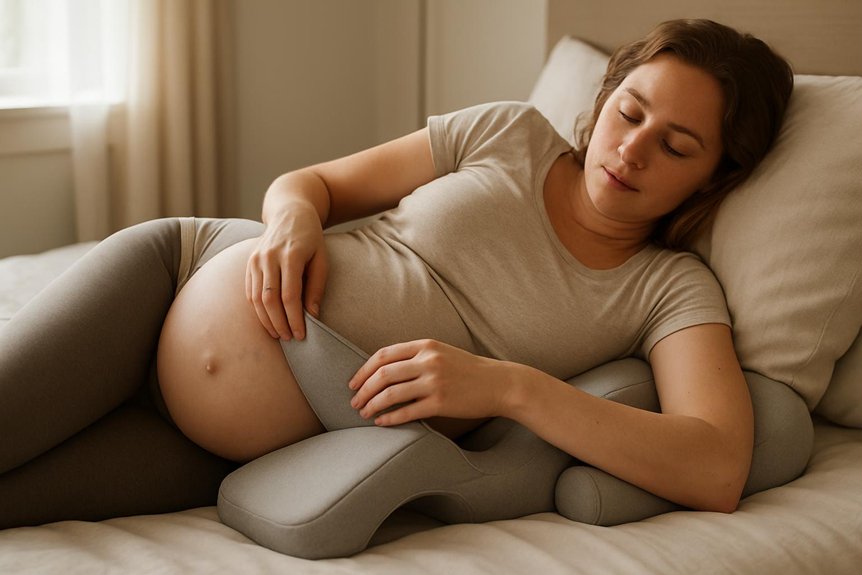
With the client on the left side, a pillow supports the head and neck, a bolster under the bump reduces abdominal pull, and a cushion between knees and ankles keeps hips level, limiting shear at the pubic symphysis.
A small rolled towel at the waist can prevent lumbar side-bending and ease sacroiliac strain.
At Spa & Massage clinics, therapists cue slow, shared breaths and check comfort before any change of angle.
Gentle draping preserves warmth and privacy, supporting a calm, close sense of being cared for and safe throughout.
Gentle Pelvic Stabilising Techniques
Side-lying support positions minimise pelvic asymmetry; the next focus is reducing micro-movement at the pubic symphysis through gentle stabilising work.
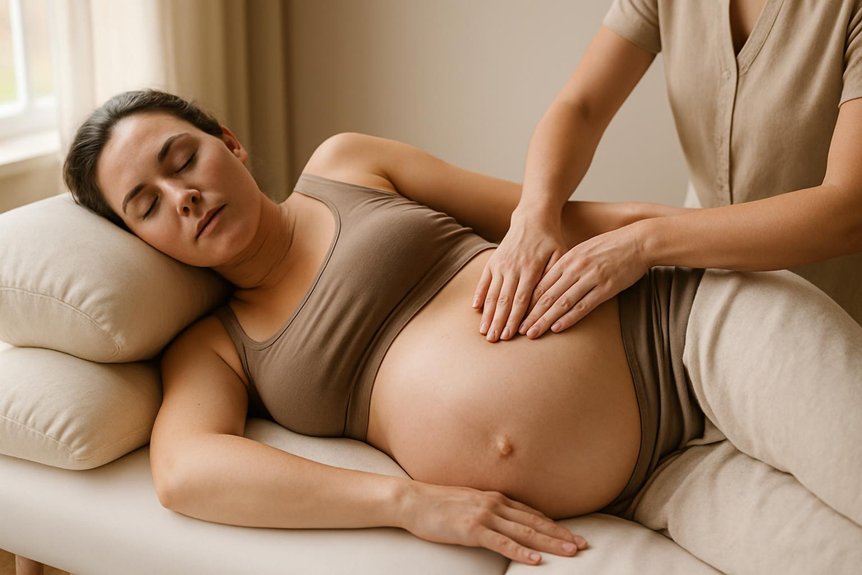
At Spa & Massage, therapists keep the pelvis “hugged” with pillows and a folded towel at the waist to prevent rolling, then work around—not on—the pubic joint. Soft, slow contact over the lower abdomen’s lateral edges, the adductors near their upper attachments, gluteus medius, and the deep hip rotators can ease protective spasm that tugs on the symphysis.
Light myofascial holds along the sacroiliac ligaments and iliacus (through the side waist) support balanced pelvic tone. Movements remain small: no wide leg positioning, no traction, and no twisting that could shear the joint.
Comfort-First Pressure And Pacing
Often, the safest and most effective approach to prenatal massage for pubic symphysis pain is to treat pressure and pacing as primary clinical variables, not afterthoughts: low-to-moderate pressure, slow rhythm, and frequent check-ins help calm protective muscle guarding without provoking shear at the symphysis.
At Spa & Massage clinics, therapists prioritise side-lying with a pillow between knees and under the bump, keeping hips stacked and avoiding wide abduction. Work tends to focus on gluteus medius/minimus, adductors, hip flexors, and thoracolumbar fascia using sustained compressions, gentle effleurage, and slow myofascial holds rather than deep stripping near the pubic bone.
Pacing is titrated to breathing; discomfort signals immediate reduction or repositioning. Many clients find warm oil and lighter, steady strokes feel safe, intimate, and reassuring throughout.
Home Tips Between Prenatal Massages for SPD
Between appointments, small, anatomy-informed changes at home can meaningfully reduce strain on the pubic symphysis by limiting shear forces across the pelvis.
Keep legs moving as one unit: sit to dress, avoid single-leg standing, and step into the car bottom-first with knees together.
In bed, roll using a pillow between knees; a small support under the bump can reduce pelvic torque.
Choose short, frequent walks over long strides; keep feet parallel and avoid wide squats or lunges.
Apply gentle heat to the inner thighs and gluteals to ease guarding.
Simple breath-led pelvic floor relaxation (not bracing) may reduce compressive load.
In Spa & Massage clinics, therapists suggest timing movement after massage, when tissues feel supple and pain is quieter.
Conclusion
It may help pubic symphysis pain by reducing guarding in the adductors, hip flexors, gluteals, and lumbar stabilisers that can increase shear through the pelvic ring. It does not “reset” the symphysis, but can support comfort when paired with pacing, pelvic support, and clinician-led exercise. Delivered in side-lying with careful bolstering and gentle pressure, it is typically safe for appropriate candidates. Used wisely, it acts like shock absorbers on a strained joint.