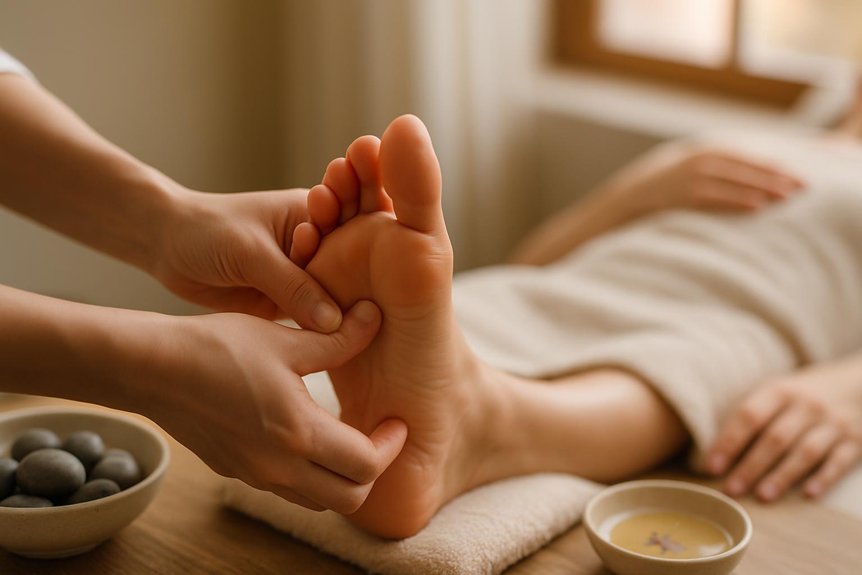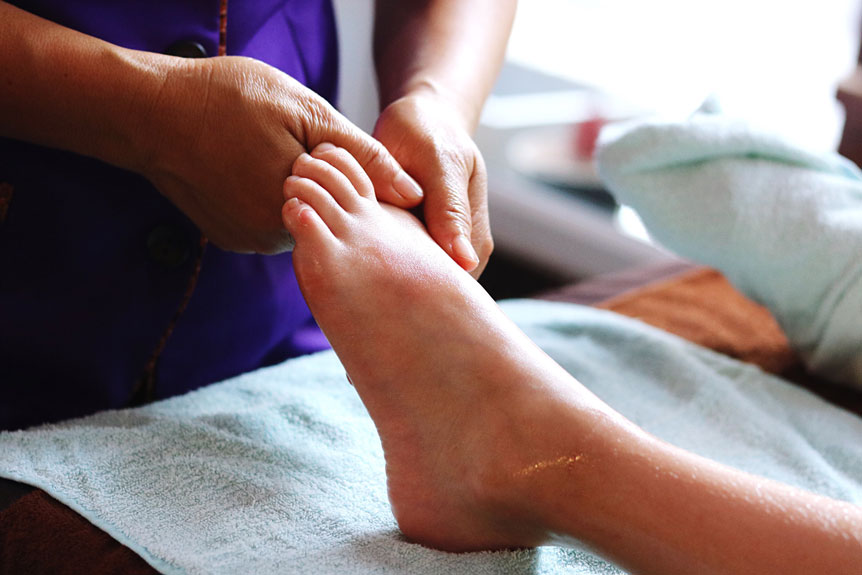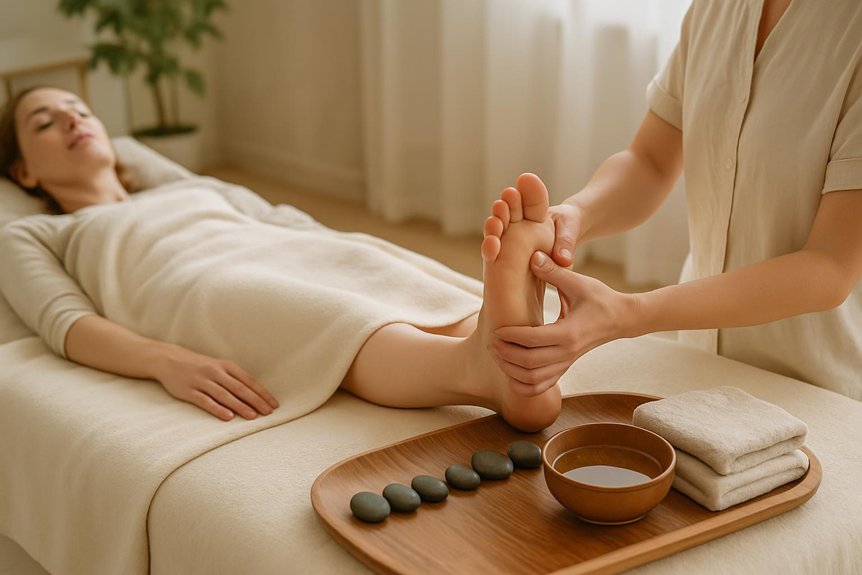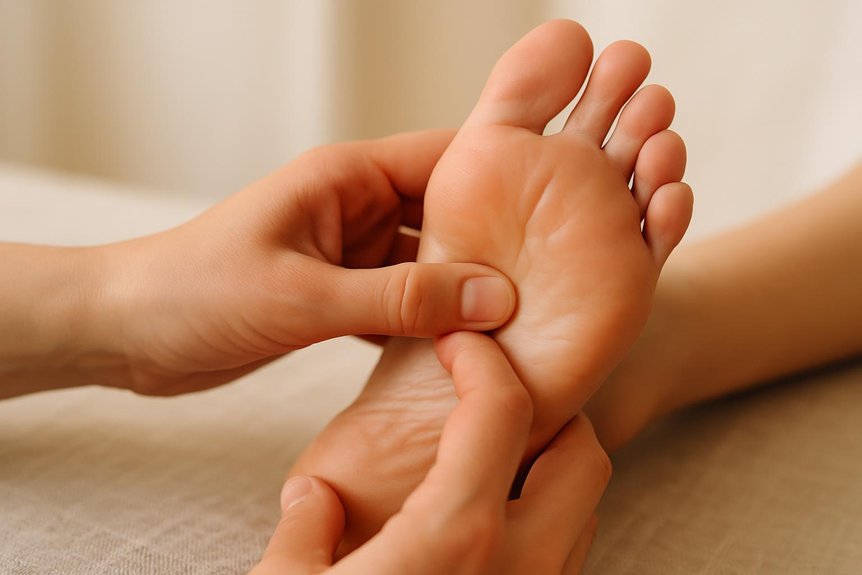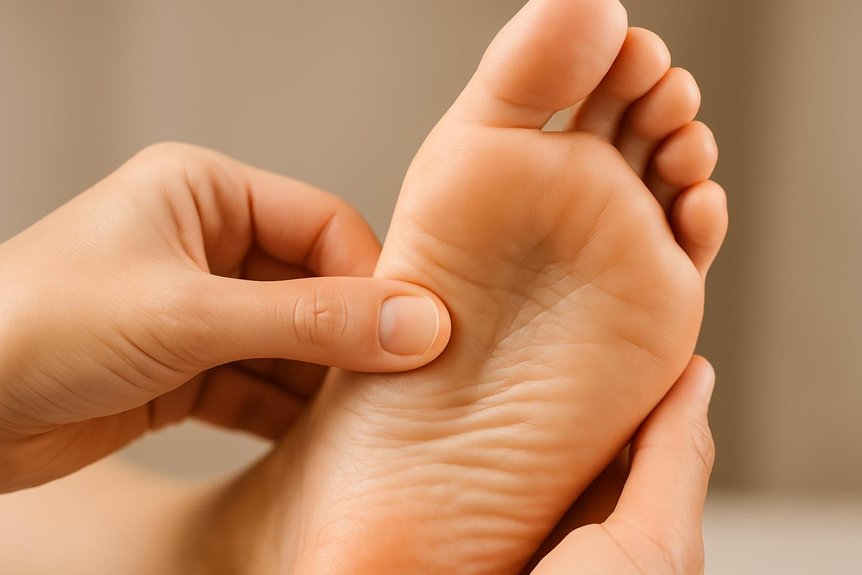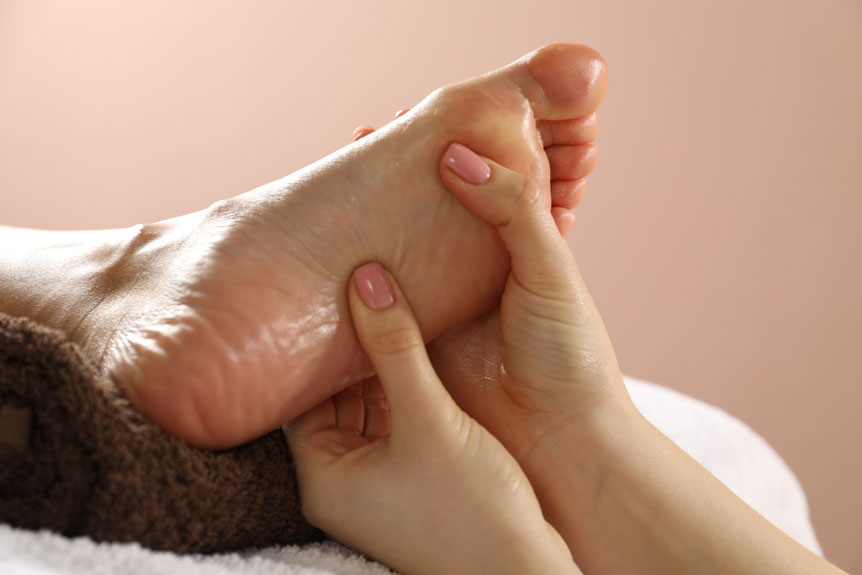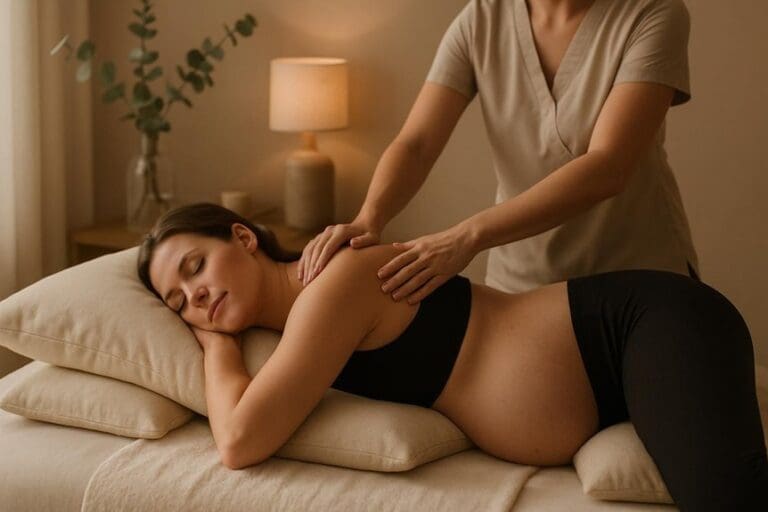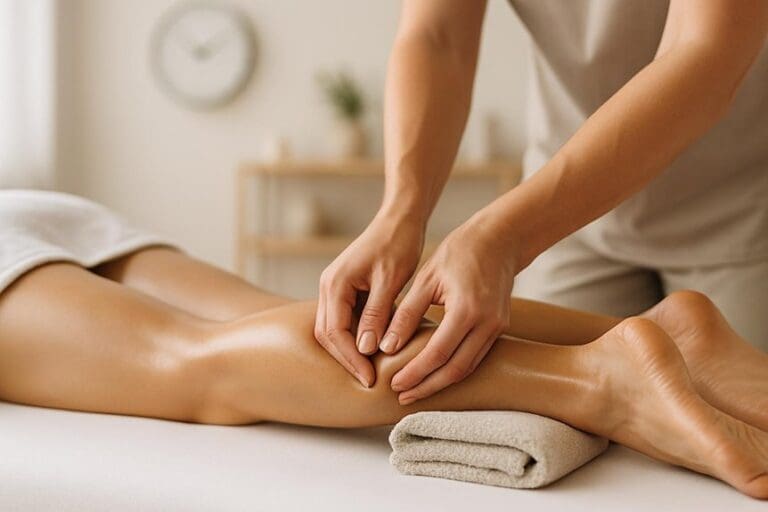
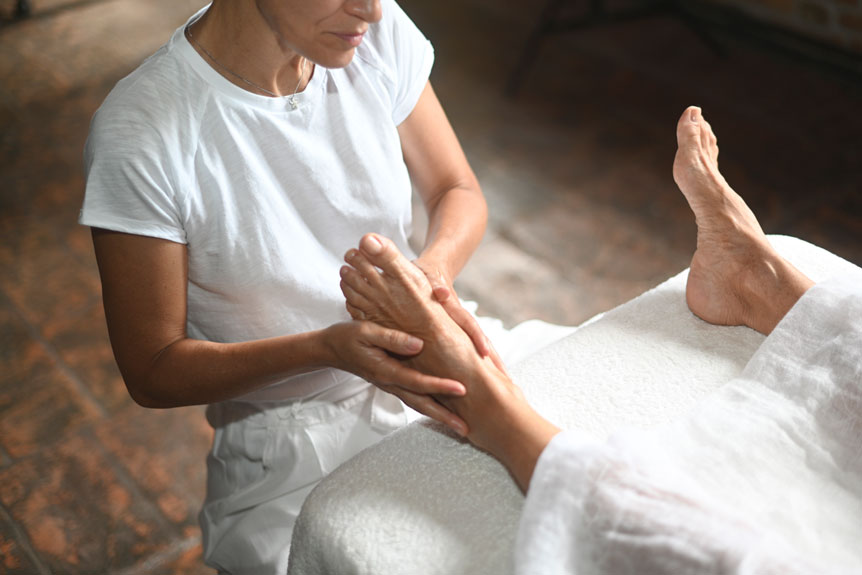
It may help jaw clenching by reducing sympathetic nervous system arousal and the whole-body muscular guarding that drives overactivity in the masseter and temporalis. Slow, graded pressure on foot reflex zones associated with the head, jaw, diaphragm, and neck can encourage slower breathing, softer cervical tone, and less mandibular bracing. Benefits are usually subtle and cumulative, supporting easier jaw opening and improved sleep. Ongoing clenching with tooth wear, locking, or escalating pain warrants assessment, and further details follow.
Is It Effective for Jaw Clenching?
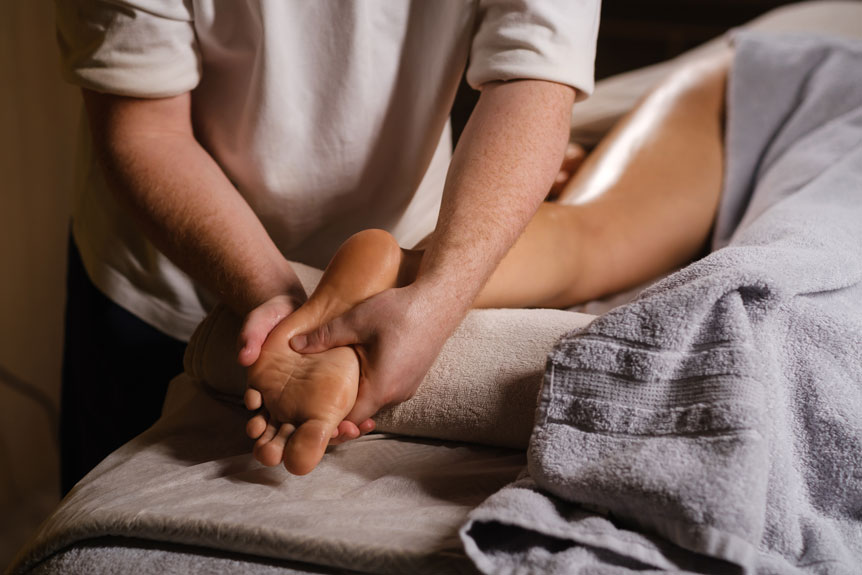
For many clients, it can be an effective supportive treatment for jaw clenching, primarily by downshifting nervous system arousal and reducing whole-body muscular guarding that contributes to temporomandibular tension.
By working the feet with precise pressure, a therapist can invite slower breathing, improved circulation, and softer tone through the neck, suprahyoid region, and jaw elevators, which may lessen compressive load at the TMJ.
Discover the Healing Power of Reflexology as a gentle, whole-person approach that may support relaxation and ease tension patterns linked to jaw clenching.
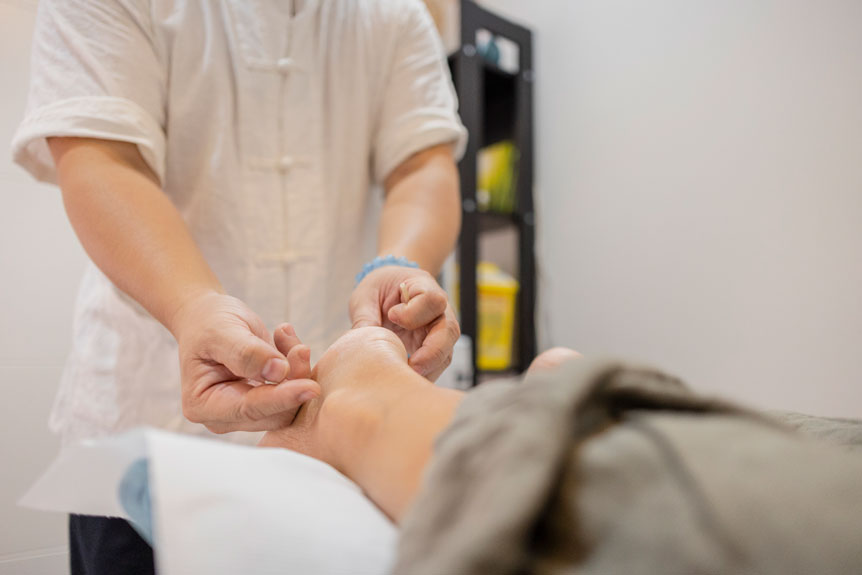
In Spa & Massage clinics across London, sessions are tailored after a brief intake, with careful pacing and pressure to maintain safety and comfort.
Outcomes are typically subtle and cumulative: reduced facial tightness, easier mouth opening, and improved sleep quality. It is best framed as adjunctive care within a broader self-regulation plan.
Jaw Clenching: Causes, Signs, and Triggers
Jaw clenching typically reflects overactivity in the masseter and temporalis muscles and may be driven by stress, sleep bruxism, occlusal factors, or sustained postural load through the neck and shoulders.
Common signs include jaw fatigue on waking, temporal headaches, tooth sensitivity or wear, and tenderness around the TMJ with clicking or reduced opening.
At Spa & Massage clinics, therapists help clients identify key triggers—such as high-pressure days, prolonged screen use, caffeine, and disrupted sleep—so zone therapy and complementary soft-tissue care can be tailored appropriately.
Common Causes Of Clenching
Identify the driver and the treatment pathway becomes clearer: jaw clenching most often reflects an overload of the masticatory system—primarily the masseter, temporalis, and pterygoid muscles—triggered by stress-related bracing, sleep bruxism, occlusal factors (such as a misaligned bite or dental work), postural strain from prolonged desk or screen use, airway or sleep disruption, and stimulants like caffeine or nicotine that increase neuromuscular arousal.
At Spa & Massage, therapists commonly note added load from forward-head posture, tight suboccipitals, and elevated shoulders that perpetuate jaw guarding. Emotional holding can keep the tongue, lips, and teeth “on alert,” even at rest. Dehydration, poor sleep routines, and high training loads may further sensitise craniofacial tissues.
A calm, personalised plan starts by mapping these contributors to the client’s daily rhythm and comfort.
Signs And Key Triggers
Often, jaw clenching is first detected through a cluster of subtle, repeatable signs—morning tightness across the masseter and temporalis, facial aching that worsens with chewing, tension-type headaches at the temples, tooth sensitivity or wear, clicking or fatigue around the temporomandibular joint (TMJ), and a “locked” or restricted opening pattern—then traced back to key triggers such as concentrated screen work with forward-head posture, stress spikes with shallow breathing and shoulder elevation, high caffeine intake, disrupted sleep, and periods of heavy training or dehydration that increase neuromuscular guarding.
At Spa & Massage, therapists also note tongue pressing to the palate, micro-clenches during commuting, and night-time bruxism. Triggers often compound: emotional load + screen posture + poor sleep amplifies trigeminal irritation and cervical tension. Noticing patterns early supports targeted zone therapy and jaw-care plans.
When Jaw Clenching Needs Dental or GP Advice
Clenching and bruxism can sometimes reflect more than muscular overactivity of the masseter and temporalis, so a dental or GP assessment is indicated when symptoms suggest structural, inflammatory, or neurological involvement. Red flags include sudden onset, facial swelling, fever, ear discharge, locked jaw (trismus), or escalating pain around the temporomandibular joint.
Dental review is advised for chipped teeth, increased sensitivity, gum recession, visible wear facets, or morning headaches, as enamel loss and occlusal overload may require a night guard. GP input is appropriate when pain radiates, numbness or tingling appears, headaches change character, sleep apnoea is suspected, or medications may be contributing. At Spa & Massage, therapists screen for these signs and, when needed, recommend timely referral while supporting comfort between appointments.
Can It Ease Stress-Driven Jaw Clenching?

Stress-driven jaw clenching is commonly linked to heightened sympathetic nervous system activity, which increases tone in the masseter and temporalis and can perpetuate TMJ discomfort and morning tightness.
It is used to support a calmer autonomic state through structured pressure on foot reflex areas, which may help reduce overall muscle guarding and improve perceived stress.
At Spa & Massage clinics across London, therapists typically recommend a short course of sessions alongside practical self-care—hydration, jaw “resting posture” awareness (lips together, teeth apart), and gentle heat to the jaw—to reinforce treatment effects.
Stress–Jaw Clenching Connection
Jaw tension frequently increases during periods of heightened psychological load, as the autonomic nervous system shifts toward sympathetic “fight-or-flight” activity and recruits the masticatory muscles—especially the masseter and temporalis—into sustained, low-level contraction. This can amplify tooth contact, elevate bite force, and irritate the temporomandibular joint (TMJ) and surrounding fascia.
In many clients, stress also drives altered breathing patterns and neck-shoulder guarding, increasing tone through the suprahyoids, sternocleidomastoid, and upper trapezius, which can further bias the jaw toward bracing. Night-time clenching may persist because cortical arousal and micro-awakenings reinforce habitual muscle firing.
At Spa & Massage clinics across London, therapists often note that jaw symptoms feel more intrusive during demanding weeks, with tenderness, headaches, and ear pressure reported alongside fatigue and poor sleep.
Reflexology’s Calming Mechanisms
When heightened sympathetic arousal keeps the masticatory system on alert, down-regulating the stress response can reduce the physiological “permission” to brace through the face and neck. It may support this shift by engaging slow, steady touch on the feet, encouraging parasympathetic activity and a measurable softening of global muscle tone.
In clinical terms, reduced arousal can ease baseline activation in temporalis, masseter, and the suprahyoid–infrahyoid chain, while also lowering protective holding through upper trapezius and suboccipitals that often feeds jaw tension. At Spa & Massage clinics, therapists observe that when breathing becomes quieter and the client feels safe, clenching impulses can lessen, even without direct jaw work. This settling can improve sleep quality and morning jaw fatigue in stress patterns.
Practical Treatment Tips
How can a zone therapy session be structured to reduce the likelihood of stress-related clenching? At Spa & Massage, therapists begin with a brief jaw and stress history, noting masseter fatigue, temporal tension, sleep posture, and triggers.
The session then prioritises diaphragmatic breathing and slow foot holds to downshift sympathetic tone before focused work on plantar zones associated with head/neck, cervical spine, and autonomic regulation.
Pressure is graded to the client’s comfort, aiming for a “good ache” without guarding, and is paired with cues to soften the tongue and let the teeth part.
To finish, therapists add gentle ankle mobilisation and grounding strokes, leaving the client feeling safely held.
Aftercare: hydration, warm compress to cheeks, and nightly unclench checks.
Zone Therapy Areas We Use for Jaw Clenching
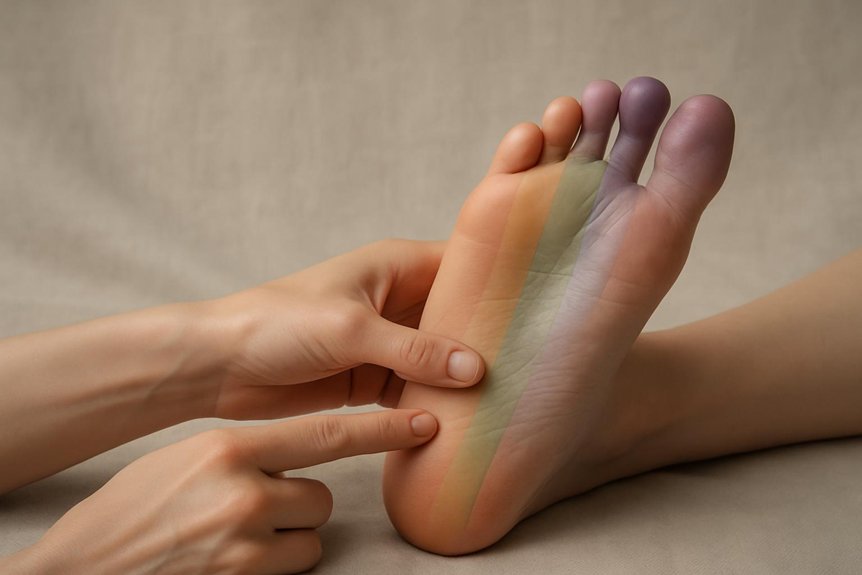
Several zone therapy zones are routinely selected to address jaw clenching by targeting facial tension patterns and the stress pathways that commonly drive bruxism.
In Spa & Massage clinics, therapists often emphasise the toe tips and toe bases, mapped to the head, jawline, and temporomandibular region, to ease guarding through the masseter and temporalis.
The diaphragm line is commonly worked to soften breath-holding that feeds mandibular bracing.
Solar plexus and adrenal-related reflexes are used to downshift sympathetic arousal linked with night clenching.
Neck and upper shoulder reflexes along the foot’s medial edge may be prioritised where cervical loading refers into the jaw.
Gentle ear, sinus, and throat reflex points can be included for clients reporting facial pressure or swallowing tension.
What to Expect in a Jaw Clenching Zone Therapy Session
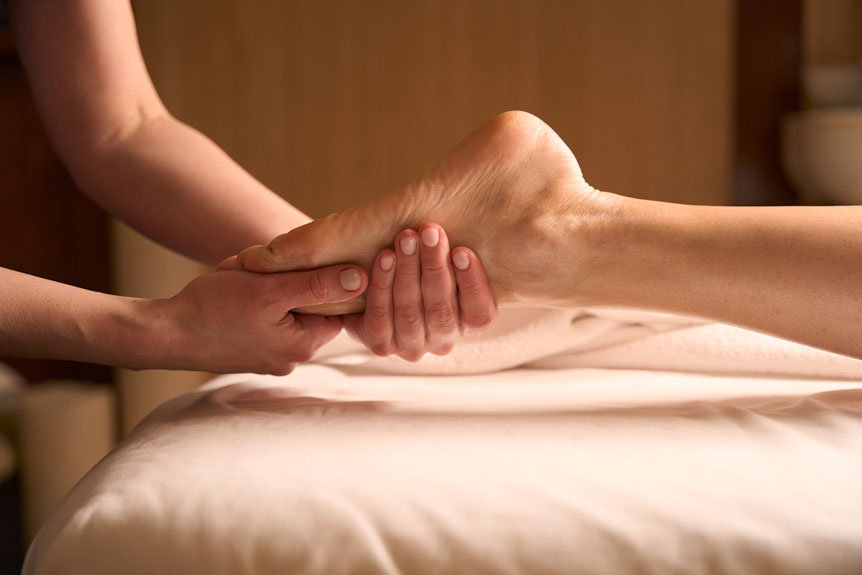
Typically, a jaw-clenching zone therapy session begins with a brief, structured intake to clarify symptom patterns (daytime bracing vs. nocturnal clenching), jaw-related features (TMJ tenderness, headaches, tooth sensitivity), contributing drivers (stress load, sleep quality, posture, recent dental work), and any contraindications, before the client is positioned comfortably and the therapist assesses foot tissue tone to guide pressure and pacing for the treatment.
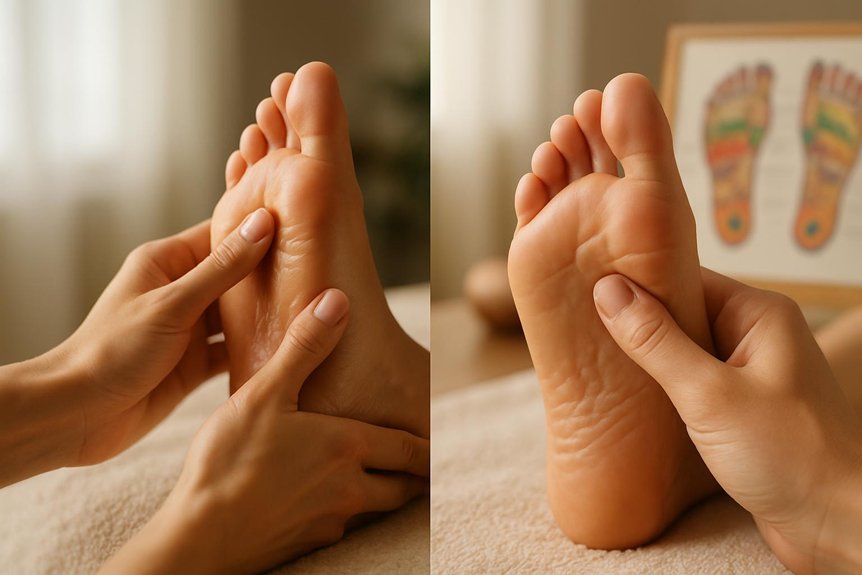
At Spa & Massage, work then focuses on mapped reflex zones linked with jaw, neck, and nervous-system regulation, using slow, sustained thumb-walking and gentle rotation to soften guarding. Pressure is adjusted moment by moment to remain deeply reassuring rather than sharp.
Many clients notice a warm, spreading release through the calves, throat, and temples, alongside slower breathing.
The session typically ends with grounding strokes and brief check-in.
Zone Therapy vs Massage for Jaw Clenching Relief
Often, jaw clenching responds best when the chosen treatment matches the primary driver—local muscular overload, nervous-system arousal, or both—so zone therapy and massage can serve different roles in relief.
It works distally via foot pressure points, often settling sympathetic drive and helping the body “unhook” from guarding that feeds masseter and temporalis tension. It suits clients who feel overstimulated, sleep poorly, or dislike direct facial work.
Massage targets local tissues: masseter, temporalis, medial pterygoid access, upper trapezius, and suboccipitals, improving circulation, glide, and jaw range while easing referral into teeth or ears.
At Spa & Massage, therapists often combine clinical assessment with carefully paced pressure, offering a contained, respectful experience. When stress and overload coexist, alternating both may feel most complete.
At-Home Tips for Jaw Clenching Between Sessions
Between zone therapy or massage appointments, targeted self-care can reduce the frequency and intensity of jaw clenching by downshifting nervous-system arousal and unloading the tissues most commonly involved—masseter, temporalis, suprahyoids, and the upper cervical and shoulder girdle.
Spa & Massage therapists advise “lips together, teeth apart,” with the tongue resting softly on the palate to quiet the trigeminal drive. Apply warm compresses to the cheeks and temples for 5–10 minutes, then perform gentle circular strokes over the masseter and temporalis, avoiding pain. Add slow nasal breathing (4 seconds in, 6–8 out) to lengthen exhalation and release the throat.
At a desk, keep the screen at eye level and shoulders heavy; micro-breaks reduce cervical load that feeds jaw tension. Sleep on a supportive pillow, not the forearm.
Conclusion
It may offer a gentle adjunct for those whose jaw tension reflects an overworked nervous system rather than a clear structural fault. By encouraging parasympathetic down‑regulation, sessions can soften guarding through the masticatory chain and associated cervical tissues, reducing the “silent load” carried at the temporomandibular joint. Outcomes are typically gradual and variable, and persistent pain, locking, or dental wear warrants clinical assessment. Used alongside sleep, posture, and stress strategies, it can support steadier jaw ease.