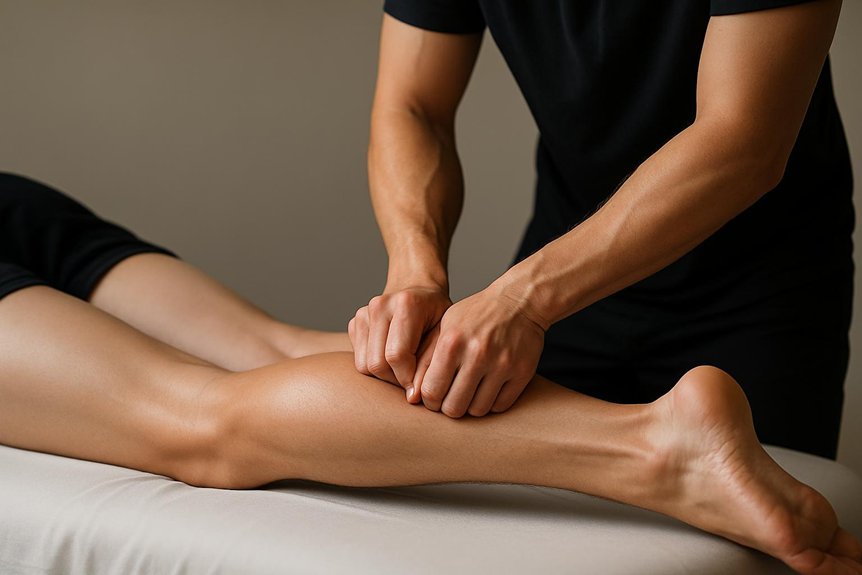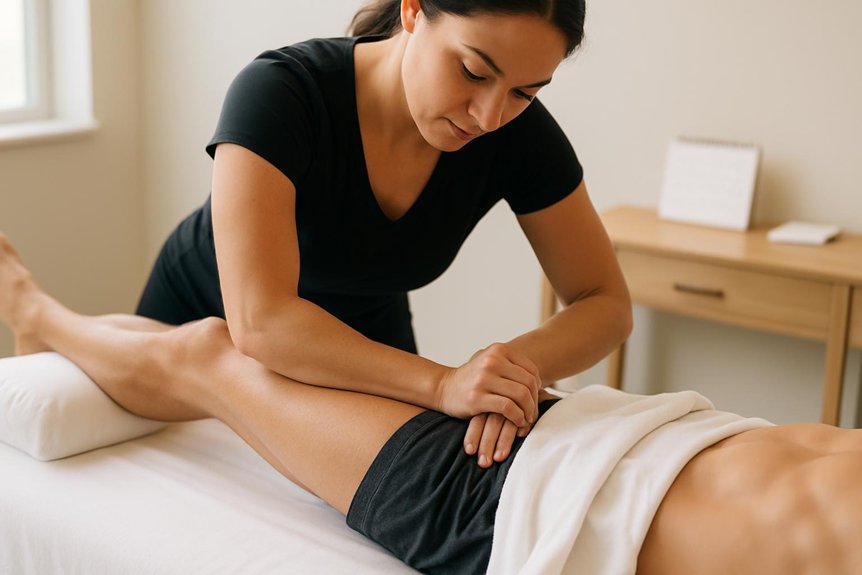

Most people with sciatica do best with short, gentle deep‑tissue sessions spaced 7–10 days apart early on, then weekly for 2–4 visits as irritability settles. If symptoms stabilise, frequency typically tapers to every 2–4 weeks, with maintenance often every 3–6 weeks for recurrent cases. Rebook when relief becomes shorter‑lived, radiating leg pain returns, or function worsens. Avoid deep work during rapidly worsening pain or any red‑flag symptoms, including weakness or bowel/bladder changes. Further guidance covers staging, soreness limits, and aftercare.
How Often for Intensive Tissue Massage (Sciatica)?

Often, the appropriate frequency of intensive tissue massage for sciatica depends on symptom severity, irritability, and how the person responds to treatment.
In early, highly irritable phases, Spa & Massage therapists typically suggest shorter sessions spaced 7–10 days apart, monitoring for symptom flare within 24–48 hours.
When symptoms are stable, frequency may increase to weekly for 2–4 visits, then taper to every 2–4 weeks for maintenance.
Intensity should remain “comfortably deep,” never sharp, burning, or electrically painful; sustained tenderness that disrupts sleep indicates overloading.
As part of the benefits and techniques of deep tissue massage, deep tissue techniques use slow, sustained pressure to target deeper muscle layers and connective tissue.
Red flags—progressive weakness, numbness in the saddle area, fever, unexplained weight loss, or bladder/bowel changes—warrant urgent medical review before further massage.
Will It Help Your Sciatica?
It may help some cases of sciatica, but its benefit depends on the underlying driver of symptoms and how irritated the nerve tissue is at the time; frequency and intensity should be matched to this response. Evidence suggests it can reduce protective muscle guarding, improve local circulation, and downshift pain sensitivity, which may ease referral down the leg when the sciatic nerve is mechanically sensitive rather than structurally compromised.
At Spa & Massage clinics across London, therapists typically focus on the hip rotators, gluteals, hamstrings, and lumbar fascia, using slow, graded pressure and clear consent, adjusting depth to the client’s breath and comfort. Many clients report short-term relief and improved mobility after 1–3 sessions, with best results when combined with movement advice, heat, hydration, and pacing between treatments.
When to Avoid Intensive Tissue Massage for Sciatica
It should be avoided during acute sciatica flare-ups when pain is rapidly worsening or highly irritable, as high-pressure work can aggravate inflamed or sensitised tissues.
It is also inappropriate when red-flag symptoms are present—such as new bowel or bladder changes, saddle numbness, progressive leg weakness, fever, unexplained weight loss, recent significant trauma, or suspected infection—where urgent medical assessment is indicated.
At Spa & Massage, therapists screen for these risks at intake and will defer treatment and advise appropriate clinical follow-up when safety thresholds are met.
Acute Pain Flare-Ups
During an acute sciatica flare-up, intensive tissue massage may be inappropriate because aggressive pressure can increase local inflammation, amplify nerve irritability, and worsen pain. In this phase, symptoms can be highly reactive, and additional mechanical stress may prolong sensitivity rather than provide relief.
Spa & Massage therapists typically advise pausing deep tissue work until pain intensity settles and movement feels less guarded. Supportive options may include gentle, slow-touch massage around the hips and lower back, light myofascial techniques, and calming aromatherapy to reduce protective muscle tension without provoking the nerve. Shorter sessions, careful positioning, and clear consent throughout help clients feel safe and cared for.
If touch increases sharp, shooting pain, treatment should stop and be rescheduled after stabilisation.
Red-Flag Symptoms
Occasionally, symptoms alongside sciatica indicate a potential medical emergency or serious underlying condition, and intensive tissue massage should be avoided until a clinician has assessed the cause.
Red flags include new bowel or bladder changes, saddle numbness, rapidly worsening leg weakness, severe unrelenting pain at rest, fever, unexplained weight loss, cancer history, recent serious trauma, or signs of infection.
Sudden calf swelling, redness, or shortness of breath also warrants urgent assessment.
At Spa & Massage, therapists screen for these risks before touch.
If a client reports them, the session is paused, privacy is protected, and referral to GP, NHS 111, or A&E is advised.
Massage can resume only when medically cleared and symptoms stabilise.
Best Schedule by Sciatica Stage (Acute to Improving)

Best practice is to adjust intensive tissue massage frequency to the stage of sciatica, with more caution and lighter, shorter sessions in the acute phase and a tapering schedule as symptoms stabilise.
At Spa & Massage clinics across London, therapists typically recommend starting conservatively (often no more than once weekly in acute presentations, only if tolerated) and increasing intervals as pain, irritability, and referred symptoms reduce.
During improvement, a maintenance plan is usually spaced to every 2–4 weeks, guided by functional gains and symptom recurrence, with ongoing screening for red flags.
Acute Sciatica Treatment Frequency
Typically, intensive tissue massage for acute sciatica is scheduled more conservatively than for long‑standing symptoms, with frequency adjusted to pain severity, irritability, and functional limitation as the condition moves from highly reactive to steadily improving.
In the first 7–10 days, Spa & Massage therapists often recommend 1 short session weekly, or every 10–14 days, prioritising gentle, specific work to reduce guarding around the hip, piriformis, and lumbar tissues without provoking symptoms.
If pain is severe, constant, or worsening, massage is delayed and medical review is advised, especially with numbness, weakness, or bladder/bowel changes.
As reactivity settles and walking/sitting tolerance improves, frequency may increase to weekly for 2–3 sessions, with pressure kept within a “comfortable, relieving” range and aftercare focused on warmth, hydration, and light movement.
Improving Sciatica Maintenance Schedule
Often, the most effective intensive tissue massage schedule for sciatica shifts as symptoms move from acute irritability to an improving, more stable phase, with session spacing guided by pain trends, neurological signs, and day‑to‑day function.
As pain settles and walking, sleep, and sitting tolerance improve, many clients do best tapering from weekly sessions to every 10–14 days, then to maintenance every 3–6 weeks.
Each visit should reassess numbness, weakness, and leg pain referral; any worsening, new saddle anaesthesia, or bladder/bowel change warrants urgent medical review, not massage.
At Spa & Massage clinics across London, therapists keep pressure respectful—focused on hip rotators, gluteals, and lumbar fascia—then support gentle stretching, heat, hydration, and paced return to exercise.
Deep Tissue Frequency for Chronic Sciatica
For chronic sciatica, intensive tissue massage is generally scheduled at regular intervals to balance symptom control with tissue recovery and to reduce the risk of post-treatment flare-ups.
Many clients benefit from weekly sessions for 2–4 weeks, then tapering to every 2–3 weeks as pain stabilises.
For longstanding, recurring symptoms, a maintenance cadence of every 3–6 weeks is often appropriate, adjusted to workload, stress, and activity.
At Spa & Massage London clinics, therapists reassess each visit, focusing on hip rotators, gluteals, and lumbar fascia while avoiding excessive pressure over irritated nerve pathways.
Frequency is safest when combined with prescribed stretching, graded strengthening, hydration, and sleep support.
Medical review is advised if symptoms change, spread, or include weakness or numbness.
How Sore Is Too Sore After Deep Tissue?
Massage frequency for sciatica must be balanced with adequate recovery, making post-treatment soreness a key safety signal. Mild to moderate tenderness, similar to delayed-onset muscle soreness, can be normal for 24–48 hours after deep tissue work.
At Spa & Massage, therapists expect discomfort to feel “worked” rather than sharp, burning, or electric, and it should steadily improve, not escalate. Soreness is considered too much when it limits walking, sleep, or toileting comfort, triggers new numbness/tingling, causes increasing leg pain, or produces marked bruising, swelling, heat, or fever.
Pain that spikes during breath or movement, or persists beyond 72 hours, warrants clinical review. Gentle hydration, warmth, and light mobility are typically advised.
Signs It’s Time to Rebook for Sciatica
Typically, rebooking for sciatica is indicated when symptom relief after deep tissue work becomes shorter-lived and functional limits begin to return.
Common signs include renewed radiating pain into the buttock, thigh, or calf; increasing morning stiffness; sleep disruption from positional discomfort; and a return of protective muscle guarding around the hip and low back.
Rebooking may also be appropriate when walking tolerance drops, sitting becomes painful sooner, or exercises previously comfortable now provoke symptoms, suggesting the tissues are again sensitised.
At Spa & Massage clinics across London, therapists also reassess when tenderness escalates beyond expected post-treatment soreness or when symptoms begin to “travel” further down the leg.
New numbness, weakness, saddle symptoms, or bladder/bowel changes require urgent medical review, not massage.
Aftercare That Prolongs Sciatica Relief
Often, the durability of sciatica relief after deep tissue treatment depends less on the session itself and more on evidence-informed aftercare that reduces neural irritation and prevents protective muscle guarding from re-establishing.
Spa & Massage therapists advise hydration, gentle walking, and heat to ease post-treatment tenderness; avoid heavy lifting, prolonged sitting, and aggressive stretching for 24–48 hours.
Targeted mobility should stay within a comfortable “mild pull” range: hip flexor and piriformis stretches, nerve-glide drills, and diaphragmatic breathing to downshift tone.
Many clients benefit from pillow support during sleep to keep the pelvis neutral and reduce nocturnal compression.
If symptoms spike, switch to relative rest and cool packs, and seek medical review for progressive weakness, saddle numbness, or bowel/bladder change.
Rebooking follows objective change, not discomfort alone.
Conclusion
Intensive tissue massage for sciatica is often booked as if “more” automatically means “better”—an assumption the irritated nerve rarely rewards. Evidence-informed practice typically favours an initial, time-limited course when symptoms are acute, then wider spacing as pain and mobility improve. Excessive frequency can amplify post-treatment soreness, provoke guarding, and delay progress. A safer plan is guided by symptom response, functional gains, and red-flag screening. When pain escalates, or neurological signs appear, assessment—not another session—wins.