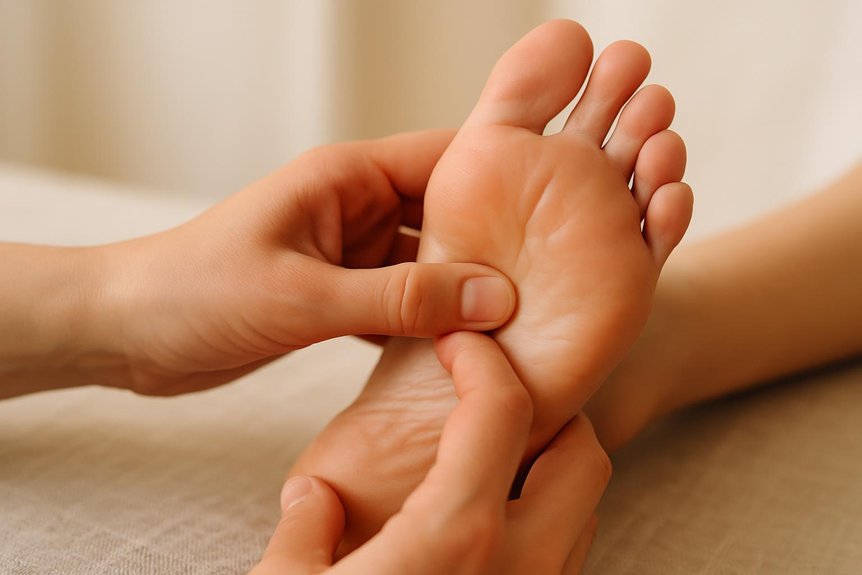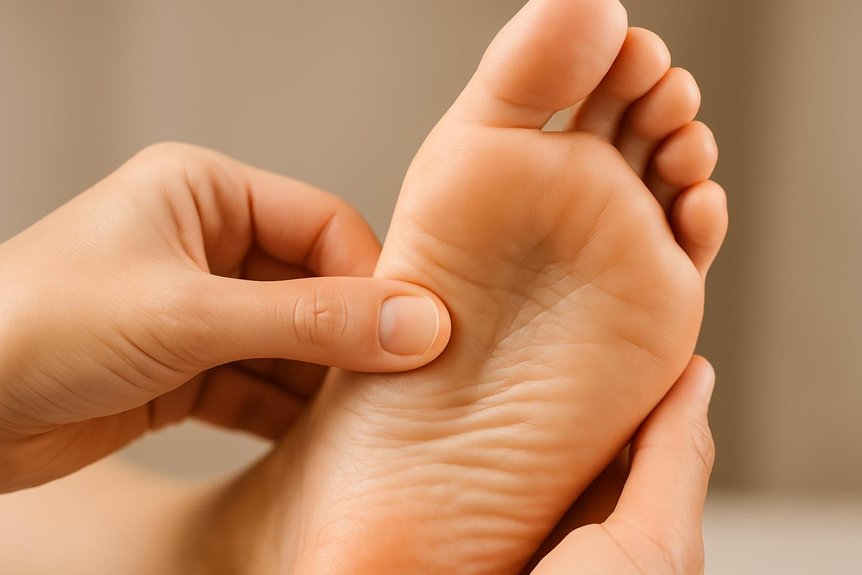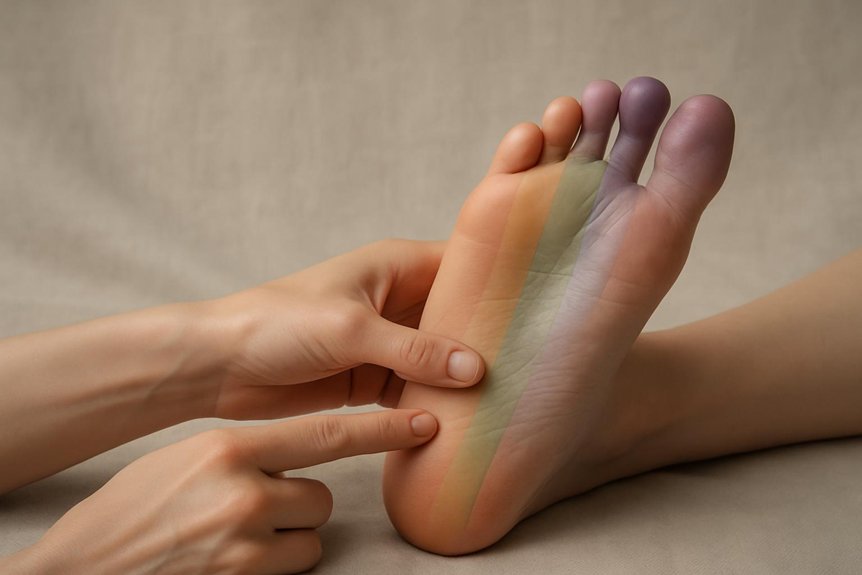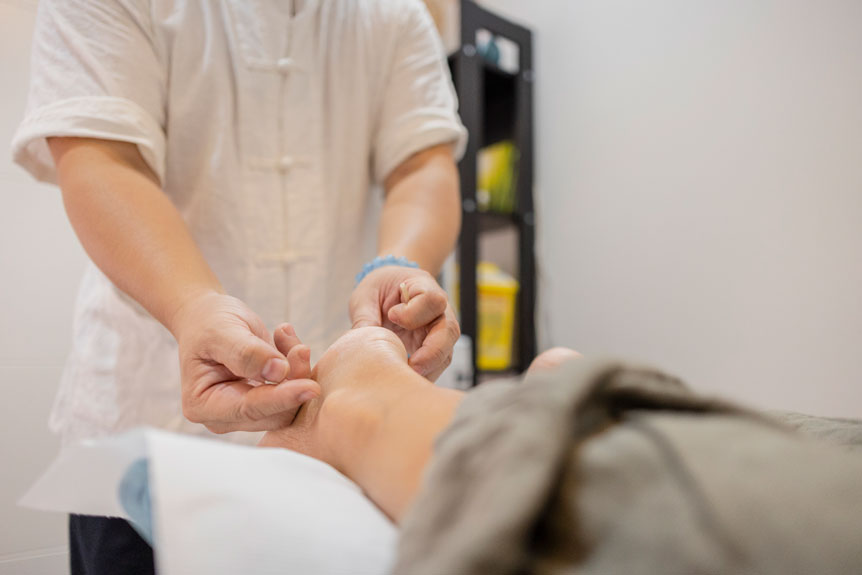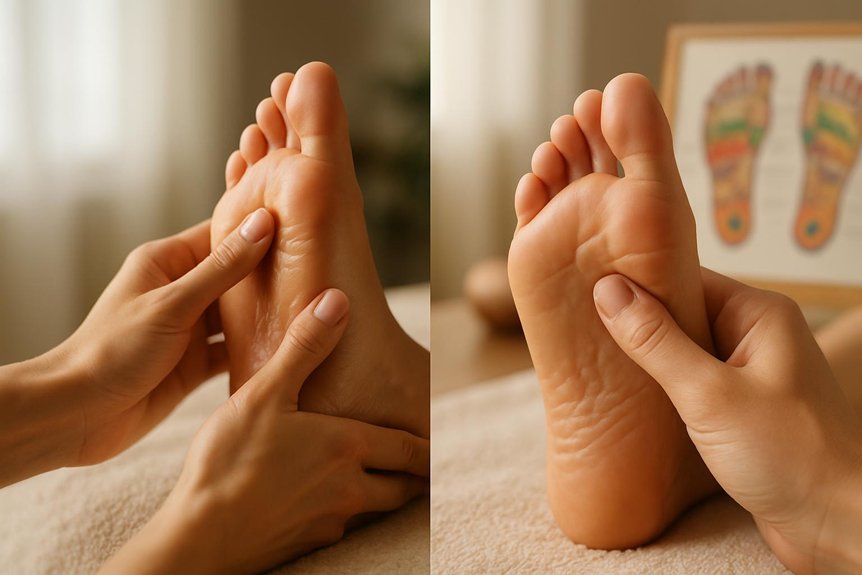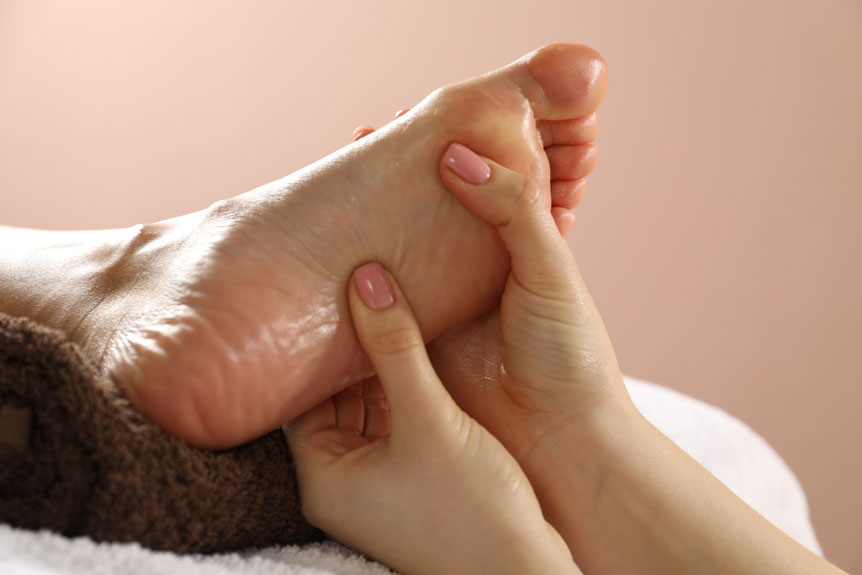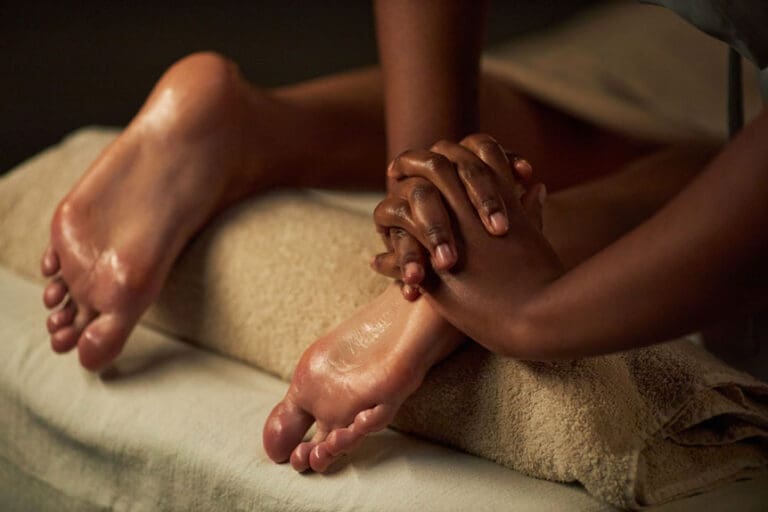
To use zone therapy for stress at work, they should sit tall with forearms supported and wrists neutral, then apply slow, sinking thumb pressure in a “pleasantly tender” range. Thumb‑walk the diaphragm line just beneath the knuckles for 2–3 passes, press the mid‑palm solar plexus point for 10 seconds, and knead the thumb pad and web space. Smooth toward fingertips, then rest for three breaths. Stop for sharp pain, tingling, swelling, pregnancy, diabetes, or neuropathy; more guidance follows.
Reflexology for Work Stress: A 5-Minute Reset

Often, a brief zone therapy sequence can interrupt the stress cycle by shifting attention from cognitive load to somatic input, and it can be done discreetly at a desk in under five minutes. This quick routine highlights the healing power of zone therapy by pairing calming breath with targeted hand pressure points.
Spa & Massage therapists suggest: slow nasal inhale; then use the thumb pad to press and glide along the inner edge of the palm from wrist toward the base of the little finger, 3 passes per hand, moderate pressure (about 4/10). Next, knead the thumb mound (thenar eminence) in small circles for 30 seconds; this can soften habitual gripping in the forearm flexors.
Finish by pinching and releasing each fingertip twice, then resting the hands on thighs for three breaths. Avoid if recent hand injury, neuropathy, or pregnancy-specific concerns without guidance.
Make Your Desk Zone Therapy-Friendly (Hands or Feet)
A five-minute reset works best when the desk setup allows steady, comfortable contact without straining small joints.
For hands, the forearms rest on the desk so the wrists stay neutral; a folded scarf can cradle the heel of the hand. A small, textured ball is placed under the palm to reduce thumb overuse and protect the carpometacarpal joint.
For feet, shoes come off only if appropriate; one foot stays grounded while the other rests on a towel or low box to keep the hip relaxed and the lumbar spine supported. Clothing should not compress the ankle or wrist.
In Spa & Massage clinics, therapists recommend warm, clean hands or socks, and wiping equipment after use. Keep elbows close, shoulders soft.
How Much Pressure to Use for Zone Therapy
In zone therapy for workplace stress, the right pressure is typically a steady, comfortable compression applied with the thumb pad or knuckle to soft tissue on the foot or hand—firm enough to engage the underlying fascia, never sharp or numbing.
Spa & Massage therapists advise adjusting in real time: start light, increase gradually on exhale, then reduce immediately if pain, tingling, or guarding occurs.
For comfort and safety, pressure should stay within a “good sore” range and be lighter over bony prominences, tender inflamed areas, varicose veins, or any recent injury.
Finding The Right Pressure
For effective zone therapy, pressure should feel firm, specific, and controlled—never sharp, burning, or numbing.
At Spa & Massage, therapists aim for a “good ache” that stays within the soft tissues, not the joints or bony ridges.
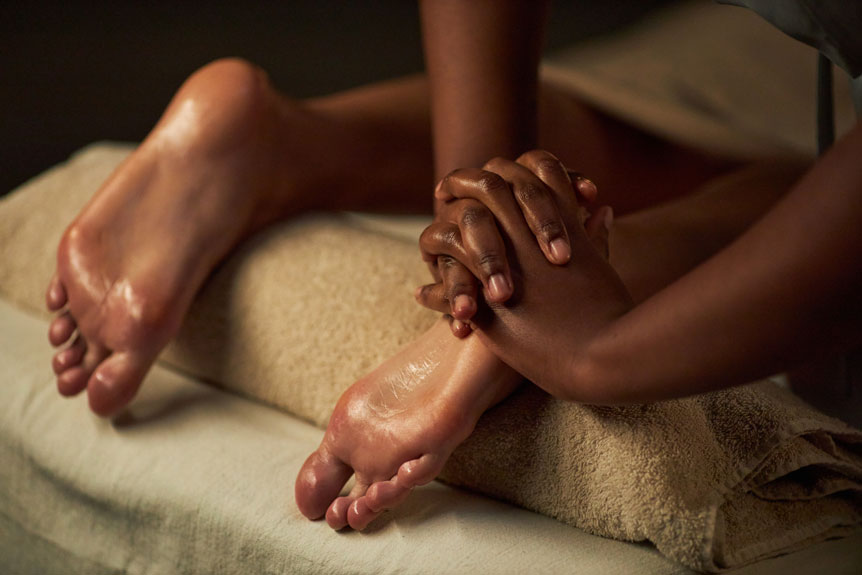
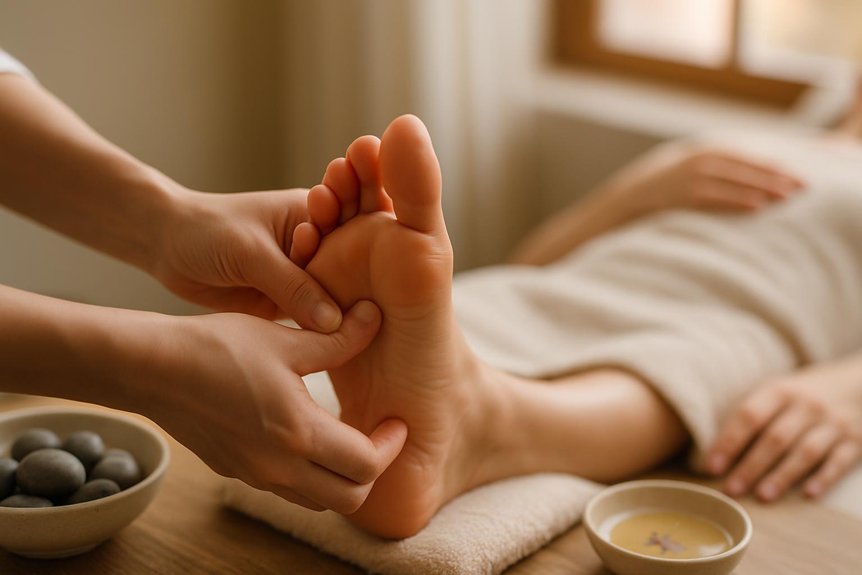
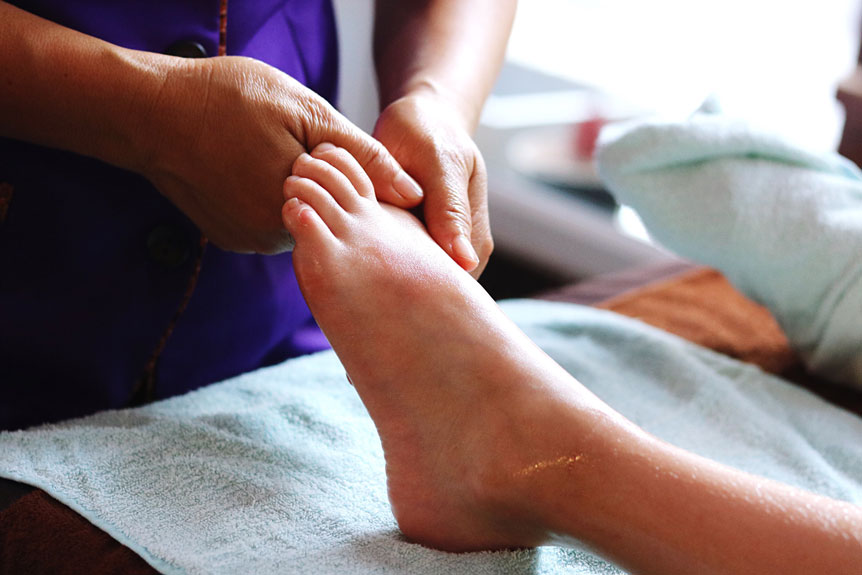
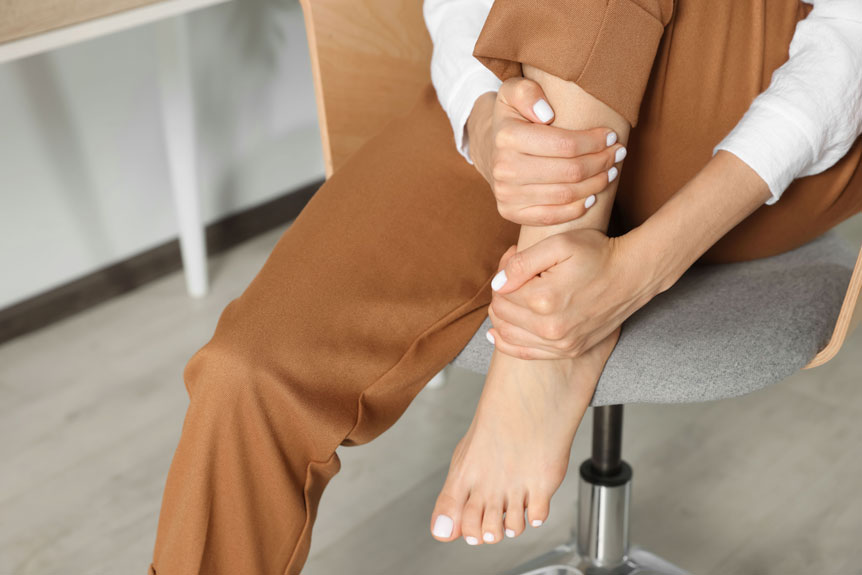
On the foot, a slow thumb-walk targets fascia and small intrinsic muscles; pressure is directed into the pad, then slightly forward, rather than sliding across skin.
Over the arch and heel, slightly deeper compression can be used because the plantar fascia is thicker; over the toes and top of the foot, pressure stays lighter to protect delicate tendons and nerves.
Capillary refill should remain brisk, and sensation should stay clear.
Hands stay warm, and breaths stay unhurried throughout.
Adjusting Pressure For Comfort
At its most effective, zone therapy pressure is adjusted moment by moment to match tissue density, client sensitivity, and the day’s stress load.
Pressure should feel like a “good ache,” never sharp, burning, or numbing; the client should be able to breathe easily and soften the jaw.
In practice, therapists at Spa & Massage begin with light compressions and thumb-walking, then sink gradually into the plantar fascia, staying perpendicular to the tissue to avoid shearing the skin.
Bony edges around the heel and metatarsal heads require gentler contact, using knuckles or supported thumbs.
If guarding, tingling, or bruising appears, pressure is reduced and strokes broadened.
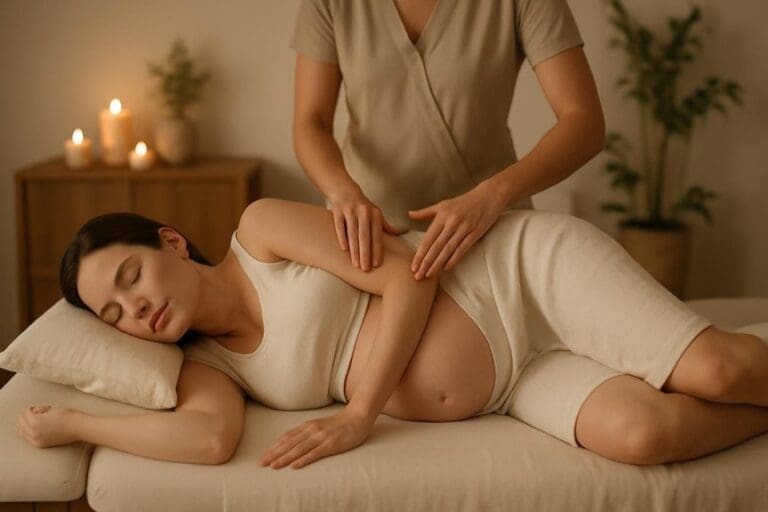
Pregnant clients, neuropathy, and varicose veins warrant extra caution and lighter work.
Hand Zone Therapy at Work: 5 Simple Steps
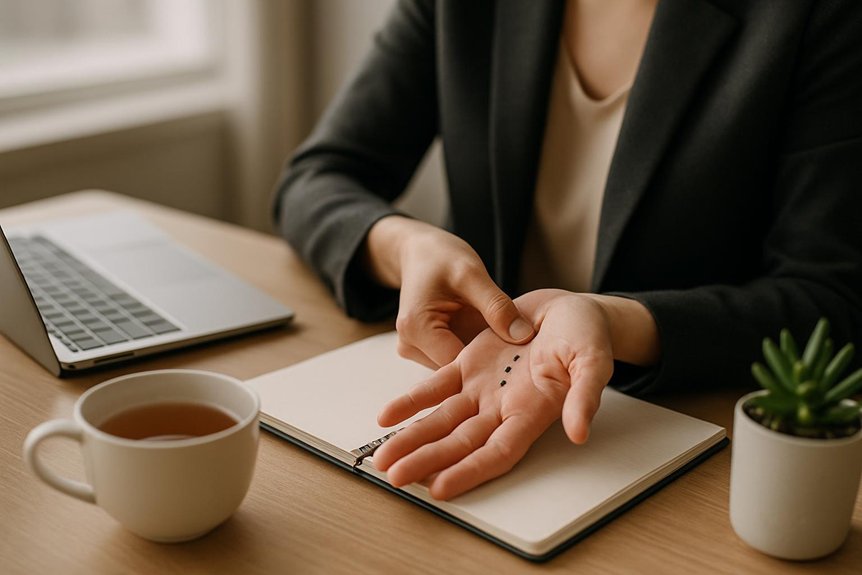
At work, hand zone therapy can be applied by first locating key landmarks—the thumb pad, the web space between thumb and index finger, the centre of the palm, and the wrist crease—then using controlled, moderate pressure that does not provoke sharp pain, numbness, or tingling.
Spa & Massage therapists advise a simple five-step desk routine using slow thumb-walking and small circular compressions for 20–30 seconds per point, keeping the wrist neutral and the shoulder relaxed to avoid strain.
The steps below outline how to identify each point accurately and apply technique-specific pressure safely in a seated workstation posture.
Locate Key Hand Points
Locating the right hand reflex points starts with a quick orientation to bony landmarks and pressure tolerance.
The thumb pads map to head and sinus reflexes; the center of the palm overlies diaphragm and solar plexus. The fleshy mound below the thumb (thenar eminence) relates to chest and breathing; the arch toward the wrist corresponds to digestion and pelvic tension. Each finger base can be treated as a neck-and-shoulder line, useful when work posture feels tight.
Spa & Massage therapists advise using slow, sinking pressure with the opposite thumb, staying on soft tissue and avoiding direct force on joints. Tender “gritty” spots should be approached gently, easing off if sharp pain, numbness, or swelling appears. Warm hands and steady breathing support comfort.
Five-Step Desk Routine
With the main hand reflex zones identified by bony landmarks and pressure tolerance, a short desk routine can be applied to calm the nervous system and reduce workday tension without leaving the chair.
Step 1: Rest the forearm on the desk; soften the shoulder and jaw.
Step 2: Thumb-walk the diaphragm line beneath the knuckles from index to little finger, 2–3 passes, using slow exhale pressure.
Step 3: Press the solar plexus point in the centre of the palm for 10 seconds, then release.
Step 4: Knead the fleshy thumb pad and web space, easing thenar tension linked to over-gripping devices.
Step 5: Smooth to each fingertip, then circle the wrist crease.
Spa & Massage therapists advise avoiding broken skin, acute inflammation, or numbness.
Foot Zone Therapy at Work: 5 Simple Steps
Many office stress symptoms show up first in the feet—tight plantar fascia, reduced ankle mobility, and shallow, tense breathing—making brief, targeted zone therapy a practical reset between tasks.
Step 1: remove shoes, sit tall, and take three slow nasal breaths to downshift.
Step 2: warm the sole with brisk rubs from heel to toes, then circle the ankle joint for mobility.
Step 3: use thumb-walking along the arch, easing pressure to a “good hurt,” never numbness; pause on tender bands and soften them with small, melting circles.
Step 4: knead the heel and outer edge to release standing fatigue; avoid deep pressure over inflamed areas.
Step 5: finish with gentle toe traction and a grounded foot press.
Spa & Massage therapists advise skipping if pregnant, diabetic neuropathy, DVT suspected.
Quick-Reference: Best Points for Calm and Focus
Those five desk-friendly steps work best when attention is placed on a few high-yield reflex zones that tend to hold stress and scatter concentration.
For calm, the solar plexus area (mid-arch) responds to slow, sinking pressure held for 5–8 breaths, keeping sensation “tender but comfortable.”
For focus, the brain/head zone (toe pads) benefits from small thumb-walks from the centre outward, avoiding sharp nail pressure.
The diaphragm line (just below the ball) can be stroked side-to-side to encourage easier breathing.
The neck/shoulder zone (base of toes) often softens with gentle pin-and-release.
At Spa & Massage, therapists advise avoiding work on broken skin, acute swelling, or severe pain, and seeking medical advice in pregnancy, diabetes, or neuropathy.
A 3-Minute Zone Therapy Break Routine
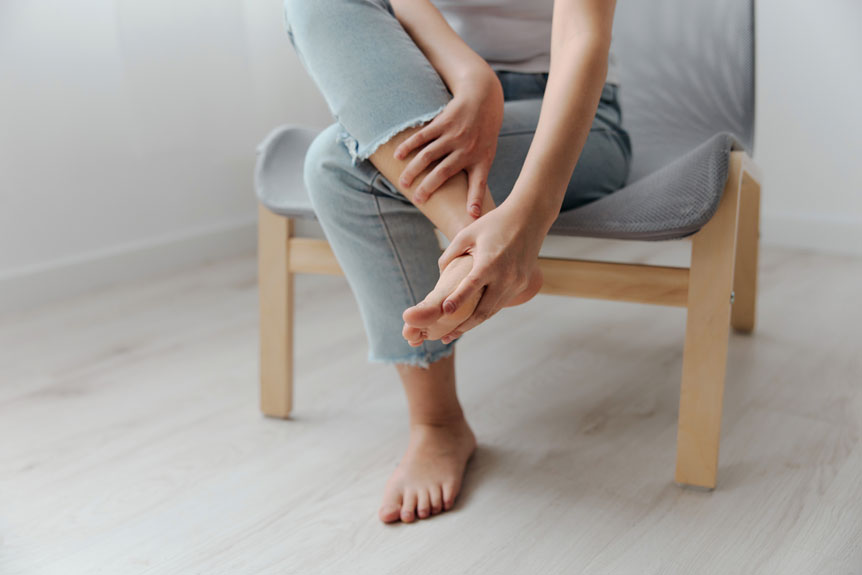
Often, a three-minute zone therapy break is enough to downshift the stress response at a desk by combining slow breathing with steady, “tender but comfortable” pressure on the solar plexus (mid-arch), diaphragm line (just below the ball of the foot), and head/brain zone (toe pads), finishing with a brief release of the neck/shoulder area at the base of the toes.
At Spa & Massage, therapists suggest sitting tall, uncrossing ankles, and cradling one foot.
For 60 seconds, press and hold the mid-arch with a thumb while inhaling for four counts and exhaling for six.
For 60 seconds, walk the thumb slowly along the diaphragm line, pausing on any warm, dense spots.
For 45 seconds, knead toe pads with small circles.
For 15 seconds, sweep across toe bases, then switch feet.
Desk Zone Therapy: Mistakes to Avoid
A short desk zone therapy routine can quickly settle breathing and ease foot tension, but the same speed that makes it convenient can also encourage sloppy technique. Common errors include pressing on bare bone at the metatarsal heads instead of the soft pads, or jamming the thumb into the arch, which can irritate plantar fascia.
Pressure should be slow, angled, and within a “pleasantly tender” range; sharp pain, pins-and-needles, or numbness are cues to stop. Avoid working through swelling, bruising, hot skin, or new ankle pain. Keep the ankle supported and the toes relaxed; gripping tightens calf muscles and limits circulation.
In Spa & Massage clinics, therapists also avoid aggressive sweeping over varicose veins, and recommend clean hands, short nails, and steady breathing.
When to Book a Zone Therapy Session at Spa & Massage
Usually, a zone therapy appointment at Spa & Massage is best booked when desk stress is showing up as persistent foot and calf tightness, restless sleep, or tension headaches—signs that the nervous system is staying in a “high alert” state and soft-tissue loading through the plantar fascia and lower leg isn’t recovering between workdays.
It is also timely after long commutes, high-heel days, or when the arches feel tender on first steps, indicating overload through the intrinsic foot muscles and Achilles complex.
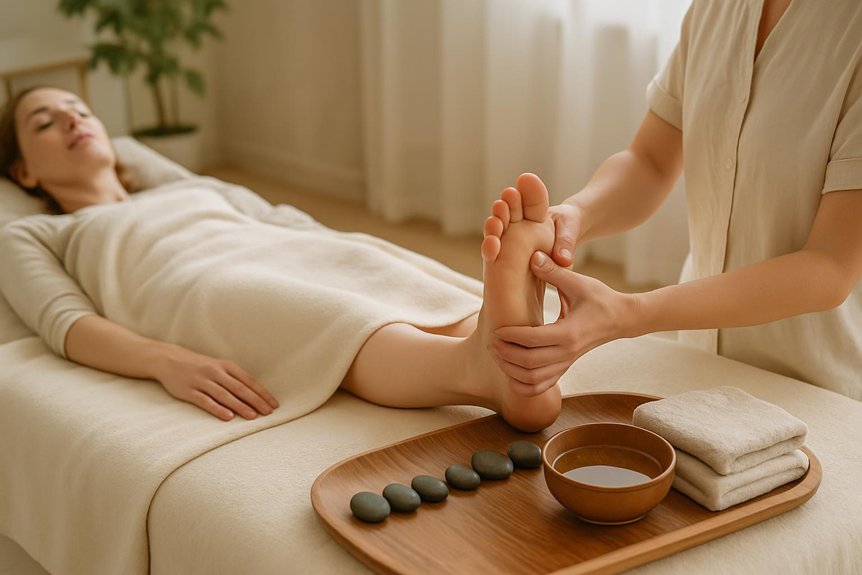
In clinic, therapists begin with warming effleurage, then apply slow, specific thumb-walking along the medial arch, heel, and metatarsal heads, pacing pressure to breath for a calmer parasympathetic shift.
Booking is advised before pain becomes sharp, swollen, numb, or post-injury; those signs need medical assessment first.
Sessions are offered across London locations.
Conclusion
Workplace zone therapy can offer a brief, low-disruption reset by using controlled pressure on hand or foot zones associated with the stress response. A comfortable, “good ache” is preferred; avoid sharp pain, numbness, or bruising, and reduce pressure over inflamed skin, varicose veins, or recent injury. As the adage goes, “a stitch in time saves nine,” so a three‑to‑five‑minute routine may help support circulation, calmer breathing, and steadier focus.