Mild pregnancy swelling in feet, ankles, and hands often improves with gentle, light-pressure massage that supports comfortable circulation and lymph flow. Use slow strokes from toes and ankles upward toward the knee, avoiding deep work, varicose veins, and direct pressure behind the knee. Short, regular sessions later in the day can help, followed by hydration and 10–15 minutes of leg elevation. Sudden, one-sided, painful, hot, or facial swelling needs prompt medical advice. More guidance follows.
Pregnancy Swelling: What’s Normal, What’s Not
During pregnancy, when does swelling become part of the normal picture—and when might it signal a need for medical advice? Mild, gradual puffiness in feet, ankles, and hands is common, especially later in pregnancy, after warm days, long walks, or sitting.
It often eases with rest, gentle movement, hydration, and elevating the legs.
It may also help by supporting comfort and circulation through pregnancy massage techniques tailored for expecting mothers.
Swelling deserves prompt clinical advice if it appears suddenly, is severe, affects the face or around the eyes, is much worse on one side, or comes with headache, visual changes, pain, redness, shortness of breath, or high blood pressure concerns.
Spa & Massage encourages clients to share any new or worrying symptoms with a midwife or GP first.
In-clinic, therapists also ask about swelling patterns to support safe, personalised care.
Is It Safe for Swelling (and When to Avoid It)?
It can be a safe, soothing way to ease swelling when it is tailored to the trimester, medical history, and comfort—an approach Spa & Massage therapists follow in every clinic.
Even so, massage should be avoided or postponed when there are warning signs such as sudden or severe swelling, calf pain, headaches or visual changes, high blood pressure, fever, or any pregnancy complications unless a midwife or doctor has advised it is appropriate.
The next section outlines practical safety guidelines and clear moments when professional assessment should come first.
Swelling Massage Safety
In many cases, prenatal massage can be a safe, calming way to ease mild swelling when it is delivered by a trained therapist and tailored to the client’s trimester, comfort, and medical history.
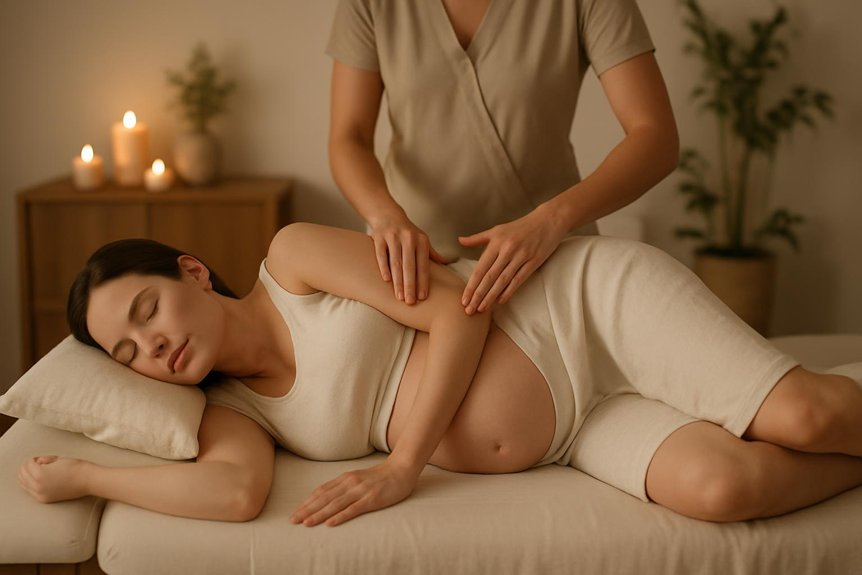
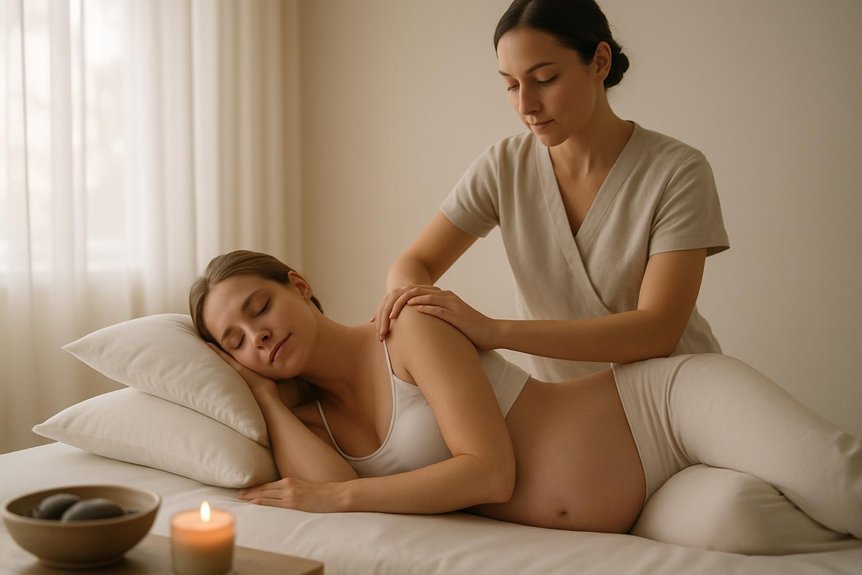
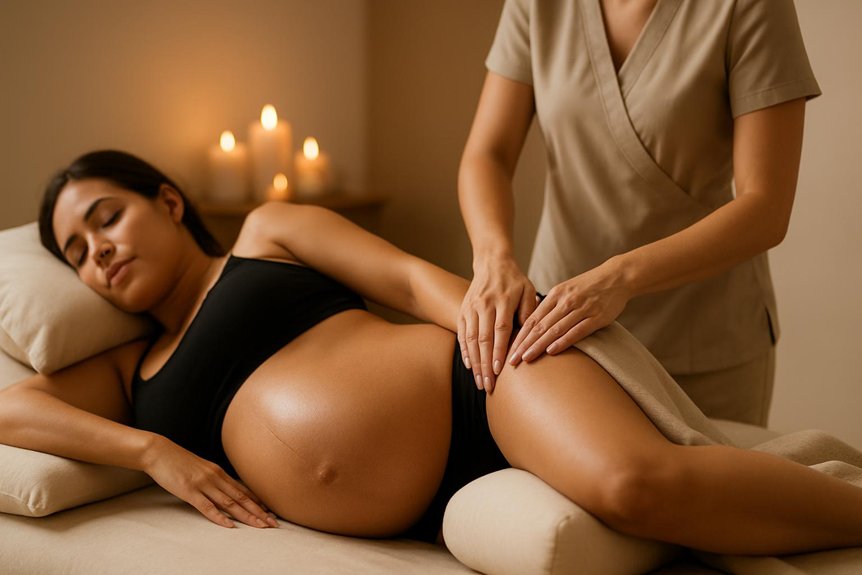
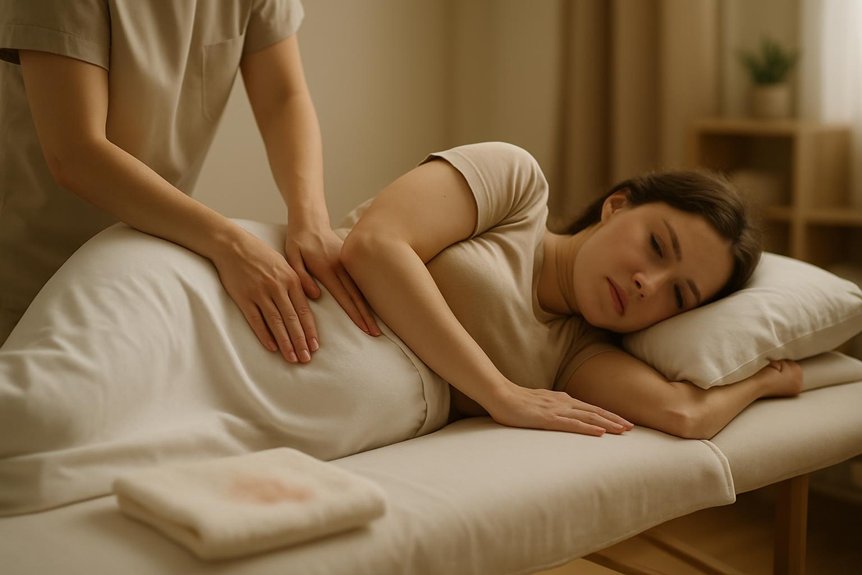
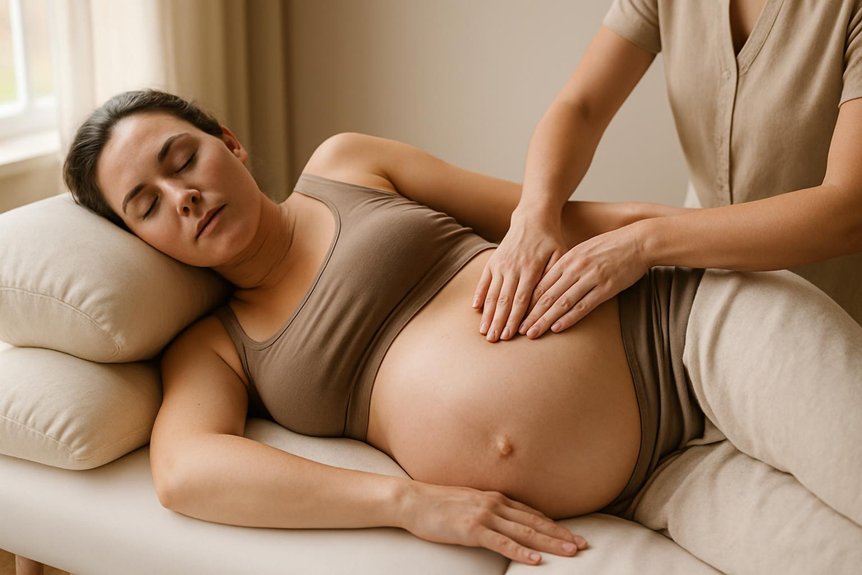
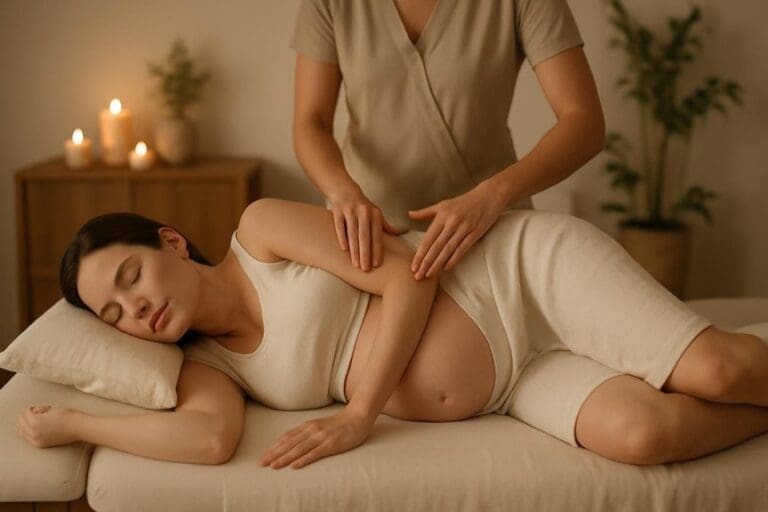
At Spa & Massage clinics across London, therapists begin with a short consultation, then use supportive side-lying positioning and light-to-moderate, rhythmic strokes to encourage comfortable circulation. Work is kept gentle around ankles and calves, avoiding deep pressure, and each session is adjusted if tenderness, heat, or pronounced puffiness appears.
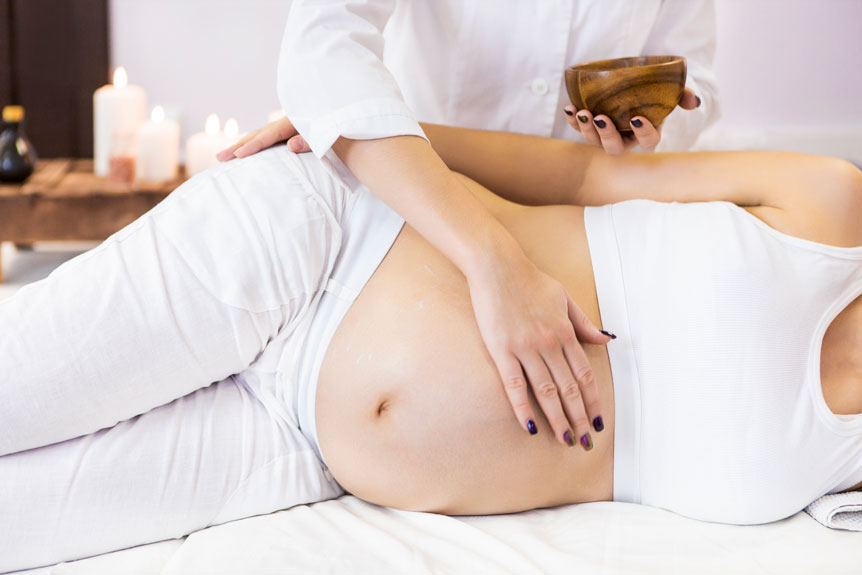
Unscented or pregnancy-appropriate aromatherapy oils may be used to keep skin supple and nurturing to the touch. Clients are encouraged to share feedback throughout, and therapists regularly suggest simple aftercare—hydration, brief walks, and elevated rest—to help swelling settle.
When To Avoid Massage
When should massage be avoided for swelling in pregnancy? It should be paused and medical advice sought if swelling is sudden, one-sided, painful, hot, or accompanied by headache, visual changes, chest pain, breathlessness, or high blood pressure—these can signal conditions needing urgent care.
Massage should also be avoided over suspected clots, varicose veins that are tender, broken skin, infection, fever, or unexplained abdominal pain.
Clients with pre-eclampsia risk, placenta complications, or a history of thrombosis should only proceed with explicit clinician guidance.
At Spa & Massage clinics in London, therapists screen carefully and will decline treatment if safety is uncertain.
When cleared, gentle, side-lying work and light strokes can support comfort without overloading sensitive tissue.
Best Times for Prenatal Massage to Reduce Swelling
Often, the most effective time for a prenatal massage to reduce swelling is when fluid retention is beginning to build—typically later in the day or after long periods of sitting, standing, or travel—so the body can be supported before heaviness becomes uncomfortable. Many clients at Spa & Massage in London also find gentle sessions helpful after warm weather, busy commutes, or weekends with more walking.
For consistent relief, an evening appointment can encourage calmer circulation before bed and may lessen morning puffiness. A midday session suits those who work at a desk, easing tightness before it settles. Short, regular visits often feel kinder than occasional intense ones. Timing should always follow midwife or GP guidance, and sessions are best booked when energy is steady, hydration is good, and there is time to rest afterwards.
Safe Prenatal Massage Techniques for Swollen Legs
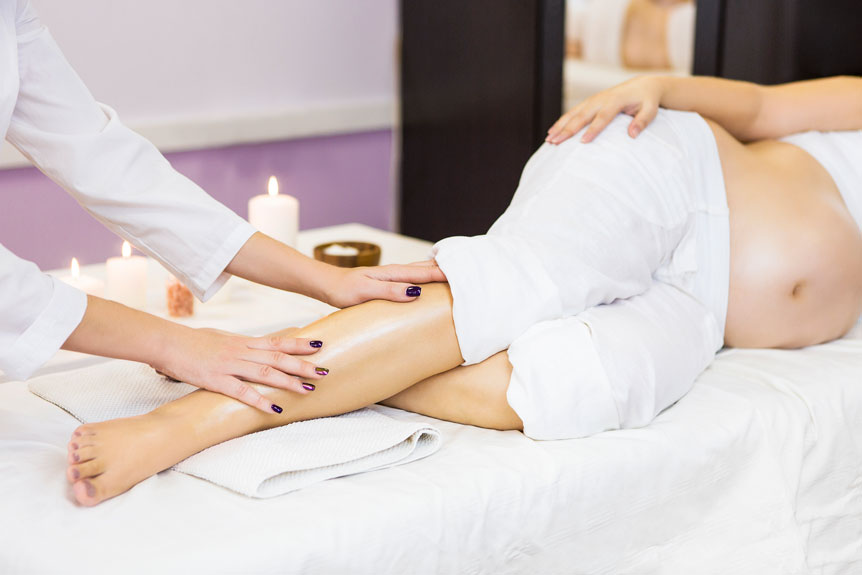
With swollen legs in pregnancy, the safest massage approach prioritises light, rhythmic strokes that support circulation without deep pressure. At Spa & Massage, therapists begin with gentle effleurage from ankle to knee, always moving upward toward the heart, then soften tight calves with slow, feather‑light kneading.
Pressure stays superficial, avoiding deep tissue work, vigorous friction, and strong squeezing. Special care is taken to avoid direct pressure behind the knee and along tender varicose veins.
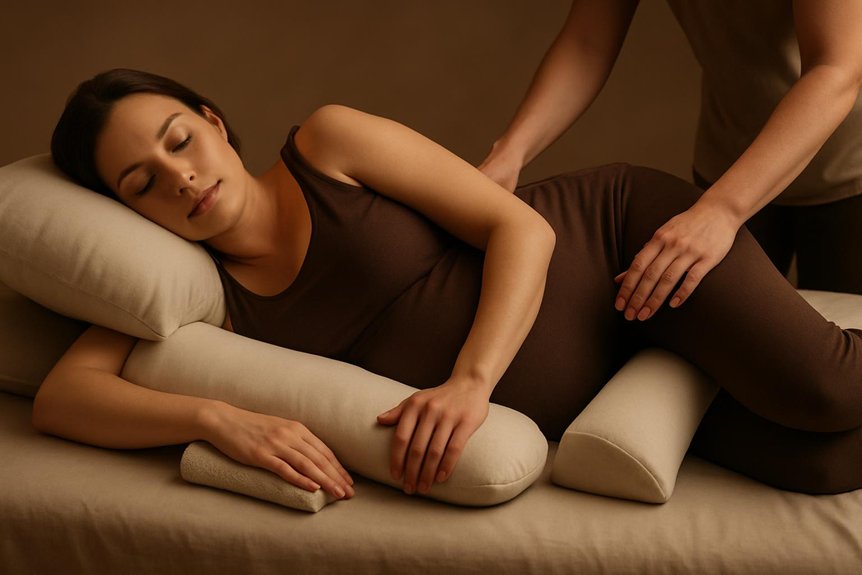
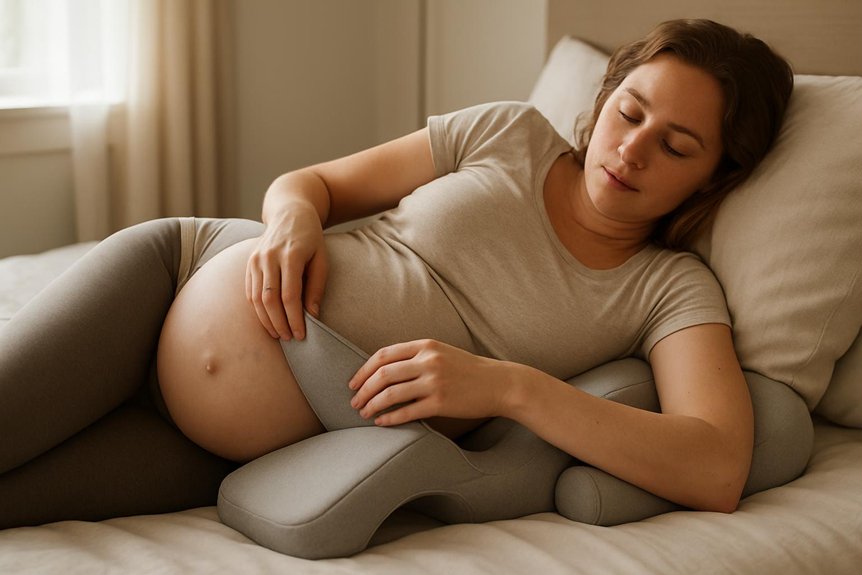
Side‑lying positioning with cushions supports comfort and steady breathing, encouraging the body to let go. A small amount of pregnancy‑safe, unscented oil may be used to keep strokes smooth and soothing.
Any sudden pain, warmth, redness, or one‑sided swelling prompts stopping and medical advice.
At-Home Massage for Swollen Feet and Ankles
At Spa & Massage, therapists advise that at-home self-massage for swollen feet and ankles during pregnancy should be light, slow, and stopped immediately if there is pain, numbness, or unusual swelling.
Gentle strokes from the toes toward the ankles, with soft circles around (not on) bony areas, can support comfort while keeping pressure minimal.
Aftercare matters: many clients are encouraged to drink water, rest, and elevate the feet above heart level for 10–15 minutes to help swelling settle.
Safe Self-Massage Basics
During pregnancy, gentle self-massage can help ease swelling in the feet and ankles when it is done with light pressure and an emphasis on comfort and safety. It should feel soothing, never sharp, hot, or bruising; discomfort is a cue to stop.
Massage is best done when they are well supported, hydrated, and breathing slowly, allowing the body to soften. At Spa & Massage clinics, therapists advise avoiding deep pressure, strong kneading, or vigorous rubbing, and skipping massage over varicose veins, redness, warmth, broken skin, or tender lumps.
Unscented, pregnancy-safe oil can reduce drag; a patch test helps prevent irritation. Any sudden swelling, one-sided pain, headache, or vision changes warrants prompt medical advice before continuing.
Foot And Ankle Techniques
For swollen feet and ankles in pregnancy, simple hands-on techniques can encourage comfort by supporting fluid return without stressing sensitive tissues. At Spa & Massage, therapists favour light, slow strokes that travel from toes toward the calf, keeping pressure soft and even, never digging into the shin or behind the knee.
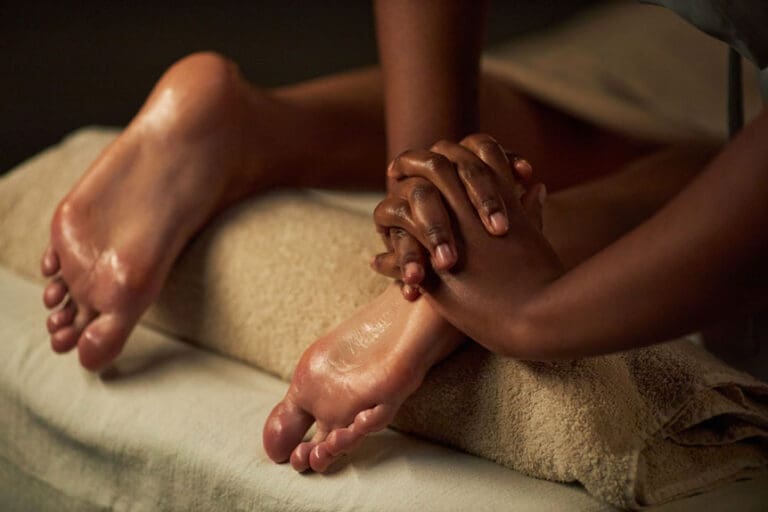
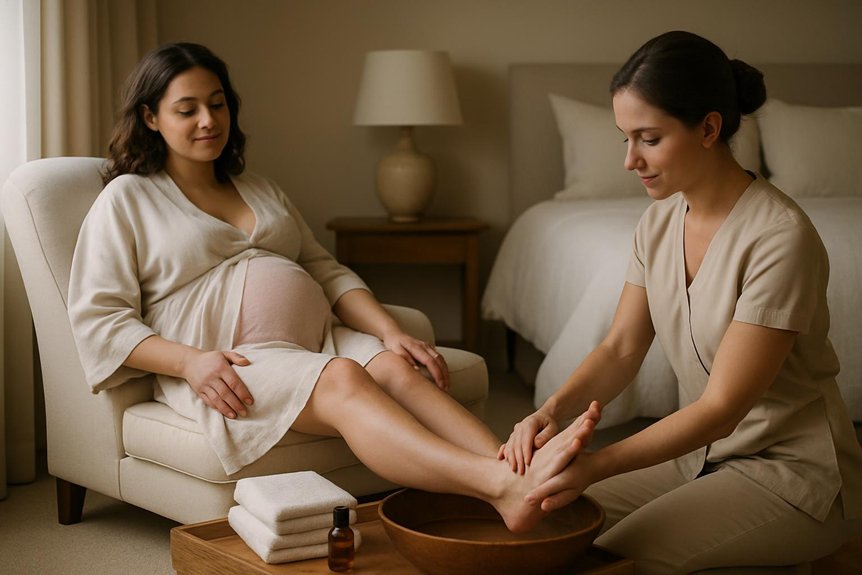
At home, the partner or parent-to-be can begin with warm palms to cradle the foot, then glide along the sole from heel to toes. Gentle circular strokes around the ankle bones can soothe tightness. Each toe may be lightly rolled between finger and thumb, then the top of the foot stroked toward the ankle. A fragrance-free, pregnancy-safe oil or lotion helps reduce drag; any tenderness, heat, or sudden pain signals stopping and seeking advice.
Aftercare And Elevation Tips
Once the foot and ankle strokes are complete, a few minutes of calm aftercare can help the tissues settle and support ongoing fluid return.
Spa & Massage therapists advise resting on the left side when possible, then elevating feet so heels sit slightly above heart level for 10–15 minutes. A pillow under the calves keeps pressure off tender ankles; toes should stay relaxed, never pointed.
A cool compress can be applied briefly if warmth or puffiness persists, avoiding numbing extremes.
Sipping water and taking a short, gentle walk afterward may encourage circulation.
If any swelling is sudden, one-sided, painful, or paired with headache or vision changes, medical advice should be sought promptly before further self-massage. At clinics, pressure is always light, attentive, and responsive.
Lymphatic Drainage Massage for Pregnancy Swelling
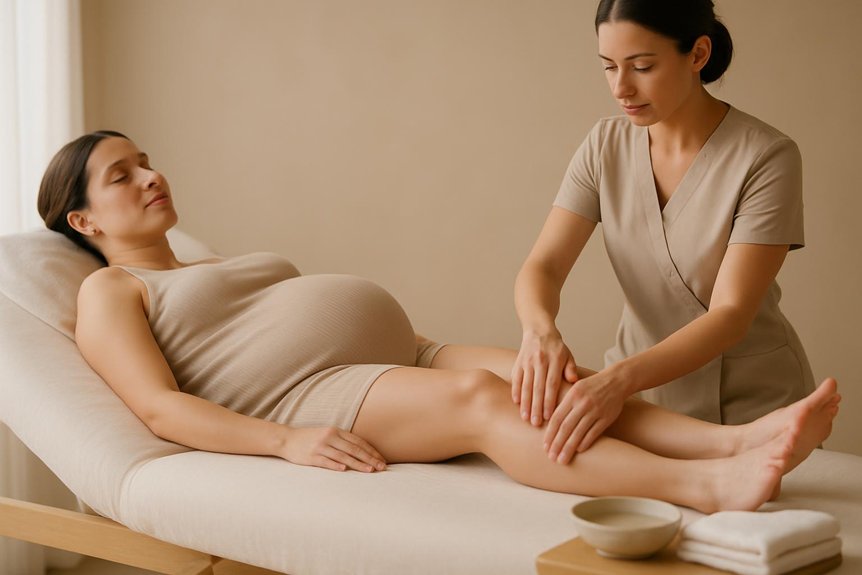
In the later stages of pregnancy, swelling in the feet, ankles, and hands is common, and lymphatic drainage massage can offer gentle, targeted support. This technique uses feather‑light, rhythmic strokes to encourage fluid movement toward nearby lymph nodes, helping ease heaviness without deep pressure.
At Spa & Massage clinics across London, therapists adapt positioning and pace for comfort, often focusing on lower legs, ankles, and hands while avoiding strong work over varicose veins. Sessions begin with a brief check-in on symptoms and medical guidance, and pressure remains soothing and respectful of sensitive tissues.
Clients often describe a warmer, lighter feeling and improved ease in shoes or rings. Any sudden, one-sided, painful, or facial swelling should be assessed by a midwife or GP first.
Aftercare to Keep Pregnancy Swelling Down Between Sessions
Gentle lymphatic drainage can leave legs and hands feeling lighter, and the benefits tend to last longer when swelling is managed with simple daily aftercare between appointments.
At Spa & Massage clinics across London, therapists encourage steady hydration, regular comfort walks, and elevating feet above heart level for 10–15 minutes, once or twice daily.
Compression socks may be suggested by a midwife, especially for standing commutes.
At home, cool rinses, side-lying rest, and gentle ankle circles support flow without strain. A pillow between knees can ease pelvic pressure overnight.
Salt-heavy meals and prolonged sitting tend to worsen fluid retention, so small movement breaks help.
Any sudden swelling, headache, or visual changes should be checked urgently with a clinician immediately.
Conclusion
Massage can be a soothing way to ease common pregnancy swelling when adapted for comfort and safety, using light-to-moderate pressure, supportive positioning, and a focus on feet, ankles, lower legs, and hands. Gentle lymphatic-style strokes and simple at-home techniques may help reduce heaviness between sessions, especially with good aftercare. Swelling should still be monitored closely, as sudden, painful, or one-sided changes need medical advice—because peace of mind is worth a mountain.