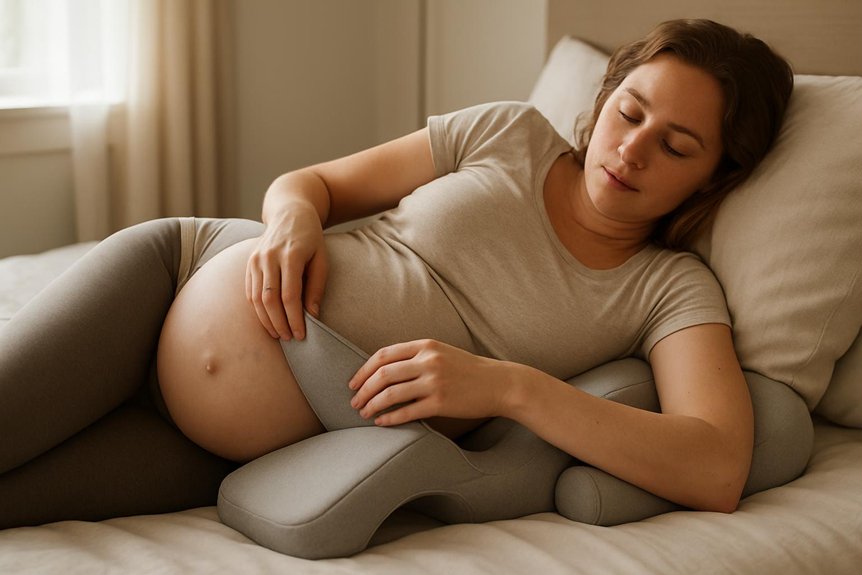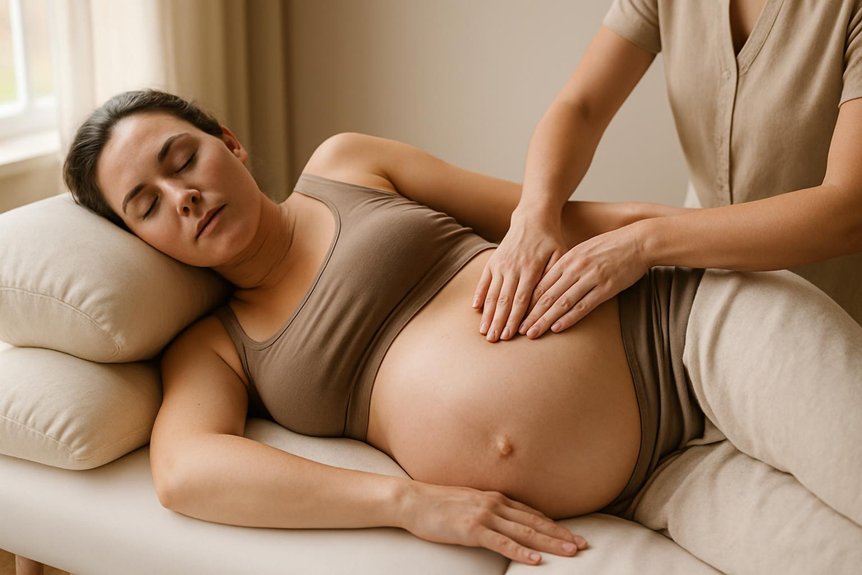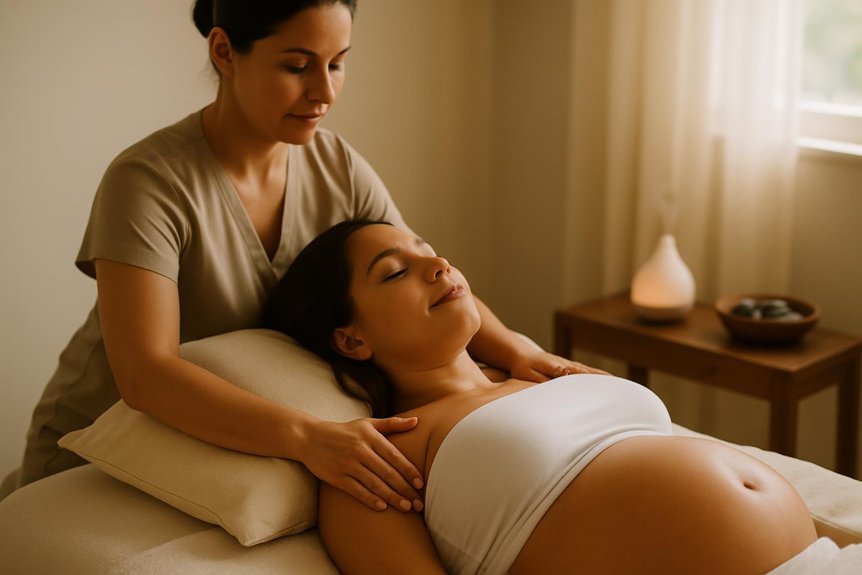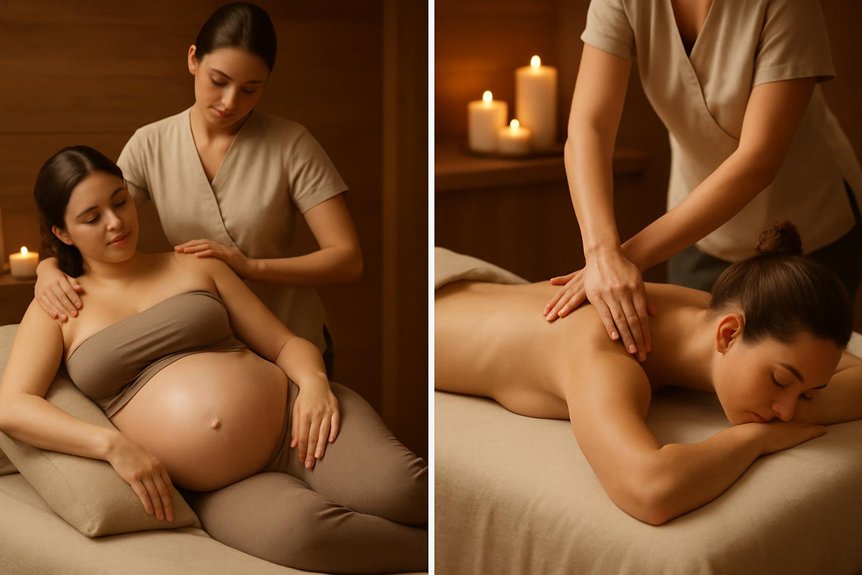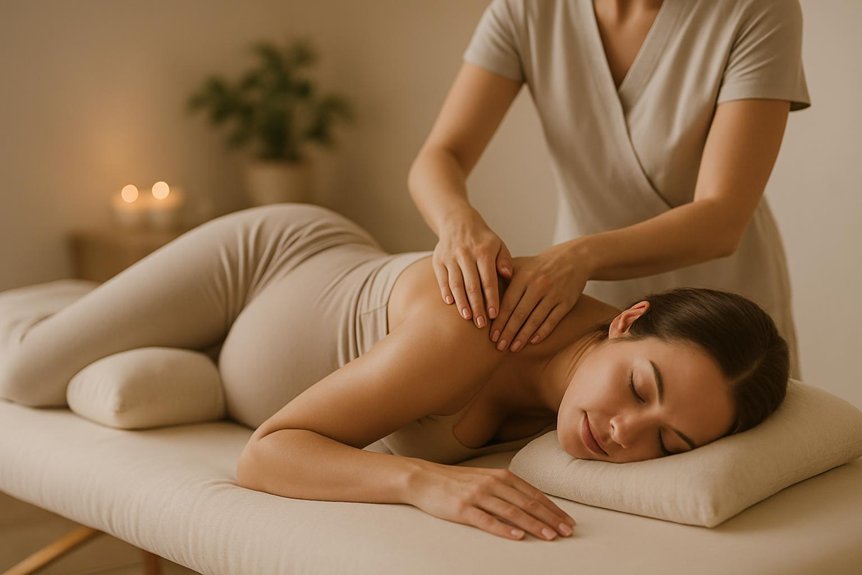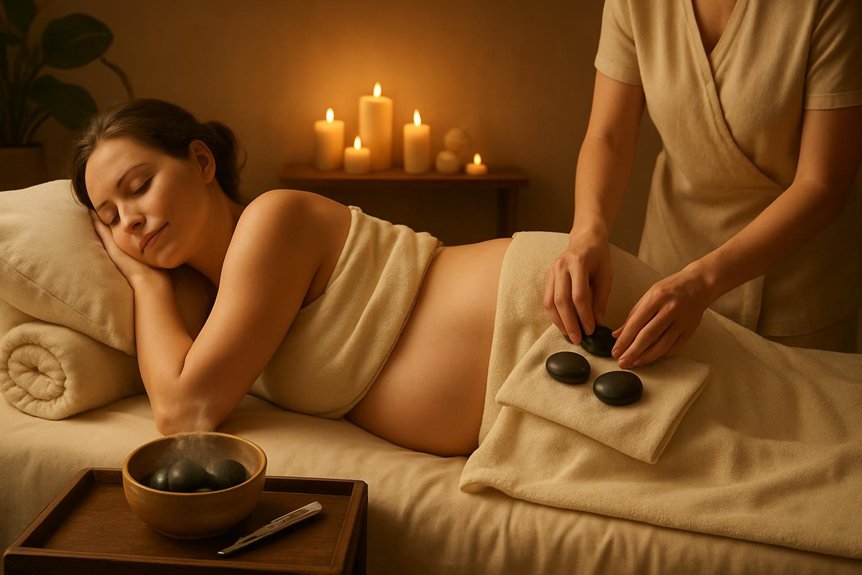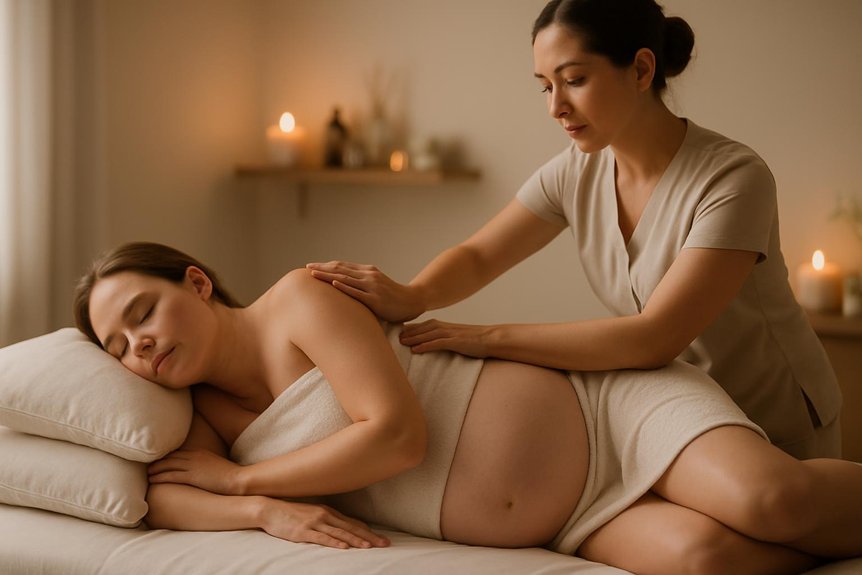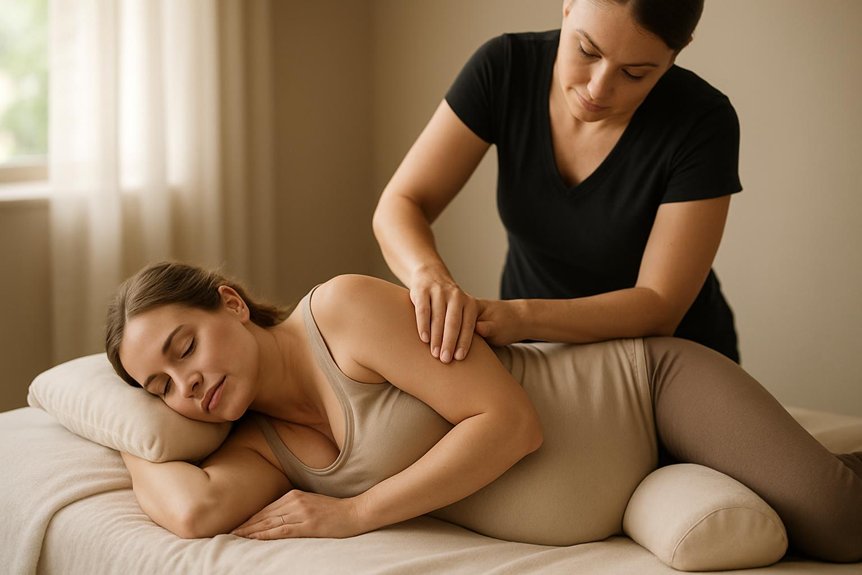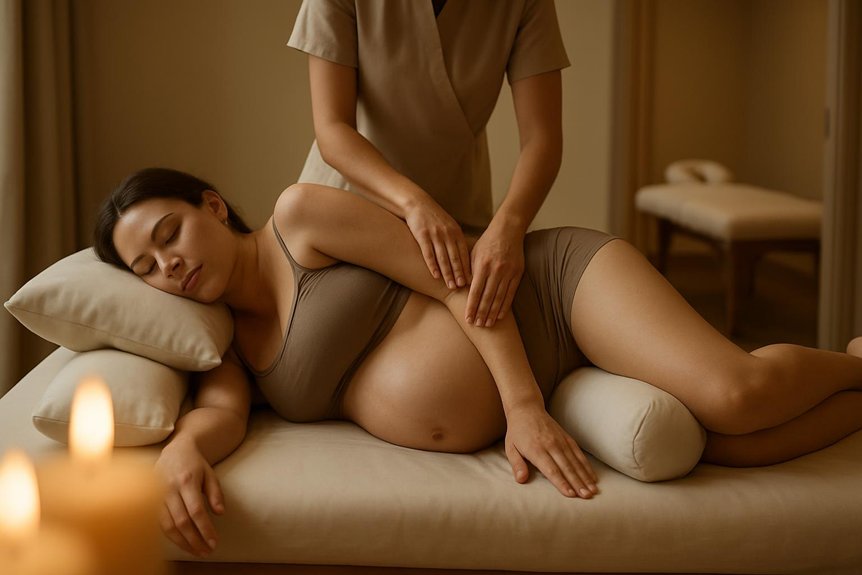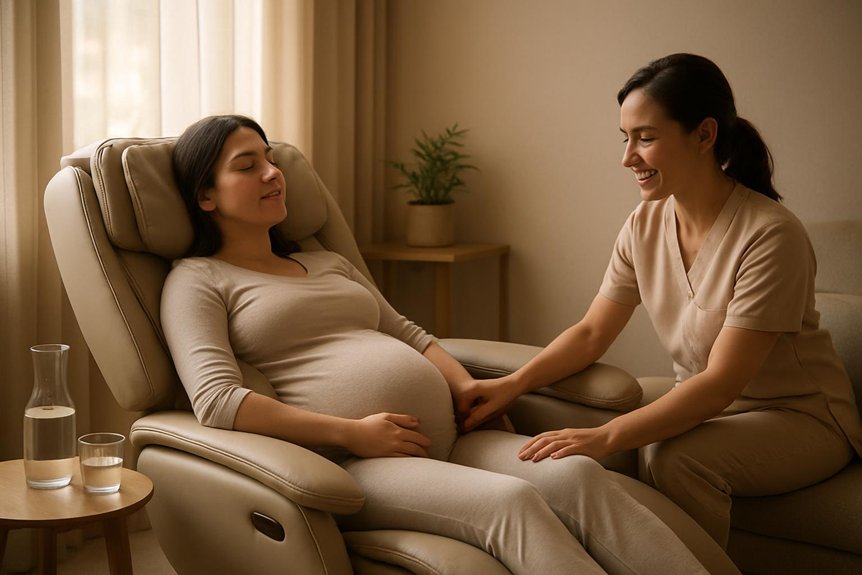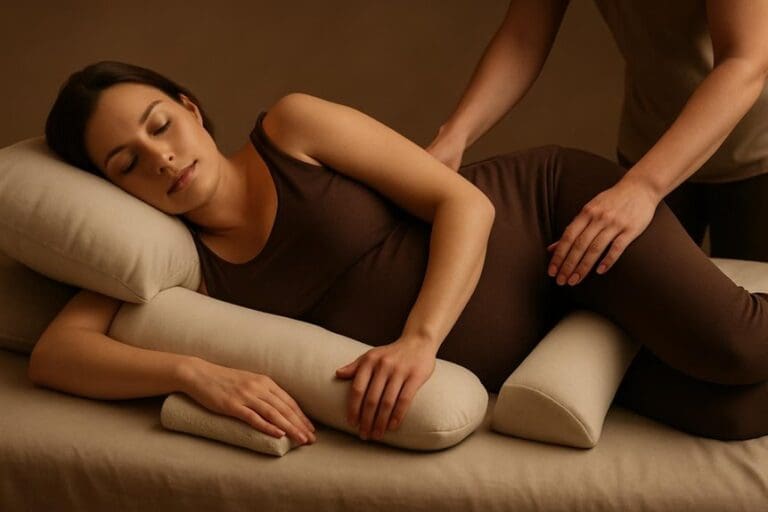
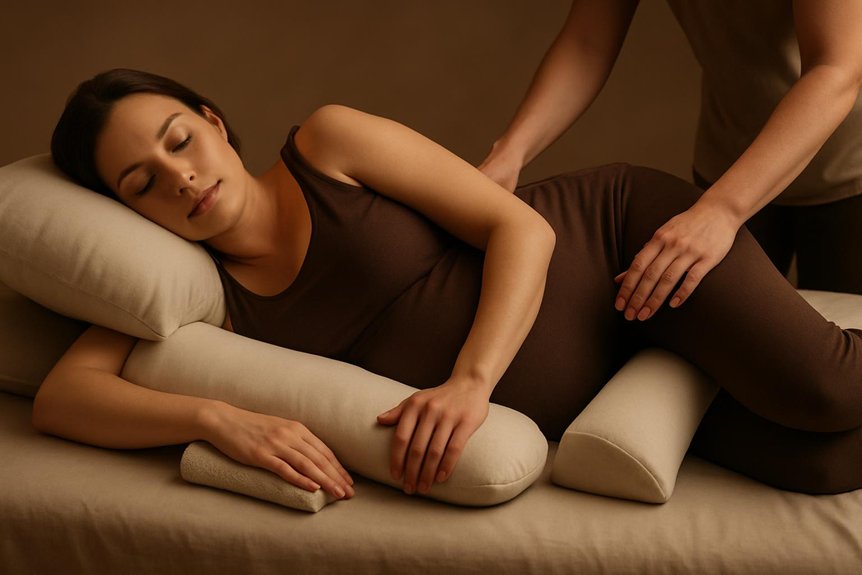
Bolsters in prenatal massage are used to support side-lying or semi-reclined positions, keeping the abdomen free and reducing strain on the low back, hips, and pelvic joints. Firm, stable pillows or wedges are placed under the head for neutral neck alignment, behind the back to prevent rolling, under the bump to cradle without pressure, and between knees and ankles to limit hip rotation. Supine time is minimized after mid‑pregnancy, with comfort and symptoms checked often. More setup options follow.
Pregnancy Massage Bolster Basics (Types and Safety)
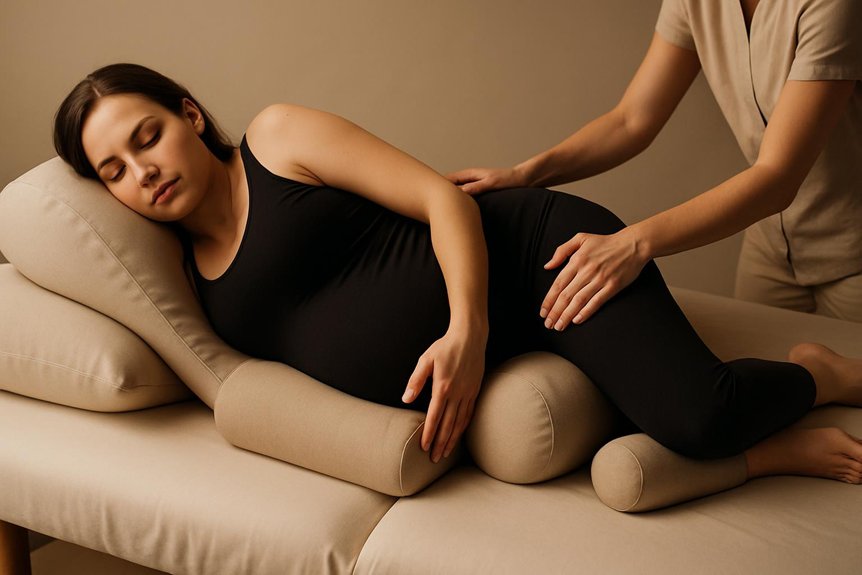
In prenatal massage, bolsters are used to support side-lying or semi-reclined positioning so that pressure is kept off the abdomen and strain on the lower back, hips, and pelvic joints is reduced.
Common types include full-length body pillows, wedge bolsters for the belly or back, and smaller knee/ankle cushions to keep hips aligned and improve circulation.
Safety depends on firm, stable support that does not compress the vena cava; sustained flat supine positioning is generally avoided after mid‑pregnancy.
Materials should be wipe-clean, hypoallergenic, and covered with fresh linens; in Spa & Massage clinics, bolsters are sanitised between clients.
Therapists check comfort, breathing, warmth, and numbness, and adjust support so touch remains reassuring, close, and unhurried.
When properly supported, prenatal massage positioning can enhance maternal relaxation and overall comfort for expecting mothers.
Side-Lying Prenatal Massage Bolster Setup (Step-by-Step)
In Spa & Massage clinics, side-lying prenatal massage begins by preparing a stable, uncluttered treatment space that allows safe turning and easy access for both client and therapist.
Bolsters are then positioned to support the head and neck, the abdomen, the top knee and ankle, and the back to reduce strain and maintain neutral spinal alignment.
Before treatment proceeds, alignment and comfort are checked through clear client feedback and observation of breathing, pressure points, and any signs of numbness or discomfort.
Prepare The Side-Lying Space
For safe, comfortable prenatal work, the side-lying space should be set up before any hands-on contact to keep the client’s abdomen uncompressed and the spine neutrally supported.
At Spa & Massage clinics across London, therapists begin by sanitising the table, confirming trimester, symptoms, and any medical guidance, then adjusting room temperature, lighting, and privacy for a calm, intimate feel.
Fresh linens are layered to reduce friction and allow easy, discreet draping.
A stable step stool and water are placed within reach to prevent sudden standing.
The therapist checks table height for neutral wrists and controlled pressure, and clears cables, jewellery, and sharp edges from the contact zone.
Clear consent and a “pause anytime” cue are agreed before settling.
Position Bolsters For Support
With the side-lying space prepared, bolsters are positioned to maintain neutral spinal alignment, minimise pelvic and lumbar strain, and keep abdominal weight fully supported.
At Spa & Massage, therapists begin by placing a firm bolster under the head and neck so the airway stays open and the shoulders remain relaxed. A long bolster is then tucked behind the back to prevent rolling and create a secure, held feeling.
Next, a wedge or pillow is placed under the abdomen to cradle the bump without pressure.
A thick bolster is positioned between the knees and ankles to reduce hip rotation and ease sacroiliac stress.
Finally, a small pillow supports the top arm and wrist, keeping the chest soft and breathing unforced.
Check Alignment And Comfort
Bolsters should feel supportive rather than restrictive, so the next step is to confirm alignment and comfort before any massage begins.
In side-lying, the head and neck should rest neutral, with a small pillow keeping the chin level and the airway open.
The top shoulder and hip should stack, not roll forward; a front bolster can prevent twisting while allowing easy breathing.
The abdomen should be cradled without pressure.
A bolster between the knees and ankles reduces pelvic strain and helps the lower back soften.
At Spa & Massage clinics, therapists ask for a 0–10 comfort rating, then adjust height and distance until the spine feels long and the baby’s space feels protected.
Numbness, tingling, or breathlessness signals immediate repositioning.
Position Prenatal Bolsters to Support the Bump
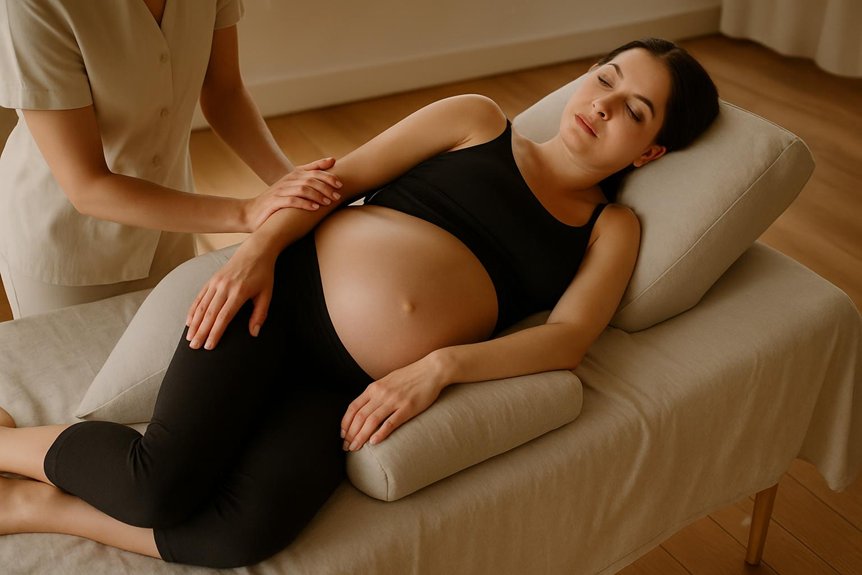
In side-lying prenatal massage, correct bolster placement supports the abdomen without compressing it, helping maintain neutral spinal alignment and steady circulation.
At Spa & Massage, therapists slide a small, firm bolster or folded towel under the bump from the front, so the abdomen rests into support rather than hanging. The contact should feel cradling, never tight; breathing should stay easy and deep.
Support is adjusted by moving the bolster closer to the navel for more lift, or slightly lower for a gentler hold. The upper edge is kept away from the ribcage to avoid pressure, and the lower edge avoids the groin.
Therapists confirm comfort with consent-based check-ins, inviting subtle shifts as needed.
Add Bolsters for Hips, Pelvis, and Low Back Relief
At Spa & Massage, therapists often add targeted bolsters to create a gentle hip tilt that supports spinal alignment and reduces strain on the pelvis and surrounding soft tissues.
Strategic pelvic support can improve stability in side-lying positions and help clients maintain comfort without compressing the abdomen.
Carefully placed bolsters under the waist or between the knees can also assist low-back decompression, with positioning adjusted to the client’s symptoms and pregnancy stage for safety.
Hip Tilt For Alignment
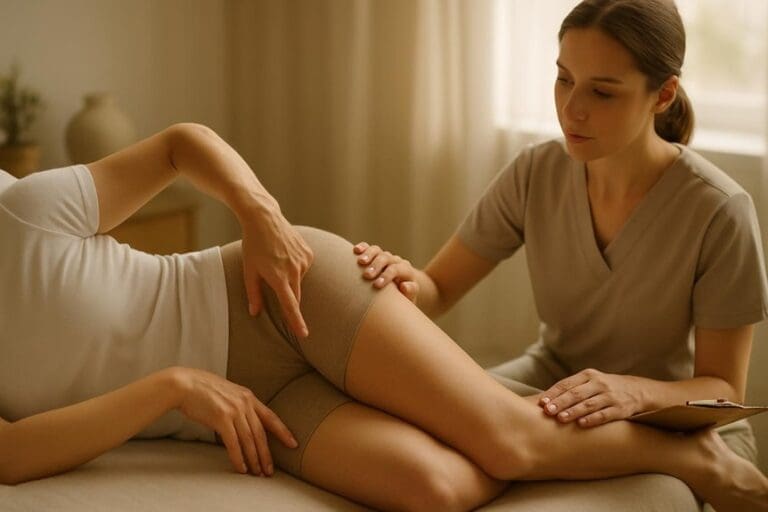
For many pregnant clients, a gentle hip tilt created with strategically placed bolsters can improve pelvic alignment and reduce strain through the low back during prenatal massage.
In Spa & Massage clinics, therapists typically place a small bolster or folded towel under the upper hip when side-lying, aiming for a neutral spine rather than a deep twist. The tilt is adjusted in small increments, guided by the client’s breathing, comfort, and any tenderness around the sacrum or SI area.
This setup can ease pressure on the lumbar muscles, reduce pulling through the abdomen, and help the legs rest without gripping.
Safety comes first: bolsters should never compress the belly, and numbness, tingling, dizziness, or increased pain signals immediate repositioning.
Pelvic Support And Stability
With the pelvis under increased load as pregnancy progresses, well-placed bolsters can stabilise the hips and sacrum in side-lying positions, helping reduce shear through the SI joints and unnecessary tension in the low back.
A firm bolster between the knees and ankles keeps the top leg from dropping forward, supporting neutral hip rotation and easing strain along the pelvic girdle.
For additional steadiness, a small wedge or folded towel behind the waist can prevent rolling and allow the abdomen to soften without pull.
At Spa & Massage clinics across London, therapists confirm comfort first, then adjust height gradually to avoid pressure on the belly, pubic symphysis, or greater trochanter.
Clear communication and gentle repositioning maintain a sense of closeness, safety, and supported ease.
Low Back Decompression Bolsters
In side-lying prenatal massage, strategic bolstering can create gentle low-back decompression by keeping the hips and pelvis level and reducing torsion through the lumbar spine. At Spa & Massage, therapists typically place a firm bolster between the knees and ankles to minimise hip rotation, then add a thin support under the waist to fill the natural side gap without pushing into the abdomen.
For added relief, a small bolster can be positioned behind the sacrum to invite a sense of being held and to soften guarding in the gluteal and quadratus lumborum area. A pillow under the upper arm and chest helps prevent shoulder collapse, which can otherwise pull the spine into tension. Comfort is continually checked, and numbness, breath restriction, or sharp pain signals immediate repositioning.
Semi-Reclined Prenatal Massage Bolster Setup
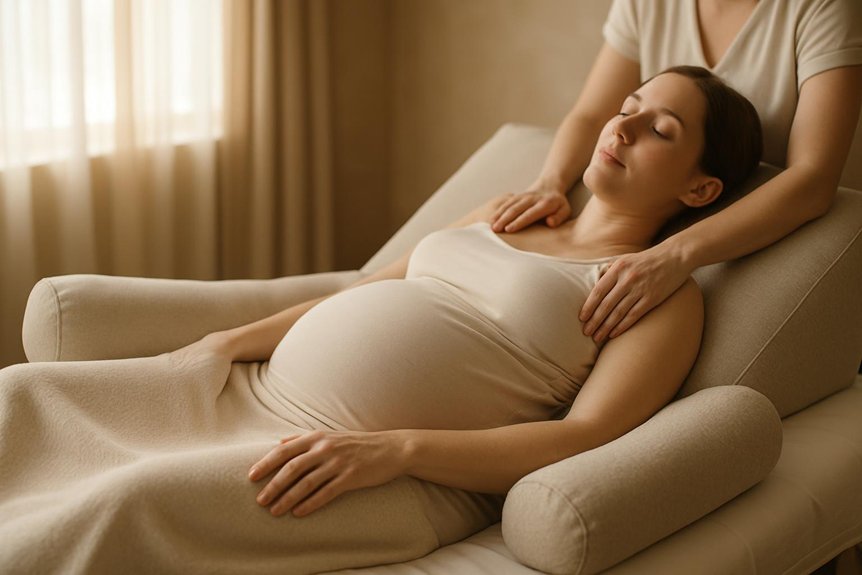
Why is a semi-reclined position so often preferred for prenatal massage? It supports circulation and breathing while reducing pressure on the abdomen and lower back, helping many clients relax without feeling “flat” on the table.
At Spa & Massage clinics across London, therapists typically raise the backrest to a comfortable incline and place a firm wedge under the upper back and shoulders.
A small bolster under the knees softens hip flexors and eases lumbar strain; a thin pillow under the head keeps the neck neutral.
Side bolsters or folded towels can cradle the outer thighs and prevent rolling.
The belly is left free of compression, with space for easy diaphragmatic movement.
Therapists check for dizziness, warmth, or shortness of breath and adjust immediately.
When to Choose Side-Lying vs Semi-Reclined
When should a prenatal client be positioned side-lying rather than semi-reclined? Side-lying is preferred from mid‑pregnancy onward, or whenever supine positioning triggers breathlessness, nausea, dizziness, or a heavy, “pressed” feeling—signs consistent with vena cava compression risk.
It also suits clients with reflux, pelvic pressure, or hip and low‑back sensitivity, allowing the abdomen to be cradled and the spine to settle softly.
Semi‑reclined can be chosen earlier in pregnancy, or later when the client remains fully comfortable and circulation feels steady; it offers easy access for neck, shoulders, arms, and scalp work while keeping the chest open.
At Spa & Massage, therapists check comfort frequently and adjust bolsters to maintain ease and closeness throughout.
Prenatal Massage Bolster Mistakes to Avoid
Although bolsters are essential for comfort and circulation in prenatal massage, common set‑up errors—such as over‑elevating the torso, allowing the abdomen to hang unsupported, twisting the pelvis with uneven hip wedges, or placing pressure points under the knees and ribs—can increase strain, compromise breathing, and trigger symptoms linked to vena cava compression.
At Spa & Massage, therapists avoid “one‑size” stacks and instead check alignment from shoulders to ankles, then confirm ease of breath and a soft, supported belly.
Another frequent mistake is leaving the neck unsupported or flexed; a small pillow should keep the jaw relaxed and airway open. Bolsters that are too firm can create numbness; too soft can collapse and destabilise.
Clients should be encouraged to speak up about tingling, dizziness, or discomfort immediately.
Trimester-by-Trimester Prenatal Bolster Adjustments
Across pregnancy’s changing anatomy and circulation, bolster set‑ups should be adjusted trimester by trimester to maintain neutral alignment, unimpeded breathing, and safe blood flow.
In the first trimester, light bolstering under ankles and a small head cradle typically supports comfort while avoiding pressure on tender breasts; sessions remain gentle and consent‑led.
In the second trimester, many clients at Spa & Massage prefer side‑lying with a firm belly bolster, a pillow between knees, and support under the top arm to reduce lumbar strain and round‑ligament pull.
In the third trimester, extra chest elevation and a deeper hip/knee stack can ease breathlessness and pelvic load; prolonged supine positioning is avoided to reduce vena cava compression.
Therapists reassess positioning continuously, inviting quiet feedback to keep touch intimate and safe.
Conclusion
Proper bolster placement promotes peaceful, protected prenatal massage. By supporting the bump without pressure, stabilising the pelvis, and softening stress on hips, shoulders, and spine, bolsters help maintain neutral alignment and healthy circulation in side-lying or semi-reclined positions. Safety remains central: positioning is adjusted to trimester, symptoms, and comfort, and red flags prompt referral when needed. Avoiding common mistakes—overextension, uneven support, or restrictive pressure—keeps treatment calm, customised, and clinically considerate.