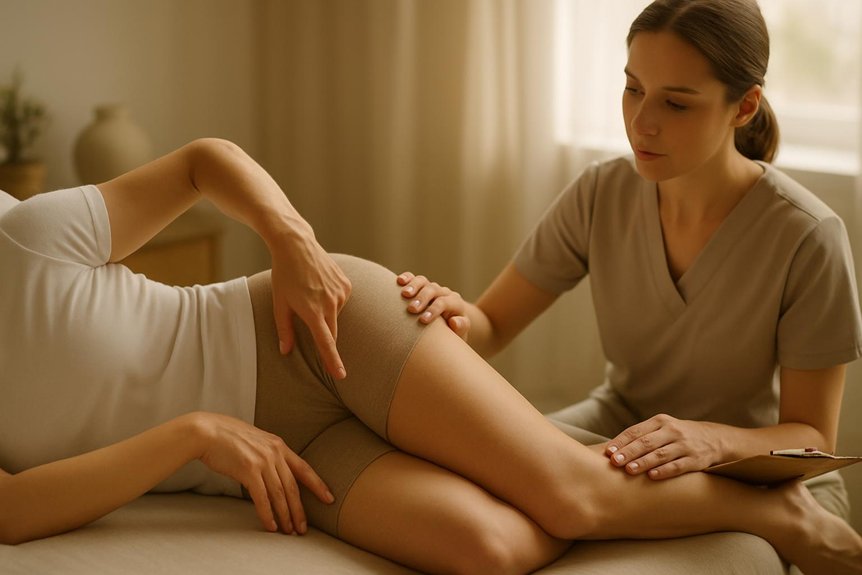
Before intensive tissue massage, a client with sciatica should describe symptom quality and intensity (0–10), onset, triggers, and what worsens or eases symptoms, plus any prior diagnoses, imaging, medicines, injections, or physiotherapy advice. The therapist should be told exactly where symptoms travel (buttock, thigh, calf, foot), whether they cross the knee, and any numbness, tingling, or weakness. Urgent red flags include saddle numbness, bowel/bladder changes, progressive weakness, fever, or night pain. More guidance follows.
Is It Safe for Your Sciatica?

Evaluating suitability is essential: intensive tissue massage can be safe for some people with sciatica, but only after the likely cause, symptom severity, and any red flags (e.g., progressive weakness, numbness, or bowel/bladder changes) are screened, because excessive pressure over irritated lumbar tissues or the piriformis region may aggravate nerve compression and increase pain.
When appropriate, therapists at Spa & Massage typically use a graded-pressure approach, avoiding direct compression on tender nerve pathways and prioritising surrounding structures (glutes, hip rotators, hamstrings) to reduce protective spasm.
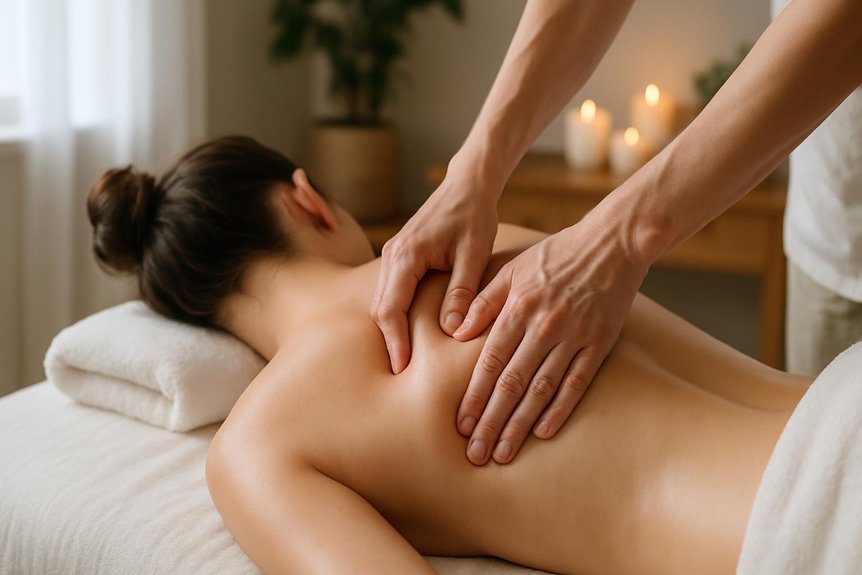
A key technique in deep tissue massage is using slow, targeted pressure to work through deeper muscle layers while staying within a tolerable range.
Evidence-informed care also includes brief reassessment during treatment: pain should not travel further down the leg or sharpen. Clients are encouraged to describe what feels “good hurt” versus threatening pain.
Aftercare may include hydration, gentle walking, and heat or cold as advised.
Which Sciatica Red Flags Should You Mention?
Often, the most important information to share before any massage for suspected sciatica is the presence of “red flag” symptoms that may indicate serious nerve compromise or an underlying condition requiring urgent medical assessment; at Spa & Massage, therapists routinely screen for progressive leg weakness or foot drop, significant or worsening numbness (especially in the saddle area), new bowel or bladder changes, unexplained fever, recent significant trauma, a history of cancer, unintentional weight loss, or severe, unrelenting pain that is not eased by rest, because these findings can make massage inappropriate until a clinician has ruled out emergencies.
Clients should disclose if they feel unsafe walking, cannot lift the toes, or notice sudden loss of sensation around the genitals or anus. Any rapidly escalating pain after injury, night pain, or systemic illness should be reported. When these appear, Spa & Massage will pause treatment and advise urgent medical evaluation.
What Sciatica Symptoms Should You Describe to Us?
Once serious “red flag” concerns have been ruled out, the next step is to describe the sciatica pattern in detail so a Spa & Massage therapist can assess suitability for treatment and select appropriate techniques. They should note symptom quality (sharp, burning, aching), intensity (0–10), and whether it is constant or intermittent.
They should report onset, recent triggers (lifting, prolonged sitting, exercise), and aggravating or easing factors (walking, lying down, heat, stretching). They should mention any associated low-back stiffness, hip tightness, or muscle spasm, plus sleep disruption and limits on daily activities.
They should disclose prior diagnoses, imaging, or clinician advice, and current medicines, injections, or physiotherapy. In Spa & Massage clinics, these details guide pressure choice, positioning, and pacing for comfort and safety.
Where Does Your Sciatica Pain Travel or Tingle?
Map the symptoms from the lower back into the leg as precisely as possible, because the travel pattern helps distinguish sciatic nerve irritation from local muscle or joint pain.
At Spa & Massage, therapists ask whether sensation runs into the buttock, back of thigh, calf, heel, or outer foot (often S1), or down the front/side of the thigh to the shin and top of the foot (often L4–L5).
They also note whether symptoms stay above the knee, switch sides, or feel like burning, pins-and-needles, numbness, or electric shock.
Exact “hot spots,” skin sensitivity, and positions that worsen or ease symptoms (sitting, bending, walking, lying) should be shared.
Rapidly worsening weakness, saddle numbness, or bladder/bowel changes require urgent medical assessment.
How Deep Should Deep Tissue Be With Sciatica?
With sciatica, deep tissue pressure should be pain-guided, staying within a tolerable range that does not reproduce sharp, shooting, or worsening symptoms.
At Spa & Massage, therapists typically start with lighter to moderate pressure and increase depth only in small, controlled steps as the client’s response is monitored throughout the session. If symptoms intensify or travel further down the leg, the safest approach is to reduce pressure, adjust technique, and avoid aggressive work over irritated tissues.
Pain-Guided Pressure Levels
In cases of sciatica, deep tissue pressure should be titrated to the client’s pain response rather than delivered at a fixed “deep” intensity, because excessive force can increase neural irritability and aggravate symptoms.
At Spa & Massage, therapists use a pain-guided scale, aiming for strong-but-comfortable sensation that never feels sharp, electric, burning, or causes protective guarding.
Pressure should allow relaxed breathing and a sense of safety, with symptoms staying stable during and after the session.
Any increase in radiating leg pain, tingling, numbness, or weakness signals that depth is too high and the tissue should be approached more gently.
Clear, intimate communication is essential: clients are encouraged to describe where sensation travels, how it changes, and whether touch feels settling or threatening, moment by moment.
Safe Depth Progression
From a safety standpoint, the appropriate “deep” level for sciatica is not a fixed intensity but a staged progression that begins with low-load contact and advances only when symptoms remain stable.
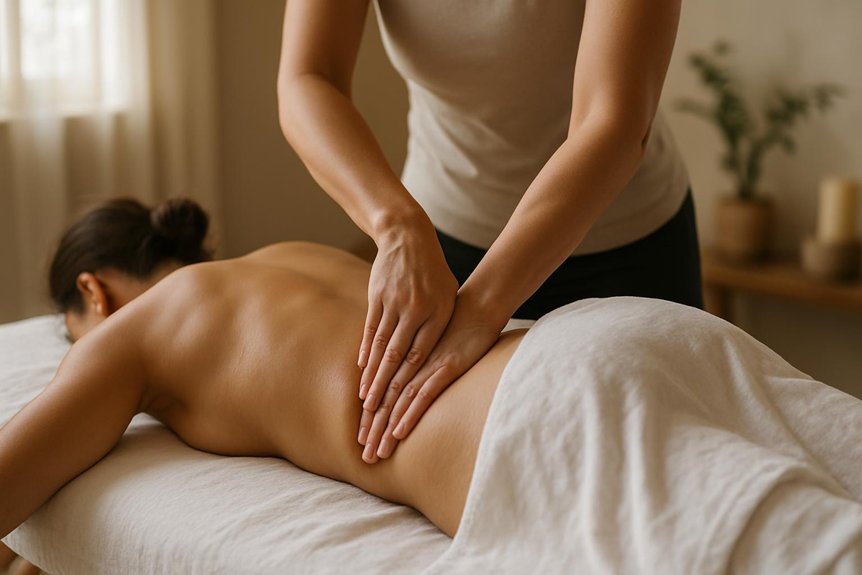
Early work prioritises calming touch, slow strokes, and gentle compression around the hips, glutes, and lumbar tissues, while avoiding sustained pressure directly over the nerve pathway.
Depth increases only if there is no sharp, burning, or radiating change during the session and no delayed flare within 24 hours.
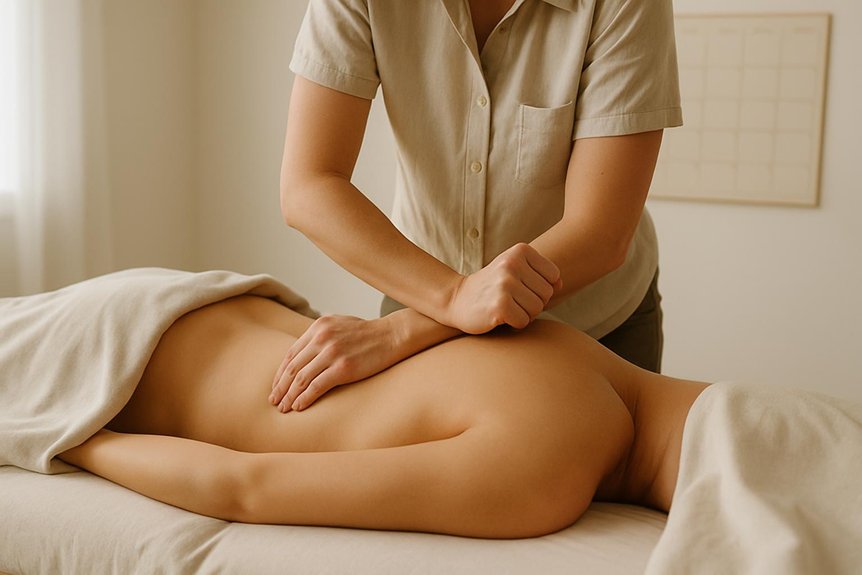
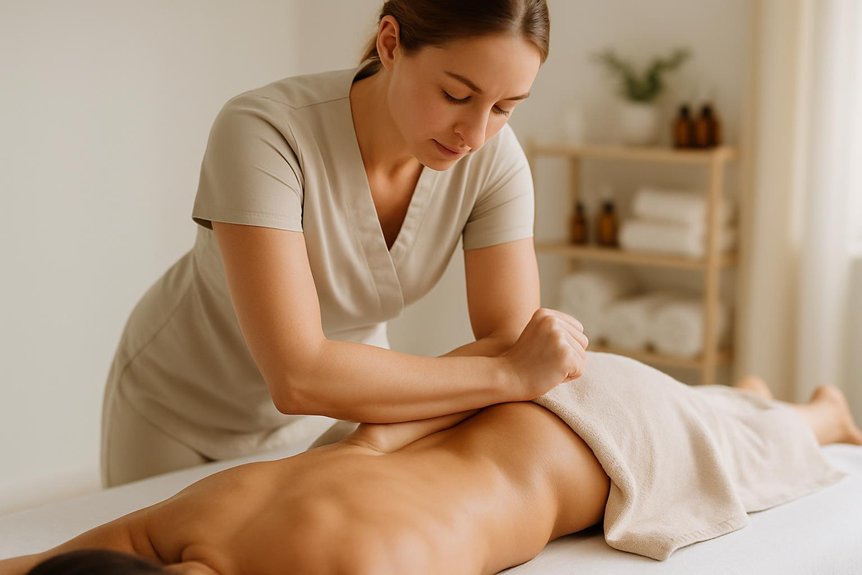
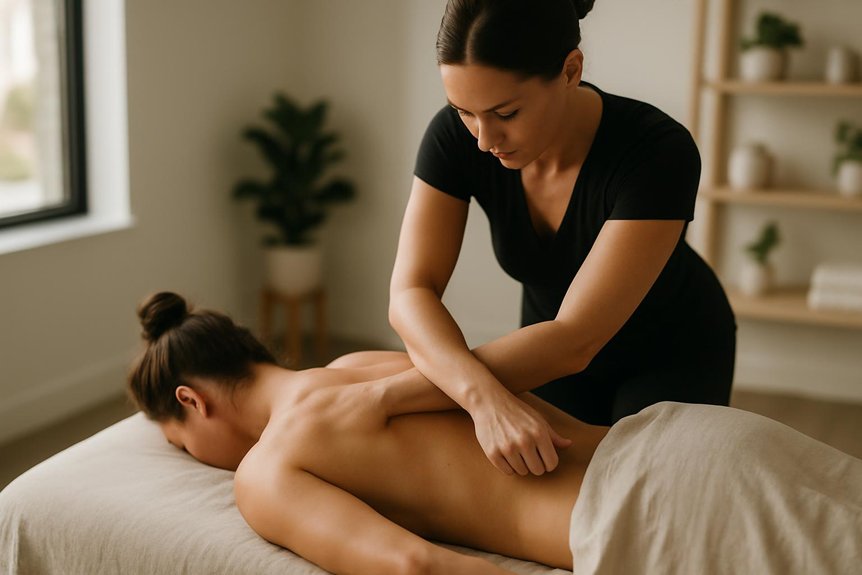
In Spa & Massage clinics, therapists typically start with broad forearm contact, then progress to more specific thumb or elbow work in short intervals, checking feedback frequently.
If symptoms peripheralise, intensity is reduced, the area is reworked indirectly, and treatment is refocused on comfort and safety.
What Should You Do After Deep Tissue for Sciatica?
After an intensive tissue massage for sciatica, aftercare should prioritise hydration and light, regular movement to reduce post-treatment soreness and support circulation.
Symptom-guided heat or ice may be used to manage discomfort, and at Spa & Massage clinics our therapists typically advise choosing the option that improves pain without increasing numbness or radiating symptoms.
Gentle stretching can then be introduced to maintain range of motion, kept within a pain-free limit and stopped if symptoms worsen.
Hydrate And Keep Moving
To support tissue recovery and reduce post-treatment soreness, adequate hydration and gentle movement are routinely advised following intensive tissue massage for sciatica. Fluids support circulation and may help clear metabolic by-products associated with vigorous manual work.
At Spa & Massage clinics across London, therapists typically suggest sipping water regularly for the rest of the day, especially if the client feels fatigued or “heavy” through the hips and low back. Gentle walking, pelvic tilts, and comfortable range-of-motion work can maintain mobility without provoking symptoms.
Prolonged sitting is discouraged; brief standing breaks every 30–60 minutes may reduce neural sensitivity. Movement should remain pain-free and unforced, avoiding stretching into sharp, radiating, or increasing numbness.
New weakness, bladder or bowel changes require urgent medical review.
Use Heat Or Ice
When post-massage tenderness or sciatic irritation persists, heat and ice can be used as simple, adjunctive tools to modulate pain and reduce reactive guarding in the low back, glutes, and posterior thigh.
In general, ice suits “hot,” sharp, or newly flared symptoms; apply a wrapped cold pack 10–15 minutes, then reassess.
Heat suits stiffness and aching; use a warm compress or shower 15–20 minutes to support circulation and comfort.
Skin should be checked every few minutes, avoiding direct contact and prolonged exposure, especially with reduced sensation, diabetes, or vascular disease.
At Spa & Massage clinics across London, therapists advise choosing the modality that eases symptoms within one session and stopping if pain, numbness, or weakness increases.
Follow Gentle Stretching
Following deep tissue work for sciatica, gentle stretching can help maintain mobility and reduce protective muscle guarding in the low back, glutes, and posterior thigh, provided it remains pain-free and does not provoke radiating symptoms.
At Spa & Massage, clients are advised to wait until tissues feel settled, then use slow, supported holds (20–30 seconds), breathing steadily and staying below a mild stretch sensation.
Suitable options include a supine hamstring stretch with a strap, a gentle piriformis stretch, and a hip flexor opener with a cushion under the knee.
Stretching should stop if numbness, tingling, sharp pain, or leg symptoms increase.
Hydration and a short walk can complement mobility.
Persistent or worsening symptoms warrant medical review promptly.
Conclusion
Of course, sciatica will “probably be fine” if no one mentions the leg numbness, worsening weakness, bowel/bladder changes, or pain that escalates at night—medicine loves surprises. A safer, evidence-based approach is less theatrical: the client reports symptom location, radiation, triggers, duration, prior diagnoses/imaging, and current medications or anticoagulants. The therapist then adjusts depth, avoids provocative zones, monitors neurological signs, and provides aftercare guidance. Deep tissue becomes targeted care, not bravado.