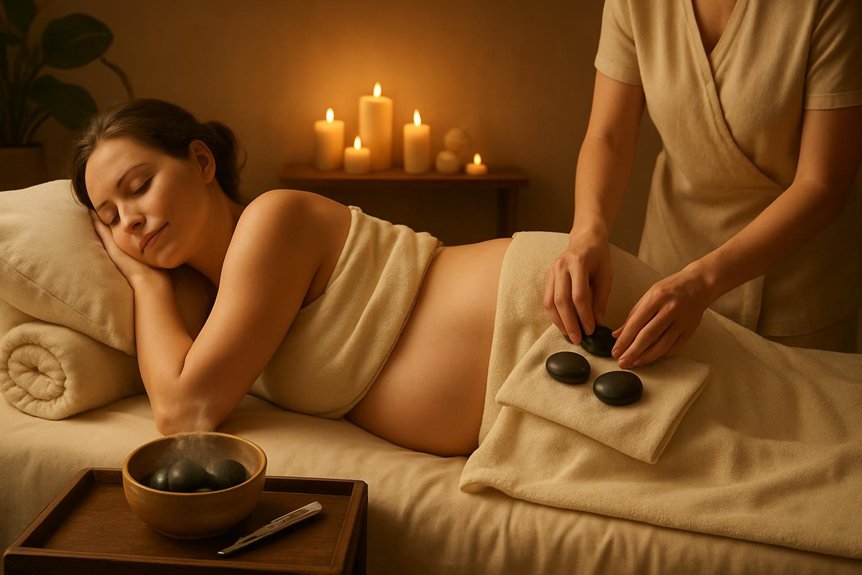
Hot stone massage is generally not considered first-line during pregnancy because added heat can raise core temperature and affect blood pressure, increasing dizziness or fainting risk. Many clinicians advise avoiding hot stones in the first trimester and in higher-risk pregnancies, including hypertension, pre-eclampsia, bleeding history, multiple pregnancy, or clotting concerns. If used at all, stones should be mildly warm, kept moving, and avoided on the abdomen and low back. Further guidance outlines trimester-specific precautions and stop signs.
Is Hot Stone Massage Safe During Pregnancy?
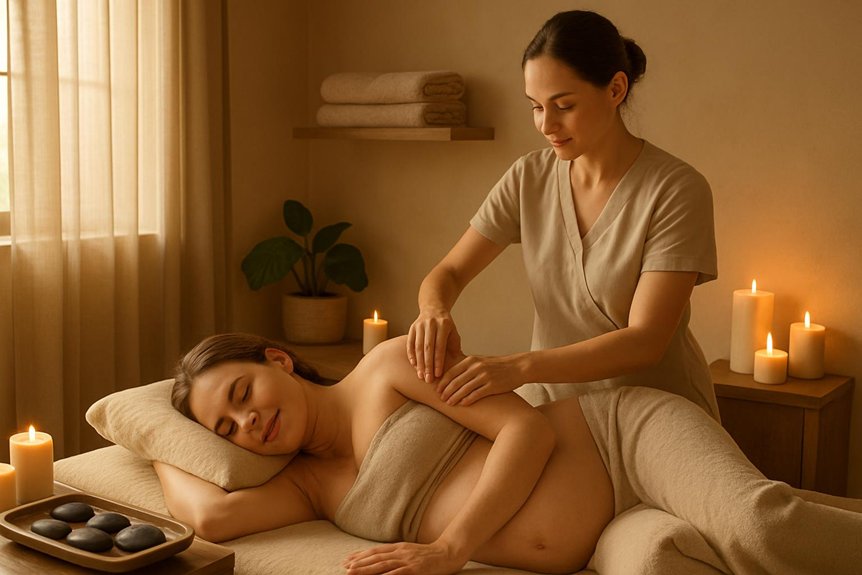
In most cases, hot stone massage is not considered a first-line option during pregnancy because added heat can increase core temperature, alter blood pressure, and heighten dizziness or fainting risk—effects that may be more pronounced in pregnancy.
Safety depends on gestational stage, medical history, hydration, and how heat is applied (stone temperature, duration, body area).
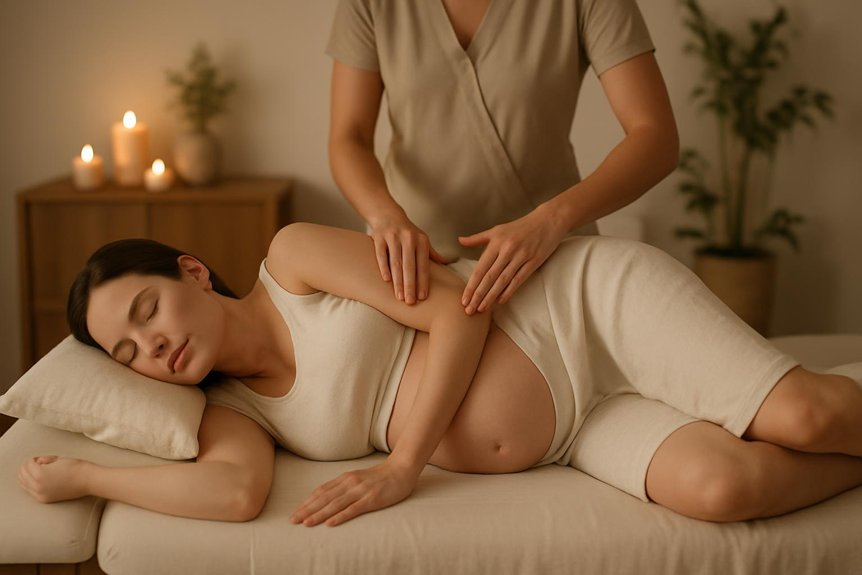
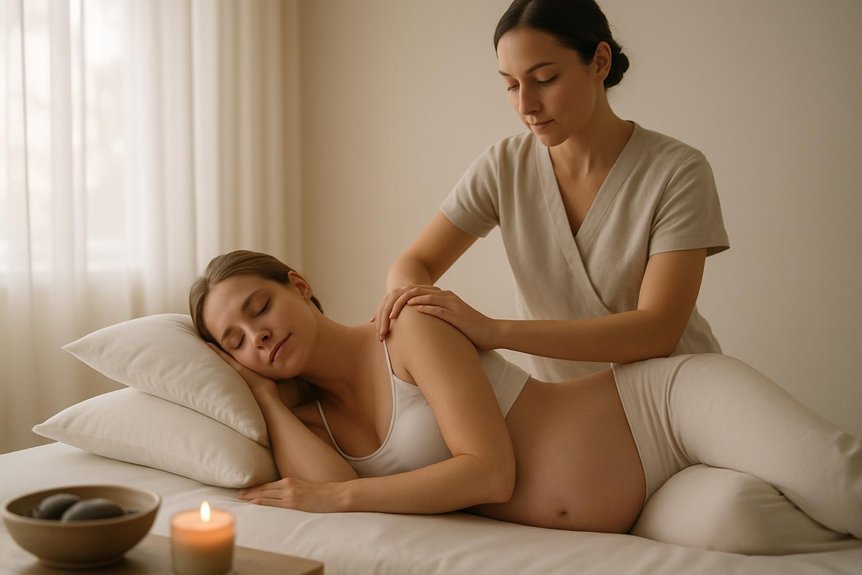
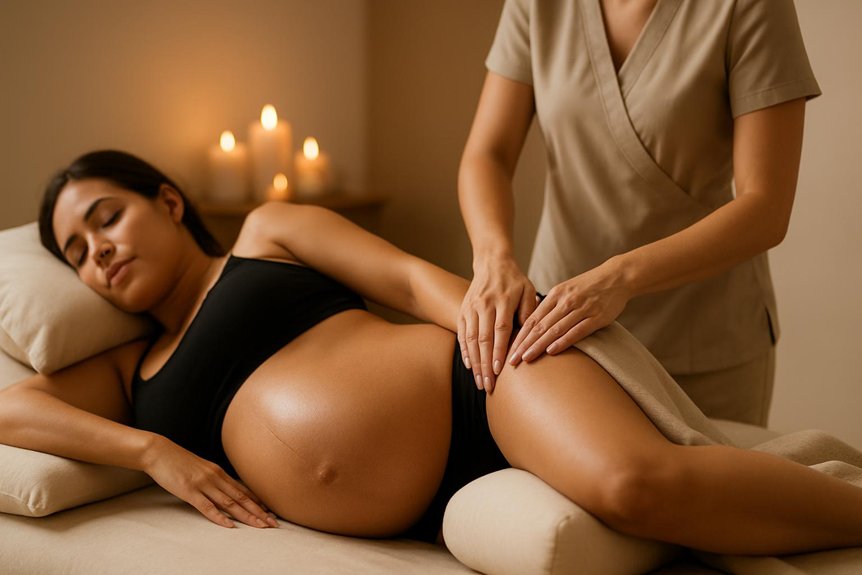
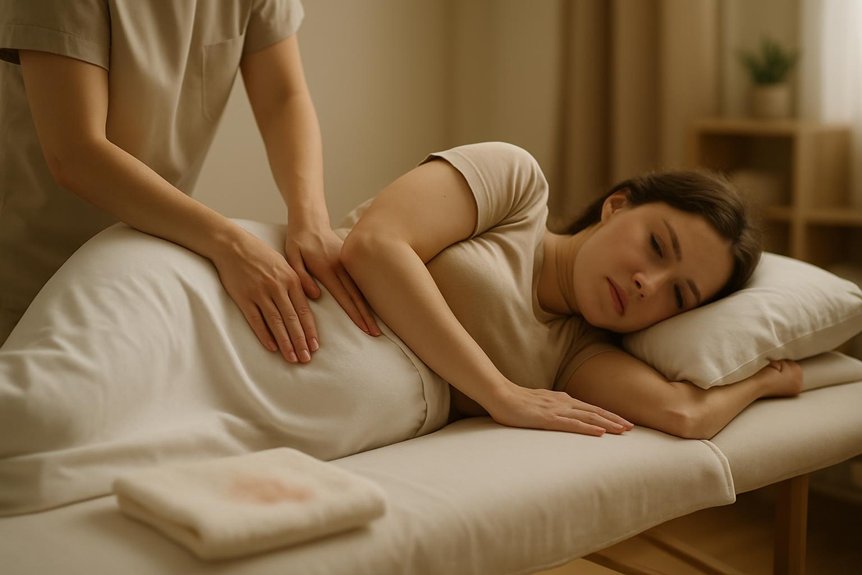
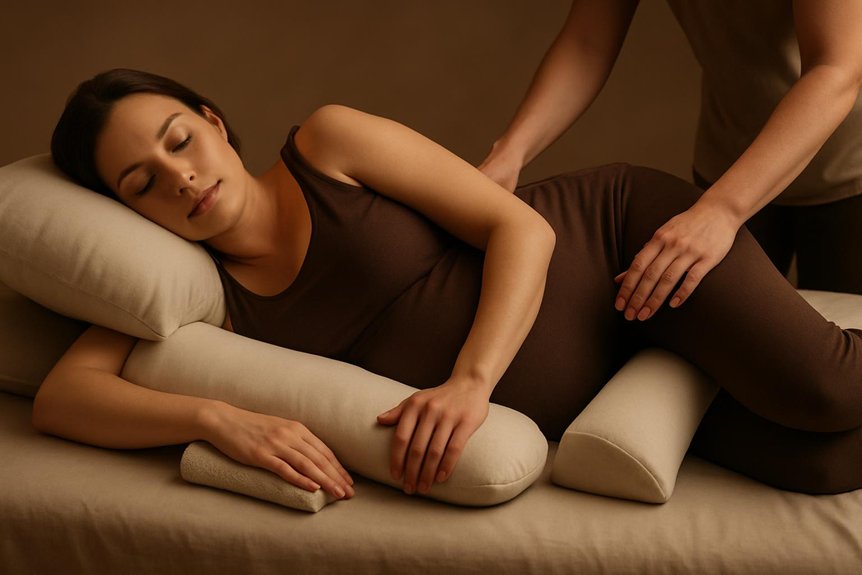
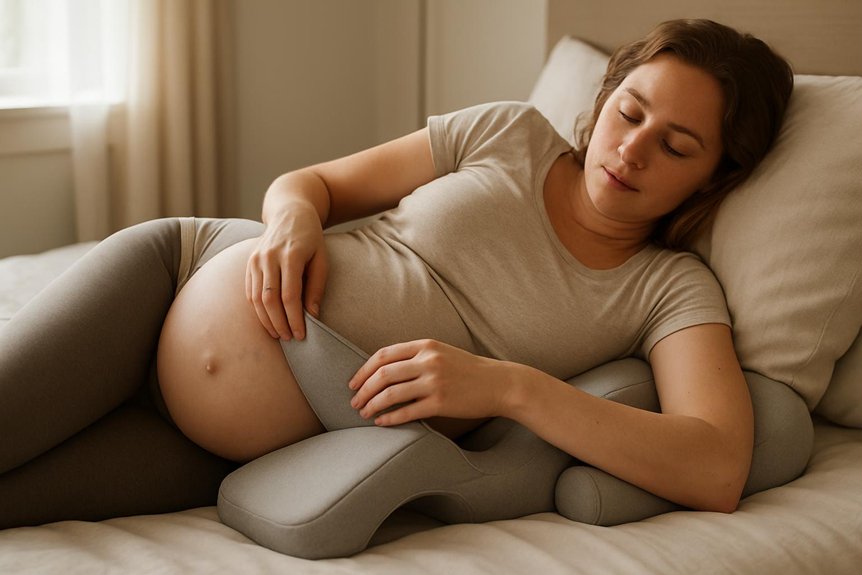
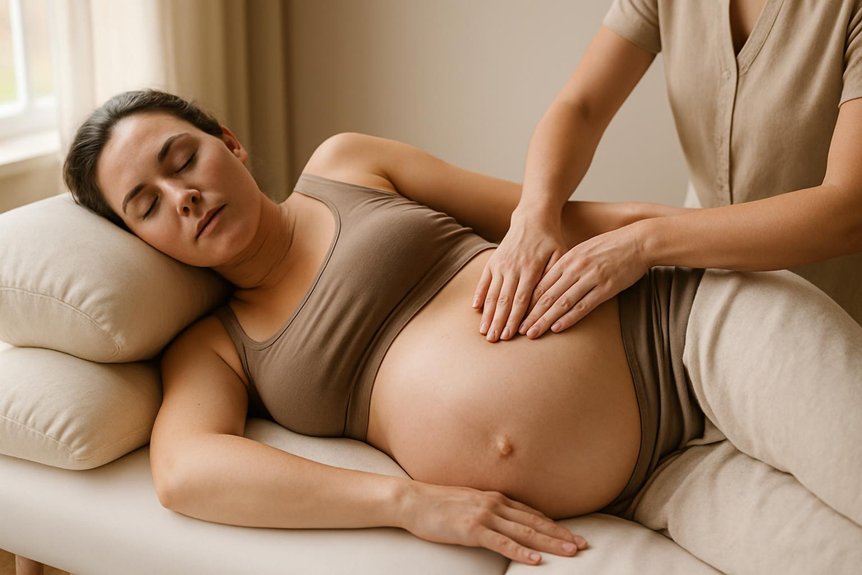
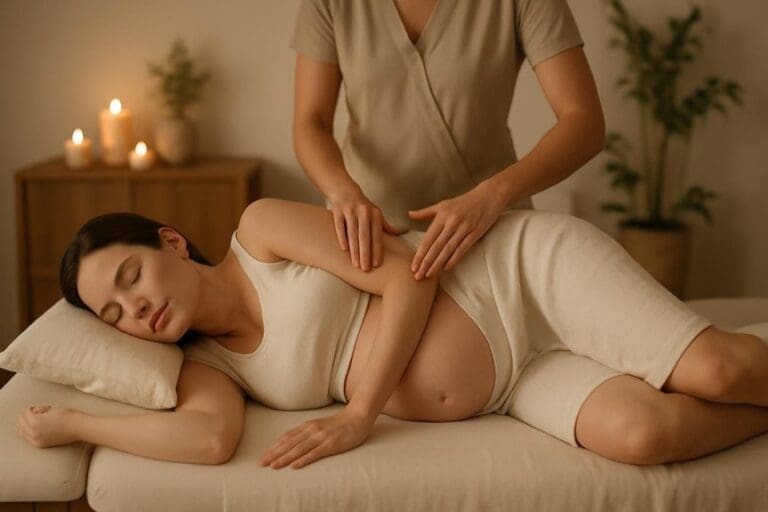
At Spa & Massage, therapists generally prioritise pregnancy massage over hot stones, using supportive side-lying positioning, lighter pressure, and temperature-neutral comfort to reduce risk while preserving a close, soothing experience.
For clients seeking deeper muscular relief without added heat, deep tissue massage techniques may be considered with pregnancy-appropriate modifications and professional screening.
If a client still requests warmth, a clinician’s clearance and a careful, consent-led approach are recommended, with immediate stopping if nausea, lightheadedness, palpitations, or flushing occurs.
Individualised screening matters most.
When Should You Avoid Hot Stone Massage in Pregnancy?
Hot stone massage may be offered only with tight safeguards in pregnancy, yet there are clear situations where it should be avoided altogether to reduce the risk of overheating, blood pressure changes, dizziness, or symptom escalation.
It is typically not advised in the first trimester, in multiple pregnancy, or where there is any history of miscarriage, bleeding, or unexplained abdominal pain.
It should also be avoided with pre‑eclampsia, hypertension, clotting disorders, DVT risk, significant varicose veins, or cardiovascular disease, where heat and positioning can add strain.
Fever, infection, active skin conditions, or reduced temperature sensation also raise safety concerns.
At Spa & Massage clinics across London, therapists defer to a midwife or GP when complications exist and may recommend prenatal massage without heat instead.
What Are the Warning Signs to Stop a Session?
During a hot stone massage in pregnancy, the session should be stopped immediately if dizziness or faintness occurs, as this may indicate a blood-pressure or overheating response.
Abdominal pain or cramping should also be treated as a red flag requiring prompt cessation and medical advice if symptoms persist.
At Spa & Massage clinics, therapists monitor heat tolerance closely, and any excessive heat discomfort is considered sufficient reason to remove stones and end the treatment to prioritise maternal and fetal safety.
Dizziness Or Faintness
Why can dizziness or faintness matter in a prenatal massage session? In pregnancy, blood pressure and circulation can shift quickly, and warmth or prolonged positioning may worsen light‑headedness, risking a fall when turning, sitting up, or walking out.
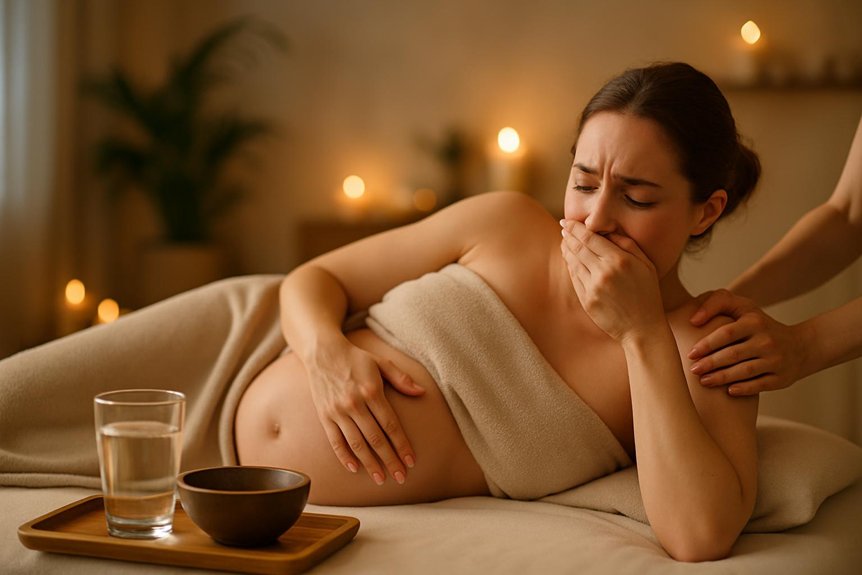
Warning signs to stop include sudden wooziness, sweating, nausea, pale or clammy skin, ringing in the ears, blurred vision, shortness of breath, or feeling “far away.” At Spa & Massage, therapists pause immediately, cool the stones, adjust the room temperature, and reposition the client with supportive bolsters, typically into a side‑lying posture.
Slow, guided breathing and sips of water may help, but symptoms that persist, recur, or include true fainting warrant urgent medical advice and a same‑day check.
Abdominal Pain Or Cramping
Light‑headedness is not the only symptom that warrants immediate caution in prenatal massage; abdominal pain or cramping can signal uterine irritability, dehydration, or (more rarely) an evolving complication that should not be masked by warmth or relaxation.
A session should stop if cramps feel rhythmic, intensify, or spread to the lower back; if there is pelvic pressure, tightening, or a “period‑like” ache; or if pain is one‑sided, sharp, or accompanied by nausea.
Any vaginal bleeding, fluid leakage, fever, chills, reduced fetal movement, or feeling unwell warrants urgent medical advice.
At Spa & Massage, therapists pause, help the client change position, offer water, and recommend contacting a midwife or GP before continuing, even when symptoms settle quickly.
Excessive Heat Discomfort
Given pregnancy’s reduced heat tolerance and the importance of maintaining a stable core temperature, any sign of excessive warmth during hot stone work should be treated as a prompt to stop rather than “push through.”
Warning signs include sudden flushing, sweating that feels out of proportion to the room temperature, nausea, dizziness, a racing heartbeat, headache, breathlessness, or feeling faint; skin that is uncomfortably hot to touch, red, or painful under the stones; and a general sense of overheating or agitation that does not settle with repositioning.
At Spa & Massage, therapists pause immediately, remove stones, cool the area, offer water, and switch to hands-only prenatal massage if symptoms resolve.
If symptoms persist, the session should end and medical advice sought. A client’s comfort and safety always come first.
Is Hot Stone Massage Safe by Trimester (1st, 2nd, 3rd)?
In clinical practice, hot stone massage during pregnancy is approached as a trimester-specific risk assessment rather than a one-size-fits-all treatment, because maternal circulation, temperature regulation, and sensitivity to pressure change as pregnancy progresses.
In the 1st trimester, many clinicians advise avoiding hot stone work, as early pregnancy symptoms and miscarriage anxiety make conservative choices more patient-centred; Spa & Massage typically recommends prenatal massage instead.
In the 2nd trimester, selected clients may be suitable for limited stone use, kept local, brief, and away from the abdomen and low back, with continuous comfort check-ins.
In the 3rd trimester, positioning, breath ease, and swelling risk dominate; if stones are used, therapists prioritise gentle, grounding contact and shorter sessions.
Medical clearance is prudent for high-risk pregnancies.
How Hot Is Too Hot for Pregnant Clients?
How hot is too hot in pregnancy? In general, any heat that raises core body temperature is the concern.
Evidence from hyperthermia research links sustained maternal overheating—especially in early pregnancy—to increased fetal risk, so “hot enough to sweat, feel faint, or flush” is too hot for many clients.
Stone temperatures used for standard hot stone massage can exceed safe skin comfort if held in place; burns are an additional risk because pregnancy can change circulation and heat sensitivity.
Patient-centred screening matters: fever, high blood pressure, preeclampsia symptoms, diabetes, neuropathy, or reduced sensation lower the safe threshold.
At Spa & Massage, therapists treat heat as optional, keeping touch close, soothing, and never pushing past “comfortably warm.”
How We Adapt Hot Stone Massage for Pregnancy at Spa & Massage
Because overheating and skin sensitivity are the main safety concerns, Spa & Massage adapts any hot-stone elements in pregnancy to prioritize temperature control, positioning, and ongoing client feedback.
Stones are kept only mildly warm, tested on the therapist’s inner wrist and the client’s forearm, then moved continuously rather than left resting on the body.
Therapists avoid the abdomen and deep pressure, and limit heat near the lower back if swelling, varicosities, or discomfort are present.
Side-lying positioning with supportive bolsters reduces strain and supports circulation.
Sessions begin with a brief health check, including trimester, medical advice, and heat tolerance, and clients are encouraged to speak up instantly if warmth shifts from soothing to sharp.
Hydration and gentle aftercare are advised afterward.
What to Book Instead: Safer Prenatal Massage Options
When heat sensitivity, swelling, or medical guidance makes hot stones a less suitable choice, safer pregnancy-focused treatments can provide meaningful relief without added thermal risk.
It is typically the best alternative: it uses side-lying positioning, supportive bolsters, and lighter-to-moderate pressure to ease low-back strain, hip tension, and leg heaviness while monitoring comfort and breath.
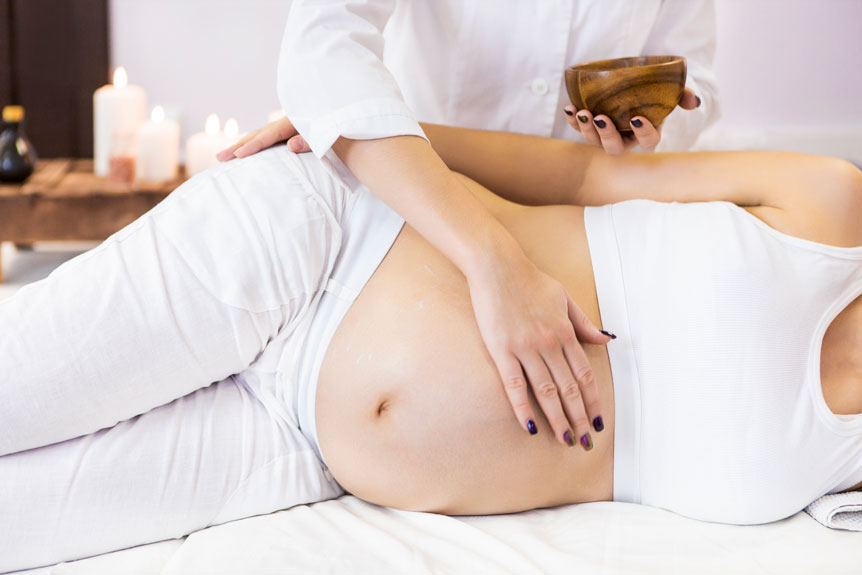
Many clients also choose aromatherapy massage with pregnancy-appropriate essential oils and minimal scent, prioritising nausea sensitivity and skin reactivity.
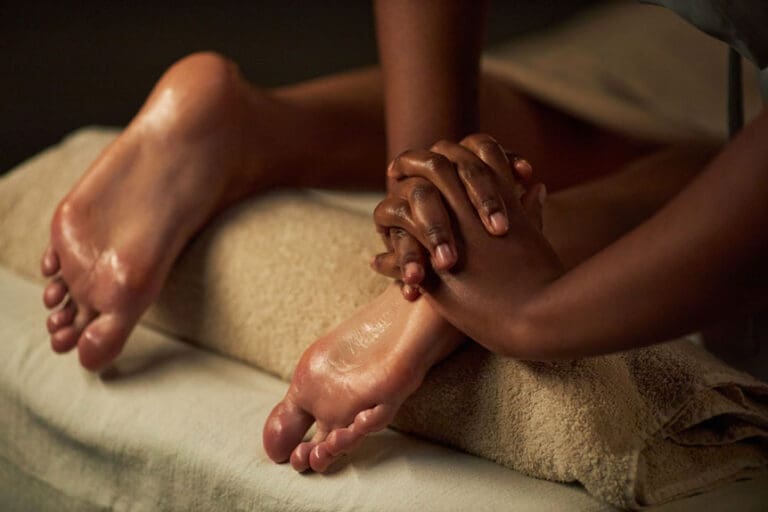
Reflexology can be booked for soothing foot and ankle fatigue, with careful, non-stimulating techniques.
At Spa & Massage’s London clinics, therapists screen each trimester, adjust pressure and time, and encourage hydration and slow standing to reduce dizziness.
Always confirm GP or midwife advice.
Conclusion
Hot stone massage in pregnancy is not inherently unsafe, but the theory that “heat equals harm” is only partly supported: risk appears to rise with excessive temperature, prolonged heat exposure, dehydration, and unmanaged medical conditions rather than with careful, localized warming. Evidence-based practice consequently prioritises screening, trimester-specific modifications, and stopping at early warning signs (dizziness, nausea, uterine cramping, palpitations). When uncertainty remains, cooler prenatal massage techniques offer comparable relaxation with a lower risk profile.