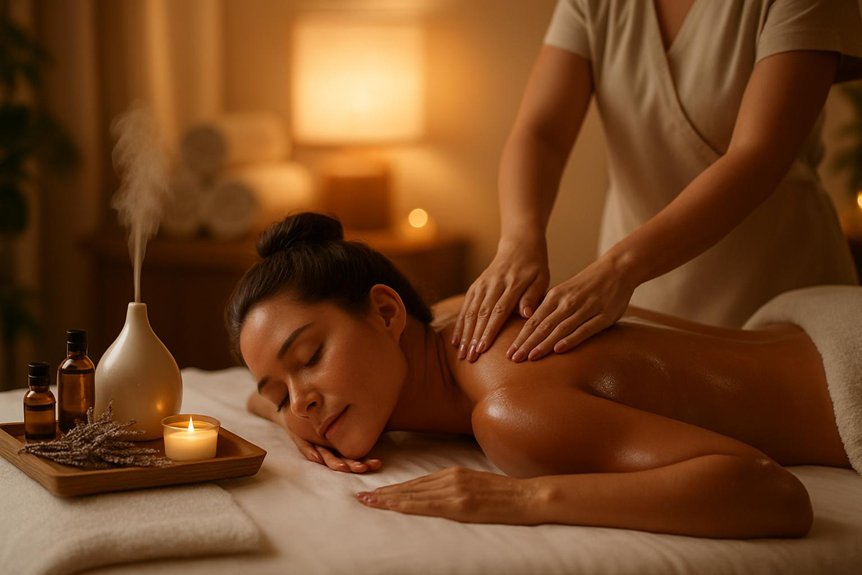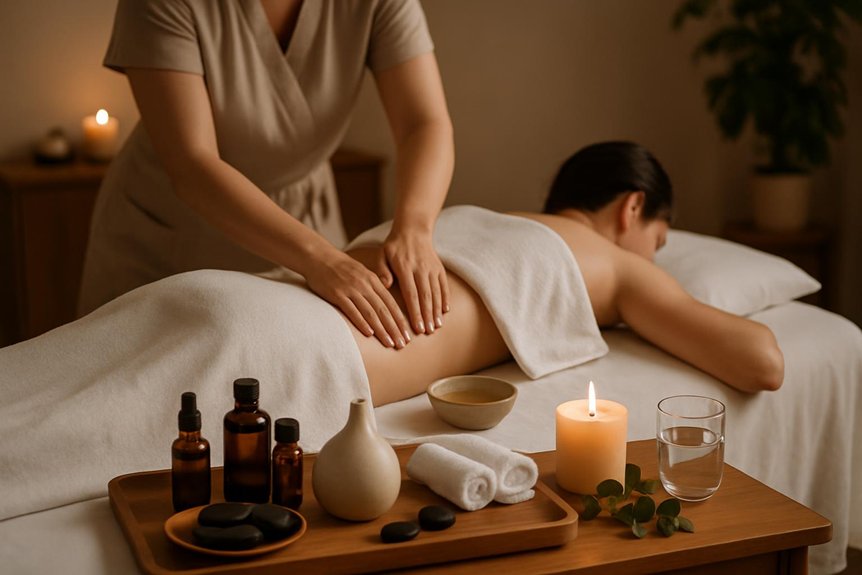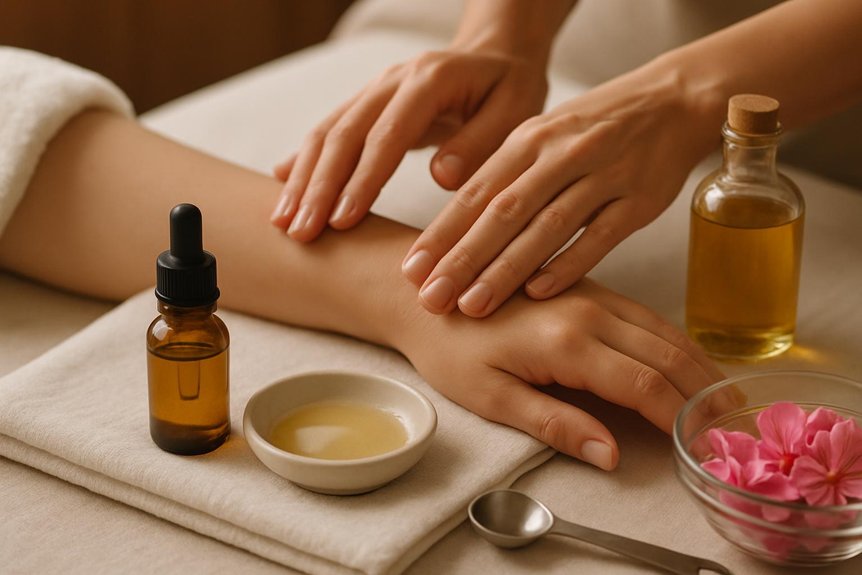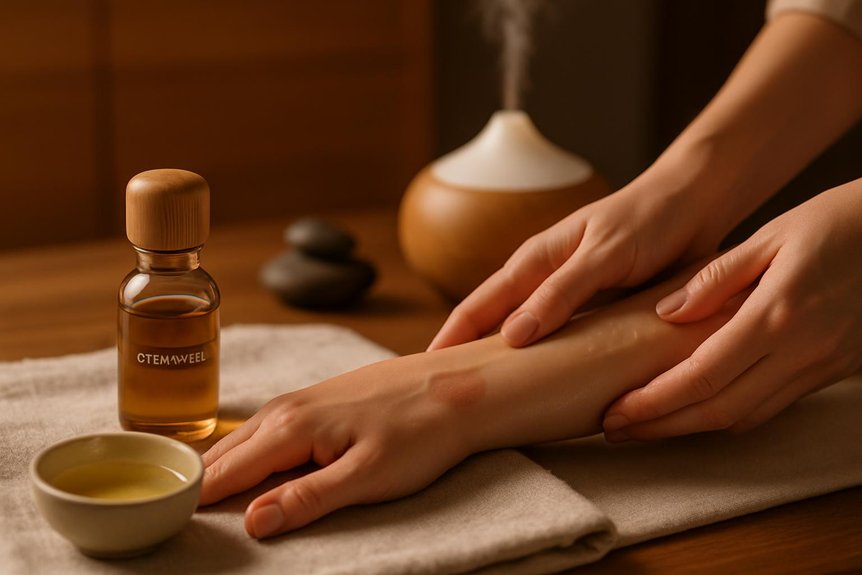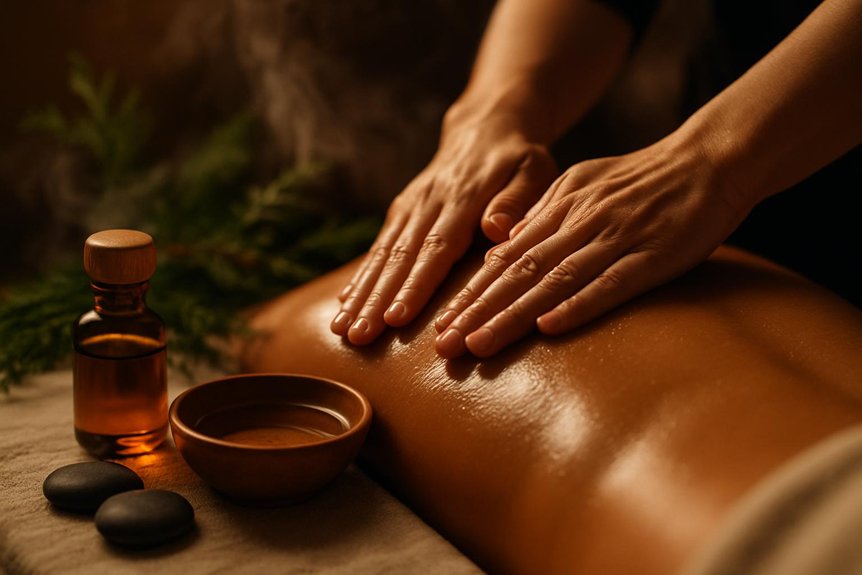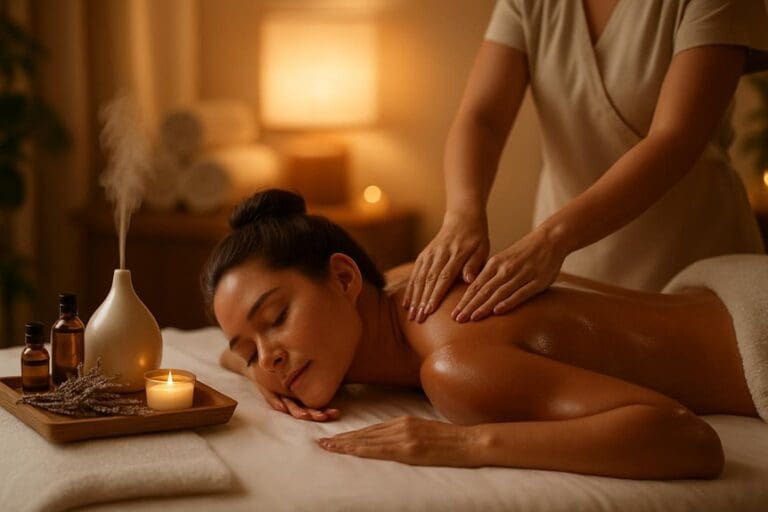
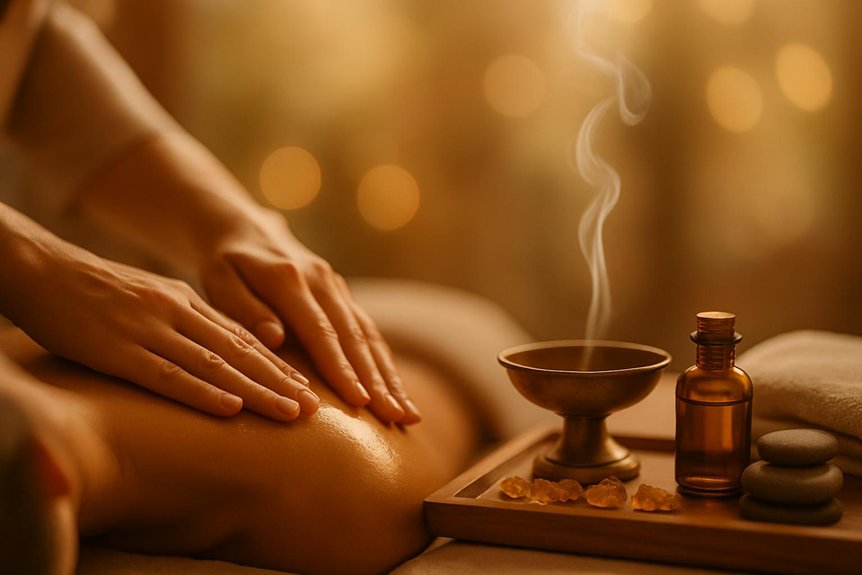
In aromatic massage, frankincense smells clean and resinous, with a pine-like balsamic core, a gentle citrus-peel lift, and a warm, lightly smoky-woody finish. It tends to stay close to the skin, offering medium strength when properly diluted rather than filling the room. As body heat and circulation increase, the aroma softens and deepens, sometimes releasing brief fresh top-note pulses with friction. Because sensitivity varies, it is usually patch-tested and adjusted, with more to explore next.
What Does Frankincense Smell Like in Massage?
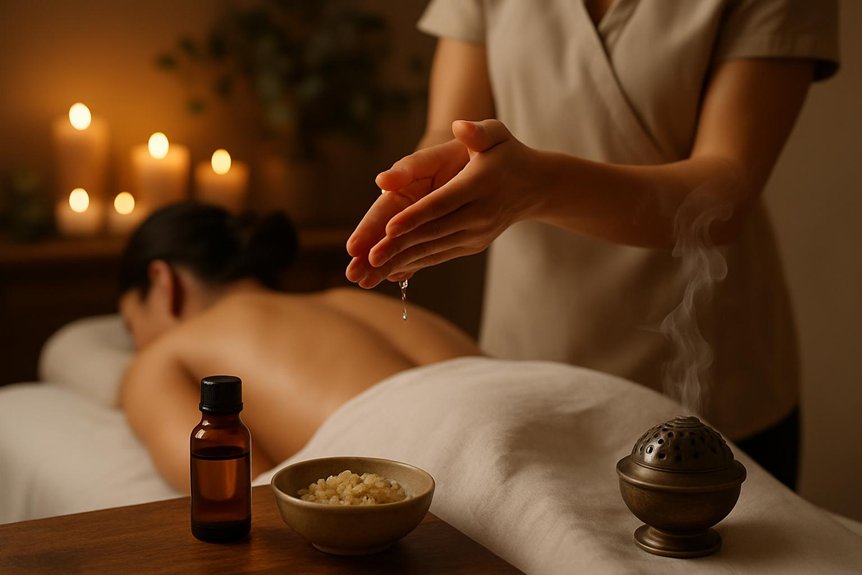
Often described as resinous and softly citrusy, frankincense in aromatic massage presents a clean, balsamic scent with subtle notes of warm wood, pine-like freshness, and a faint spice that deepens as the oil warms on the skin.
In Spa & Massage clinics, it is typically perceived as grounding and quietly sensual rather than perfumey, helping many clients settle into slower breathing and fuller body awareness.
The aroma tends to feel clearer after initial inhalation, then rounder as gentle effleurage increases warmth and circulation.
For an even more calming session, many therapists pair frankincense with aromatherapy massage tips to help clients relax and heal.
For safety, therapists use properly diluted essential oil in a carrier and adjust for sensitive skin, asthma, or pregnancy. Patch testing and avoidance on broken skin reduce irritation risk. Clients are advised to hydrate and pause if dizziness or headache appears.
What Scent Notes Does Frankincense Have (Resin, Citrus, Smoke)?
Aromatic structure is the easiest way to describe frankincense in aromatherapy massage: it opens with a clear resin note (balsamic, pine-leaning and slightly sweet), lifts into a gentle citrus facet (bright but not sharp, more peel than juice), and can finish with a faint smoky-woody nuance that reads as warm rather than heavy.
In Spa & Massage clinics, therapists describe this as a “skin-close” profile that pairs well with slow, grounding strokes. Aromachemistry studies link these facets to monoterpenes and resin acids, which shape the airy top and balsamic base.
For comfort and safety, frankincense essential oil is always diluted in a carrier; facial contact is avoided, and sensitivity is screened in consultation. The smoke note is subtle, adding cocooning warmth without feeling ashy.
Is the Frankincense Smell Strong or Subtle?
In Spa & Massage clinics, frankincense is typically perceived as medium in strength on the skin—warm, resinous, and gently smoky—yet its intensity depends on dilution and individual sensitivity, so patch-testing and conservative dosing are standard safety measures.
In the massage room, diffusion tends to be subtle-to-moderate because the aroma lifts gradually with body heat and airflow rather than striking sharply on first inhale.
Blending also shifts the impact: citrus or light florals can brighten and soften frankincense, while woods, spices, or higher concentrations can make it feel richer and more pronounced.
Strength Level On Skin
A frankincense aroma on skin typically reads as medium in strength: a resinous, slightly citrus-woody note that is noticeable during massage but rarely overpowering when properly diluted in a carrier oil.
On warm skin, it blooms softly, then settles into a smooth, balsamic finish that stays close, creating a private, skin-scent effect rather than a loud perfume.
At Spa & Massage, therapists generally dilute essential oils to skin-safe levels and adjust drops to sensitivity, as higher concentrations can feel sharp, drying, or irritating.
Strength also varies with body heat, massage pressure, and the client’s natural oils, which can amplify longevity.
A patch test is advised for reactive skin, and frankincense is avoided on broken or freshly shaved areas.
Diffusion In Massage Room
Once frankincense has settled on the skin, the next factor shaping the overall experience is how it disperses through the massage room air. In diffusion, it is typically subtle: a warm resinous veil with citrus-lifted, wood-smoke undertones that feels close to the body rather than filling the space.
Perception depends on room size, ventilation, and heat; warmed linens and gentle movement can momentarily bloom the aroma, then let it soften again. At Spa & Massage clinics, therapists keep concentrations low and monitor comfort, as strong diffusion can trigger headaches or nausea in sensitive clients.
Pregnant clients, asthmatics, and those with fragrance sensitivity are advised to request lighter scenting or unscented oil for a calm, intimate session.
Blending Changes Intensity
Frankincense rarely smells “strong” on its own in massage; its perceived intensity is largely determined by how it is blended and at what dilution.
At lower dilutions it reads soft, resinous, and clean—like warm skin with a faint citrus-wood lift.
Pairing it with bright top notes (bergamot, lemon) makes it feel lighter and more intimate; grounding notes (cedarwood, patchouli) deepen it, adding a slow, smoky warmth that can seem stronger.
At Spa & Massage clinics, therapists typically keep total essential oils within safe dermal limits and adjust drops to preference, sensitivity, and treatment goals.
For a subtle closeness, they may use frankincense as a quiet base and avoid stacking multiple heavy resins.
Patch testing is advised for reactive skin.
How Does the Frankincense Smell Change During a Massage?
During an aromatic massage, how the scent presents can shift noticeably as heat, airflow, and dilution change on the skin.
Frankincense often opens with a bright, resinous-lime lift, then warms into a balsamic, lightly peppered woodiness as effleurage increases circulation and evaporation.
As the carrier oil spreads, sharp edges soften; the aroma becomes rounder, closer to incense and warm skin, without feeling heavy.
In deeper work, brief “pulses” of scent can reappear when friction releases fresh top notes from the oil film.
In Spa & Massage clinics, therapists use low, skin-safe dilutions and avoid the face unless requested, helping the fragrance stay comforting rather than overpowering.
Clients are advised to pause if headaches or irritation occur.
Why Does Frankincense Smell Different on Each Person?
Noticing the scent shift from person to person is expected with frankincense because skin chemistry and the massage environment alter how its volatile molecules evaporate and bind.
Variations in sebum, hydration, microbiome, temperature, and pH can tilt the aroma toward resinous warmth, citrus-lift, or a deeper balsamic hush.
Heat and pressure from hands increase diffusion, while towels, room humidity, and carrier oil choice subtly buffer sharp notes and prolong softer ones.
Hormonal cycles, medication, and stress-related sweating may also change perceived intensity.
In Spa & Massage clinics, therapists patch-check and dilute appropriately, then adjust placement (wrists, chest, back) to keep the scent close and comforting rather than overwhelming.
Clients are advised to report sensitivities, asthma, or pregnancy so blends stay gentle, safe, and intimate.
How Does Frankincense Compare to Lavender, Bergamot, and Eucalyptus?
In aromatic massage, frankincense is generally experienced as a warm, resinous base note that lingers, whereas lavender reads as soft floral-herbal and quickly calming, bergamot as bright citrus with an uplifting edge, and eucalyptus as crisp, camphoraceous and strongly clearing.
In Spa & Massage clinics, therapists often use frankincense to add depth and steadiness, helping a blend feel grounded through slow, nourishing strokes. Lavender typically suits winding down; bergamot can feel more sparkling and mood-brightening; eucalyptus is best when a client wants a clean, open-breath sensation rather than sweetness.
Safety matters: bergamot may increase photosensitivity, so it is usually avoided before sun exposure; eucalyptus can be intense for sensitive airways. All are diluted appropriately and patch-tested when needed.
Who Typically Loves the Smell of Frankincense in Massage?
Clients who seek a grounding scent often favour frankincense in aromatic massage, describing its warm, woody-resin aroma as steadying without the sharpness of mint or citrus; emerging evidence also links its inhaled profile with relaxation and calmer mood.
Meditation and yoga enthusiasts commonly choose it for sessions intended to feel quiet and centred, and at Spa & Massage therapists can keep the blend lightly dosed to support comfort and reduce the chance of scent overload.
Lovers of resinous, incense-like notes tend to enjoy its lingering, amber quality on the skin, while safety screening remains essential—especially for pregnancy, asthma, migraines, or known fragrance sensitivity.
Grounding Scent Seekers
For many people drawn to grounding, resinous aromas, frankincense is a standout choice in aromatic massage—warm, woody, and gently balsamic without the sharp sweetness some essential oils carry.
These clients often prefer scents that feel steadying and intimate, especially after demanding days, travel, or sensory overload. In our London clinics, therapists notice frankincense appeals to those who want a “held” feeling on the table: slower breathing, softer jaw, less fidgeting.
Evidence suggests inhaled essential oils can influence mood via olfactory pathways; however, responses vary, so scent choice is always personalised. For safety, frankincense is diluted in a carrier oil and patch-tested when needed, and fragrance sensitivity is screened before treatment.
Many choose it for neck, shoulders, and grounded feet work.
Meditation And Yoga Fans
After a yoga class or a quiet sit on the cushion, many meditation and yoga enthusiasts gravitate toward frankincense in aromatic massage because its resinous, incense-like profile supports a slower, steadier breathing rhythm without feeling overly sweet or stimulating.
In Spa & Massage clinics across London, therapists notice these clients often prefer quieter aromas that feel warm, balsamic, and softly smoky, helping attention settle inward during long, unhurried strokes.
Evidence suggests certain aromatics may encourage relaxation by shifting perceived stress and supporting calmer respiration; frankincense is chosen for that subtle, temple-like comfort on the skin.
For intimacy and safety, it is diluted properly in carrier oil and kept away from eyes and sensitive areas.
Clients who are pregnant, asthmatic, or scent-sensitive are advised to request a patch test or a lighter blend.
Woody Resin Notes Lovers
Beyond the contemplative appeal frankincense holds for yoga and meditation enthusiasts, it also strongly attracts people who naturally favour woody, resinous notes—aromas that read as cedar-like, balsamic, and softly smoky rather than floral or sweet. These clients often describe it as “clean warmth”: grounding, skin-close, and quietly sensual, especially when blended into a neutral carrier oil and warmed by massage.
At Spa & Massage clinics across London, therapists find frankincense suits those who enjoy forested, incense-like scents and want calm focus without a perfumed finish. Evidence from aromatherapy practice suggests resinous oils can feel settling and supportive during stress, though effects vary by individual and context. Safety matters: therapists dilute appropriately, patch-test when needed, and avoid use around sensitivities or pregnancy unless professionally advised.
How Do We Use Frankincense in Aromatic Massage at Spa & Massage?
How is frankincense brought into an aromatic massage at Spa & Massage? It is typically blended into a neutral carrier oil at a low, skin-safe dilution, then warmed between the therapist’s palms before contact. The aroma opens gradually—balsamic, woody, faintly citrus—encouraging slower breathing and a calm, grounded mood supported by aromatherapy research on relaxation.
Therapists tailor application to the client’s preferences, using long, gliding strokes and gentle compressions so scent and touch stay close and unhurried. Safety comes first: a brief consultation screens for pregnancy, asthma, migraines, allergies, and sensitive skin; patch-testing is considered when needed. In clinics, oils are not applied to broken skin, and clients are advised to hydrate and avoid fragranced products afterward to preserve comfort.
Which Frankincense Massage Should You Choose in London?
In practice, the right frankincense aromatic massage in London depends on whether the priority is muscular relief, nervous-system calming, or gentle, whole-body comfort.
For tight shoulders or post-workout heaviness, Spa & Massage therapists often pair frankincense with deeper, slow strokes to ease fascia and support circulation, keeping pressure within safe comfort.
For stress, low mood, or poor sleep, many clients choose a lighter aromatherapy flow; frankincense’s resinous, warm-citrus scent feels grounding, while measured breathing and long effleurage help downshift.
For tenderness, sensitised skin, or pregnancy, a gentler session is advised, using careful dilution and avoiding essential oils when contraindicated.
Across six London clinics, treatment is tailored after a brief consultation and patch-sensitivity check.
Conclusion
In aromatic massage, frankincense typically opens with a faint citrus lift, then settles into warm resin, soft smoke, and amber-wood on the skin. In one London clinic log, frankincense was among the most rebooked grounding oils during winter weeks, suggesting its steady, comforting appeal. Its aroma can shift with body heat, carrier oil, and sensitivity—like a cathedral incense trail that starts bright at the door and deepens as it lingers. Patch-test and avoid eyes.