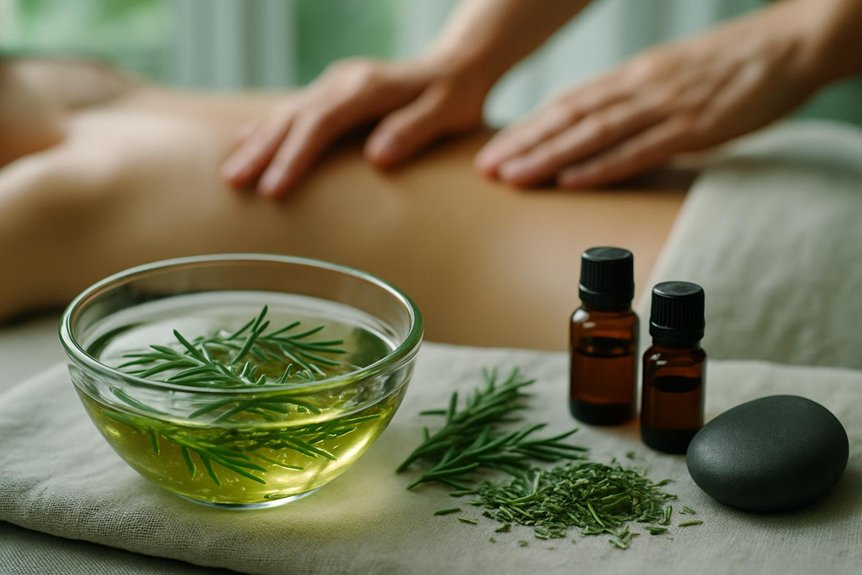
Rosemary in aromatic massage typically smells brisk, clean, and herbaceous, like crushed green leaves with a pine-like, camphoraceous lift. A dry, stemmy wood note can add quiet warmth as the oil warms on the skin. Its cineole-rich profile often feels clarifying and mentally sharpening, with a “freshly washed air” quality that stays close at light-to-moderate dilution. Skin temperature, hydration, sweat, and pH can shift it toward sweeter or more medicinal nuances. Further guidance explains effects, blends, and safety.
What Does Rosemary Smell Like in Aromatic Massage?
Often described as brisk and clarifying, rosemary in an aromatic massage presents a clean, herbaceous scent with pine-like and camphoraceous notes, sometimes edged with a faint woody sweetness.
In treatment, it tends to read as “freshly washed air” on the skin, lending a sense of alert calm without feeling sharp or perfumed.
As part of aromatherapy massage, therapists often use rosemary’s scent to help clients relax and heal while staying comfortably refreshed.
At Spa & Massage clinics across London, therapists typically dilute rosemary into a neutral carrier oil so it stays close to the body, releasing gradually with warmth and pressure.
Many clients notice the aroma settling at the collarbone and along the spine, subtly framing the therapist’s touch and breath.
It can feel especially supportive during deep tissue or sports work, where a clear scent helps the client stay grounded and present throughout.
What Scent Notes Will You Notice (Herbaceous, Woody, Camphor)?
In an aromatic massage, that “fresh, clear” rosemary impression typically separates into three main scent notes—herbaceous, woody, and camphoraceous—each becoming more noticeable as the oil warms on the skin.
The herbaceous note reads as green, slightly peppery, like crushed rosemary leaves between fingertips; it can feel clean and close, inviting slow breathing as hands settle into the back and shoulders.
A woody undertone follows: dry, stemmy, faintly resinous, giving the blend a grounded “spa” warmth that suits steady, reassuring pressure.
Then comes the camphoraceous lift—cool, medicinal, and airy—often noticed on the inhale during neck and scalp work.
At Spa & Massage, therapists use light-to-moderate dilution so these notes remain intimate, not sharp or overwhelming.
Why Can Rosemary Smell Different on Your Skin?
On contact with the skin, rosemary can smell brighter, sweeter, or more camphor-like because body chemistry subtly reshapes how its aromatic molecules evaporate and are perceived. Skin temperature, hydration, and natural oils change diffusion, so the same blend can bloom quickly on warm shoulders yet feel drier on cooler forearms.
pH, sweat minerals, and recent skincare also influence how cineole, camphor, and pinene present—sometimes sharpening the “clean” edge, sometimes rounding it into a softer, green sweetness. In Spa & Massage clinics, therapists notice that stress perspiration or post-gym skin can make rosemary read more medicinal. Conversely, well-moisturised skin may hold the aroma closer, creating a quieter, more private trail that lingers near the body.
Is Rosemary Aromatic Massage Relaxing or Energising?
Sometimes rosemary aromatic massage feels both relaxing and energising, with the balance largely determined by dosage, dilution, and the client’s baseline state of fatigue or stress. Its scent is brisk, green, and camphoraceous, often read by the nervous system as clarifying, like cool air across warm skin. Many clients at Spa & Massage describe a gentle “wake-up” in the mind while the body softens into the table.
Relaxation tends to present as a slower breath, reduced jaw tension, and a quieter internal chatter, especially when touch remains steady and unhurried. Energising effects are reported as brighter focus, a lighter heaviness behind the eyes, and a subtle readiness to move. The same session can deliver both, shifting moment by moment.
How We Use Rosemary in Aromatic Massage (Dilution and Goals)
That “relaxed yet alert” effect with rosemary is shaped less by the oil itself and more by how it is prepared and the goal of the session.
At Spa & Massage clinics, therapists typically dilute rosemary essential oil to a skin-safe level (often 1–2%) in a silky carrier, then adjust downward for sensitive skin or pregnancy protocols.
The aroma is introduced gradually: a light veil first, then a slightly fuller note if the client’s breathing stays easy and the skin remains calm.
For mental clarity, it may be placed along the upper back and neck so the scent rises with warmth.
For muscular fatigue, it is worked into forearms, calves, or shoulders with slower pressure.
Goals are agreed upfront, keeping the experience close, clean, and unhurried throughout.
Which Oils Blend Best With Rosemary in Massage (By Outcome)
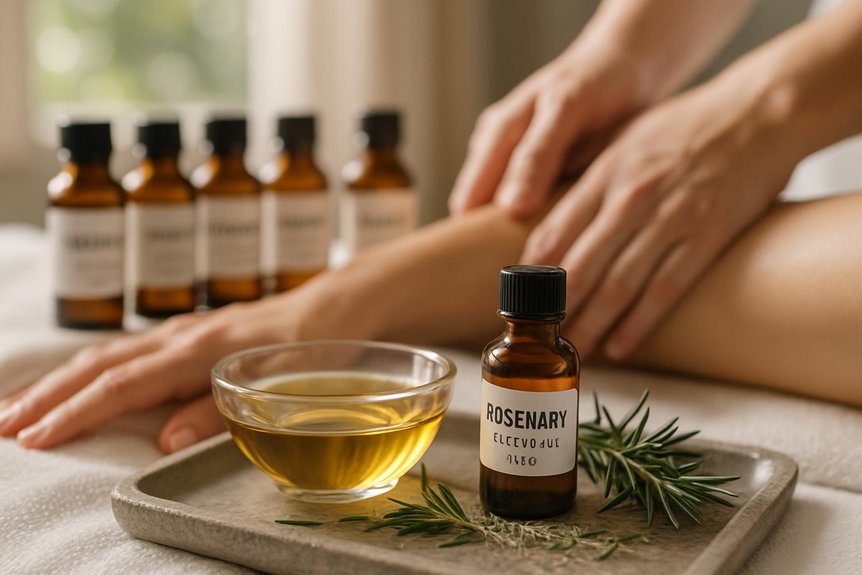
At Spa & Massage, therapists pair rosemary with selected essential oils to shape the session’s outcome, keeping the aroma clear, herbal, and clinically balanced on the skin.
For an energising, focus-oriented blend, rosemary is commonly combined with bright citrus or mint notes to promote alertness without feeling overstimulating.
For muscle relief and recovery, it is often matched with warming or soothing oils to support post-exercise comfort and ease tight, fatigued tissues.
Energising And Focus Blends
How can rosemary be paired to sharpen attention and lift energy during massage?
At Spa & Massage clinics, therapists often combine rosemary’s clear, camphoraceous-green aroma with oils that brighten the mind without feeling harsh on the senses. Lemon or bergamot can add a clean sparkle, while peppermint contributes a crisp, cooling edge that many clients find instantly alerting; all are kept at low dilution for close, comfortable breathing.
For a more intimate, steady focus, rosemary may be softened with lavender or frankincense, creating a calm, centred clarity rather than a jittery lift. These blends suit morning appointments, desk-fatigue, or pre-event preparation, helping clients feel awake, mentally present, and quietly confident on the table.
Muscle Relief And Recovery Blends
Several rosemary-led blends are used in aromatic massage to support muscle relief and post-activity recovery, with pairings selected by outcome and client sensitivity.
For soreness and tight bands, rosemary can be paired with marjoram and lavender for a warm, herbaceous, softly floral profile that encourages easing during slow, deep strokes.
For heavy, fatigued legs, cypress and black pepper add a dry, woody heat that feels grounding as the therapist works toward the heart with measured pressure.
When inflammation is a concern, rosemary with Roman chamomile and frankincense creates a calm resin-herb scent that supports gentler, sustained contact.
In Spa & Massage clinics, dilution is kept conservative and fragrance is checked at the skin; clients are invited to breathe close, then exhale as tension releases.
When Should You Avoid Rosemary Aromatic Massage?
At Spa & Massage, rosemary aromatic massage is not recommended during pregnancy or while breastfeeding, as the herbaceous, camphor-like aroma and active constituents may be inappropriate for this stage.
Caution is also advised for clients with high blood pressure, since rosemary can feel stimulating in the nervous system and may not suit those needing a more settling treatment.
Therapists additionally screen for medications and allergies, because certain drugs and sensitivities can increase the risk of irritation or adverse reactions to rosemary oil.
Pregnancy And Breastfeeding
During pregnancy and breastfeeding, rosemary essential oil is generally avoided in aromatic massage because its stimulating, herbaceous aroma reflects active constituents that may be inappropriate for these sensitive stages. In practice, the scent can feel clarifying and brisk on the skin, yet this “lift” is not always desirable when the body is adapting hormonally and emotionally.
At Spa & Massage clinics in London, therapists typically choose gentler, pregnancy-appropriate blends and lighter carrier oils, keeping pressure soothing and circulation-friendly while protecting comfort and privacy. Clients are advised to disclose pregnancy status, trimester, and breastfeeding plans at booking and intake so the treatment can be tailored safely.
If rosemary has been used at home, patch testing and discontinuation are recommended, with prompt guidance if sensitivity occurs.
High Blood Pressure Risks
Beyond pregnancy and breastfeeding considerations, blood pressure is another key screening point before choosing rosemary in an aromatic massage. Rosemary’s brisk, camphoraceous scent can feel mentally sharpening and subtly stimulating, which may be unsuitable for clients with poorly controlled hypertension, recent cardiovascular events, or those advised to avoid stimulating essential oils.
At Spa & Massage, therapists ask about baseline readings and symptoms such as headaches, flushing, or chest tightness before selecting oils. If pressure is high on the day, the treatment is adapted: gentler pressure, slower rhythm, cooler compresses, and a quieter aromatic profile to support settling rather than lift.
Clients seeking close, unhurried touch are guided toward grounding techniques and breath-led pacing until blood pressure is stable and comfort is assured.
Medication And Allergies
Given rosemary’s camphoraceous, circulating feel on the breath and skin, medication use and allergy history should be screened before it is selected for an aromatic massage. At Spa & Massage, therapists avoid rosemary essential oil when clients use anticoagulants, antiplatelets, or blood-pressure medication, as stimulating oils may feel too activating and complicate monitoring.
Extra caution is used with seizure disorders, asthma, and pregnancy, where strong, cineole-rich aromas can be irritating or contraindicated. Rosemary is also avoided with known allergy to rosemary, mint-family botanicals, or fragrance; patch testing is offered when uncertainty remains.
If itching, heat, tight chest, or headache appears during treatment, the oil is removed, ventilation increased, and a bland carrier oil used instead.
Conclusion
In aromatic massage, rosemary typically presents as crisp, green, and herbaceous, with a clean camphor edge and occasional woody or mint-like undertones. On skin, its character may shift with dilution, carrier oils, and individual sensitivity, so pre-treatment scent testing is prudent. It is often selected to sharpen focus or reduce mental heaviness, though some clients experience it as soothing. Used with appropriate blending and safety screening, it can hit the nail on the head.