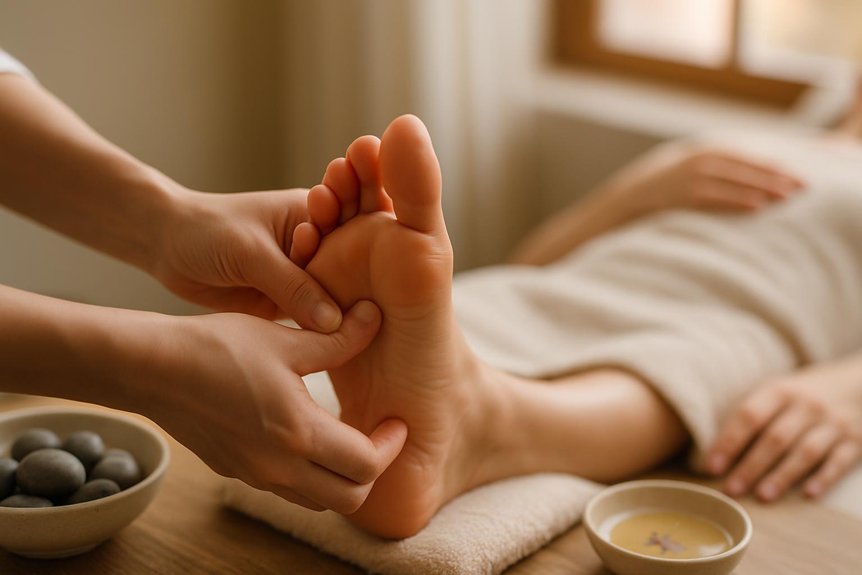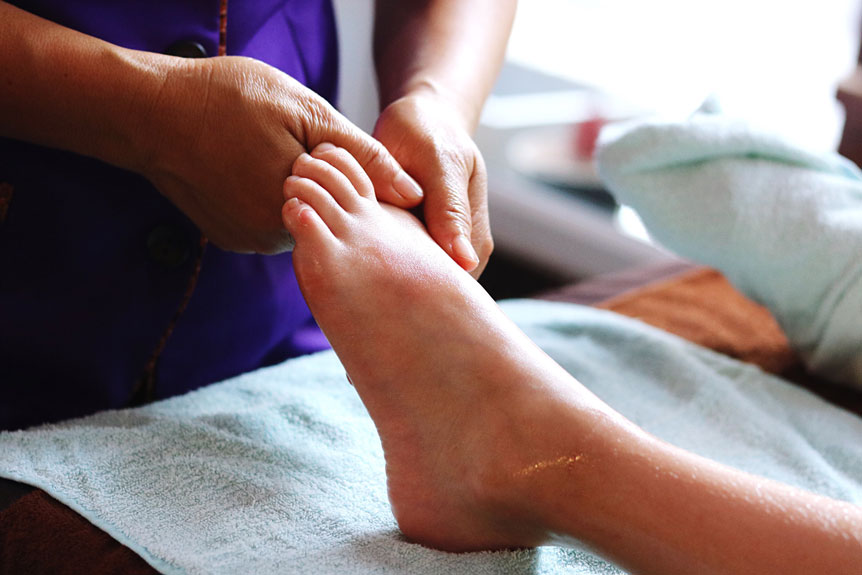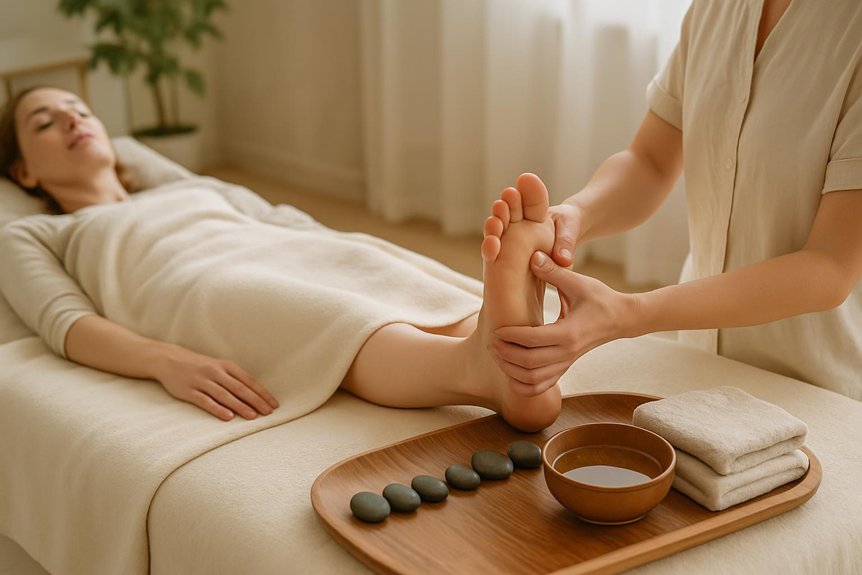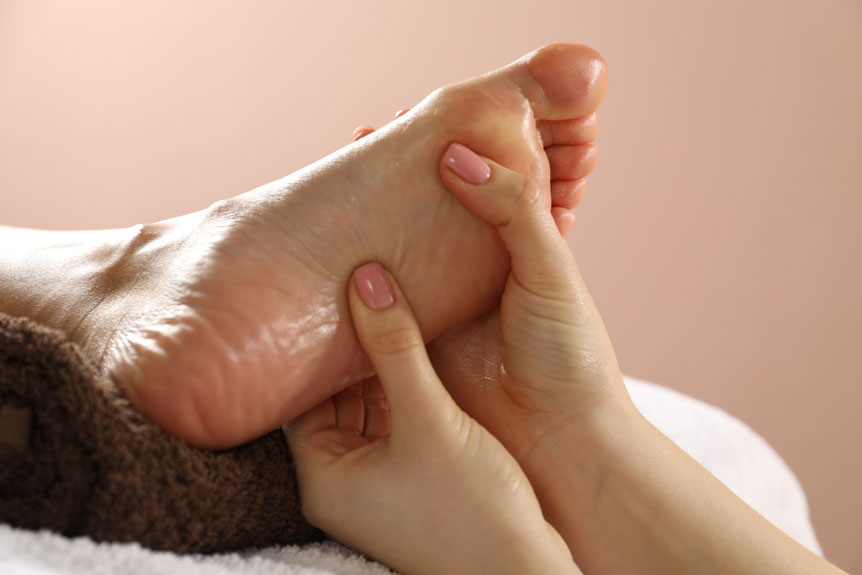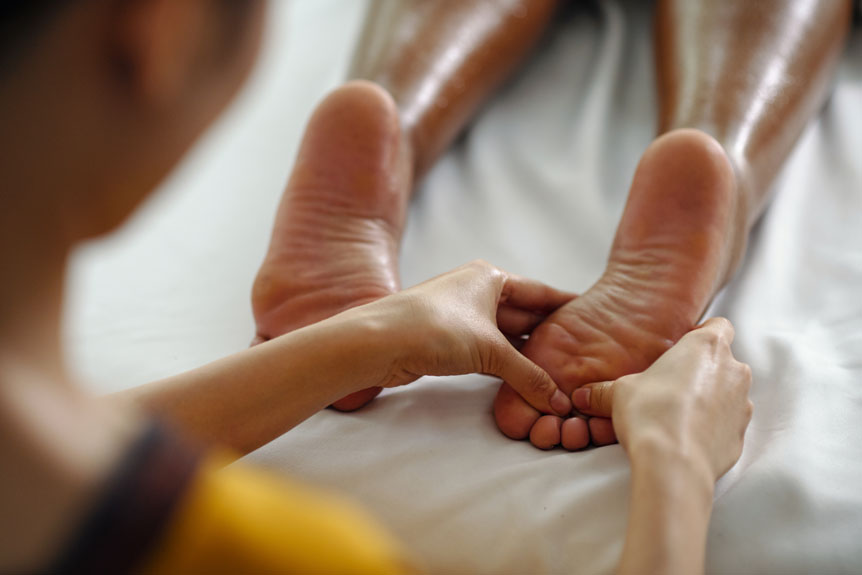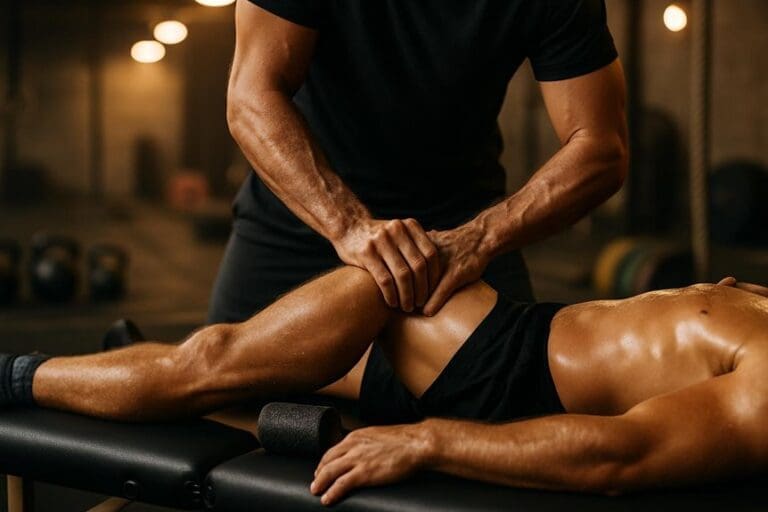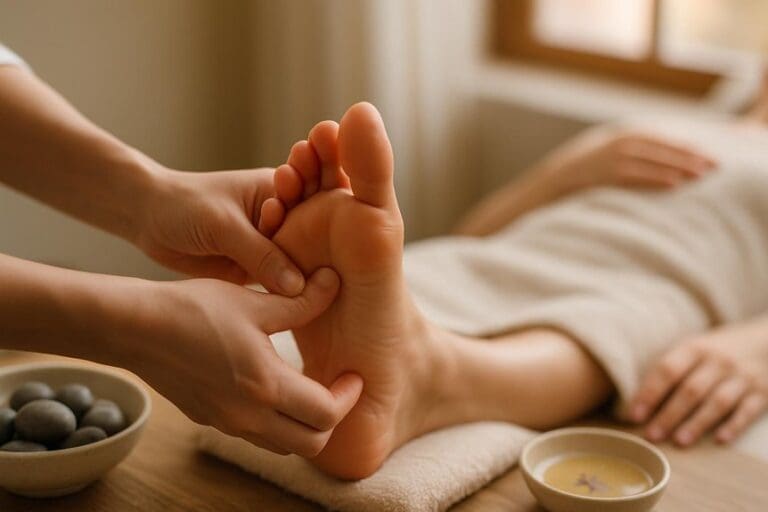
It uses targeted, sustained pressure on mapped points of the feet (and sometimes hands) to support whole‑body comfort through sensory and autonomic nervous‑system pathways. Massage works directly on soft tissues—skin, fascia, and muscle—using gliding, kneading, compression, and stretching to reduce local tension and improve movement. It is often chosen for a calmer, clothed session and stress-linked symptoms. Massage is preferred for tightness, stiffness, and load-related strain. Further details explain session feel, pressure, and best uses.
Reflexology vs Massage: Which Should You Choose?
In practice, the choice between reflex therapy and massage depends on the client’s primary goal, symptom pattern, and comfort with hands-on bodywork. Clients seeking whole-body relaxation, muscular ease, or recovery from training often prefer massage because it directly addresses soft tissue tone, circulation, and movement restrictions.
Those who want a calmer, more contained session—especially if they feel sensitive about full-body touch—may choose zone therapy, which focuses on the feet and supports downregulation of the nervous system. Many people explore zone therapy to experience the healing power it’s known for supporting. At Spa & Massage clinics across London, therapists guide selection through a short consultation, asking about pain location, stress load, sleep, and touch preferences.
Many clients alternate sessions, using massage for tightness and zone therapy for stress, to maintain steady wellbeing.
Zone Therapy vs Massage: The Key Differences
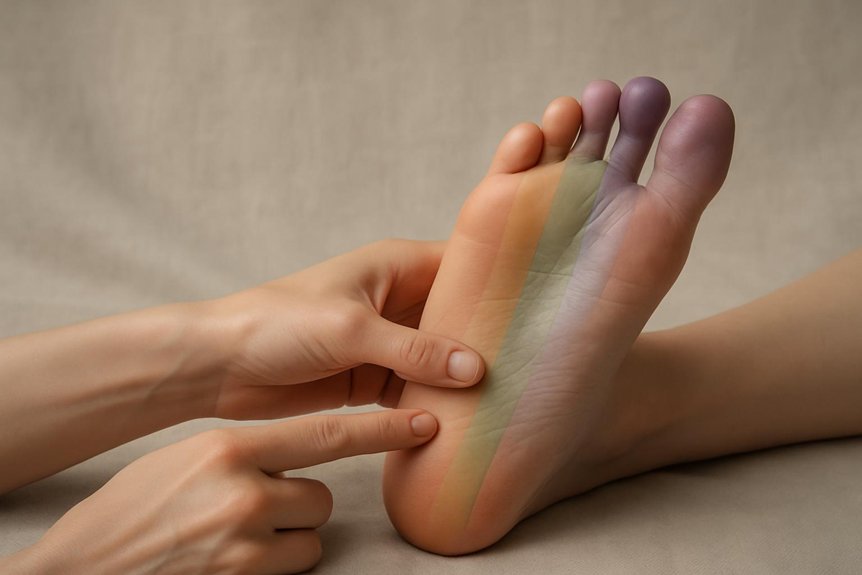
At a practical level, zone therapy and massage differ in both anatomical focus and therapeutic intent: it applies targeted pressure to mapped areas of the feet (and sometimes hands) to influence perceived whole‑body balance via sensory and autonomic pathways, while massage works directly on soft tissues—skin, fascia, and muscle—to change local tone, circulation, and movement comfort.
It is typically chosen when a client wants calming, sleep support, or stress modulation without broad tissue work; massage is preferred for stiffness, postural load, sports recovery, or persistent tension patterns.
Contraindications also differ: acute foot injuries, neuropathy, or pregnancy considerations may shape zone therapy choices, while bruising, inflammation, or clot risk can limit massage pressure.
At Spa & Massage, therapists assess goals and comfort to match the most intimate, appropriate modality.
What Happens in Zone Therapy (and How It Feels)?
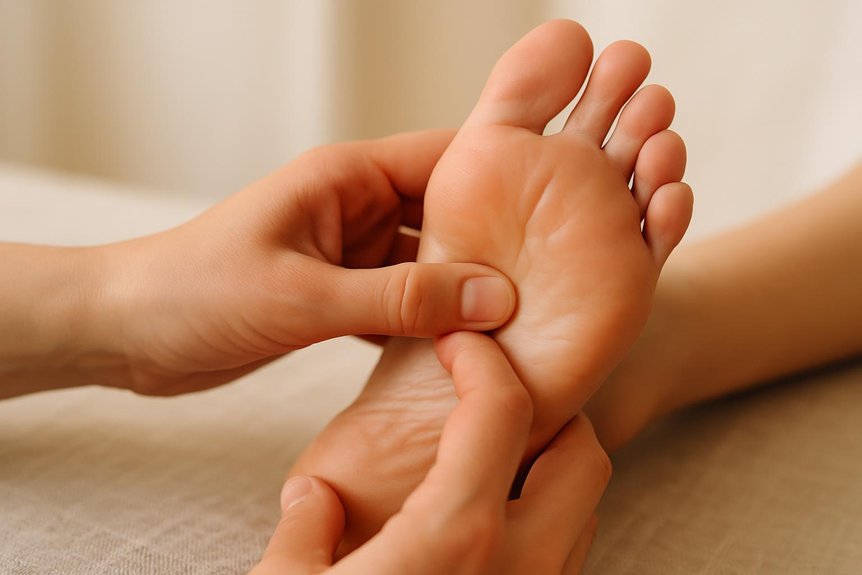
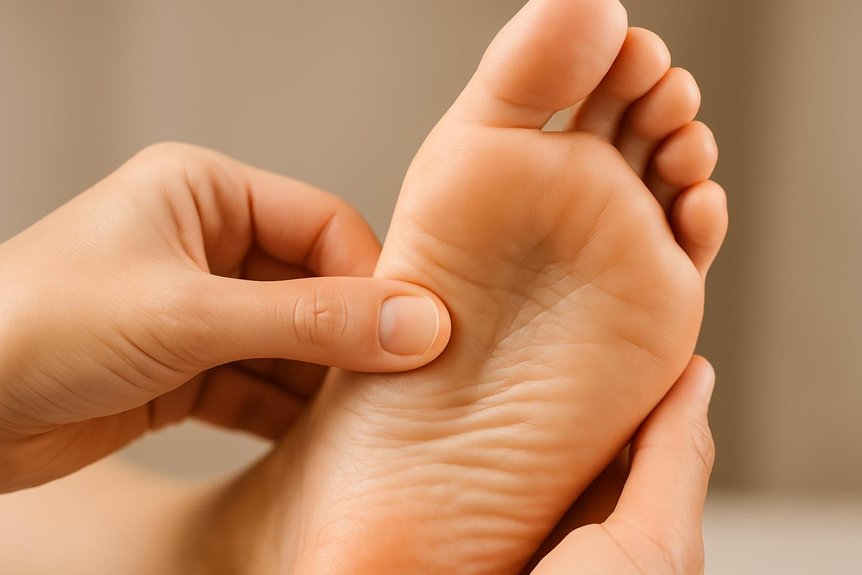
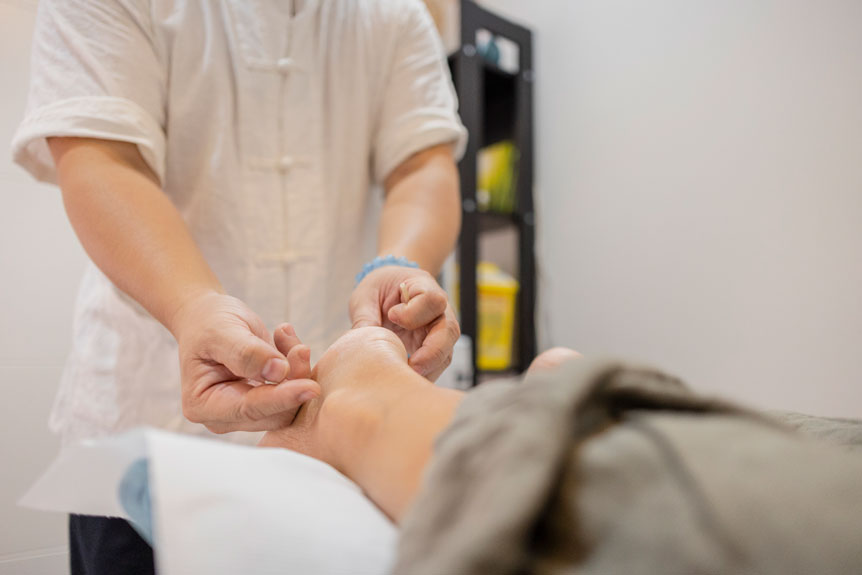
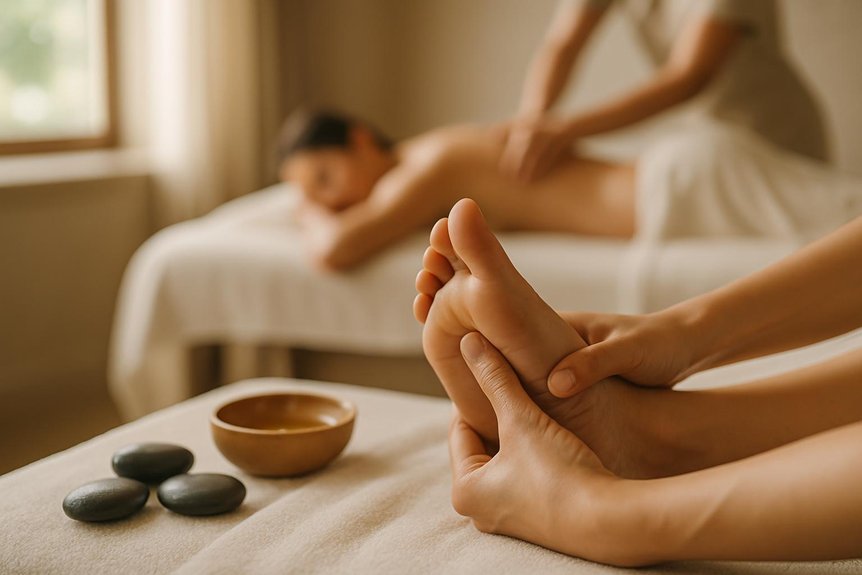
During a massage session, the client remains fully clothed and typically reclines comfortably while a therapist applies firm-to-gentle, sustained pressure with thumbs and fingers to specific points on the feet (and, when appropriate, the hands), varying depth and tempo according to tolerance and goals.
At Spa & Massage clinics, the therapist begins with brief grounding holds, then maps and works reflex zones linked with nerves and connective tissue, checking in often and adjusting pressure to keep sensations “good-intense,” not sharp.
It may feel like warmth, tenderness, tingling, or a pleasant ache in targeted areas, followed by spreading ease.
Many clients notice a settling of breath and a quieting of mental chatter as the nervous system downshifts.
Afterwards, feet can feel lighter, and the whole body looser.
What Happens in a Massage Session (and How It Feels)?
Zone therapy centres on pressure to mapped points of the feet and hands, whereas a massage session typically involves hands-on work across larger muscle groups and connective tissues to address tension, mobility, and pain patterns.
At Spa & Massage London clinics, the session begins with a brief, private consultation about goals, medical history, and preferred boundaries.
The client undresses to comfort and is draped; only the area being worked is uncovered, supporting ease and modesty.
Warm oil may be applied, and touch typically progresses from lighter contact to deeper, slower strokes as tissues soften.
Sensations often include warmth, a “good ache,” and a settling of breath; some feel emotional release.
Afterwards, clients often notice calmer sleep and freer movement, with mild tenderness possible.
Pressure and Techniques: Zone Therapy vs Massage
It typically applies targeted, sustained pressure to specific points—most often on the feet, hands, or ears—while massage uses hands-on strokes (such as gliding, kneading, and friction) to work with muscle and fascia across broader areas of the body.
These technique differences influence treatment intensity and feel: it can be sharply focused and occasionally tender at points, whereas massage pressure is usually distributed through tissues and adjusted to goals like reducing muscle tension or supporting recovery.
At Spa & Massage clinics across London, therapists tailor pressure and methods to each client’s anatomy, comfort, and response during the session.
Targeted Pressure Points
Map the body’s needs, then apply pressure with purpose: targeted pressure points are where zone therapy and massage diverge most clearly in both technique and intent. It focuses on specific zones on the feet, hands, or ears, applying sustained, precise pressure to mapped points that practitioners associate with distant body regions. Clients often describe a surprising “echo” of sensation elsewhere, while the work remains local and controlled.
Massage targets points based on anatomy: areas of palpable tenderness, tight bands, or trigger points within muscles and connective tissue. Pressure is directed into tissues to influence tone, circulation, and movement comfort, and feedback guides the exact depth. In Spa & Massage clinics across London, therapists assess comfort, breath, and sensitivity so pressure feels intimate, safe, and responsive rather than overwhelming.
Hands-On Massage Strokes
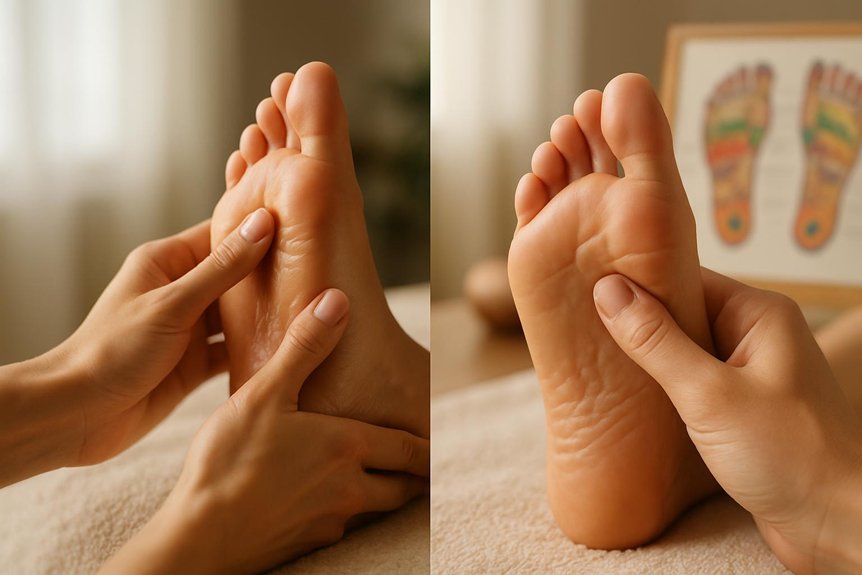
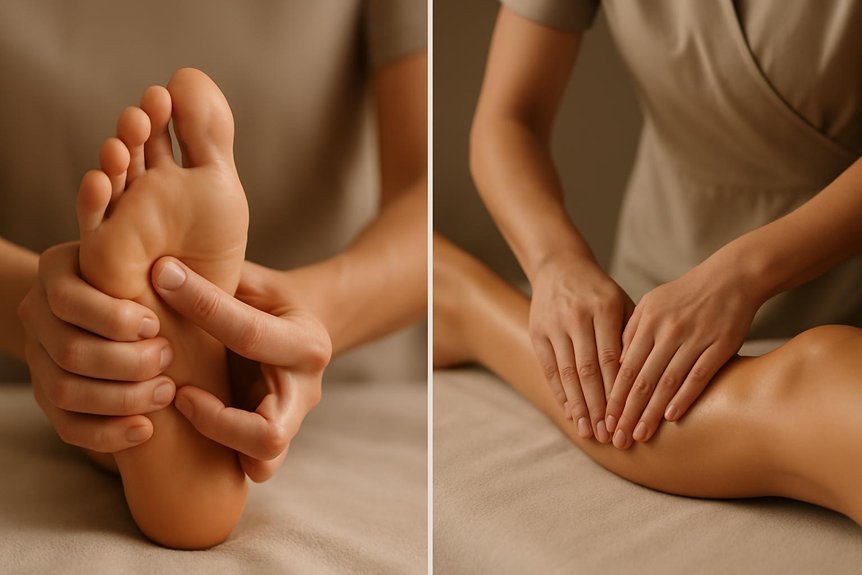
In practical terms, the hands-on work differs most in how pressure is delivered and how tissues are engaged. It is typically uses thumb- and finger-walking, small pivots, and sustained holds on the feet, hands, or ears to address mapped reflex areas, with minimal sliding across skin. Massage more often applies gliding effleurage, kneading petrissage, friction, compression, and stretching to influence superficial and deeper soft tissues along muscle fibres and fascial lines.
At Spa & Massage, therapists match stroke selection to anatomy and goals: slow forearm or elbow compressions for dense bands, fingertip friction around tendinous attachments, and broad palm strokes to ease guarding. It work may include subtle ankle mobilisations and toe traction, prioritising precise contact and consistent, comfortable pressure.
Treatment Intensity And Feel
Expect the most noticeable difference to be how intensity is perceived during the session. It concentrates pressure into specific reflex points on the feet, hands, or ears; this can feel sharp, tender, or “electric” in small areas even when overall effort is moderate.
Techniques are precise—thumb-walking, finger pressure, and holds—rather than broad strokes, and sensitivity often reflects local tissue tension and nerve density.
Massage spreads pressure across larger muscle groups and fascia, so intensity is felt as depth, warmth, and stretch. Techniques may include effleurage, kneading, compression, and deeper myofascial work, adjusted to breathing and comfort.
In Spa & Massage clinics, therapists regularly check pressure and invite honest feedback, helping clients stay relaxed, safe, and closely connected to what the body needs.
Stress Relief and Pain: Which Works Best?
For many Londoners balancing long desk hours and busy commutes, both zone therapy and massage can reduce stress and ease pain, but they tend to work best for different patterns of symptoms.
Massage typically targets local muscle tension and trigger points, improving circulation and down‑regulating the nervous system through slow, reassuring pressure. It works more indirectly: firm, attentive work on the feet can shift autonomic tone, helping clients feel grounded when stress shows up as restlessness, headaches, or generalised aches.
Evidence suggests both can lower perceived stress and pain, with massage often preferred for clearly defined, tissue-based discomfort, and zone therapy for diffuse, stress-linked symptoms. At Spa & Massage clinics, therapists tailor pressure, pacing, and breath cues to support safety, warmth, and lasting relief.
Zone Therapy or Massage for Back Pain, Sleep, Pregnancy, Sport
For back pain, clinically informed massage may be prioritised when symptoms relate to muscle tension, joint stiffness, or load-related strain, while it is often chosen when clients prefer a non-local, relaxing approach that can support overall comfort.
For sleep, both treatments are used to reduce sympathetic arousal, with Spa & Massage therapists matching pressure, pacing, and aftercare advice to the client’s sensitivity and goals.
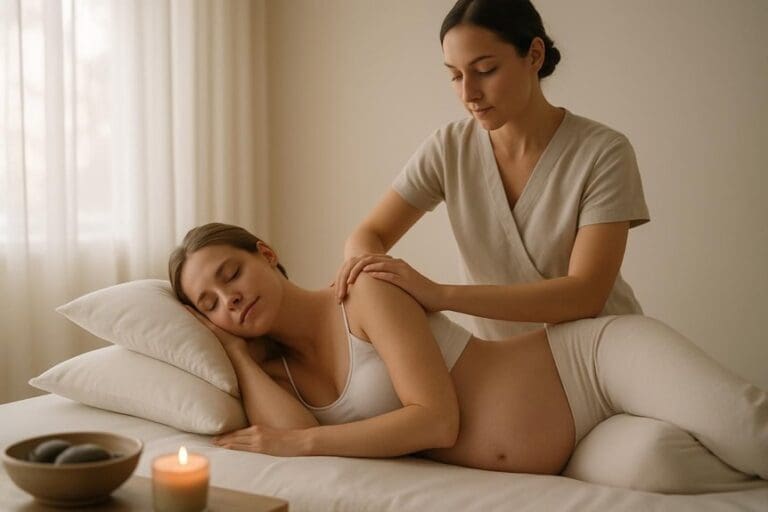
In pregnancy and sport, selection is guided by anatomy and safety—pregnancy massage is adapted for positioning and circulation, whereas sports massage targets tissue tolerance and recovery, and it can be used as a lower-intensity option when direct work is not appropriate.
Back Pain Relief Choices
Choose the right approach and back pain relief becomes far more targeted. Massage addresses local tissues: erector spinae, quadratus lumborum, gluteals, and hip flexors that often drive stiffness and referred ache. In Spa & Massage clinics, therapists assess posture, movement, and tenderness, then use deep tissue or sports techniques to reduce tone, improve circulation, and restore range without overwhelming sensitive areas.
It is chosen when touch on the back feels too intense, or when stress and nervous-system arousal amplify pain. Focused pressure through the feet can promote relaxation and downregulate pain sensitivity, while maintaining a sense of closeness and safety. For persistent or radiating symptoms, combined care and medical review support best outcomes.
Sleep, Pregnancy, Sport Needs
Back pain rarely exists in isolation; sleep disruption, pregnancy-related postural change, and sport-specific loading often determine whether zone therapy or massage is the better fit on a given week.
For sleep, it may suit clients who prefer gentle, clothed touch; its slow pressure can downshift the nervous system and support easier settling at night.
For pregnancy, Spa & Massage therapists typically choose side-lying pregnancy massage to ease lumbar compression, hip tightness, and rib tension while respecting circulation and comfort.
When sport demands dominate, sports or deep tissue massage can target overloaded glutes, hamstrings, calves, and thoracolumbar fascia, improving tissue glide and recovery.
Many clients alternate: zone therapy between training sessions, and massage after heavier weeks, to keep bodies responsive and closely cared for.
Who Should Avoid Zone Therapy or Massage (and What to Book Instead)?
In clinical practice, zone therapy and massage are generally safe for most people, but certain health conditions and stages of recovery warrant caution or a different approach.
Clients with fever, contagious illness, new fractures, acute inflammation, unexplained swelling, or suspected deep vein thrombosis should avoid hands-on work and seek medical advice first.
Those on anticoagulants, with fragile skin, neuropathy, severe varicose veins, or active cancer treatment may need modified pressure and careful positioning.
In early pregnancy, deep abdominal work and intensive foot pressure are avoided; a tailored pregnancy massage is often preferred.
After surgery, scar and lymphatic considerations matter.
At Spa & Massage clinics across London, therapists can recommend gentle aromatherapy massage, side-lying relaxation work, or focused, light-touch treatments instead.
Conclusion
Choosing between zone therapy and massage depends on the goal: it uses mapped pressure points (often on the feet) to support relaxation and whole‑system balance, while massage treats muscles and connective tissue to reduce tension and improve movement. At Spa & Massage London, many clients arrive thinking it is “just a foot rub,” then notice calmer breathing within minutes—like adjusting a thermostat rather than pushing air around a room. For pain, mobility, sport or pregnancy needs, assessment and contraindications should guide booking.