Light, comfort-led abdominal massage is generally considered safe in an uncomplicated pregnancy when performed by a therapist trained in prenatal care, using gentle, broad strokes and continuous consent. Most providers avoid deep pressure, vigorous kneading, heat, or sustained work over the uterus, and often limit direct belly work in the first trimester. Abdominal massage should be avoided with bleeding, cramping, fluid leakage, dizziness, reduced fetal movement, or high-risk conditions unless a midwife or GP advises otherwise. More guidance follows.
Is Abdominal Massage Safe During Pregnancy?
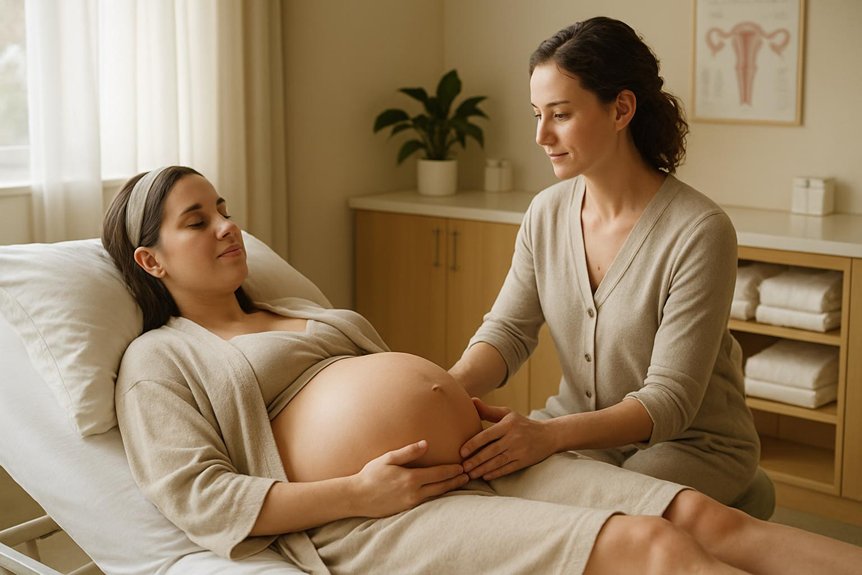
When is abdominal massage safe during pregnancy? It is typically safe when pregnancy is uncomplicated, consent is clear, and touch is light, comfort-led, and stops with any pain, dizziness, bleeding, or contractions.
Evidence and clinical guidance favour gentle relaxation work over deep pressure, especially around the uterus. At Spa & Massage clinics across London, therapists begin with a brief health screen and adapt positioning, pace, and pressure to protect comfort, breathing, and circulation.
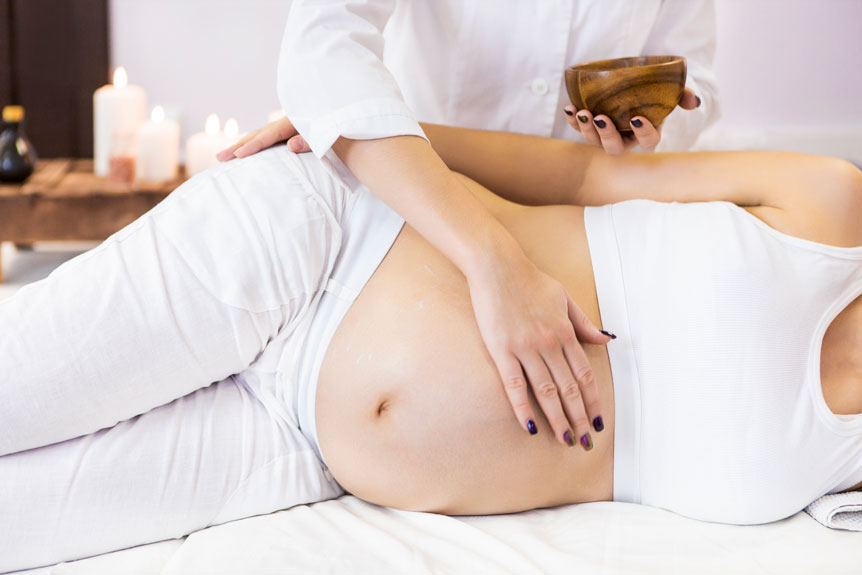
Many clients prefer soothing strokes over clothing or with a small amount of neutral oil, keeping contact calm and emotionally reassuring. Prenatal massage can also support relaxation and ease common aches through gentle touch tailored to each trimester.
Abdominal work should be avoided without medical clearance if there is any high-risk pregnancy, abdominal pain, leaking fluid, or reduced fetal movements. When in doubt, a midwife or GP should advise.
Does Trimester Affect Abdominal Massage Safety?
Trimester can influence how abdominal massage is approached, even when pregnancy is uncomplicated and touch remains gentle and comfort-led.
In the first trimester, many prefer minimal direct abdominal work, focusing instead on soothing side-lying massage to ease fatigue and nausea.
In the second trimester, growing comfort and stability often allow light, slow strokes around (not pressing into) the abdomen, supporting body awareness and relaxation.
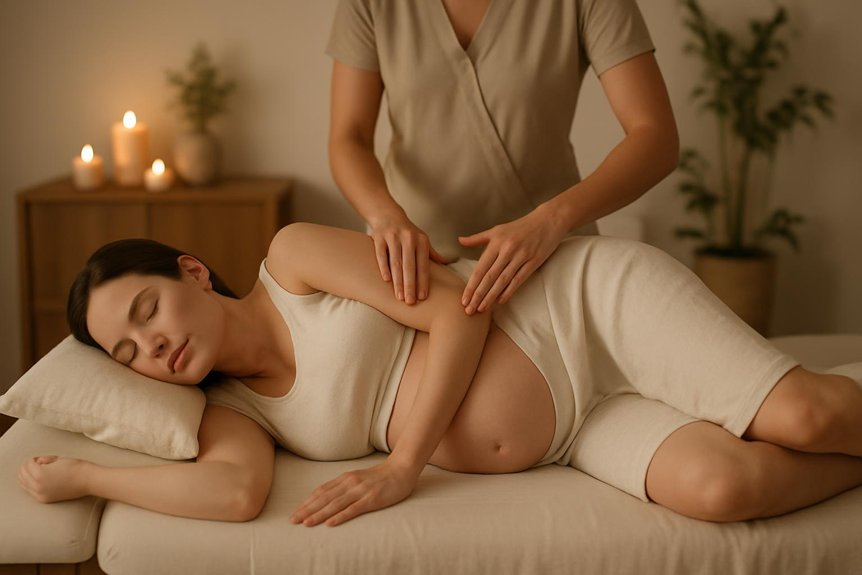
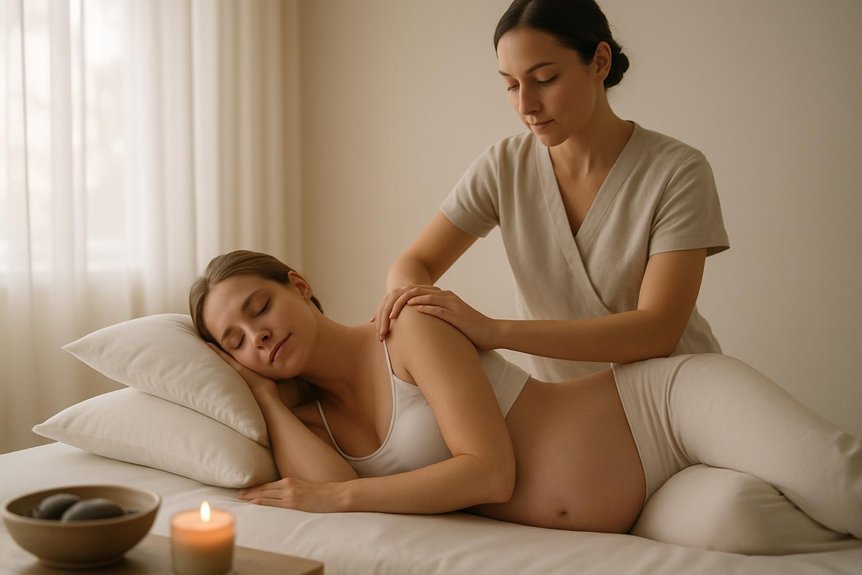
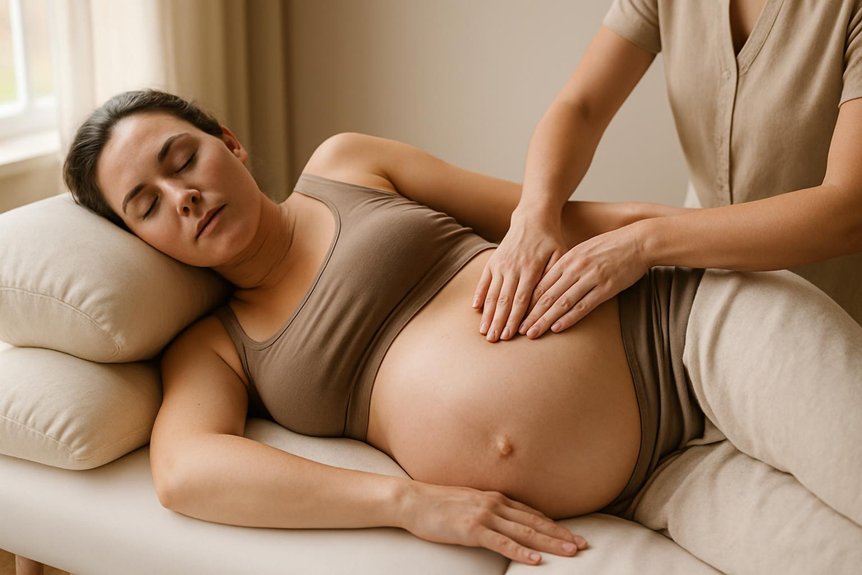
In the third trimester, positioning becomes key; our Spa & Massage therapists prioritise side-lying support with cushions and use feather-light, nurturing contact to accommodate tenderness, reflux, and breathlessness.
Across all trimesters, safety is enhanced by clear consent, constant check-ins, and avoiding deep pressure, vigorous kneading, or heat over the belly.
When Should Abdominal Massage Be Avoided in Pregnancy?
Abdominal massage should be avoided in pregnancy when there are high‑risk factors (such as a history of preterm birth, placenta complications, pre‑eclampsia, or multiple pregnancy) unless a midwife or obstetrician has advised it is safe.
It should also be avoided if there is new or worsening abdominal pain, vaginal bleeding, fever, or any signs of infection, and urgent clinical assessment is recommended.
At Spa & Massage clinics across London, therapists screen for these red flags and will modify or postpone treatment to prioritize comfort and safety.
High-Risk Pregnancy Factors
Several pregnancy factors can make any direct belly work inappropriate, so careful screening is essential before considering abdominal massage.
Abdominal work is typically avoided in high-risk pregnancies, including a history of recurrent miscarriage, preterm labour risk, placenta praevia, cervical insufficiency, preeclampsia or significant hypertension, insulin-dependent diabetes with complications, significant clotting disorders or anticoagulant use, multiple pregnancy with complications, or any restriction advised by a midwife or consultant.
After IVF or other fertility treatment, many clinicians recommend extra caution in early weeks, so guidance should be followed closely.
At Spa & Massage, therapists prioritise a calm, intimate sense of safety: if risk factors apply, they focus on side-lying pregnancy massage for shoulders, hips, legs, and breath-led relaxation instead.
Pain, Bleeding, Or Fever
When should belly-focused massage be avoided during pregnancy? It should be paused and medical advice sought if there is new or worsening abdominal pain, cramping, vaginal bleeding or spotting, leaking fluid, dizziness, fainting, shortness of breath, or fever/chills.
These symptoms can signal conditions where touch, heat, or increased circulation is not appropriate until assessed by a midwife or GP.
At Spa & Massage clinics across London, therapists screen carefully and will not perform abdominal work when pain, bleeding, or fever is present.
Instead, they may offer gentle side-lying relaxation focused on shoulders, hips, and legs only after symptoms have fully resolved and a clinician has agreed.
If any symptom starts during a session, treatment stops immediately and urgent care is recommended.
What Pressure and Techniques Are Safe (and Unsafe)?
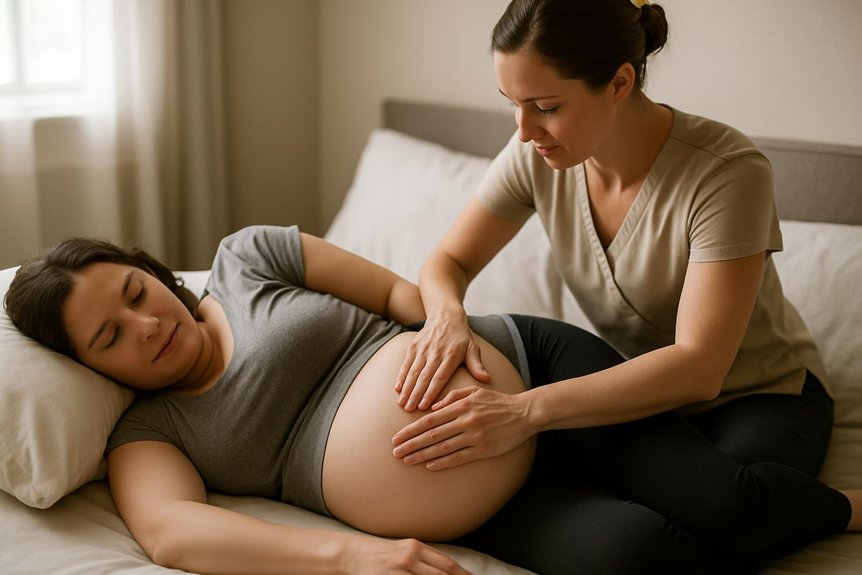
Choose gentle, light-to-moderate pressure and slow, supportive techniques as the baseline for abdominal massage in pregnancy, because the goal is relaxation and comfort rather than “working deep.” At Spa & Massage clinics, therapists typically use broad palm contact, soothing effleurage strokes, and careful breathing-led pacing, while continuously checking in on comfort and any sensations of tightening, dizziness, or nausea.
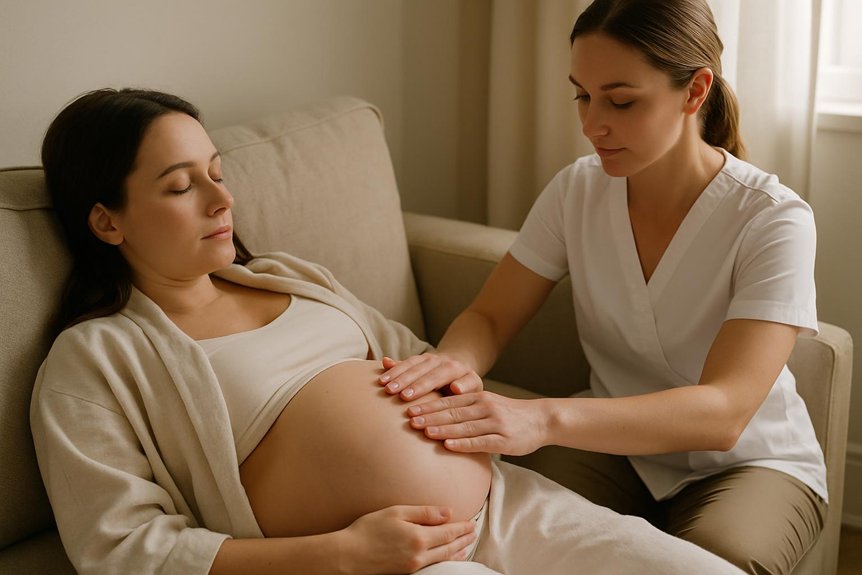
Safe technique stays superficial, avoids direct pressure into the midline, and prioritises side-lying positioning and full consent. Small circles around—never on—tender spots may feel nurturing, but should stop immediately if cramping appears.
Unsafe approaches include deep tissue work, vigorous kneading, rapid friction, sustained pressure over the uterus, and any technique that triggers pain, tightening, or light-headedness. When in doubt, gentler is safer.
Safe Alternatives to Abdominal Massage in Pregnancy
During pregnancy, many people find it more comfortable—and equally effective for relaxation—to skip direct abdominal work and focus instead on supportive, low-risk areas that help ease common aches and tension.
Evidence-informed options include gentle side-lying massage for the back, hips, glutes, and legs, plus light work across shoulders, neck, and scalp to calm the nervous system.
At Spa & Massage, therapists often use slow, rhythmic strokes and supportive bolstering, keeping pressure moderate and checking in frequently.
For swelling or heaviness, soothing foot and calf massage and lymphatic-style strokes can feel deeply nurturing without stressing the abdomen.
Hand and forearm massage may ease upper-body fatigue from posture changes.
Warm compresses on the lower back (not the belly) and guided breathing can add comfort and closeness.
What Prenatal Massage Means at Spa & Massage
At Spa & Massage, prenatal massage is a client-led treatment designed to support comfort and wellbeing while respecting current clinical guidance and individual circumstances.
Their therapists are specifically trained in pregnancy-safe techniques, screening, and pressure modification, with a strong focus on safety and clear communication throughout.
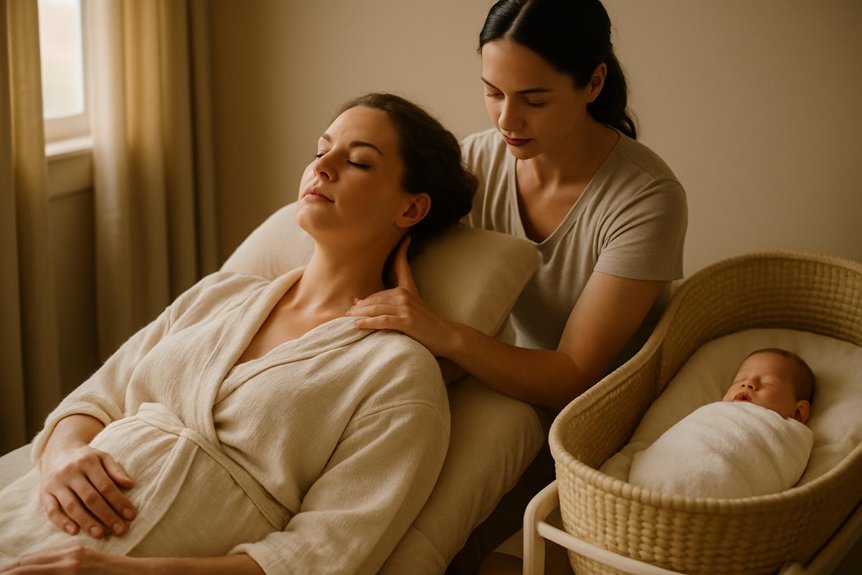
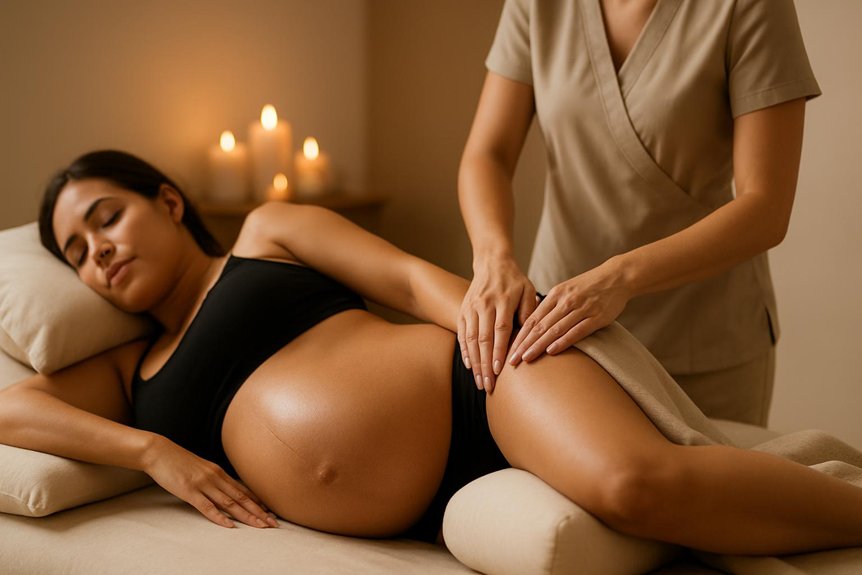
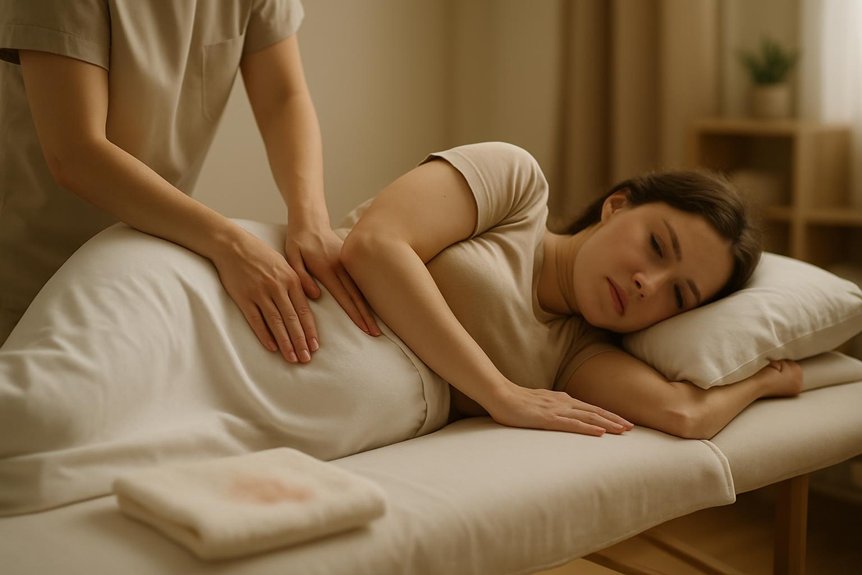
Sessions prioritise comfort through supported side-lying or semi-reclined positioning, using bolsters and cushions to reduce strain and guarantee steady, relaxed breathing.
Our Prenatal Massage Approach
With comfort and safety as the guiding principles, prenatal massage at Spa & Massage is a specialised, therapist-led treatment designed to support the physical changes of pregnancy without unnecessary risk.
Each session begins with a brief, private check-in on trimester, symptoms, medical guidance, and touch preferences, shaping a plan that feels personal and unhurried.
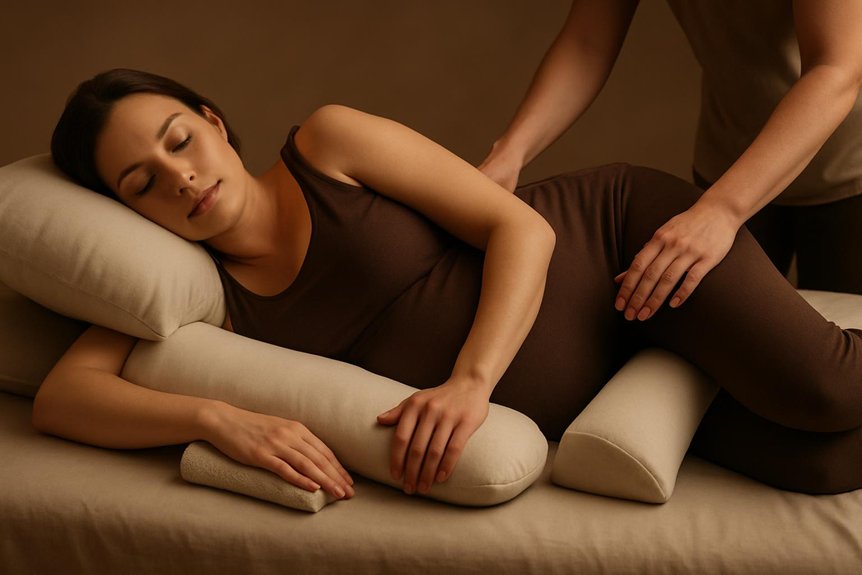
Positioning is adjusted for ease, typically side-lying with supportive bolsters to reduce strain and promote calm breathing.
Pressure is kept gentle to moderate, focused on areas that commonly hold tension—lower back, hips, shoulders, legs, and feet—while respecting sensitivity and avoiding intrusive work.
In selected cases, any abdominal contact is light, consent-led, and comfort-first.
Many clients leave feeling grounded, soothed, and more connected to their changing body.
Therapist Training And Safety
Before any hands-on work begins, prenatal massage at Spa & Massage is defined by therapist training, structured screening, and clear safety boundaries tailored to pregnancy physiology.
Therapists are trained in maternal anatomy, trimester-specific risk awareness, and contraindications, with a conservative approach to the abdomen.
Each appointment starts with a brief, confidential check-in on gestational age, symptoms, medical advice, and any history of bleeding, hypertension, preeclampsia, placenta concerns, or clotting risk.
When red flags appear, treatment is adapted or deferred and clients are encouraged to consult their midwife or GP.
Pressure is kept light, strokes are slow and reassuring, and direct abdominal work is avoided unless explicitly requested and clinically appropriate.
Clear consent is reaffirmed throughout, supporting safety and trust.
Comfort, Positioning, And Support
For many pregnant clients, comfort and positioning are not optional extras but core safety measures in prenatal massage at Spa & Massage.
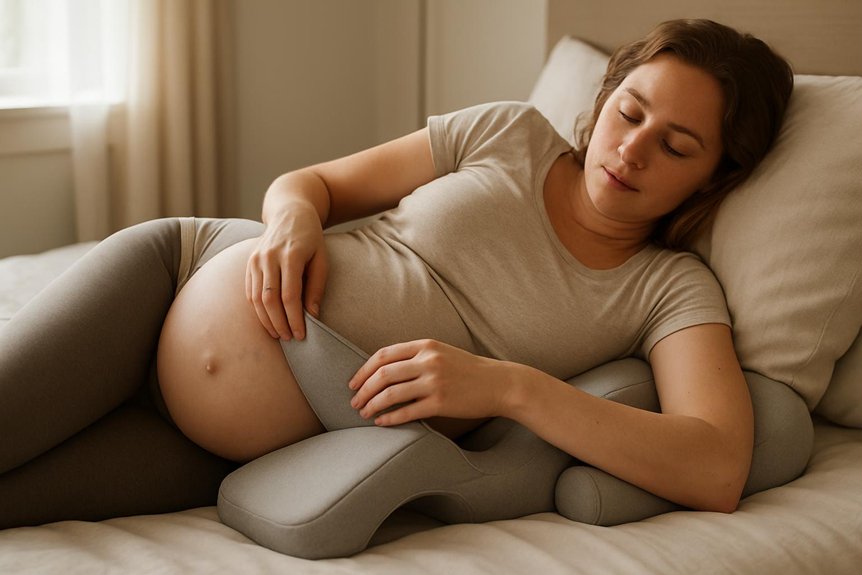
Therapists use side-lying or semi-reclined positioning, with bolsters supporting the bump, hips, and knees to reduce pressure on the vena cava and ease breathlessness.
Head, neck, and shoulder alignment is adjusted to minimise strain and headaches.
Support is guided by the client’s cues: warmth, modest draping, and clear consent help the body relax without feeling exposed.
If any abdominal work is appropriate, it stays light, above the pubic bone, and never provokes tightening, dizziness, or nausea.
Sessions pause for water, bathroom breaks, or a change of position, prioritising steady circulation and calm intimacy throughout.
Which Areas We Treat Instead of the Belly
In place of direct abdominal work, prenatal massage sessions typically focus on areas that can be treated safely and effectively to ease common discomforts.
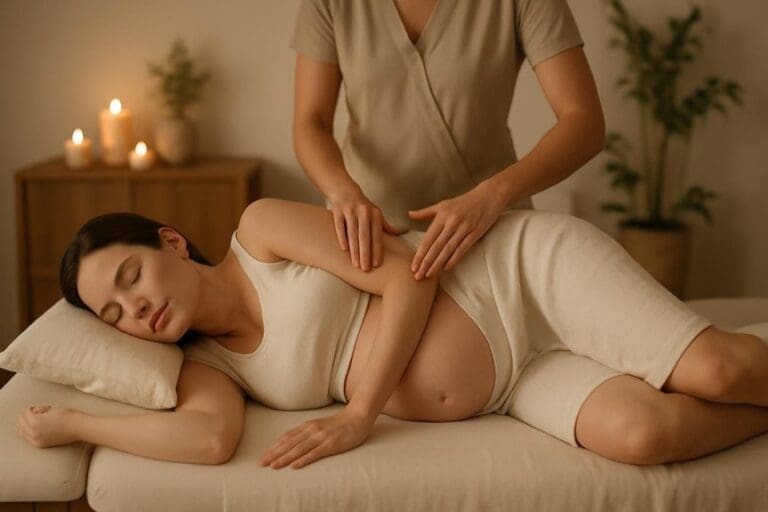
At Spa & Massage, therapists prioritise the lower back and sacrum for pelvic strain, the glutes and hips for sciatic-style tightness, and the upper back, shoulders, and neck for posture-related tension as the chest and bump change biomechanics.
Gentle, supported work through the legs and calves can help heaviness and fluid retention, while careful foot and ankle massage promotes comfort without excessive pressure.
Many clients also benefit from soothing forearm and hand treatment when swelling or repetitive strain is present.
Pressure is kept moderate, strokes are slow and grounding, and sessions remain responsive to how the body feels.
When Should You Ask Your Midwife or GP First?
Prenatal massage often focuses on the back, hips, legs, and shoulders rather than the belly, and it is also wise to check when medical guidance is needed before booking.
A midwife or GP should be consulted if there is a high-risk pregnancy, previous miscarriage, placenta issues, pre-eclampsia, unexplained bleeding, diabetes, hypertension, clotting disorders, severe varicose veins, or current infection/fever.
Medical advice is also sensible after recent surgery, with severe abdominal pain, or when reduced fetal movements have been assessed recently and reassurance is still needed.
At Spa & Massage, therapists ask screening questions and adapt positioning, pressure, and oils to trimester and comfort.
When clearance is recommended, written confirmation helps guarantee a calm, close, safe treatment experience throughout.
Stop Immediately if You Notice These Red Flags
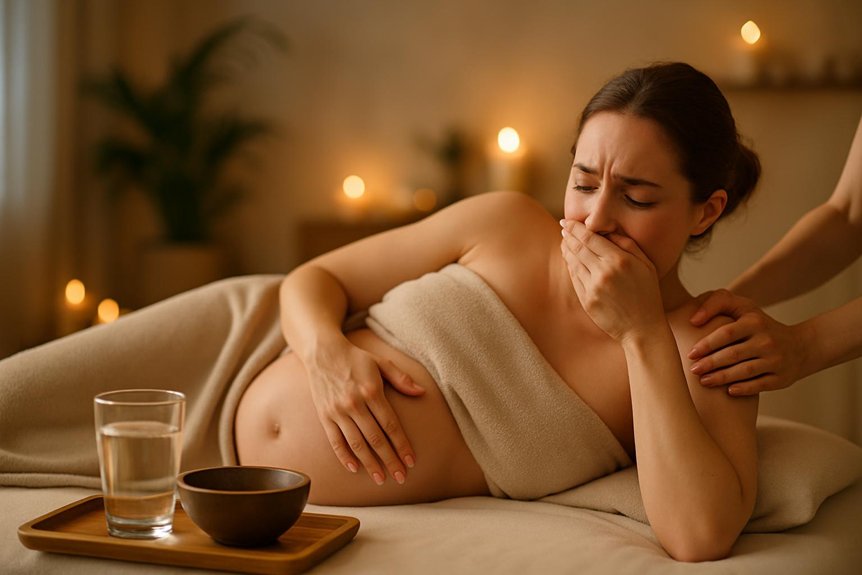
Stop the massage straight away if any warning signs appear during abdominal work, and switch focus to safety and assessment. Red flags include vaginal bleeding or fluid leakage, new or worsening abdominal cramps, regular tightening, sharp pelvic pain, dizziness, faintness, breathlessness, headache, fever, reduced baby movements, sudden swelling, or any feeling that something is “not right.” Gentle touch should never feel painful.
Spa & Massage therapists in London advise clients to rest on the left side, sip water, and contact a midwife, GP, or maternity triage promptly if symptoms persist or are severe. If there is heavy bleeding, severe pain, collapse, or breathing difficulty, emergency care is appropriate.
In clinic, prenatal massage is adapted with side-lying positioning and light pressure, keeping comfort, consent, and continuous check-ins central.
Conclusion
Abdominal massage in pregnancy is not a simple yes or no; it is a decision shaped by trimester, symptoms, and clinical history. Done gently, it may soothe breath, ease tension, and support digestion; done wrongly, it may increase discomfort, trigger sensitivity, and raise avoidable risk. Safer care prioritises assessment, clear consent, and specialist technique—often treating back, hips, and sides instead of the belly. When uncertainty remains, midwife or GP guidance comes first.