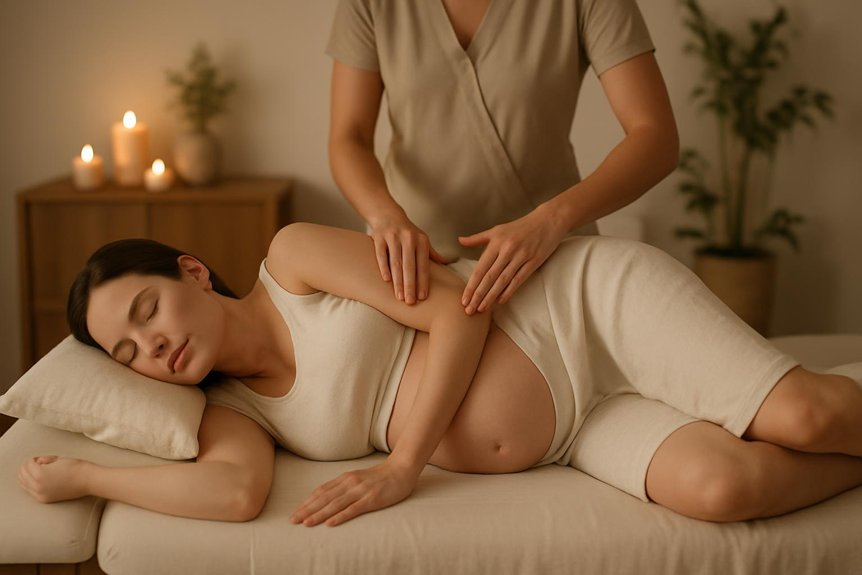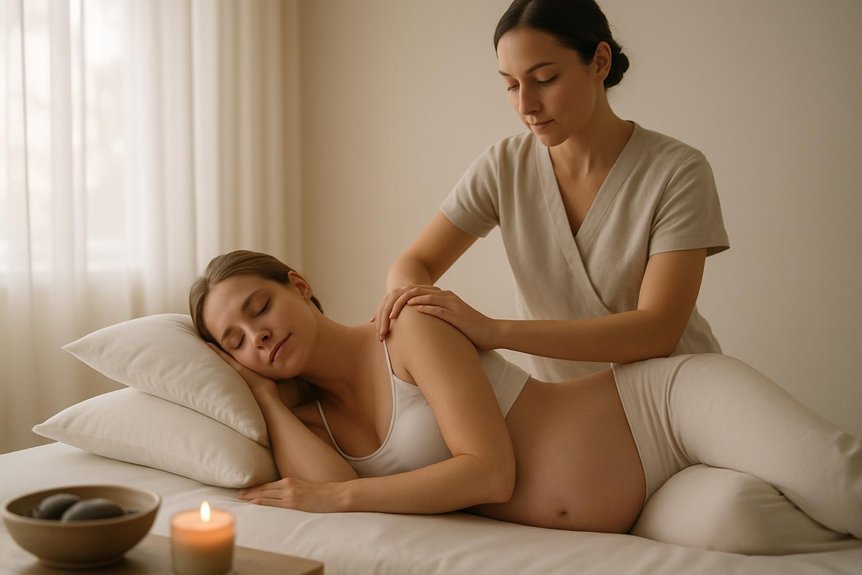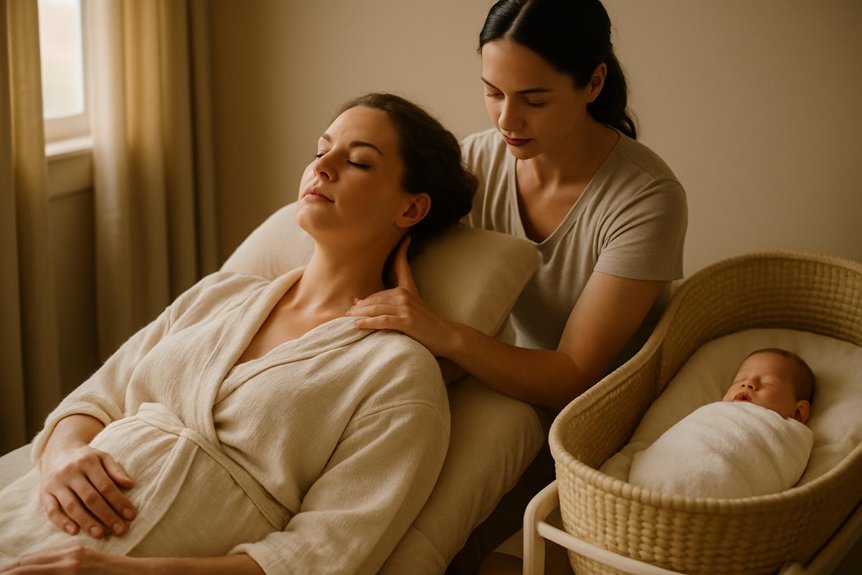
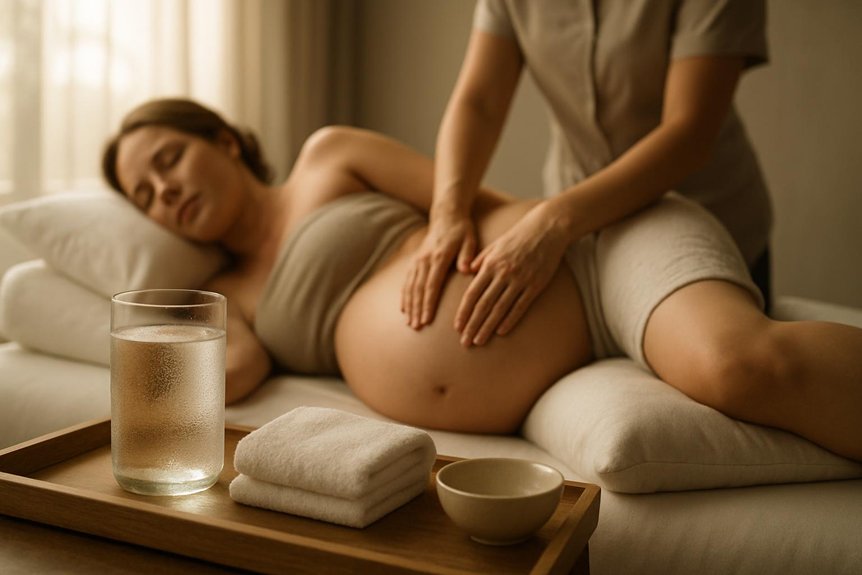
Yes—drinking water after a prenatal massage is generally recommended to support circulation, temperature regulation, and comfort as the body re-settles. Most clients do well with a modest 250–500 ml top-up, taken as small sips within 10–15 minutes and then steadily over the next few hours, rather than one large drink. Plain, room-temperature water is the safest default, with caution around “detox” herbal blends. Further guidance covers trimester timing, symptoms, and when to check with a midwife.
Do You Need Water After a Prenatal Massage?
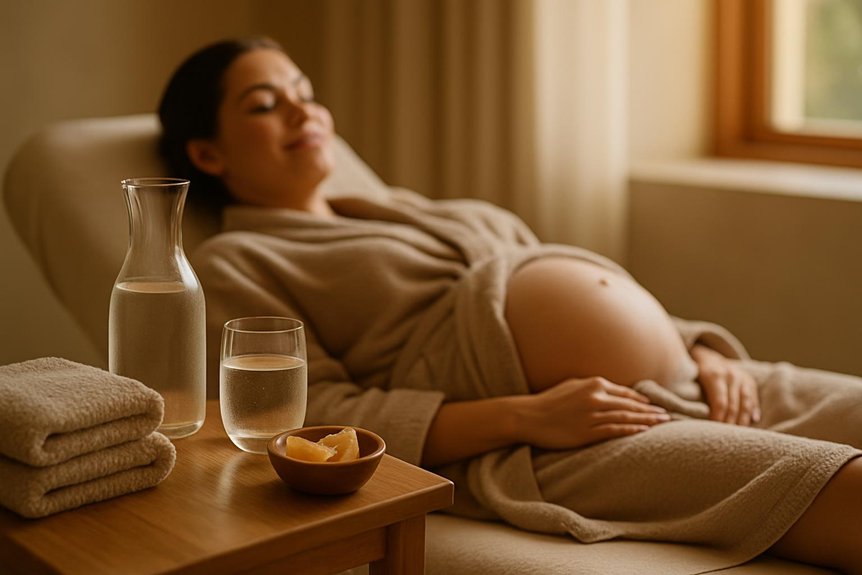
In most cases, drinking water after a prenatal massage is advisable, not because massage “flushes toxins,” but because pregnancy increases baseline fluid needs and relaxation can leave some clients feeling warm, light‑headed, or mildly fatigued.
A few small sips before standing can feel grounding, especially after time spent side‑lying and deeply relaxed.
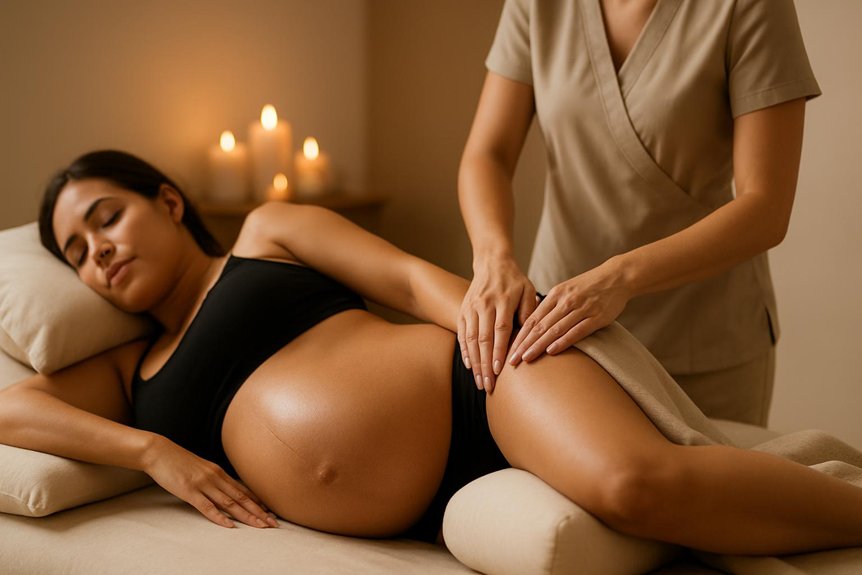
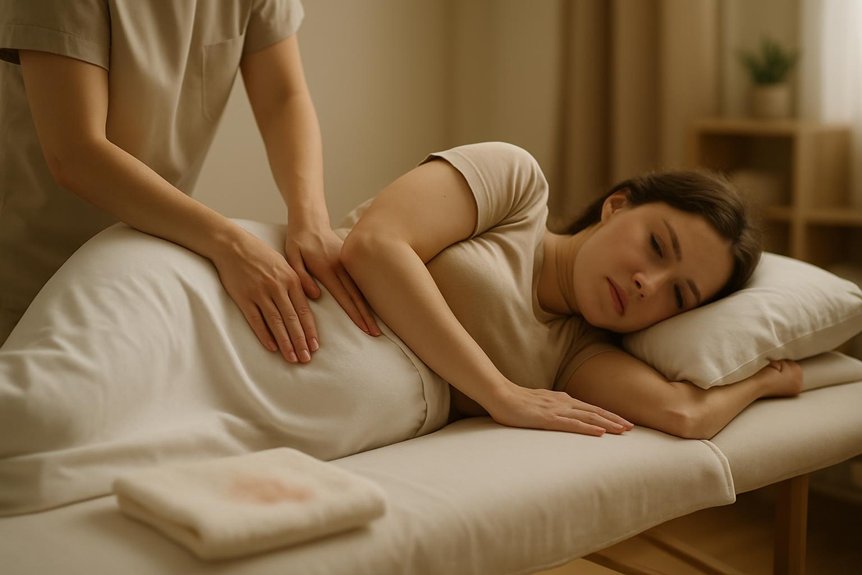
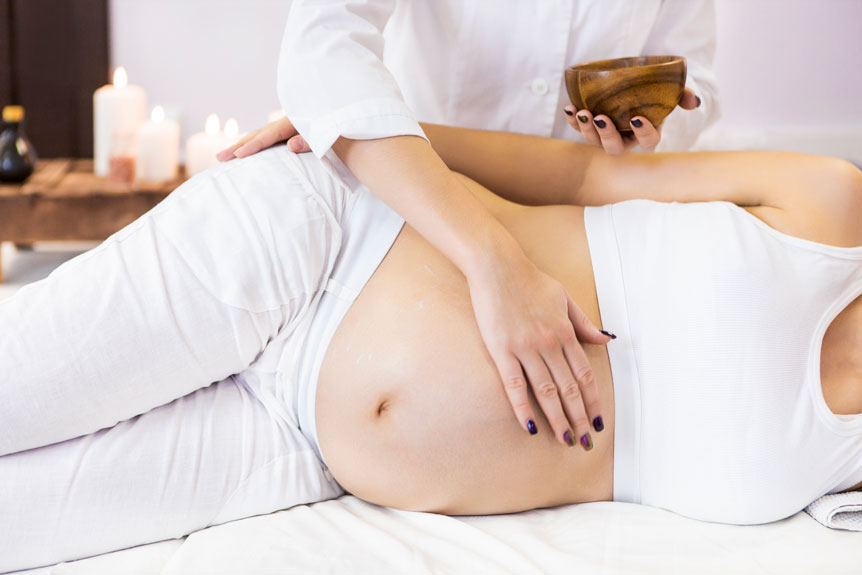
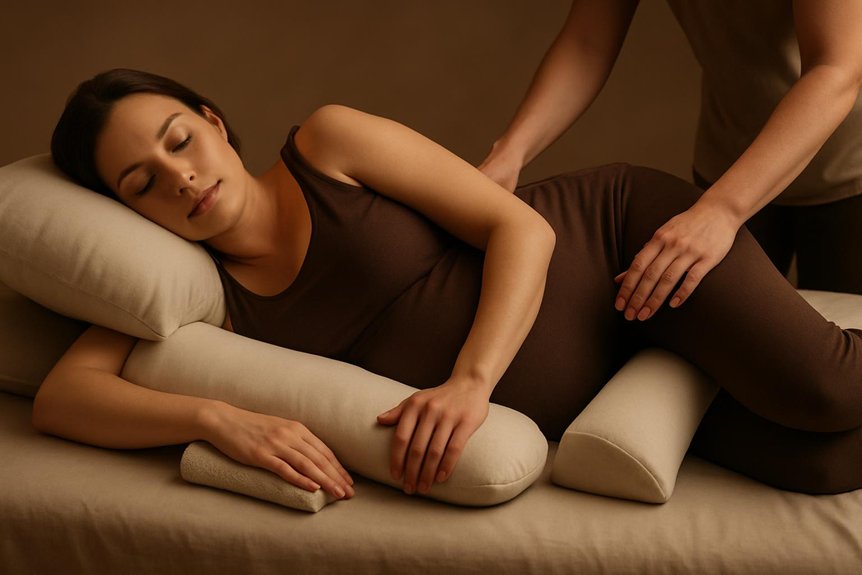
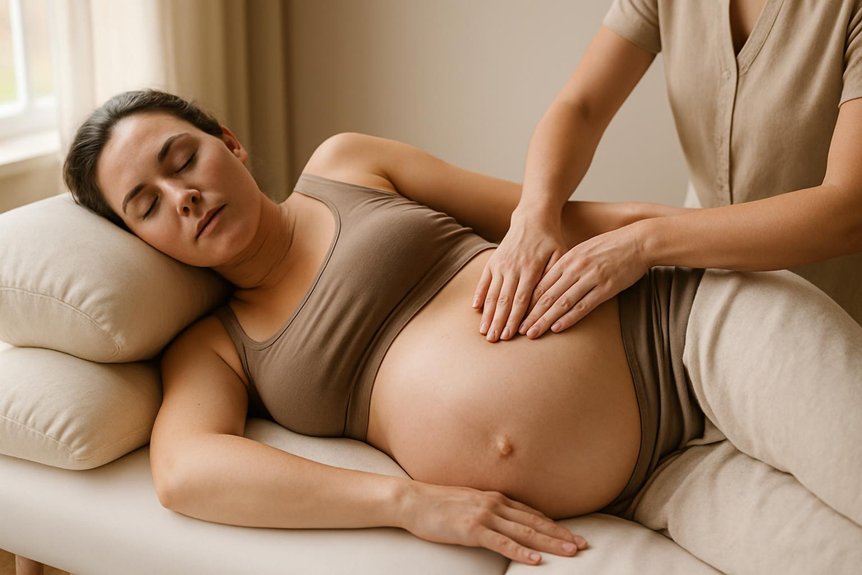
Pregnancy massage offers stress relief for expecting mothers, which can make gentle rehydration afterward feel especially supportive.
At Spa & Massage clinics across London, therapists encourage clients to listen to thirst and comfort rather than forcing large amounts.
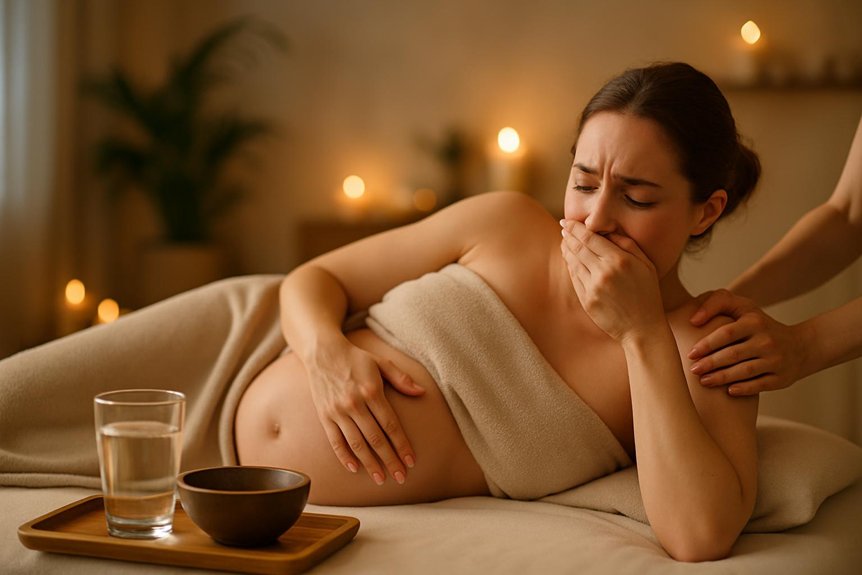
If nausea, reflux, or frequent urination is an issue, a slower pace—room‑temperature water, taken gradually—may be more comfortable.
Anyone with conditions requiring fluid restriction, such as certain hypertensive or cardiac complications, should follow their midwife or obstetric team’s guidance.
Otherwise, water is a gentle, low‑risk aftercare choice.
Why Hydration Helps After Prenatal Massage
Staying well hydrated after a prenatal massage can support comfort and recovery by helping maintain normal blood volume and circulation—both already under extra demand during pregnancy—while also reducing the chance of post-treatment light‑headedness when standing.
Fluid intake supports temperature regulation and normal kidney function, which may feel especially welcome after gentle, heat‑holding relaxation.
Hydration can also help ease common pregnancy discomforts such as constipation and mild headaches, making the post‑massage “settled” feeling last longer.
At Spa & Massage clinics across London, therapists encourage clients to pause, breathe, and sip water slowly, particularly if they have been lying on their side for an extended period.
Those with swelling, hypertension, or medical restrictions should follow midwife or GP guidance on fluids.
How Much Water Should You Drink After Prenatal Massage?
Hydration supports circulation and comfort after a prenatal massage, so the next consideration is quantity. For most pregnant clients, Spa & Massage recommends aiming for a modest top‑up: about 250–500 ml (one to two glasses) of water, in addition to usual daily fluids. This supports normal blood volume and can reduce post‑treatment light‑headedness without overfilling a sensitive bladder.
Those who already meet pregnancy hydration targets—often around 2–2.3 litres of total fluids daily from drinks and foods—may only need the lower end. More may be appropriate after a warm room, heavier pressure, or noticeable thirst. Safety comes first: clients with pre‑eclampsia, kidney disease, or fluid restrictions should follow their midwife’s guidance.
When Should You Drink Water After Prenatal Massage?
After a prenatal massage, it is generally safest to drink water promptly, as hydration supports circulation and comfort following hands-on treatment.
Spa & Massage therapists typically advise continuing to sip water over the next few hours rather than consuming a large amount at once, which can help reduce light-headedness and nausea.
Timing and volume should be adjusted to the trimester and individual tolerance, with extra caution in later pregnancy when reflux and frequent urination are more common.
Drink Water Immediately
Within the first 10–15 minutes of finishing a prenatal massage, drinking a glass of water is generally recommended to support circulation and help replace fluids lost through warmth and relaxation.
At Spa & Massage clinics across London, therapists encourage this gentle aftercare because pregnancy can increase sensitivity to heat, positional changes, and lightheadedness. Immediate hydration may help stabilise blood pressure and reduce post-treatment headaches, especially after focused work on the neck, shoulders, or hips.
A calm, unhurried sip also extends the soothing, close-to-the-body feeling clients seek, keeping the nervous system settled as they shift back to standing and walking.
If nausea, reflux, or swelling is present, smaller sips are safer; any concerning symptoms should be discussed with a midwife.
Keep Sipping Over Hours
Most clients benefit from continuing to sip water steadily for the next several hours following a prenatal massage, rather than relying on one large drink.
Gentle hydration supports normal circulation and helps replace fluid lost through warmth, relaxed breathing, or post-treatment urination.
At Spa & Massage clinics across London, therapists often suggest keeping a bottle nearby and taking small sips every 15–30 minutes, guided by thirst and comfort. This paced approach is usually easier on the stomach and may reduce light-headedness when standing or travelling home.
Water can also complement the calming, close-to-the-body feeling many clients notice after prenatal massage, helping the nervous system settle without abrupt changes.
If nausea, headache, swelling, or dizziness appears, hydration should be paired with prompt clinical advice.
Adjust For Your Trimester
Across pregnancy, hydration timing is best adjusted to trimester-specific comfort and risk factors rather than a fixed rule.
In the first trimester, nausea and reflux can be sensitive; Spa & Massage therapists suggest small sips before standing, then steady drinking over the next hour to avoid provoking queasiness.
In the second trimester, many clients tolerate a fuller glass soon after treatment; hydration supports circulation and helps the body integrate soothing work, especially after gentle deep-tissue or side-lying techniques used in clinic.
In the third trimester, bladder pressure and swelling are common; splitting water into frequent sips reduces urgency while supporting fluid balance.
Any dizziness, headache, contractions, or reduced fetal movement warrants prompt medical advice and pausing further treatments.
Water, Herbal Tea, or Electrolytes: What’s Safest in Pregnancy?
After a prenatal massage, hydration choices should prioritise safety for both parent and baby. Plain water is typically the safest default, supporting circulation and comfort without added ingredients. At Spa & Massage clinics across London, therapists usually recommend room‑temperature water and gentle sipping, especially for clients who feel tender, warm, or emotionally open after treatment.
Herbal tea can be soothing, but pregnancy safety varies by herb and dose. Options like ginger or peppermint are commonly tolerated, while some blends (for example, containing liquorice root or strong “detox” herbs) may be unsuitable; clients should check with a midwife or GP and choose clearly labelled, caffeine‑free teas.
Electrolyte drinks may help after heavy sweating or vomiting, yet many are high in sugar or additives—select low‑sugar, pregnancy‑appropriate formulas.
Signs You Need More Fluids After Prenatal Massage
After a prenatal massage, some clients may need extra fluids, and the most reliable cues are persistent thirst or a dry mouth.
Headache, dizziness, or unusual fatigue can also signal inadequate hydration and should be addressed promptly with pregnancy-safe fluids, as Spa & Massage therapists routinely advise in clinic.
If these symptoms are severe, persistent, or accompanied by concerning signs (such as fainting or reduced foetal movements), appropriate medical guidance is recommended.
Persistent Thirst Or Dry Mouth
Noticing persistent thirst or a dry, sticky mouth in the hours following a prenatal massage can be a practical sign that fluid intake needs to increase. Pregnancy already raises fluid needs, and gentle massage, warmth, and relaxed breathing can subtly shift comfort and appetite cues, making dehydration easier to overlook.
Spa & Massage therapists advise sipping water steadily rather than gulping: small, frequent drinks support circulation and comfort without upsetting the stomach. Pale urine and moist lips are simple, reassuring markers. Many clients also feel better adding hydrating foods (soups, fruit) and limiting salty snacks immediately after treatment.
If dryness persists despite regular fluids, or there are concerns about swelling or medical restrictions, it is safest to check with a midwife or GP.
Headache, Dizziness, Or Fatigue
Headache, light-headedness, or unusual fatigue can sometimes indicate that fluid intake has not kept pace with the body’s needs following a prenatal massage. Gentle massage can support circulation and lymphatic flow; without adequate fluids, some clients may feel “washed out,” especially if they arrived slightly dehydrated or have been warm, busy, or nauseated.
At Spa & Massage clinics across London, therapists advise sipping water slowly after treatment and continuing steady intake through the day. A snack with electrolytes (for example, fruit, yoghurt, or soup) may also help.
Symptoms should ease with rest and hydration; if dizziness is persistent, severe, accompanied by visual changes, swelling, bleeding, or reduced fetal movement, prompt medical advice is recommended. If unsure, a clinician should be contacted.
When to Limit Fluids or Check With Your Midwife
When should fluid intake be limited—or a midwife consulted—following a prenatal massage? It may be appropriate when a clinician has advised fluid restriction for pregnancy-related swelling, hypertension, heart or kidney conditions, or when monitoring blood sugars requires planned intake.
People with hyperemesis, reflux, or frequent urination may prefer smaller sips rather than large amounts at once.
If there is sudden swelling of face or hands, severe headache, visual changes, shortness of breath, chest pain, reduced fetal movements, fever, or ongoing vomiting, a midwife should be contacted promptly; hydration needs may differ.
At Spa & Massage, therapists ask about medical guidance and encourage clients to follow their maternity team’s personalised plan, keeping the body comfortable, calm, and supported afterward.
What to Avoid After Prenatal Massage (Same Day)
After a prenatal massage, the same-day priority is to protect circulation, blood pressure stability, and pelvic comfort by avoiding common triggers that can undo the treatment’s calming effects.
Spa & Massage advises skipping alcohol, excess caffeine, and very salty meals, which may worsen dehydration or swelling.
Avoid hot baths, saunas, and overheating, as pregnancy already increases heat sensitivity and can provoke dizziness.
Postpone high-impact exercise, deep stretching, or heavy lifting; relaxed ligaments and softened tissues can be more injury-prone.
Limit long periods of standing or sitting—change position gently and elevate legs if ankles feel puffy.
Avoid lying flat on the back for extended time, especially later in pregnancy, to reduce vena cava compression.
If cramping, bleeding, or reduced fetal movement appears, seek midwife advice promptly.
Our Spa & Massage Aftercare Tips for Prenatal Massage
In the hours following a prenatal massage at Spa & Massage, simple, safety-first aftercare supports steady circulation, reduces light‑headedness, and helps the body integrate the treatment’s benefits.
Therapists advise sipping water regularly, as hydration supports blood volume changes in pregnancy and replaces fluids lost through warmth and relaxation.
Standing slowly, pausing before walking, and eating a light, balanced snack can steady energy.
A warm (not hot) shower may soothe, while avoiding saunas and very hot baths protects temperature regulation.
If the session used aromatherapy, clients are encouraged to notice any skin sensitivity and rinse gently if needed.
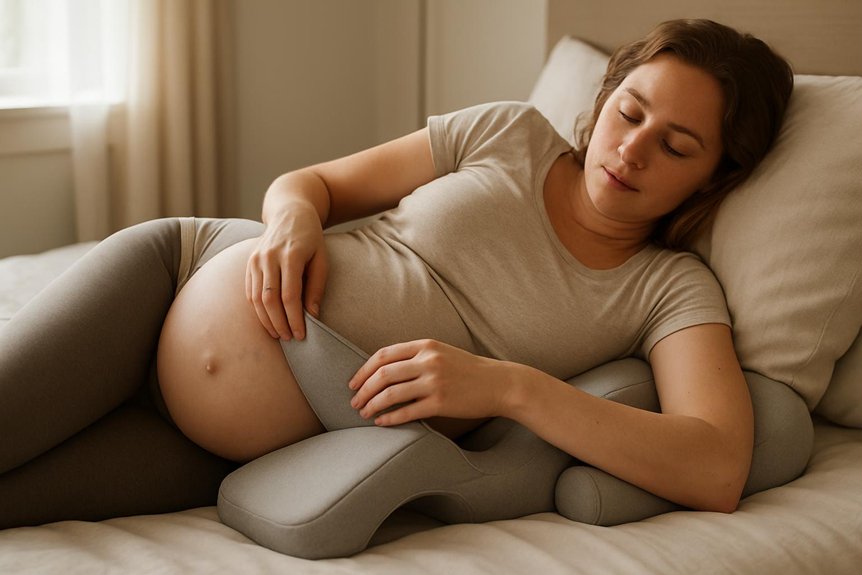
Resting on the left side with pillows can ease pelvic pressure.
Any new dizziness, contractions, bleeding, or reduced fetal movement warrants urgent medical advice.
Conclusion
After a prenatal massage, hydration can act like a gentle rinse for a body already working hard. As circulation settles and tissues soften, sipping water may help maintain blood volume, support normal temperature regulation, and reduce post‑treatment light‑headedness. It is not a “detox,” but a practical aftercare step. Clear urine, steady energy, and comfortable swelling are useful guides. If fluid restriction, pre‑eclampsia concerns, or kidney issues exist, midwife advice should lead.