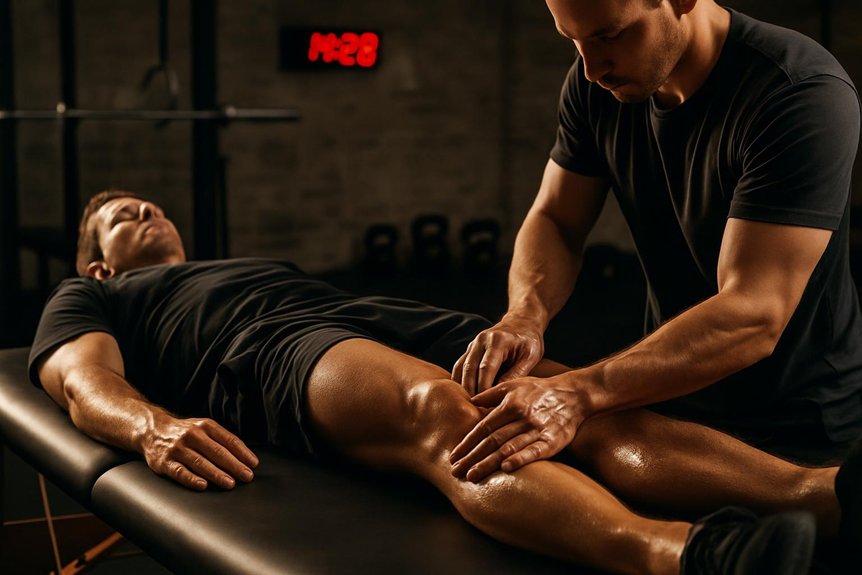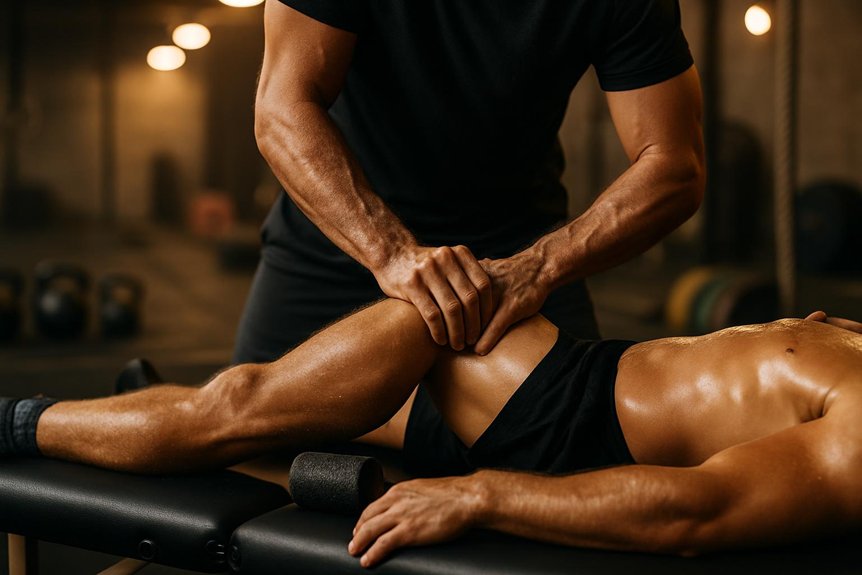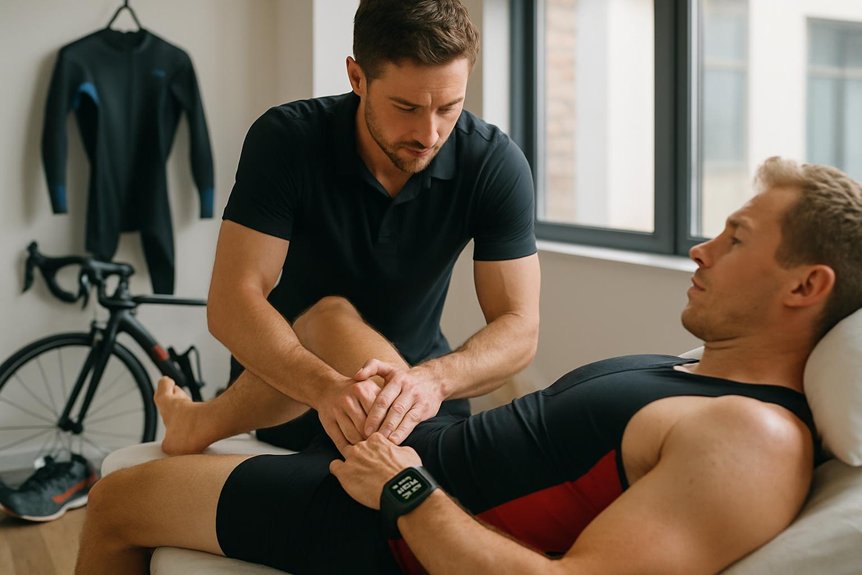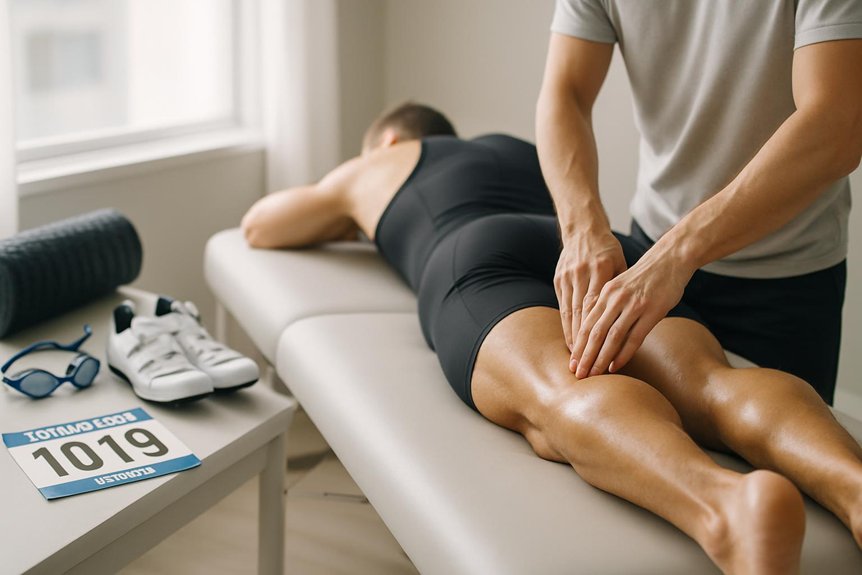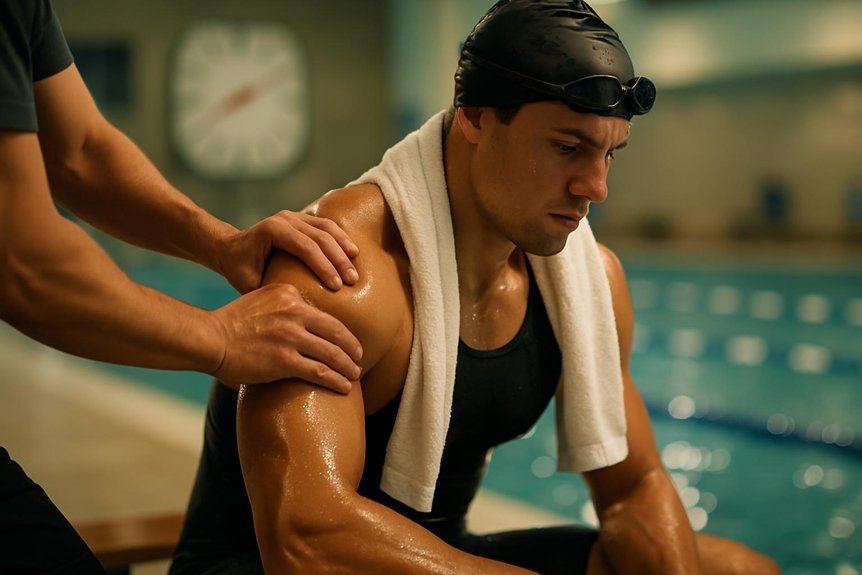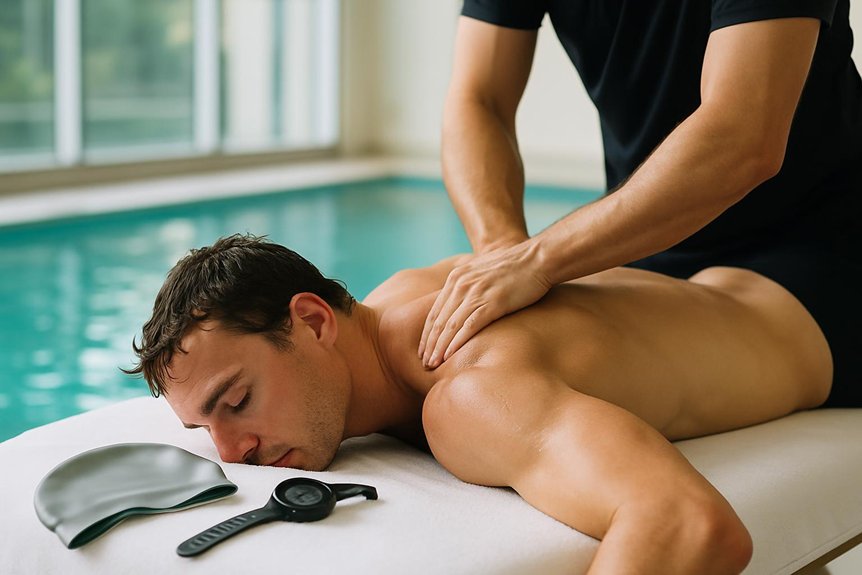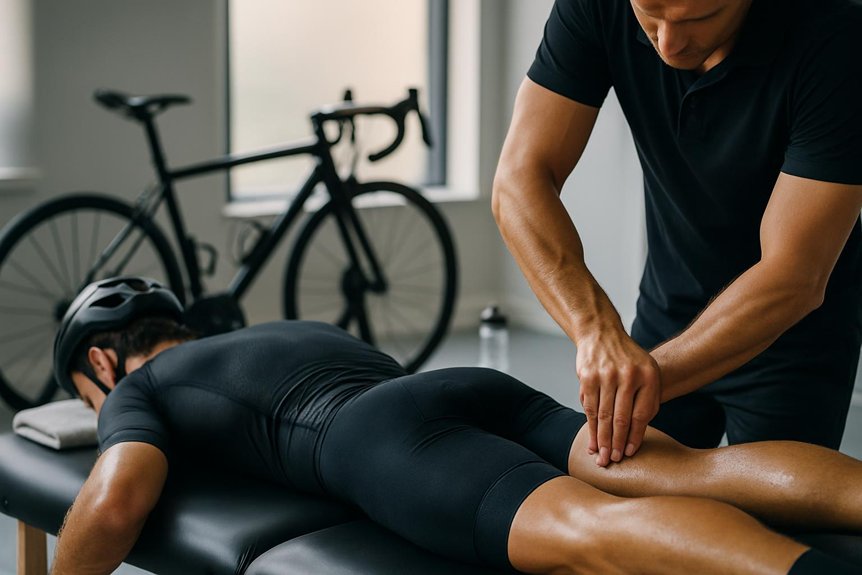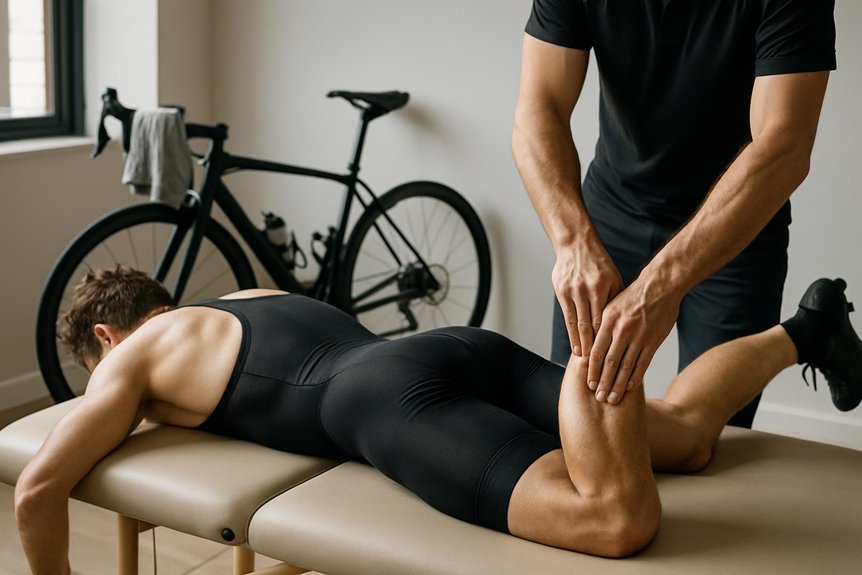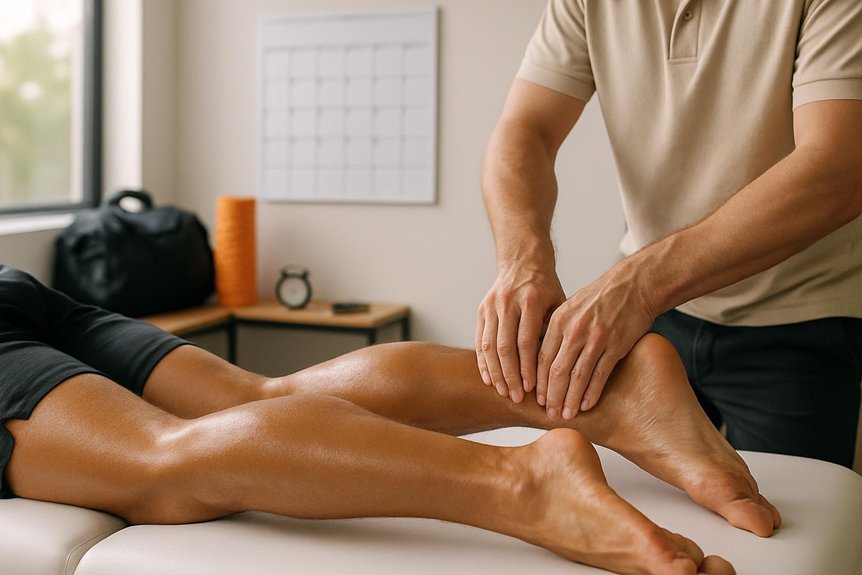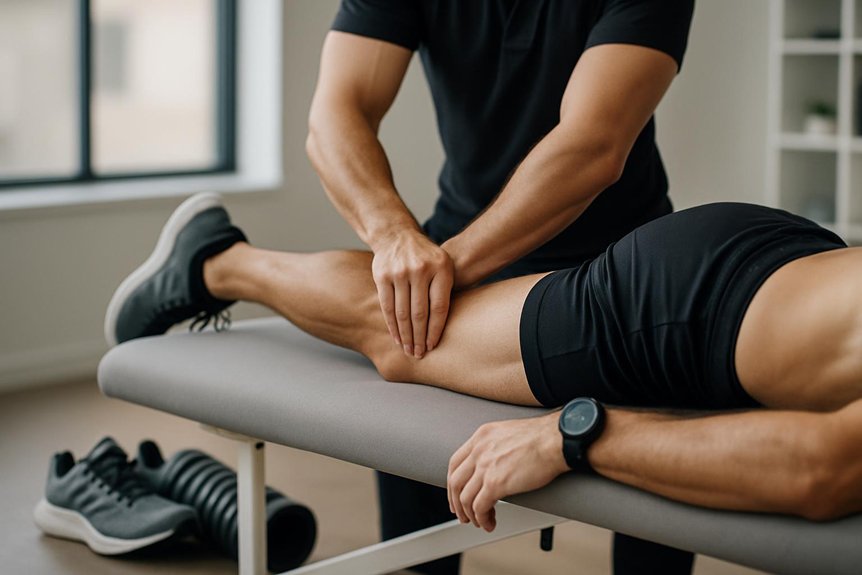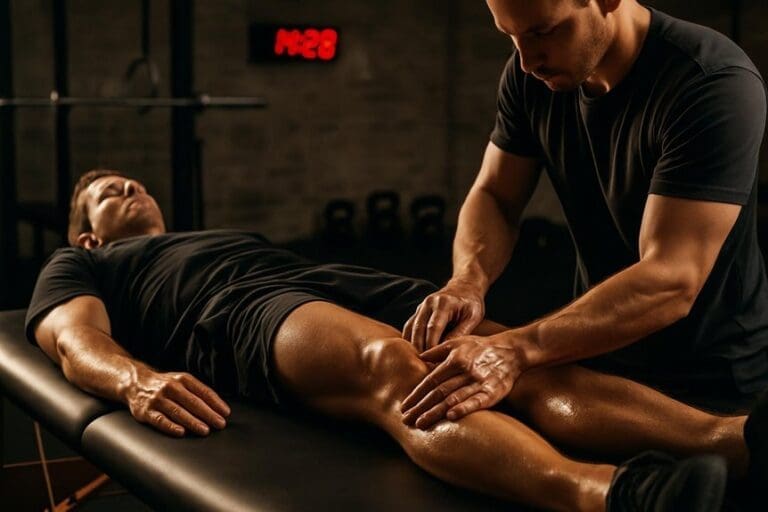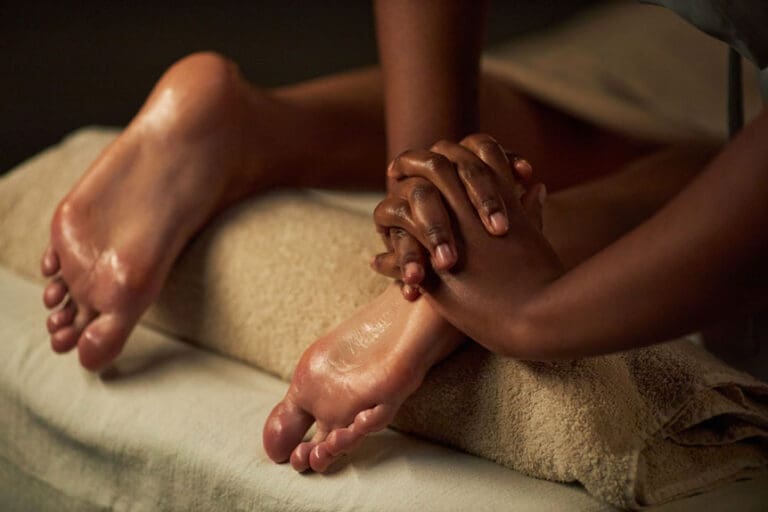
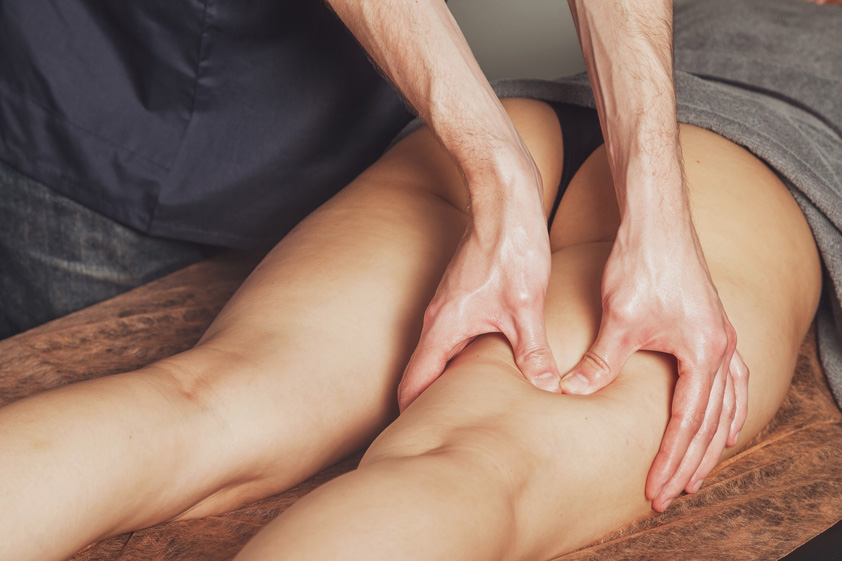
It can help IT band pain by reducing excessive muscle tone in the tissues that tension the band—especially the tensor fasciae latae, gluteals, and vastus lateralis—improving comfort on stairs and during running. Benefits are typically short term and work best when combined with hip-strengthening, mobility work, and sensible training-load changes. Clinically informed sessions use graded pressure, myofascial techniques, and trigger-point work within tolerance. Further details cover symptoms, timelines, and red flags.
Can Athletic Massage Help IT Band Pain?
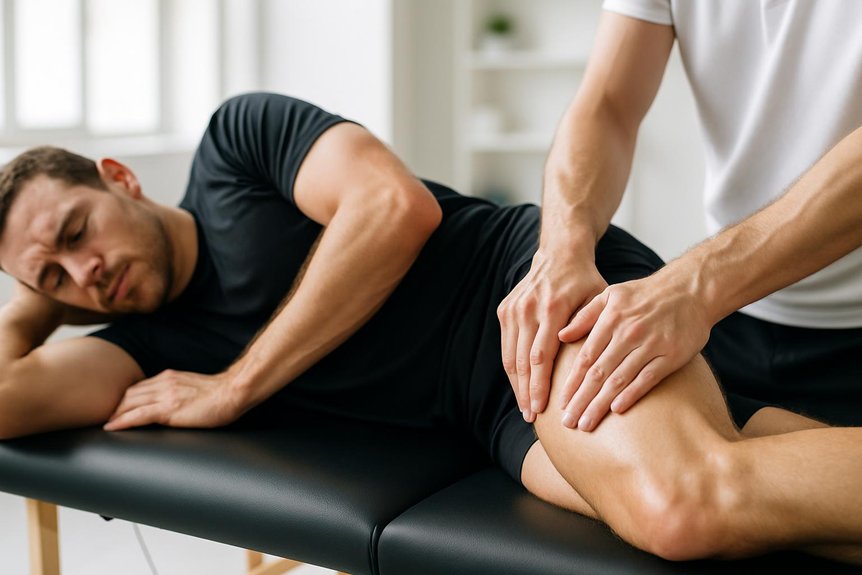
Target tightness along the outer thigh to ease the strain driving many cases of IT band pain. It can support recovery by reducing tone in the tensor fasciae latae, gluteals, and vastus lateralis, improving load tolerance around the hip and knee. As part of the broader benefits of sports massage for athletes, this approach may also support training consistency by easing post-exercise soreness and maintaining mobility. Evidence suggests manual therapy may help short-term pain and function when combined with exercise and activity modification rather than used alone.
At Spa & Massage clinics across London, therapists assess movement patterns, then use firm, progressive pressure, myofascial techniques, and targeted trigger-point work, staying within a client’s comfort and consent. Many clients prefer slower strokes and steady contact to feel safe, grounded, and cared for. Aftercare typically includes gentle hip strengthening, paced running return, and heat or mobility work.
IT Band Pain Symptoms (and Red Flags)
IT band–related pain commonly presents as a sharp or burning ache on the outside of the knee or lateral thigh, often triggered by running, stair use, or repeated knee bending and easing with rest.
At Spa & Massage, therapists screen for features that suggest a more complex issue—such as significant swelling, inability to bear weight, locking or giving way, night/rest pain, fever, or symptoms after a fall.
When these red flags are present, prompt medical assessment is recommended before any athletic massage or hands-on treatment.
Common IT Band Symptoms
Where does discomfort typically show up when the iliotibial (IT) band is involved? Most people notice a sharp or burning pain on the outside of the knee, often worsening during running, stairs, or repeated knee bending.
Tenderness may be felt along the outer thigh, with a tight, “rope-like” sensation when pressing the band.
Symptoms commonly include pain that starts after a predictable distance, eases with rest, and returns when activity resumes. Some experience a subtle clicking or snapping sensation near the lateral knee, plus stiffness after sitting.
Swelling is usually minimal, but localized sensitivity can make side-lying uncomfortable. At Spa & Massage, therapists often note reduced hip control and gluteal fatigue alongside these symptoms, which can guide treatment focus and home care.
Red Flags Needing Assessment
Although most lateral knee and outer-thigh pain linked with iliotibial band irritation is benign and responds well to conservative care, certain features warrant prompt clinical assessment rather than self-management or massage alone.
Red flags include sudden inability to bear weight, a clear “pop,” rapid swelling, locking or true giving-way, fever, redness or warmth, night pain, or pain after a significant fall or collision.
Numbness, tingling, spreading weakness, or pain radiating below the knee may suggest nerve or lumbar involvement.
Marked calf swelling, tenderness, or breathlessness requires urgent care to exclude clotting.
Persistent symptoms beyond 2–3 weeks despite rest and load modification also deserve review.
At Spa & Massage, therapists screen these signs, pause treatment, and guide clients to appropriate medical evaluation.
Why Runners Get IT Band Irritation
In runners, iliotibial band irritation most often develops when repetitive knee flexion and extension under load amplifies friction and compression at the outer knee, particularly around the lateral femoral epicondyle.
Symptoms often surge on downhills, track curves, or during longer efforts as tissue tolerance is exceeded.
Contributing factors include rapid mileage increases, insufficient recovery, and abrupt shifts in terrain or footwear.
Clinically, reduced hip abductor strength or endurance and altered pelvic control can increase femoral internal rotation and knee valgus, raising lateral knee compression.
Limited ankle dorsiflexion and cadence changes may further alter loading.
Many runners notice a sharp, localised ache that eases with rest yet returns predictably after a set distance.
At Spa & Massage clinics, therapists commonly hear this pattern and encourage timely assessment when it persists.
How Athletic Massage Reduces IT Band Pain
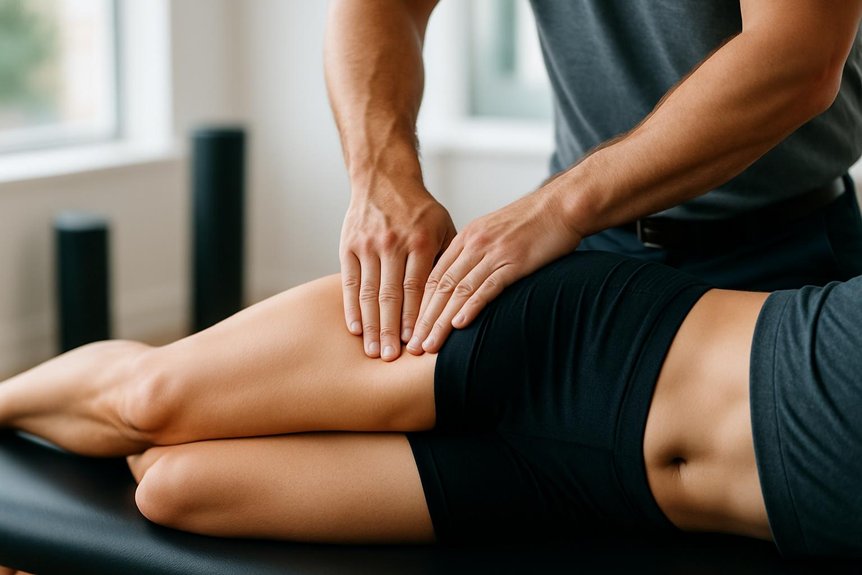
Athletic massage can help reduce IT band pain by addressing contributing tension in the tensor fasciae latae (TFL) and gluteal muscles, which can increase lateral thigh load and irritation.
In Spa & Massage clinics, therapists use targeted soft-tissue techniques to improve tissue tone and hip control, supporting more efficient hip–knee mechanics during running and daily movement.
This patient-centred approach aims to decrease pain sensitivity and restore comfortable function while complementing appropriate strength and mobility work.
Release TFL And Glutes
For many cases of lateral knee or outer‑thigh discomfort linked to IT band pain, the most effective soft‑tissue focus is not the band itself but the muscles that tension it—particularly the tensor fasciae latae (TFL) and the gluteal group. At Spa & Massage clinics across London, therapists often prioritize these tissues because reducing their tone can decrease strain on the IT band and ease tenderness along its course.
Athletic massage may use slow, firm strokes and sustained pressure to the TFL (front‑outer hip) and gluteus medius/maximus, staying within a client’s comfortable “good pressure” range. Many clients notice a warmer, more open hip and less pulling down the outer thigh. Aftercare typically includes gentle hydration, light walking, and avoiding aggressive stretching for 24 hours.
Improve Hip-Knee Mechanics
Reducing tone in the TFL and gluteal muscles often decreases the lateral pull transmitted to the IT band, but lasting relief typically depends on how the hip and knee are moving under load. When the hip drops or the knee drifts inward during running, stairs, or squats, compression rises at the lateral knee, sensitising tissues.
At Spa & Massage clinics, athletic massage is used to support better mechanics by improving hip rotator length, reducing protective guarding, and restoring glide around the lateral thigh. Therapists then cue simple, pain‑free drills—controlled step‑downs, hip hinges, and banded side steps—to help clients feel steadier through the pelvis and knee. Many clients notice that when movement is re‑trained alongside massage, flare‑ups become less frequent and training feels calmer overall.
Athletic Massage Techniques for IT Band Pain
In clinical practice, IT band pain is typically addressed with athletic massage by targeting the contributing tissues around the lateral thigh and hip rather than aggressively “stripping” the band itself. Therapists often begin with slow, warming effleurage, then apply sustained, tolerable pressure to the gluteus medius/minimus, tensor fasciae latae, vastus lateralis, and lateral hamstrings to reduce tone and improve slide between layers.
Myofascial release and pin-and-stretch around the hip can ease compression and support smoother hip-knee mechanics. Trigger point work is used sparingly, with clear consent and frequent check-ins, so the client feels safe and connected in their body. At Spa & Massage clinics, light oil or balm supports controlled glide, and post-treatment advice emphasizes gentle movement and hydration.
How Many Sessions for IT Band Pain Relief?
Often, meaningful IT band pain relief with athletic massage emerges over a short course rather than a single appointment, with the exact number of sessions guided by symptom duration, training load, and the presence of contributing hip or knee mechanics.
For recent, mild symptoms, many clients notice change within 2–4 sessions spaced weekly, alongside load reduction and simple home mobility. For longer-standing pain, a steadier plan of 4–8 sessions over 4–6 weeks is common, with progress reviewed each visit.
At Spa & Massage London clinics, therapists track pain on stairs, running tolerance, and tenderness, then adjust pressure and focus to the glutes, lateral thigh, and hip rotators. Maintenance sessions every 3–6 weeks can help when training volume rises.
When IT Band Pain Needs a Clinician
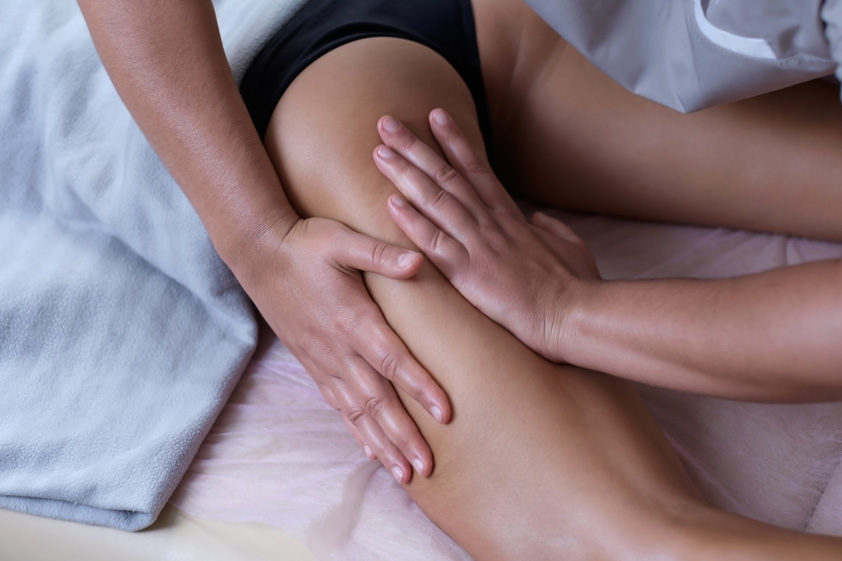
When should IT band pain be assessed by a clinician rather than managed with athletic massage and self-care alone? Assessment is advisable when pain is sharp, worsening, or present at rest or at night; when there is significant swelling, redness, warmth, bruising, locking, giving-way, or an audible pop; or when numbness, tingling, or back/hip pain suggests nerve involvement.
A clinician is also indicated after a fall, if fever or unexplained weight loss occurs, or if symptoms persist beyond 2–3 weeks despite modified activity and appropriate load management.
At Spa & Massage, therapists screen at the first visit; if findings suggest meniscal injury, stress fracture, hip pathology, or inflammatory disease, referral is recommended.
For clients, timely clinical input protects confidence, clarifies diagnosis, and guides safer hands-on care.
Aftercare: Running, Soreness, and Hydration
After an athletic massage for IT band–related pain, most people benefit from a short, structured aftercare window that balances relative rest with gentle movement, along with sensible hydration to support recovery.
At Spa & Massage clinics, therapists typically advise avoiding hard runs for 24–48 hours, then resuming with easy, flat sessions if symptoms stay calm during and the next morning. Mild tenderness is common; sharp pain, swelling, or worsening lateral knee pain is not and should prompt pausing and clinical review.
Gentle walking, light cycling, and hip mobility can maintain circulation without overloading the tissue.
Hydration supports circulation and post-treatment comfort; clients are encouraged to drink regularly, include electrolytes after heavy sweating, and limit alcohol that can increase dehydration and soreness.
Book Athletic Massage for IT Band Pain in London
Ongoing IT band symptoms that persist despite sensible rest, hydration, and a graded return to running may benefit from a clinically-informed athletic massage assessment and treatment plan. At Spa & Massage, therapists first clarify pain behaviour, training load, and contributing tension through the lateral thigh, gluteals, and hip rotators, then tailor hands-on work and home guidance accordingly.
Clients in London can book across six calm clinics—Crouch End, Bayswater, Chiswick, Earl’s Court, Belsize Park, and Richmond—choosing athletic massage or deep tissue depending on irritability. Sessions may combine myofascial release, trigger-point techniques, and graded pressure to support comfort while avoiding flare-ups. Clear aftercare is provided, including short mobility drills, pacing advice, and hydration reminders, with follow-up plans aligned to running goals and daily life.
Conclusion
IT band pain is rarely a single “villain”; it is more like a cart track worn too deep by repeated passes. Athletic massage can help smooth the ruts by reducing surrounding muscle tension, improving local circulation, and supporting more efficient movement—especially when combined with load management and targeted hip and knee strengthening. Persistent swelling, locking, night pain, or worsening symptoms signal a different road and warrant clinical assessment. With appropriate aftercare, many return to steadier miles.