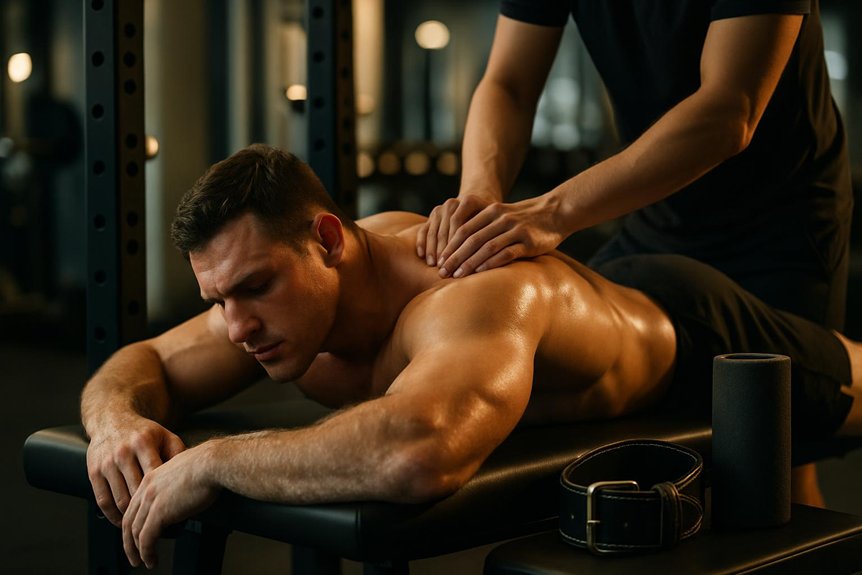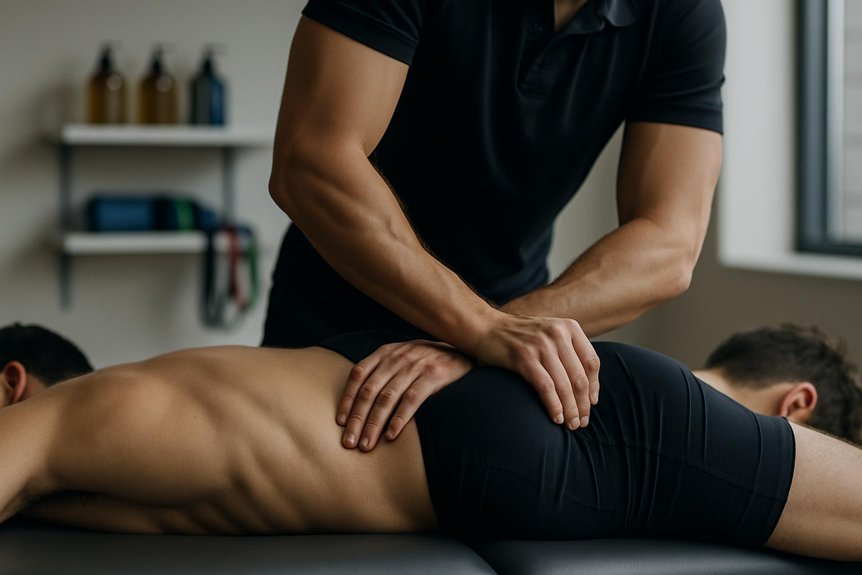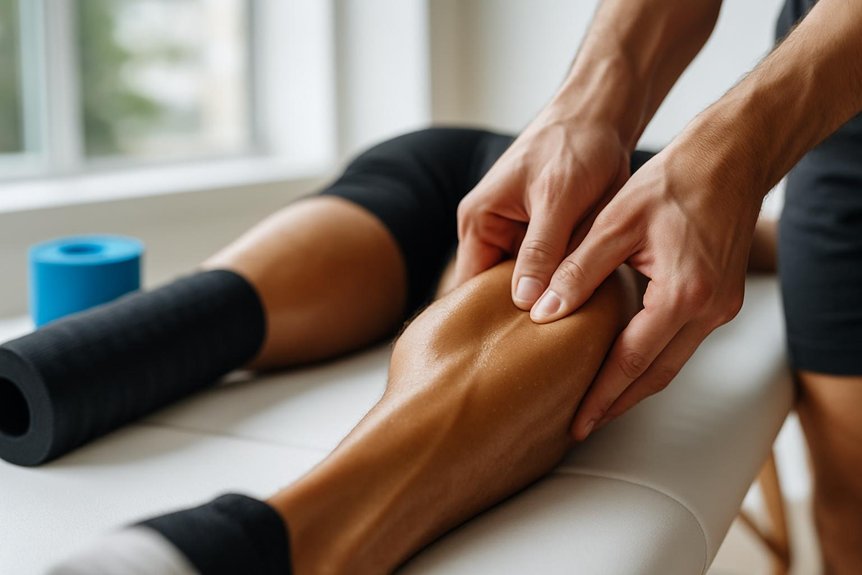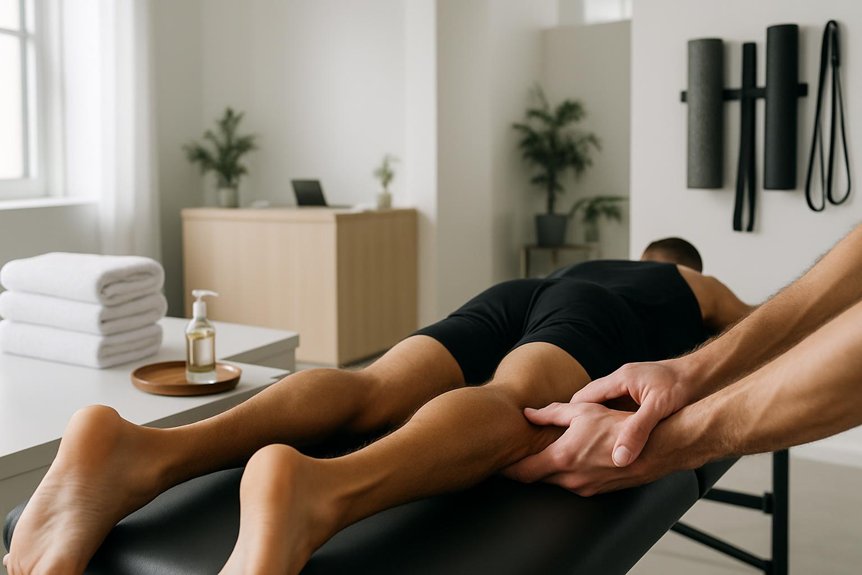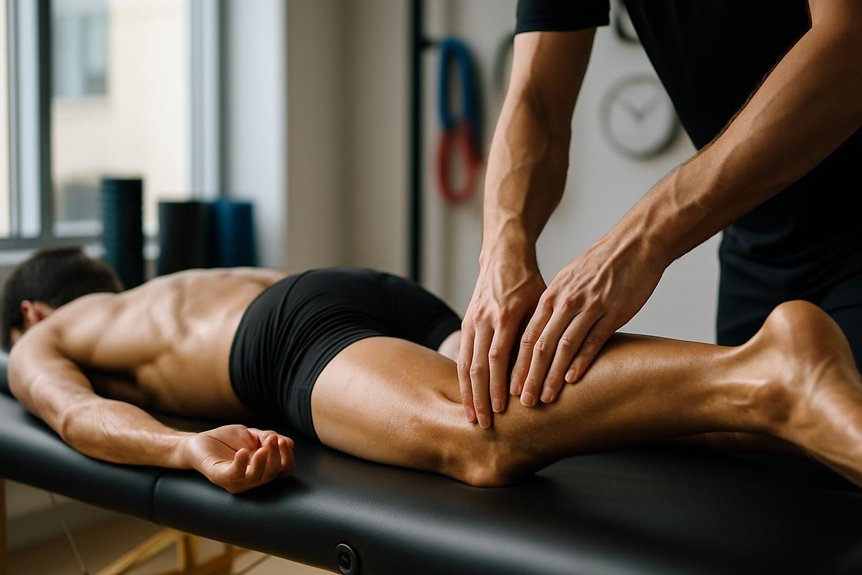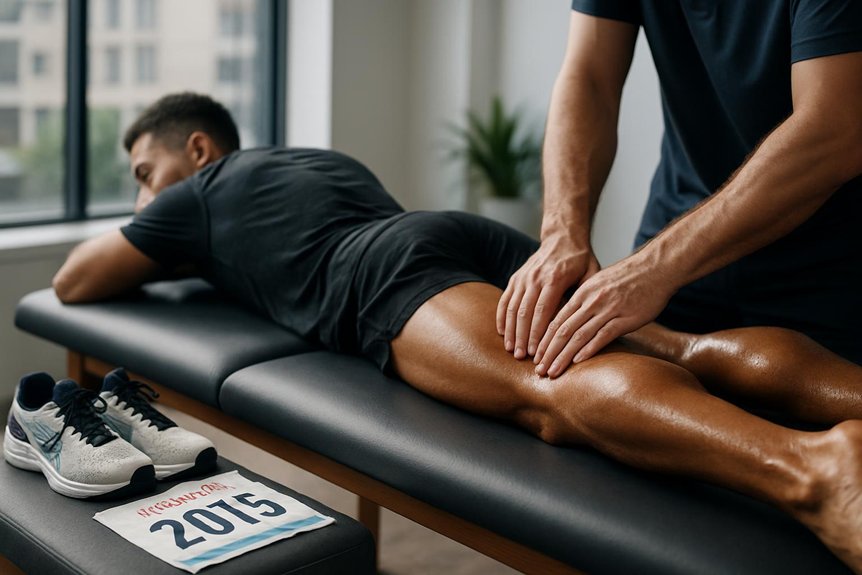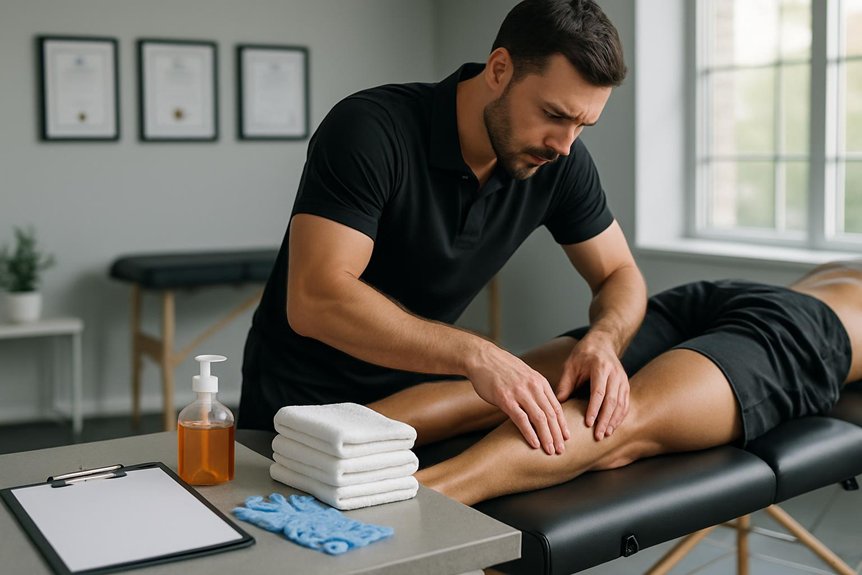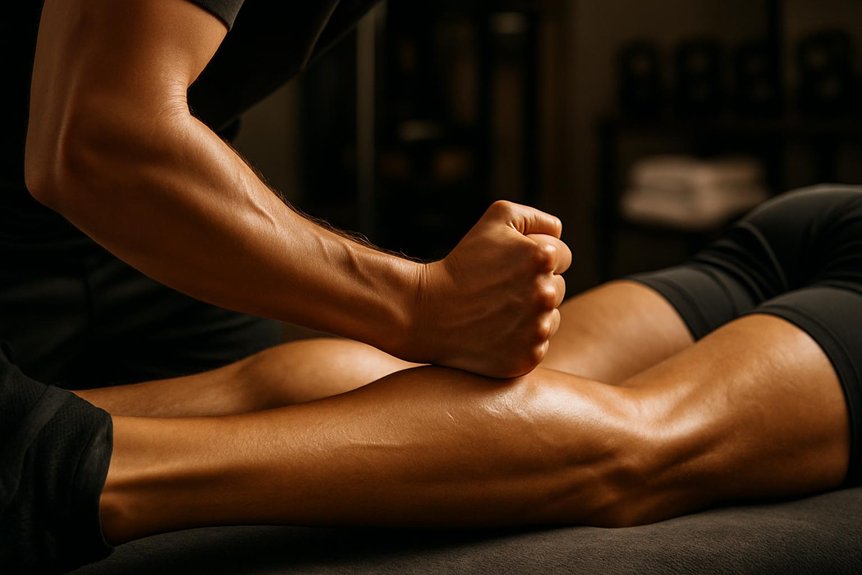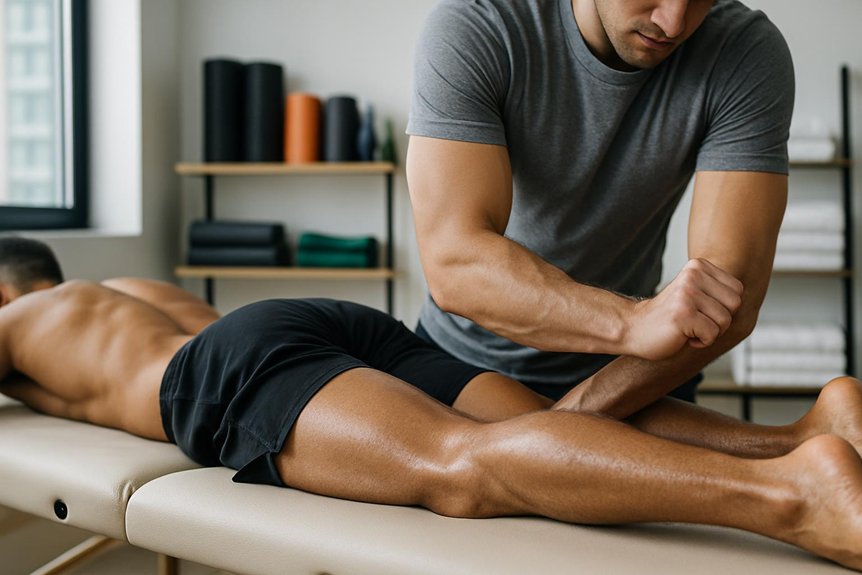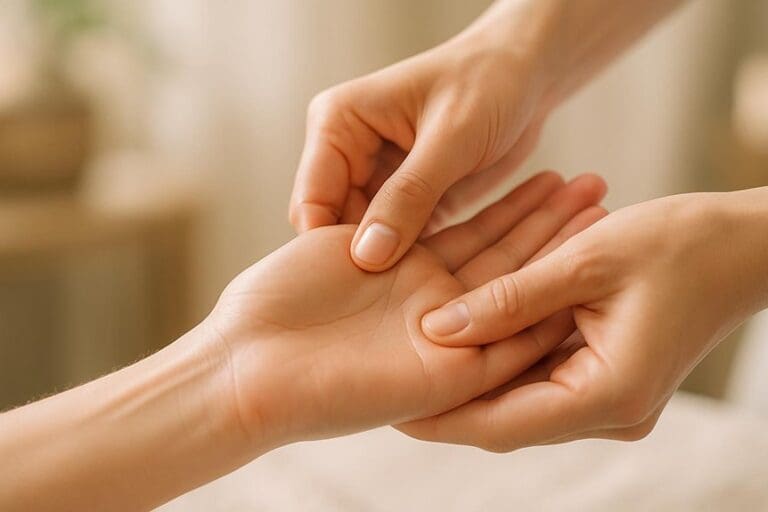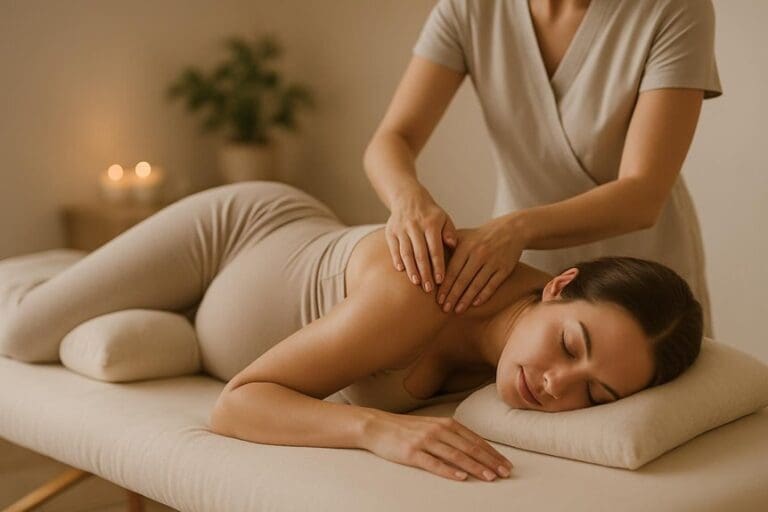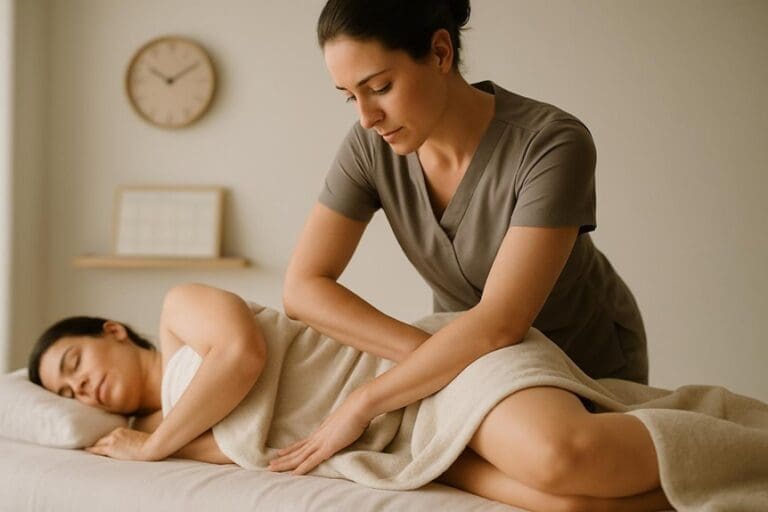
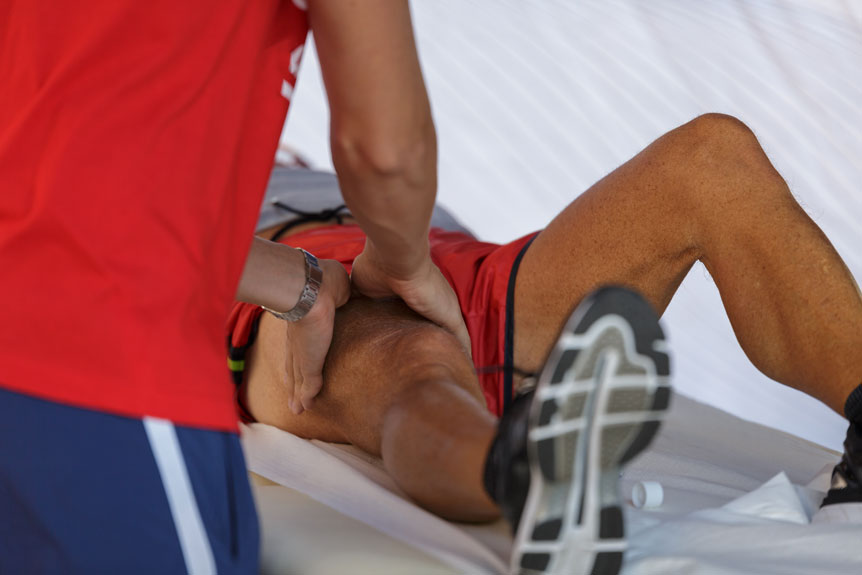
It is beneficial for cyclists managing high training loads with limited recovery time. It can reduce perceived soreness, improve short-term range of motion, and help riders feel more coordinated between hard sessions. A cyclist-focused approach typically targets hip flexors, gluteals, quadriceps, hamstrings, calves, and plantar fascia using slow stripping, myofascial release, trigger-point work, and gentle mobilisations, with pressure kept at productive discomfort. Timing and aftercare determine results, and more specific guidance follows.
Is It for Cyclists Worth It?
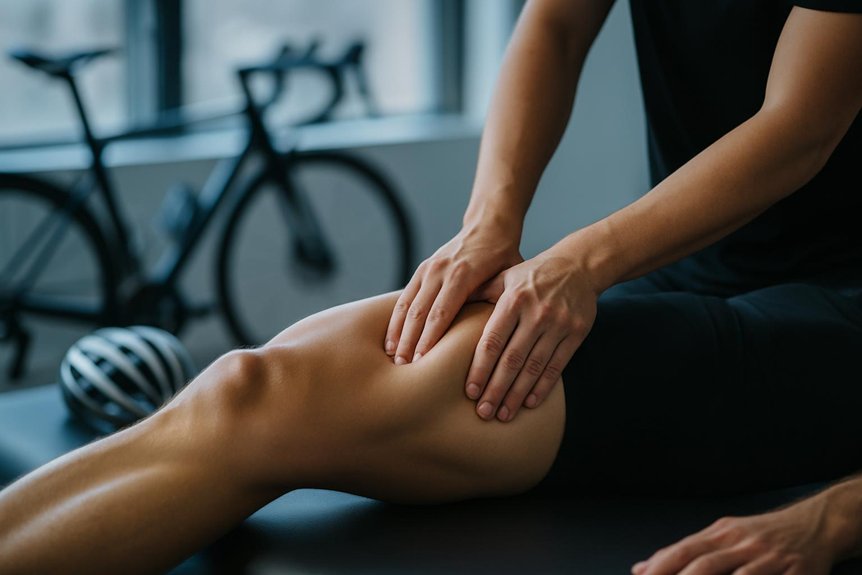
For cyclists balancing high training loads with limited recovery time, sports massage is often worth it as a targeted intervention to manage tissue stress, maintain mobility, and support consistent performance. Evidence suggests it can reduce perceived soreness and improve short-term range of motion, helping riders return to quality sessions feeling more “together” in their bodies. These benefits for athletes can be especially valuable during heavy training phases when recovery windows are tight.
At Spa & Massage clinics across London, therapists use athlete-led assessment, then apply sustained deep-tissue pressure, slow stripping, and myofascial release through key pedalling chains, finishing with mobility-informed flushing. Pressure is adjusted so the rider stays relaxed, breathing steady, and able to soften guarding. Many cyclists schedule sessions around harder blocks: lighter work pre-event for suppleness, deeper work post-block for recovery.
Simple aftercare—hydration, gentle spinning, and heat—helps benefits last longer.
What Cycling Aches and Injuries Can Athletic Massage Help?
It can support cyclists dealing with common pain points and overuse patterns—such as tight hip flexors, loaded quadriceps and calves, lower-back and neck tension from sustained posture, and irritation around the knee or Achilles from repetitive pedalling.
In Spa & Massage clinics, therapists use athlete-led assessment plus targeted techniques (e.g., deep tissue work, myofascial release, trigger point therapy, and assisted stretching) to reduce tone, improve tissue glide, and restore range of motion in the structures most stressed by cycling.
The focus is recovery and return to training capacity, with treatment scaled to training load and symptoms rather than applied as a one-size-fits-all routine.
Common Cycling Pain Points
Five cycling pain points show up repeatedly in clinic notes: anterior knee irritation, tight hip flexors and glutes, low-back fatigue, neck/shoulder tension from sustained forward posture, and calf/Achilles overload.
At Spa & Massage, therapists assess pedal stroke demands, training load, and bike fit cues, then target the tissues most likely contributing to symptoms. For knees, careful work to quads, ITB-adjacent fascia, and patellar tracking support can reduce protective guarding.
For hips and glutes, slow deep tissue and trigger-point pressure improves extension and hip rotation comfort.
For low back and neck, myofascial release and gentle mobilisations downregulate tone while restoring breathing mechanics.
For calves/Achilles, graded stripping and cross-fibre friction address stiffness without provoking tenderness.
Post-session, clients are guided on hydration, heat, and easy spins.
Overuse Injuries And Recovery
Managing repetitive-load stress is central to keeping cyclists training consistently, and athletic massage can support recovery from common overuse presentations by reducing excessive tissue tone, improving local circulation, and maintaining movement quality around vulnerable joints.
It can be useful for patellofemoral irritation, iliotibial band–related lateral knee pain, Achilles and patellar tendinopathy, plantar fascia sensitivity, hip flexor tightness, and lumbar or neck fatigue from sustained posture.
At Spa & Massage clinics across London, therapists prioritise slow deep-tissue work to quads, TFL, calves, and gluteals, plus targeted friction to irritated tendons when appropriate, followed by gentle myofascial release and mobility re-checks.
Pressure is kept communicative—close, calm, and athlete-led—and aftercare typically includes hydration, light spinning, and progressive load management.
Athletic Massage vs Deep Tissue: What Should Cyclists Book?
For cyclists, the right booking depends on the goal: athletic massage is typically chosen to support performance and recovery around training load, while deep tissue is more often selected for symptom-led relief of persistent tightness.
In Spa & Massage clinics, therapists differentiate the two by pressure, pace, and focus—sports work tends to be more targeted and session-specific, whereas deep tissue applies slower, sustained loading to address dense myofascial restriction.
The best choice is guided by symptoms and timing, such as pre-event tone and post-ride soreness versus ongoing hip flexor, glute, or calf tightness that limits range and comfort on the bike.
Goals: Performance Vs Relief
How should a cyclist choose between athletic massage and deep tissue when the aim is either faster performance or simple symptom relief?
For performance, it is typically booked around training blocks and events, using targeted work that supports range of motion, tissue glide, and neuromuscular readiness in quads, hip flexors, calves, and glutes. Evidence suggests massage can reduce perceived soreness and improve short-term flexibility, which may help an athlete feel sharper on the bike.
For relief, deep tissue is often chosen when tightness feels persistent, diffuse, and stress-linked, with slower, sustained techniques aimed at stubborn areas and protective guarding.
At Spa & Massage London clinics, therapists align the session to the cyclist’s goal, inviting clear communication, breath-led pacing, and respectful boundaries throughout.
Pressure, Pace, And Focus
Most cyclists notice the clearest difference between athletic massage and deep tissue in the pressure applied, the pace of the strokes, and the therapist’s focus.
Athletic massage typically uses moderate-to-firm pressure delivered in brisk, purposeful sequences—compression, effleurage, friction, and stretching—to support warm-up or recovery while tracking cadence-related load in quads, hip flexors, calves, and glutes.
Deep tissue tends to be slower, heavier, and more sustained, leaning on deliberate stripping and trigger-point holds to access deeper layers and reduce resting tone.
In Spa & Massage clinics, therapists continually check comfort, breath, and guarding, adjusting depth so the nervous system softens rather than fights.
For cyclists seeking close, attentive work, athletic massage feels rhythmic and athletic; deep tissue feels unhurried, intimate, and exacting.
Best Choice By Symptoms
Pressure, pace, and therapeutic focus shape how each modality feels on the table, but cyclists typically choose best by matching the session to symptoms and training context.
Athletic massage suits riders with post-ride heaviness, DOMS, or movement restriction: therapists use brisk effleurage to warm tissue, targeted compression, and active stretches to restore glide around hips, quads, calves, and ITB. It’s often booked in-season, 24–72 hours after hard sessions.
Deep tissue is better for persistent knots, low-grade tendon irritation, or long-standing adhesions where slow, sustained pressure and myofascial release reduce tone and sensitivity; it’s commonly scheduled in base weeks.
At Spa & Massage clinics, therapists adjust depth, check breath, and avoid bruising, leaving cyclists soothed, grounded, and ready to train safely.
How Does Athletic Massage Improve Cycling Recovery and Mobility?
Accelerate recovery and restore efficient movement by using athletic massage to target the specific tissue demands of cycling. Focused pressure and slow stripping strokes on quadriceps, hip flexors, glutes, calves, and plantar fascia help reduce protective tone, improve glide between tissue layers, and ease that tight, “stuck” feeling after hard miles.
Evidence supports massage for lowering perceived soreness and improving readiness, while maintaining joint range through hands-on assessment and targeted release. At Spa & Massage clinics across London, therapists combine deep tissue techniques with trigger point work and myofascial release to address common cycling restrictions around the hips and ankles, then finish with gentle compressions to calm the nervous system.
The result is smoother pedal mechanics, less compensatory strain, and a more supple, connected body.
When Should Cyclists Get an Athletic Massage (and How Often)?
Often, the best timing for a cyclist’s athletic massage depends on training load, upcoming events, and the presence of specific symptoms such as persistent muscle tone, reduced hip/ankle range, or niggles that alter pedal mechanics.
For most riders, booking 24–72 hours after key sessions supports recovery without blunting training quality; during heavy blocks, weekly or fortnightly care can keep tissues pliable and movement efficient.
In race weeks, a lighter session 3–5 days out may help settle hypertonic quads, glutes, calves, and hip flexors, while deeper work is better placed 5–10 days before.
After events, a gentle massage within 48 hours suits soreness; more intense work waits until tenderness eases.
At Spa & Massage London clinics, frequency is adjusted to goals and comfort.
What Happens in a Cyclist Athletic Massage, and Aftercare?
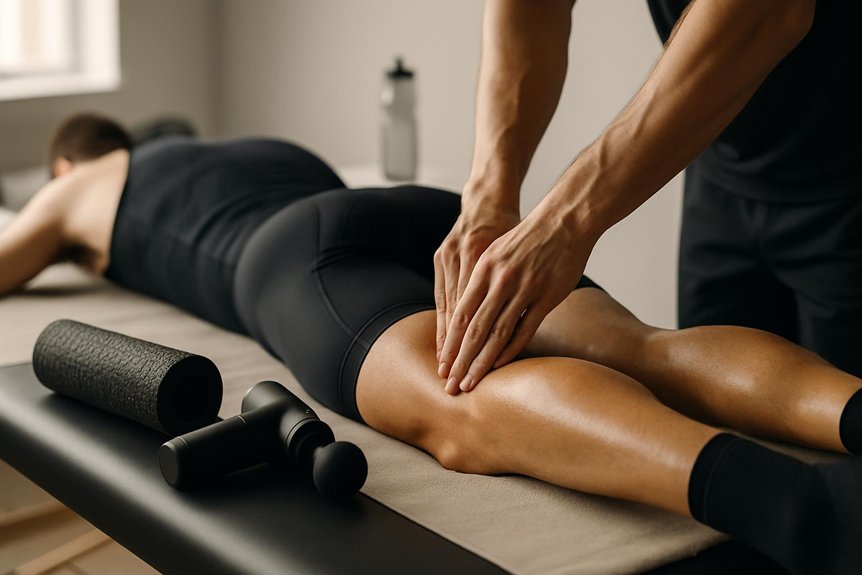
In a cyclist-focused athletic massage, the session typically begins with a brief intake and movement screen to identify load-related hotspots—commonly hip flexors, gluteals, quadriceps, hamstrings, calves, and the plantar fascia—followed by targeted, technique-led hands-on work.
At Spa & Massage, therapists blend deep tissue strokes, myofascial release, trigger-point pressure, and pin-and-stretch to reduce tone, improve glide, and calm protective guarding, adjusting depth to “productive discomfort,” not pain.
Work often includes adductors, TFL/ITB interface, and anterior ankle, then gentle flushing to finish.
Aftercare prioritises nervous-system downshift: hydration, warmth, and an easy walk later. Clients are advised to avoid maximal efforts for 24 hours, expect mild tenderness, and use light stretching only if it feels soothing. Any sharp pain warrants reassessment.
How Can Cyclists Maintain Results Between Massages?
Between appointments, cyclists maintain the gains of an athletic massage by controlling day-to-day training load and keeping key tissues moving well enough to prevent tone and trigger points from rebuilding in the hips, thighs, calves, and feet.
They should schedule easy days after hard rides, keep sleep consistent, and use gentle heat or contrast showers to support circulation.
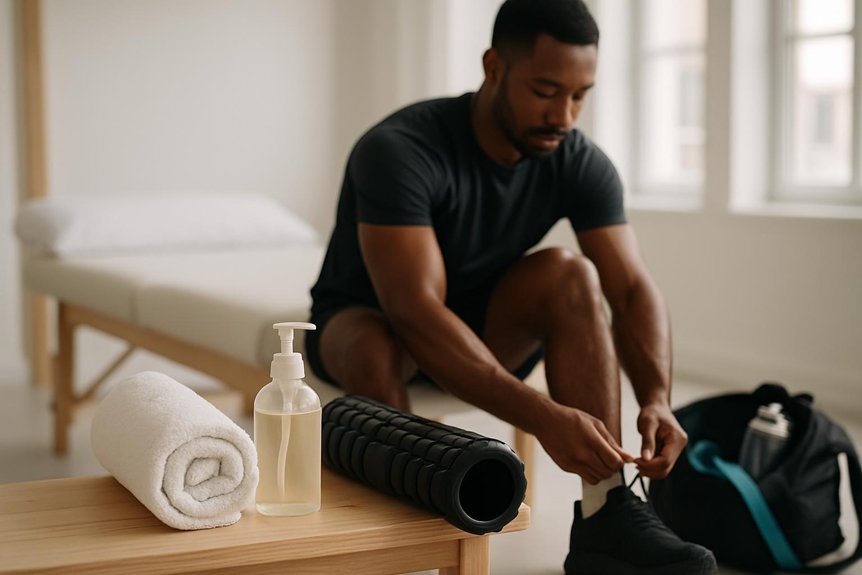
Daily mobility matters: slow hip flexor openers, glute activation, calf eccentrics, and plantar fascia rolling for 3–5 minutes each.
Hydration and protein at meals help tissue repair.
In Spa & Massage clinics, therapists often prescribe brief self-massage with a neutral oil, using long strokes toward the heart and precise pressure on tender knots without chasing pain.
Riders should also reassess saddle height and cleat position when symptoms return.
Conclusion
For cyclists, athletic massage can be a worthwhile adjunct to structured training, sleep, and nutrition. By targeting common overuse hotspots—quadriceps, hip flexors, glutes, calves, and lumbar tissues—it may reduce perceived soreness, improve tissue glide, and support range of motion between rides. Session timing can be matched to the training phase, with lighter work pre-event and deeper techniques post-load. Used consistently, it helps keep small issues from snowballing—stitch in time.