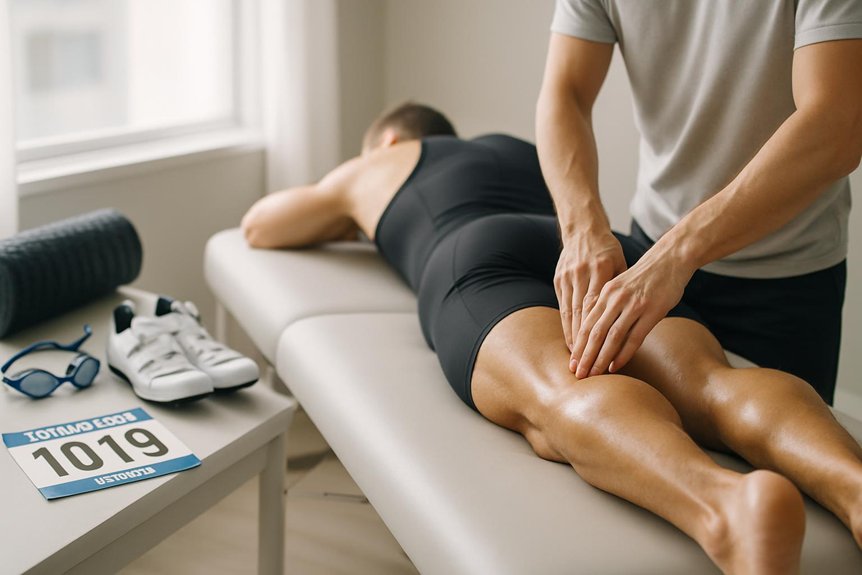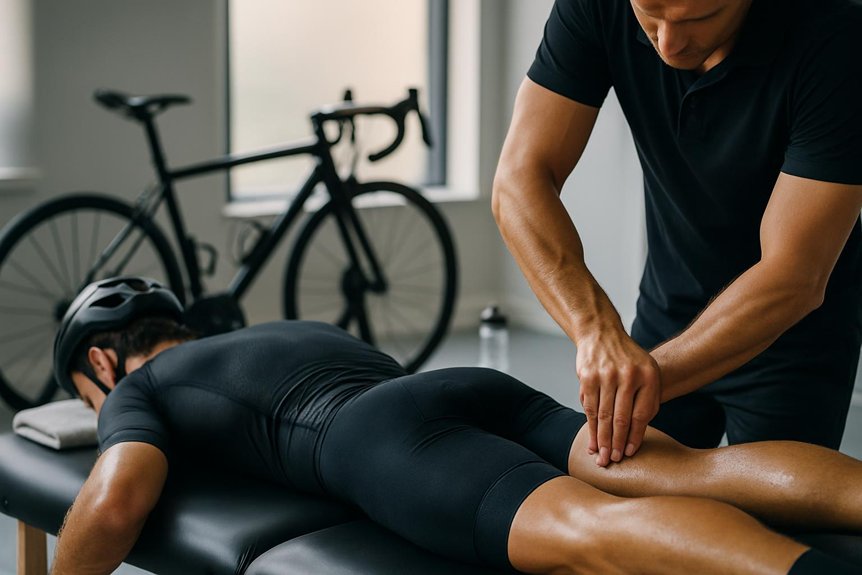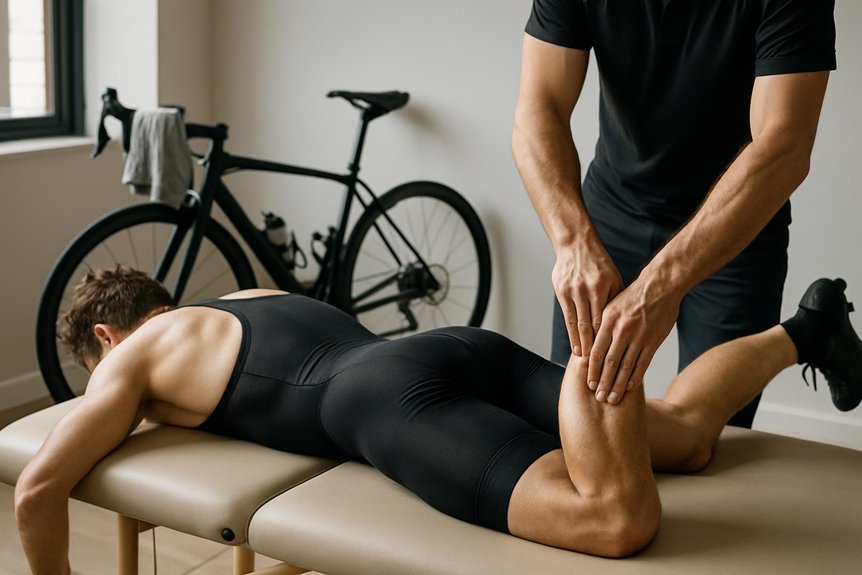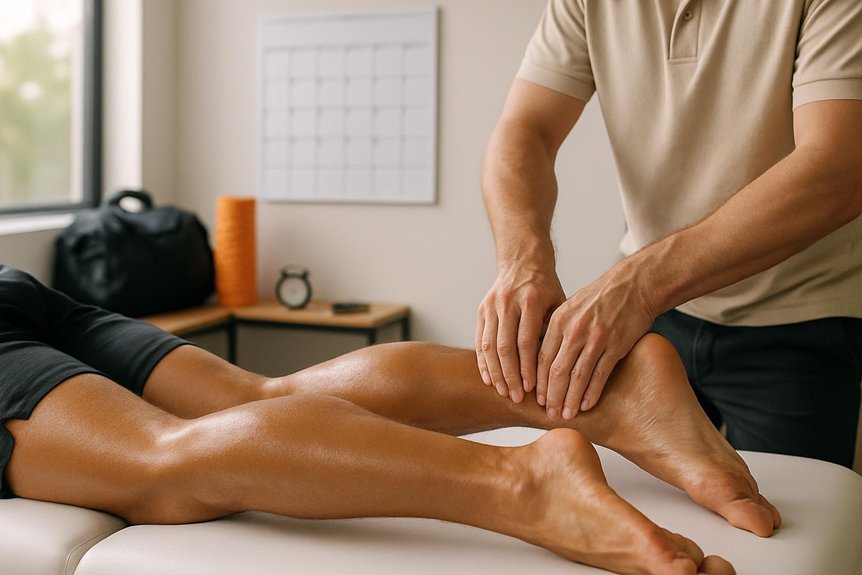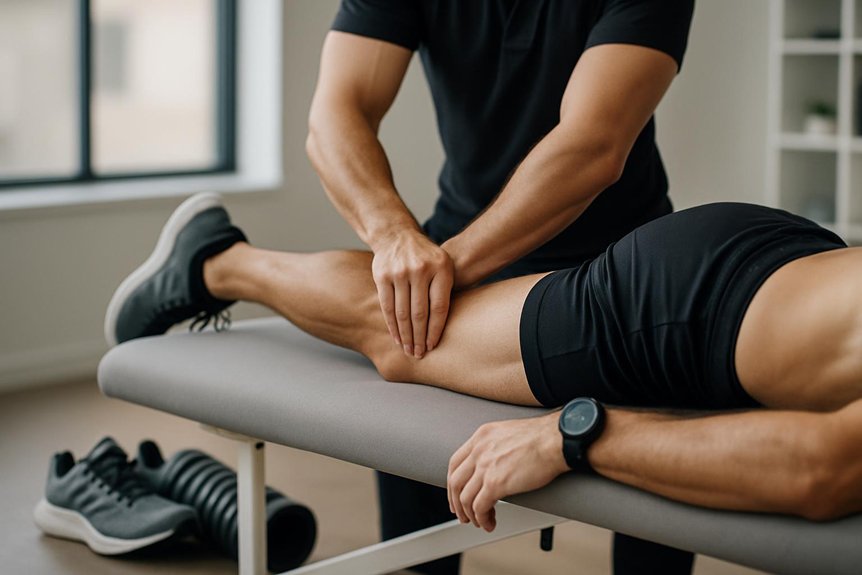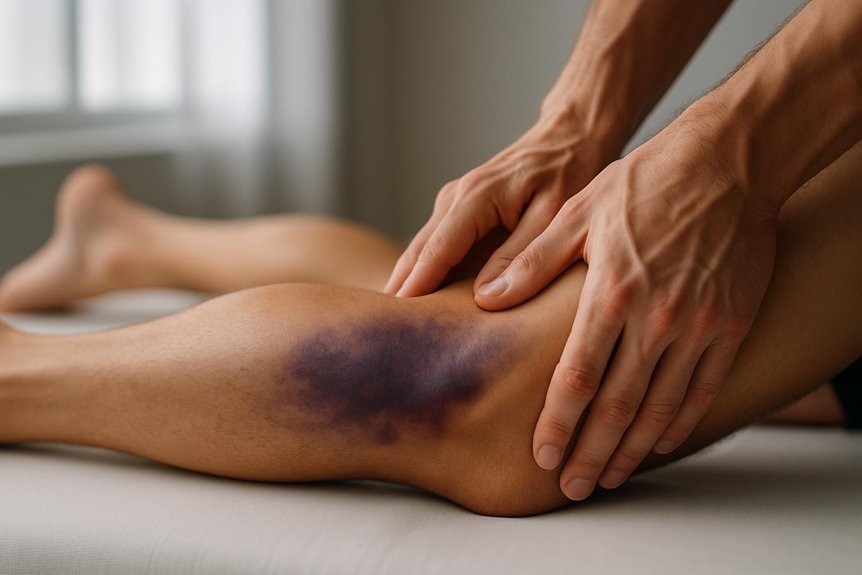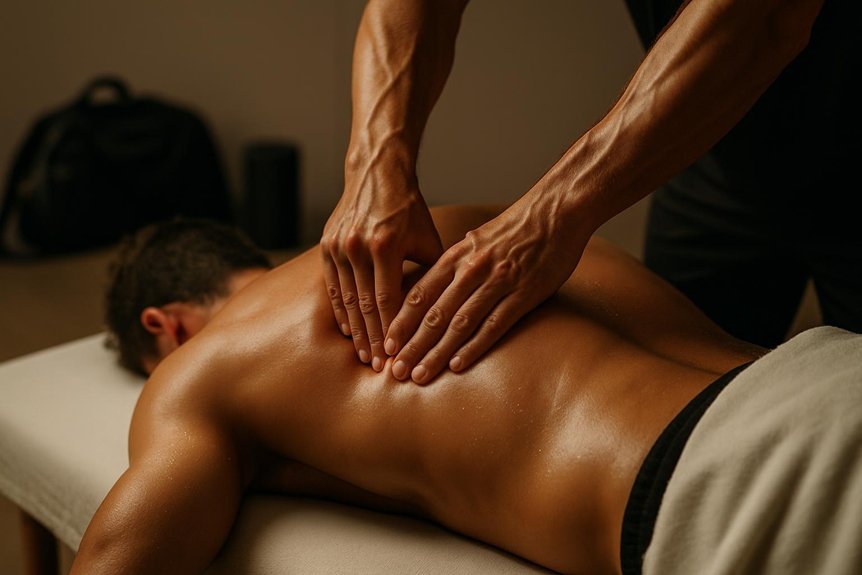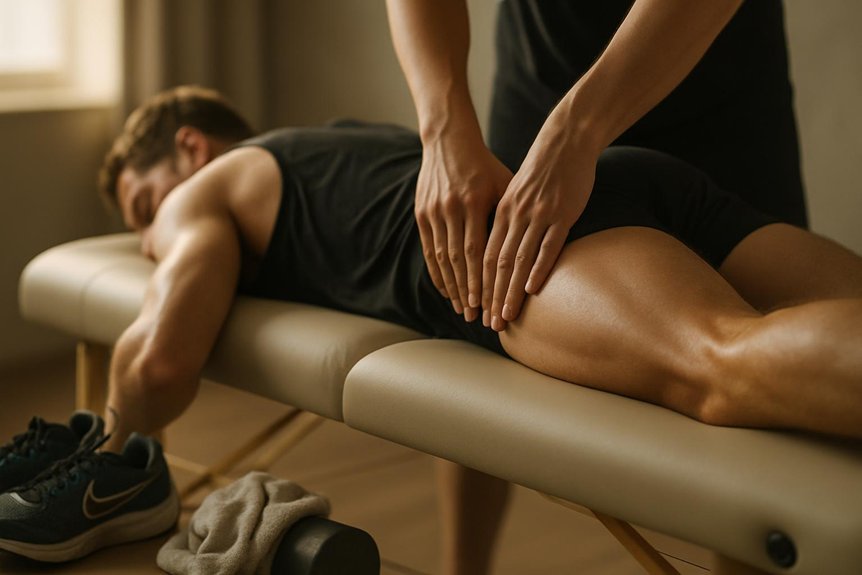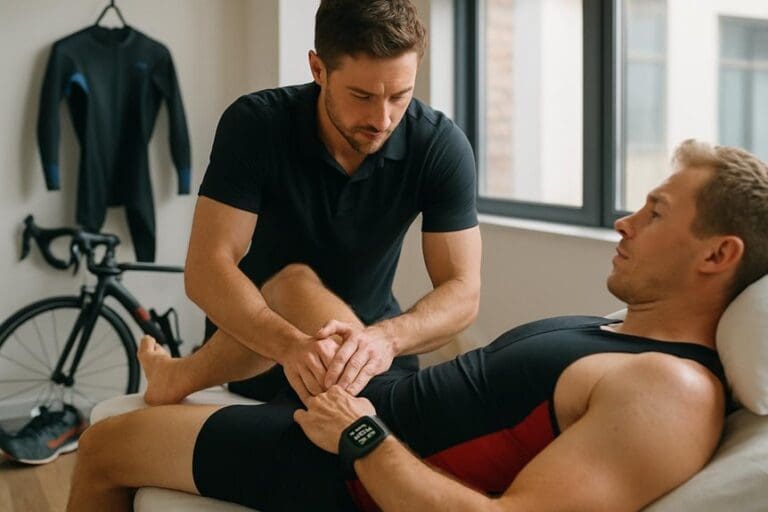
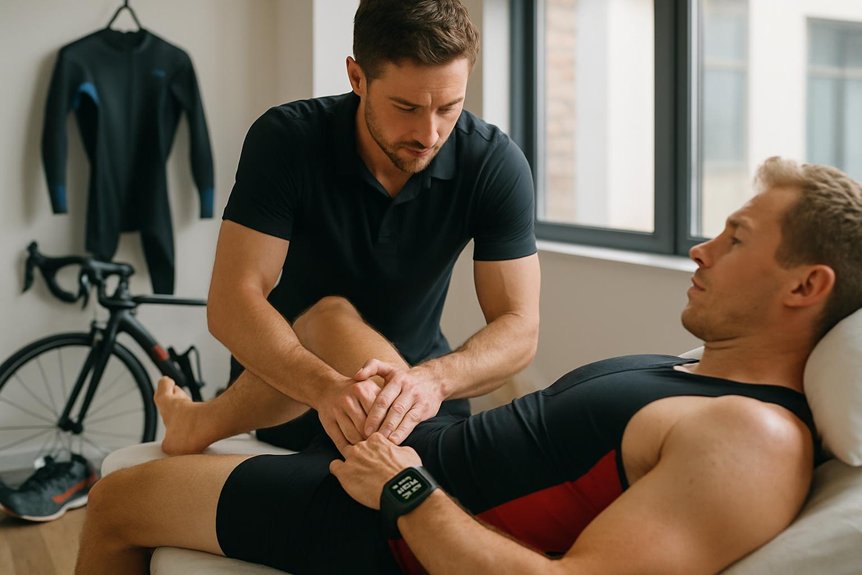
Triathletes tend to benefit most from performance massage when it is planned around training load rather than used only for flare-ups. In base and build phases, booking every 2–4 weeks can reduce perceived soreness and support short-term range of motion, especially after longer sessions. In build and peak, sessions are often timed 24–72 hours after the hardest workouts and kept lighter as race day approaches. A reliable pre-race window is 3–5 days out; post-race, go light immediately and deeper at 24–72 hours. More practical timing cues follow.
When Should Triathletes Book a Sports Massage?
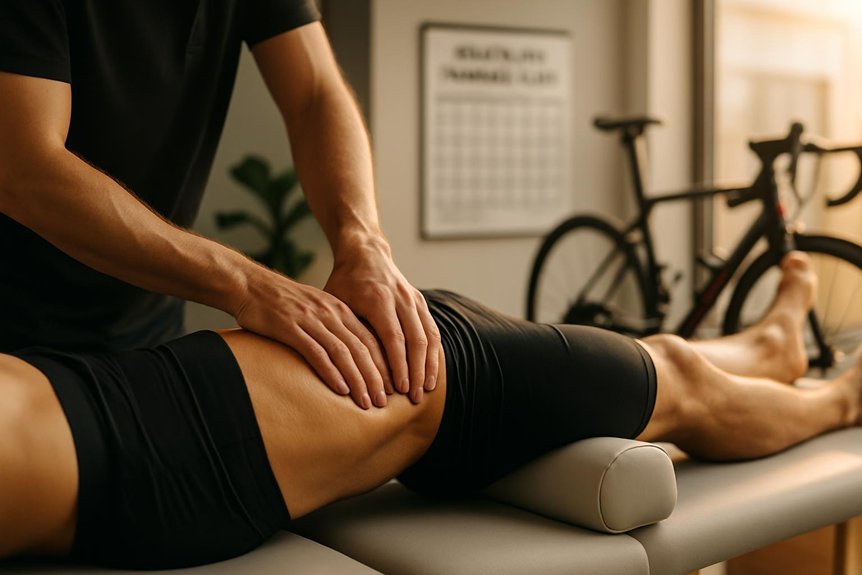
During a triathlon training block, triathletes should book performance massage at planned points in the programme rather than only when pain flares, because treatment is most effective when integrated with workload and recovery demands.
At Spa & Massage clinics across London, therapists typically schedule sessions every 2–4 weeks in base and build phases, then adjust frequency around key load increases, double-session days, and long bricks.
Many athletes time deeper work 48–72 hours after the hardest session, allowing the nervous system to settle while supporting tissue tolerance and range of motion.
In race-specific weeks, they often choose lighter, circulation-focused treatment to maintain suppleness without leaving legs feeling tender.
Booking ahead secures continuity, so treatment aligns with swim, bike, and run priorities.
This approach also helps athletes access key performance massage benefits more consistently across the training cycle.
Signs You Need a Performance Massage Sooner
Planned performance massage slots work best when they match training load, but triathlon blocks rarely run perfectly to plan, and certain warning signs suggest a session should be brought forward.
A persistent “tight” sensation that doesn’t ease after 48 hours, or a new asymmetry in stroke, stride, or pedal smoothness, often indicates protective guarding and rising tissue irritability.
Localised tenderness, hot spots, or a knot that alters movement under easy pace can precede overload.
Sleep disruption, elevated resting heart rate, or unusually heavy legs despite normal nutrition may signal accumulating stress.
At Spa & Massage, therapists screen for red flags, then use targeted sports techniques and slow, consent-led pressure so athletes feel held while restoring range, comfort, and training consistency.
Performance Massage in Base Phase (Build Resilience)
Early in the base phase—when triathletes are stacking aerobic volume and strength work to create durable tissue capacity—performance massage is most effective as a preventative tool, helping maintain mobility, manage low‑grade niggles, and support consistent technique across swim, bike, and run.
At Spa & Massage clinics across London, therapists typically use a measured deep‑tissue approach with myofascial release, targeting calves, hip flexors, glutes, lats, and pecs—areas that often tighten as mileage rises. Evidence supports massage for reducing perceived muscle soreness and improving short‑term range of motion, which can make steady training feel smoother and more connected.
Scheduling every 2–4 weeks works well for many athletes, timed after a longer session and before key skills work. Aftercare: hydrate, gentle mobility, and easy aerobic training for 24 hours.
Performance Massage in Build Phase (Manage Training Load)
As training intensity and specificity ramp up in the build phase—through threshold sets, VO₂ efforts, bricks, and longer tempo work—performance massage becomes a load‑management tool designed to protect session quality while reducing the chance that accumulating tightness turns into injury.
Evidence suggests massage can reduce perceived soreness and restore a sense of readiness, helping athletes hit key sessions with better movement and confidence.
At Spa & Massage clinics across London, therapists typically schedule 30–60 minute performance massage 24–72 hours after the hardest workouts, or before a quality session as lighter, flushing work.
Treatment targets high‑load areas—calves, quads, hip flexors, glutes, and lats—while monitoring tenderness to avoid excessive post‑massage fatigue.
Aftercare is simple: hydrate, gentle mobility, and easy spinning or walking that day.
Performance Massage in Peak Phase (Stay Race-Ready)
In the peak phase, performance massage is used to keep the athlete race-ready by fine-tuning key muscle groups without adding training stress. At Spa & Massage clinics across London, therapists typically prioritise lighter, targeted pre-race work to support range of motion, neuromuscular readiness, and comfort while avoiding techniques that can trigger lingering soreness.
Scheduling is training-integrated, aiming for recovery and freshness—supporting taper adaptations rather than creating fatigue.
Pre-Race Muscle Tuning
During the peak phase leading into a triathlon, pre-race muscle tuning with performance massage is used to keep tissues responsive without adding fatigue or soreness that could disrupt key sessions. The goal is light-to-moderate, targeted work that supports nervous system readiness and comfortable range of motion, rather than chasing “deep release.”
At Spa & Massage clinics across London, therapists focus on key triathlon areas—calves, hip flexors, glutes, lats, and neck—using brief flushing strokes, gentle compression, and specific trigger-point holds as tolerated. Timing is typically 24–72 hours before travel or race day, aligned with taper workouts. Athletes often report a calmer body, easier breathing, and smoother stride or stroke.
A short intake guarantees pressure, hydration, and sleep are respected and protected.
Recovery Without Fatigue
After the hardest peak-phase sessions, recovery massage should reduce residual tightness and restore normal movement without creating new soreness that compromises swim-bike-run quality. In this window, Spa & Massage therapists favour moderate-pressure performance massage, shorter sessions (30–45 minutes), and careful pacing that respects the athlete’s nervous system. Evidence suggests massage can support perceived recovery and reduce muscle soreness, especially when delivered within 24–48 hours of key workouts.
Treatment stays race-ready by prioritising circulation, gentle myofascial release, and range-of-motion work over aggressive “breaking down” tissue. Common focus areas include calves, hip flexors, glutes, and lats—kept specific to the week’s load. In Spa & Massage clinics, therapists finish with grounding breath cues and simple aftercare: hydrate, light mobility, and an easy session next day.
Performance Massage Before Race Day: How Many Days Out
Evidence from sports recovery practice suggests the most reliable window for a pre-race performance massage is typically 3–5 days before race day, allowing tissue to settle while supporting taper training.
In Spa & Massage clinics, therapists usually keep pre-race work lighter and more specific—aimed at reducing tone and addressing tight spots rather than creating post-treatment soreness.
The ideal timing and intensity are then adjusted to the athlete’s training load, prior response to massage, and the demands of the swim-bike-run course.
Ideal Timing Window
In the final week before a triathlon, the most reliable window for a pre-race performance massage is typically 2–5 days out, giving the body time to settle while still benefiting from improved tissue mobility and reduced perceived tightness. This timing aligns with taper physiology: fatigue is falling, and athletes want calm, responsive muscles rather than post-treatment soreness.
At Spa & Massage clinics across London, therapists often suggest booking after the last key session—such as the final brick or longer ride—so the nervous system can downshift before race logistics ramp up. For morning races, scheduling 3–4 days prior may suit travel and sleep. For weekend events, midweek appointments fit most taper plans.
Hydration, gentle movement, and warmth afterward help the body absorb the work and feel quietly ready.
Pre-Race Massage Intensity
That 2–5 day pre-race window only works well when the massage intensity matches taper goals and the athlete’s recovery profile.
In most cases, therapists keep pressure moderate, prioritising circulation, tissue glide, and down‑regulating the nervous system rather than chasing soreness.
Deep, aggressive work too close to race day can increase tenderness or fatigue, especially after peak training blocks.
At Spa & Massage, London therapists coordinate the session with the athlete’s plan: light-to-moderate performance massage 3–4 days out to settle calves, hips, and upper back; very light, soothing work 1–2 days out if they crave calm and a sense of readiness.
Trigger points are approached gently, with minimal post-treatment ache.
Aftercare focuses on hydration, easy mobility, and uninterrupted sleep.
Performance Massage After a Triathlon: Best Timing and Recovery
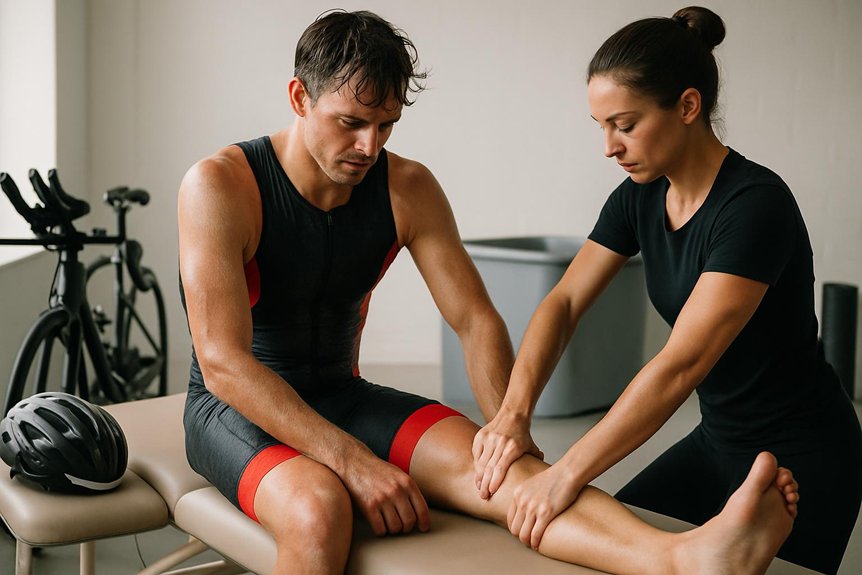
Within the first few hours after a triathlon, the best time for performance massage depends on whether the priority is calming the nervous system and restoring range of motion, or addressing deeper muscle tightness once acute soreness has settled.
In this window, evidence supports light, slow work—effleurage, gentle compression, and breathing cues—to reduce perceived soreness without adding tissue stress.
At Spa & Massage clinics across London, therapists keep pressure conservative, focusing on calves, hip flexors, and thoracic mobility, while checking hydration, sleep, and cramp history.
For deeper performance massage, 24–72 hours post-race is often optimal, when DOMS peaks and movement patterns reveal guarded areas.
This session can be firmer, yet still responsive, supporting a return-to-training plan and quiet, restorative intimacy.
Conclusion
Timed well, performance massage becomes a training tool rather than a luxury: lighter work in base to preserve range, deeper sessions in build to manage accumulating load, and maintenance in peak to stay supple without provoking soreness. In the taper, a gentle treatment a few days out can calm tissues, while post‑race care supports circulation and restores movement. Like Odysseus lashing himself to the mast, planning sessions around key workouts helps resist preventable breakdown.