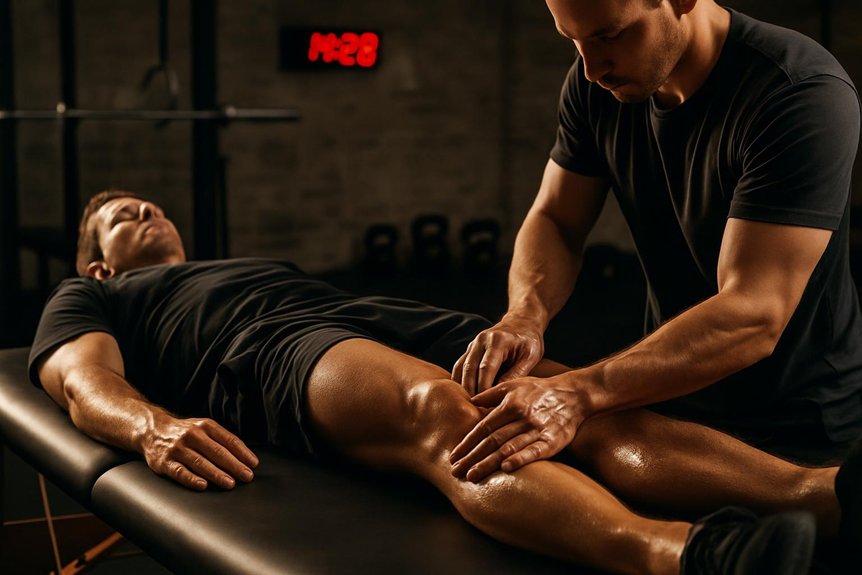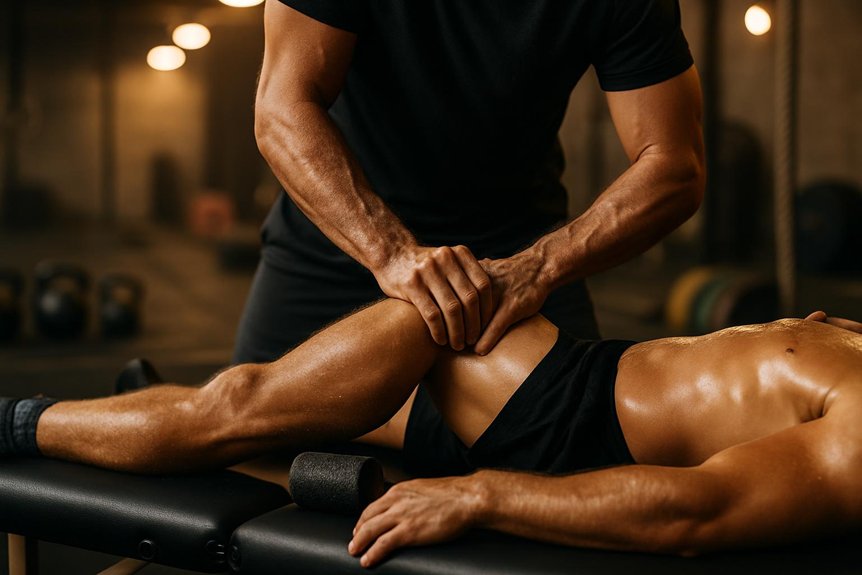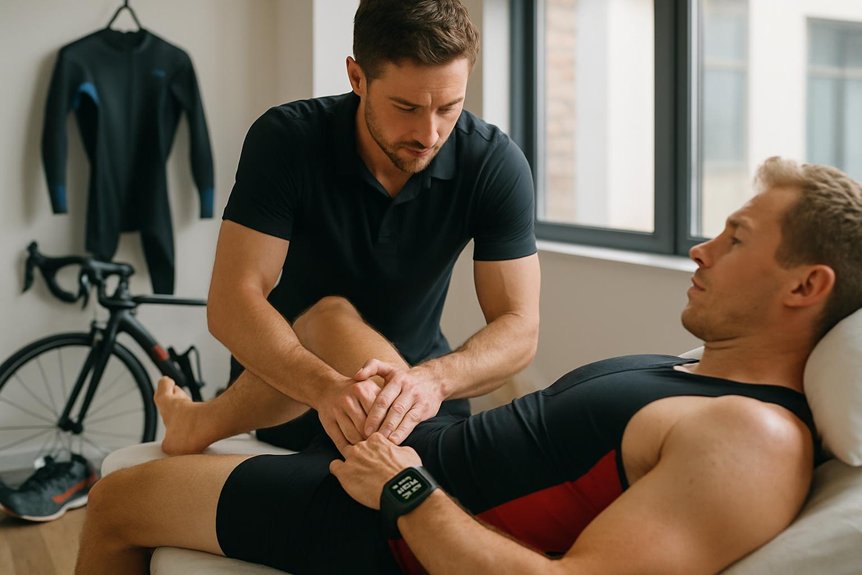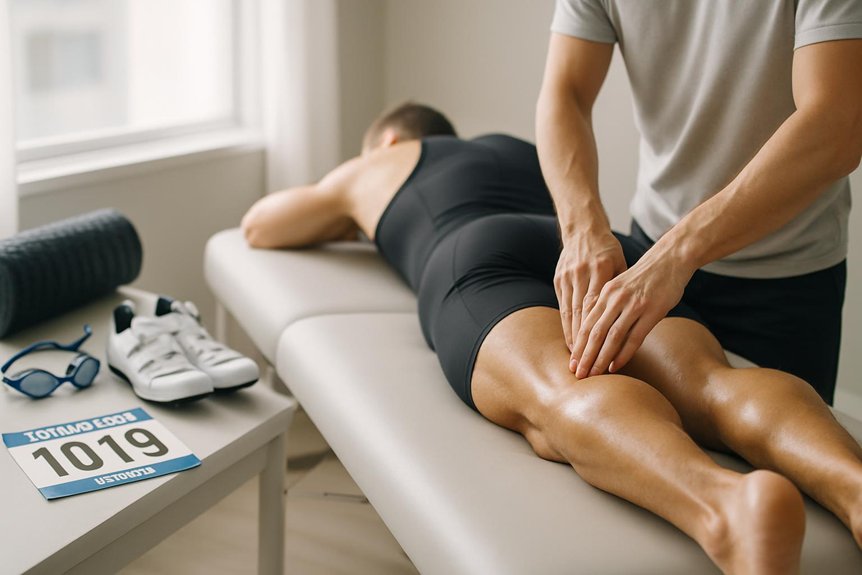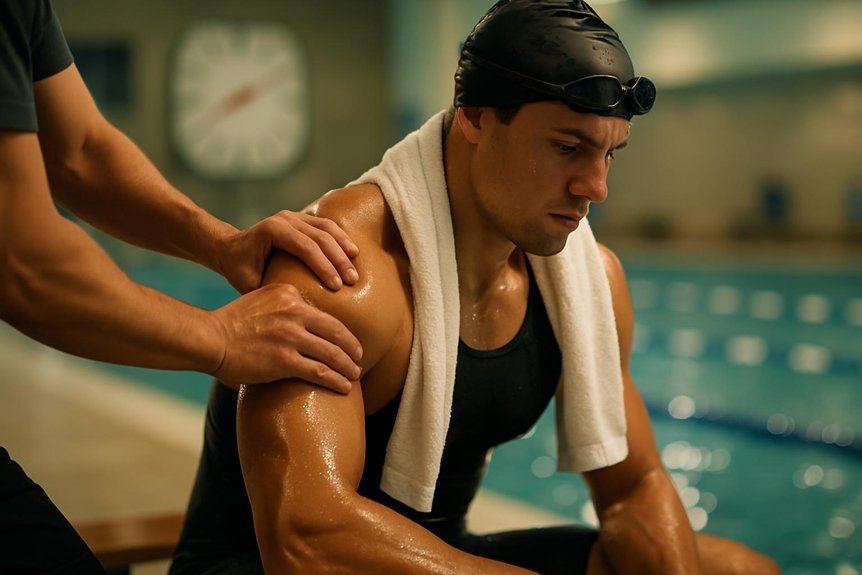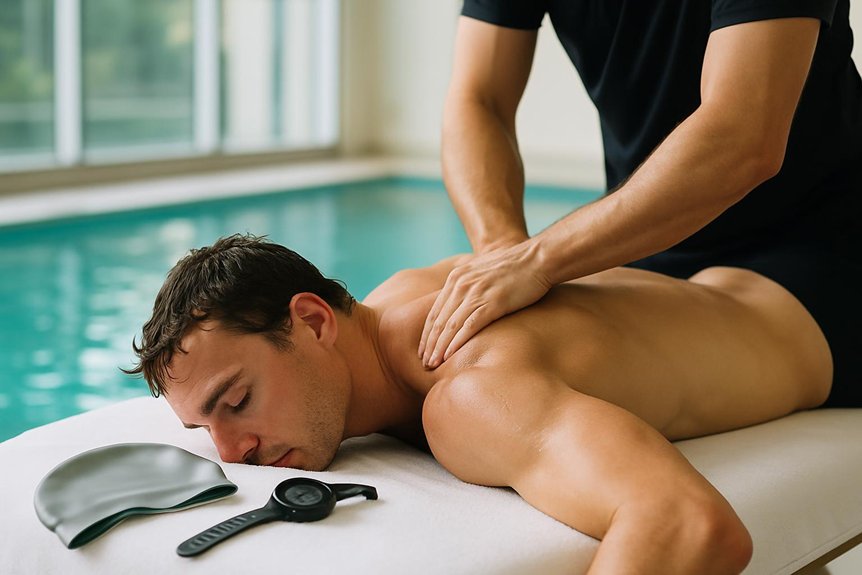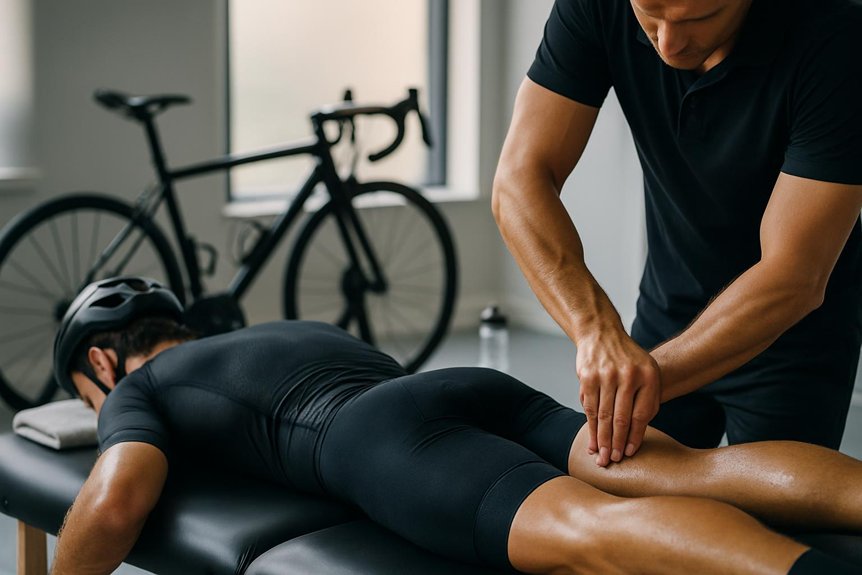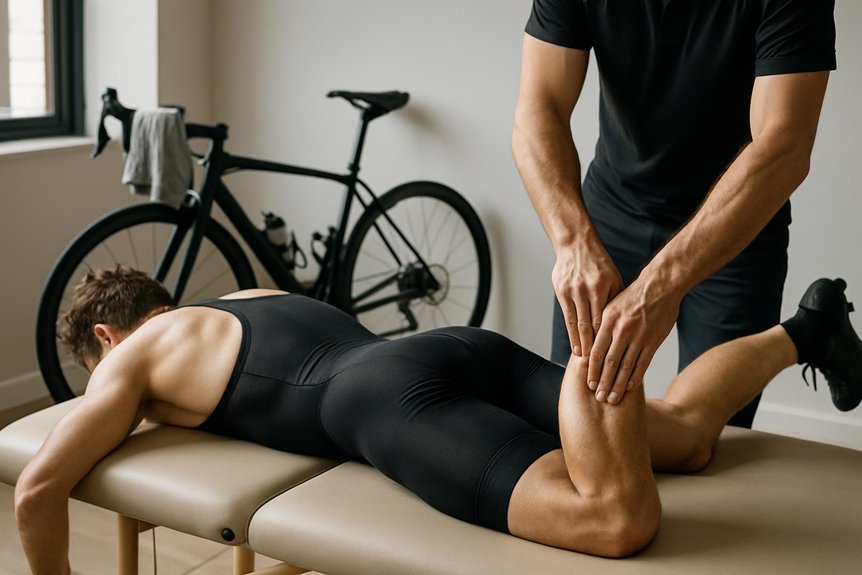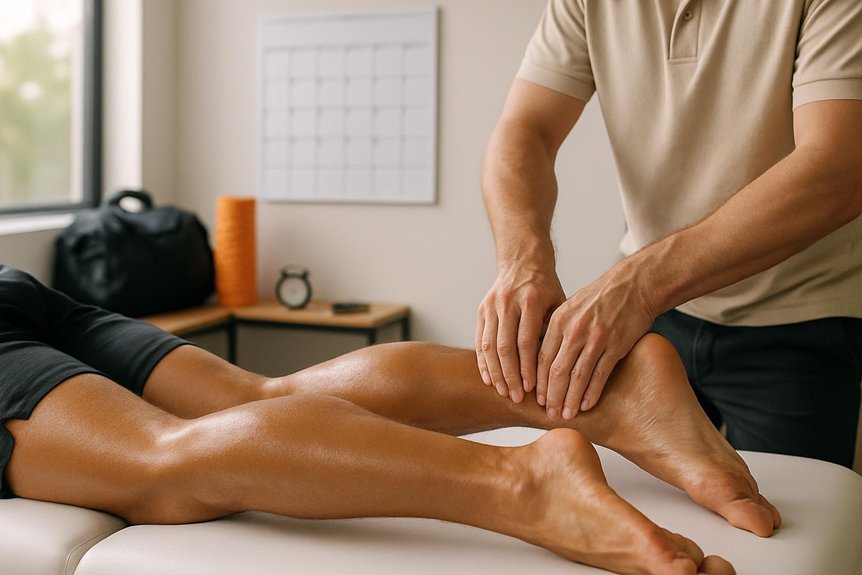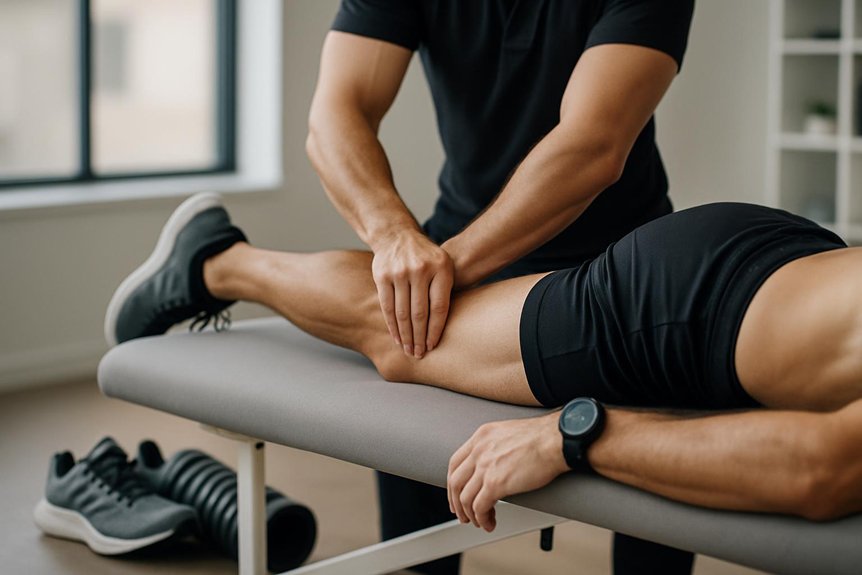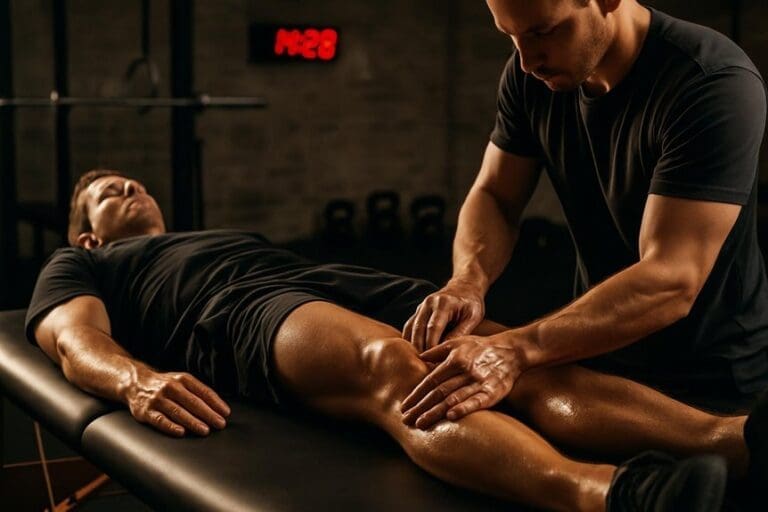
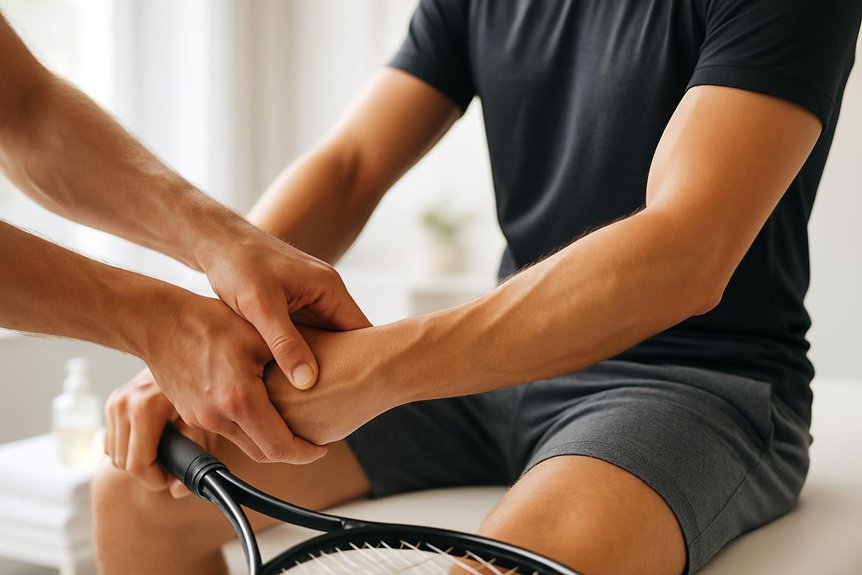
It can help tennis elbow by reducing excessive tone and load sensitivity in the wrist extensor tendon complex (often extensor carpi radialis brevis) at the lateral epicondyle. It typically provides short-term analgesia, improves forearm mobility and tendon gliding, and reduces protective guarding, making progressive strengthening and grip re-training more tolerable. Sessions commonly include palpation-led assessment, slow deep-tissue work, myofascial release, graded cross-fibre techniques, and mobility or neural glides. More detail on timing and red flags follows.
Can It Help Tennis Elbow: and How Soon?
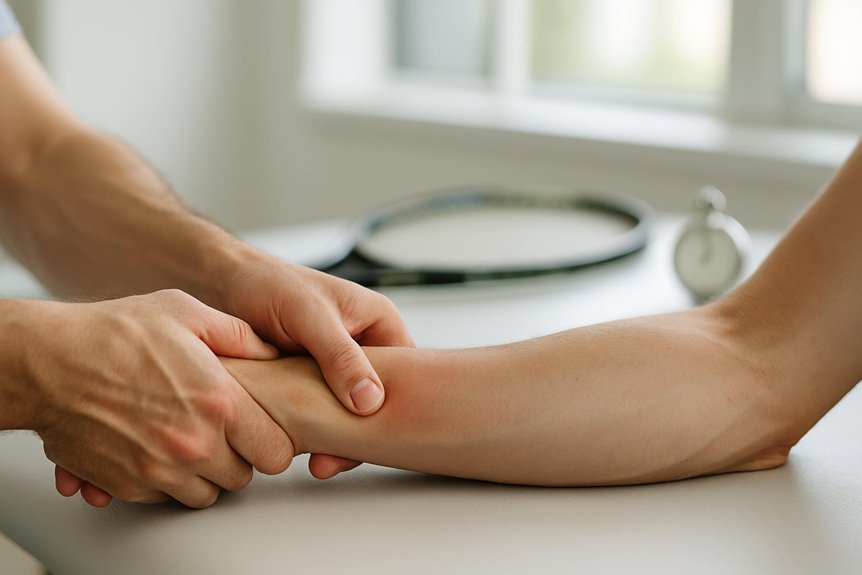
In many cases, athletic massage can support recovery from tennis elbow (lateral epicondylalgia) by reducing excessive load and tone in the forearm extensor tissues and improving local circulation.
Because it’s often used for athletic massage benefits in athletes, it may also help support recovery when overuse patterns contribute to tennis elbow.
At Spa & Massage clinics, therapists typically apply graded deep-tissue strokes to wrist extensors, gentle cross-fibre work near the lateral epicondyle, and myofascial release through the forearm to modulate tenderness without provoking flare-ups.
How soon relief is felt varies. Some clients notice eased ache and freer grip within 24–72 hours; others require 3–6 sessions over several weeks for durable change.
Progress is guided by symptom response: post-treatment soreness should settle within a day, and daily tasks should gradually feel lighter.
Aftercare commonly includes heat, hydration, and paced loading advice.
What Causes Tennis Elbow (Lateral Elbow Pain)?
It may help settle symptoms, but lasting improvement in tennis elbow depends on identifying and reducing the mechanical drivers of lateral elbow pain. The condition most often reflects overload of the wrist extensor tendon complex, particularly extensor carpi radialis brevis, at the lateral epicondyle. Repeated gripping, backhand strokes, heavy lifting, prolonged mouse use, and tool work can exceed tissue capacity, producing tendinopathic change rather than acute inflammation.
Contributing factors include sudden training-load spikes, poor racket technique, reduced shoulder/scapular control, and stiff wrist or forearm mobility, which shift strain distally. Sensitised radial nerve tissues and cervical referral may also mimic or amplify symptoms. At Spa & Massage clinics, therapists screen for these patterns to guide safe load modification, ergonomics, and progressive strengthening plans.
How Athletic Massage Reduces Pain and Supports Recovery
Often, well‑targeted athletic massage reduces tennis elbow pain by modulating local tissue sensitivity and restoring load tolerance in the wrist extensor chain rather than “treating inflammation.” Clinically, focused soft‑tissue work to the forearm extensors (including extensor carpi radialis brevis), selective friction techniques near the tendon attachment, and myofascial release along the extensor compartment can improve short‑term analgesia, reduce protective muscle guarding, and normalise forearm mobility, making progressive strengthening and grip re‑training more tolerable.
At Spa & Massage clinics in London, therapists may also use graded deep‑tissue pressure to down‑regulate pain, improve circulation to working tissue, and support smoother tendon gliding. When sensitised areas are approached slowly and within comfort, clients often notice calmer gripping, less morning stiffness, and better tolerance to daily lifting and racquet‑like tasks between visits.
What Happens in a Tennis Elbow Athletic Massage Session?
Reduced pain and improved load tolerance set the stage for a structured, technique-led session focused on assessment and targeted manual therapy.
At Spa & Massage clinics, the therapist begins with a brief history, aggravating activities, and a palpation-led exam of the lateral epicondyle, wrist extensors, and cervical/shoulder contributors, then screens grip and resisted wrist extension.
Treatment commonly combines slow deep-tissue strokes to forearm extensors, myofascial release, and trigger-point compression, progressing to cross-fibre/friction work when tolerated.
Elbow and wrist joint mobilisation and neural glide techniques may be added to optimise tissue sliding and symptom modulation.
Pressure is calibrated moment-to-moment, with steady breathing cues and clear consent, aiming for “strong but safe” intensity and immediate, measurable easing of load pain.
When to Book Sports Massage (and Red Flags)
Knowing when to intervene can shorten symptom duration and prevent compensatory overload elsewhere in the upper limb.
Booking athletic massage is appropriate when lateral elbow ache persists beyond 7–10 days, grip is painful, forearm extensor tone is high, or desk/sport load has recently increased.
At Spa & Massage, therapists use graded deep-tissue and myofascial techniques to the extensor wad, gentle cross-fibre work at the common extensor tendon, and forearm/wrist mobility, keeping pressure close, slow, and communicative so the area feels safely held, not provoked.
Red flags warrant medical review first: sudden “pop,” marked swelling or bruising, fever, numbness/tingling, neck-to-hand radiating pain, loss of strength, or night pain unrelieved by rest.
Conclusion
It may help tennis elbow by treating the forearm like a frayed rope: reducing tensile load through targeted soft‑tissue techniques, improving local circulation, and calming pain-sensitive tissue. Outcomes are typically gradual, with symptom change guided by tissue irritability and consistent load management. A well-structured session focuses on extensor muscle tone, neural and fascial mobility, and shoulder–wrist mechanics, then pairs manual therapy with progressive strengthening. Worsening night pain, neurological symptoms, or swelling warrants clinical review.