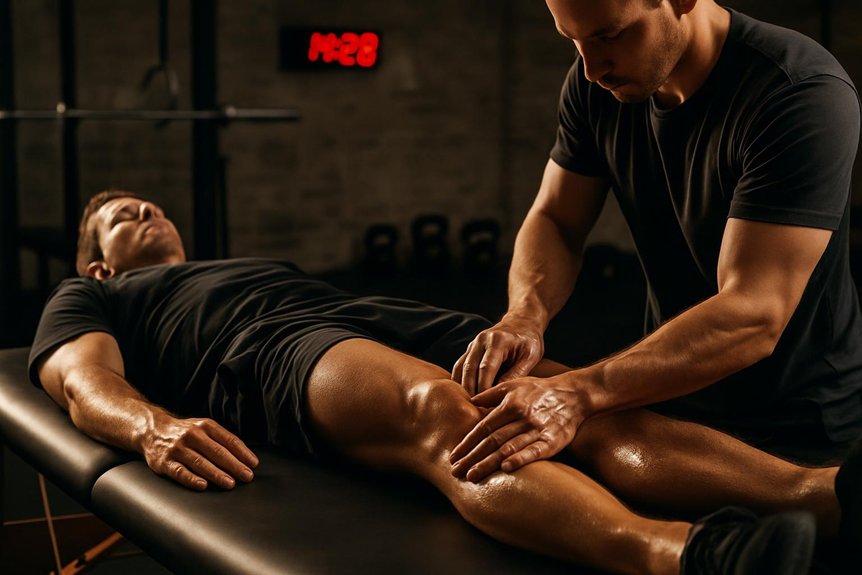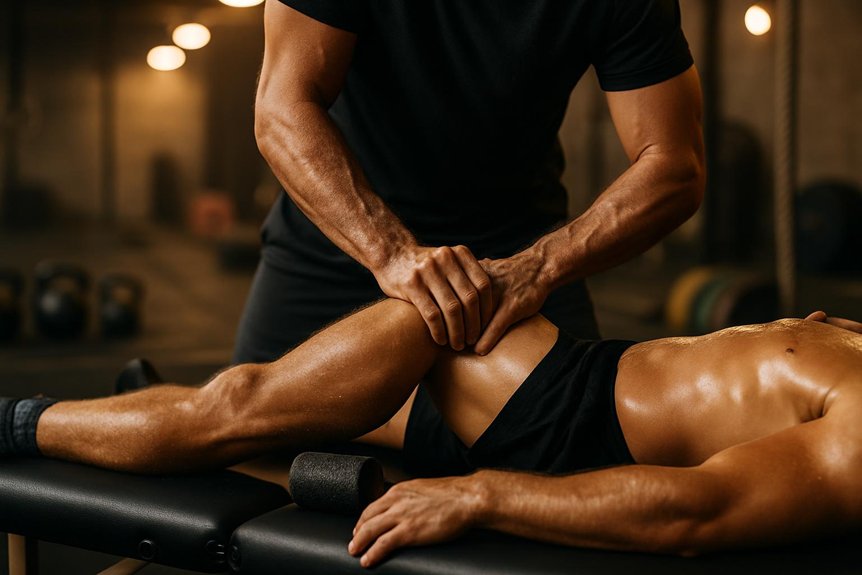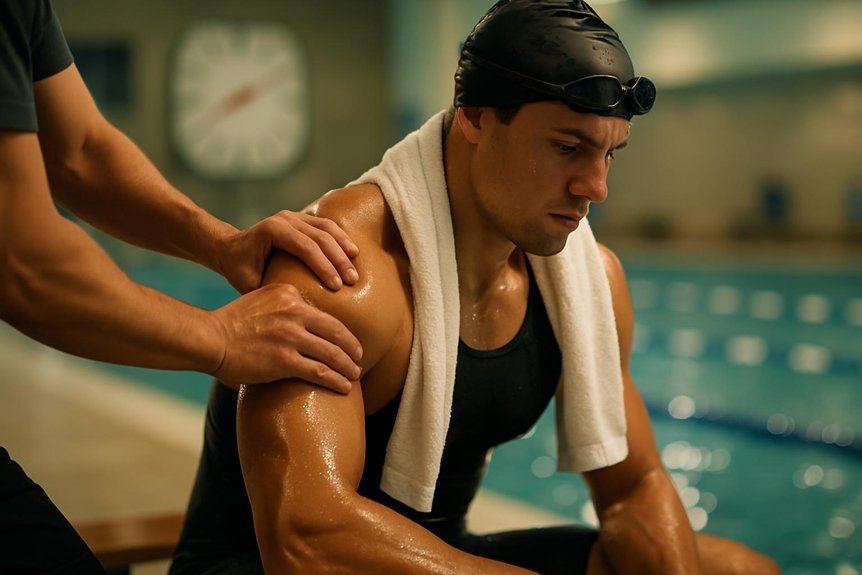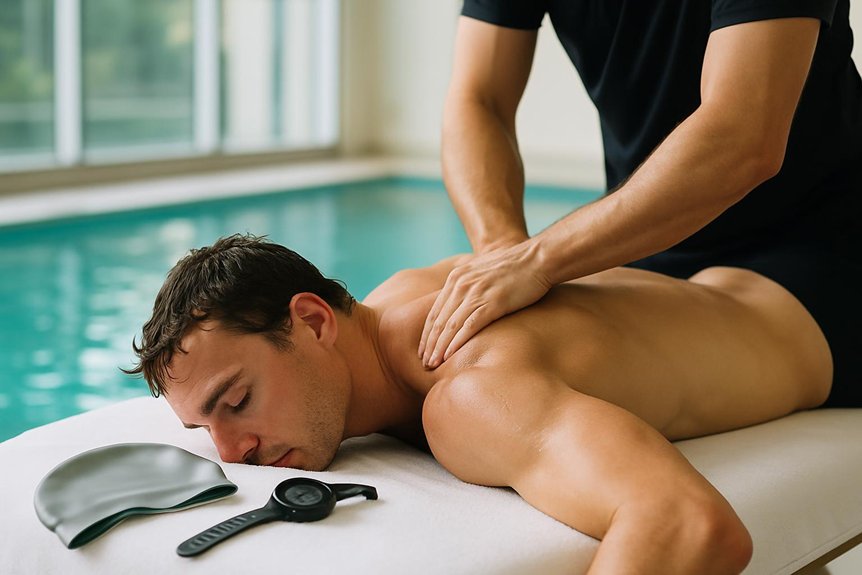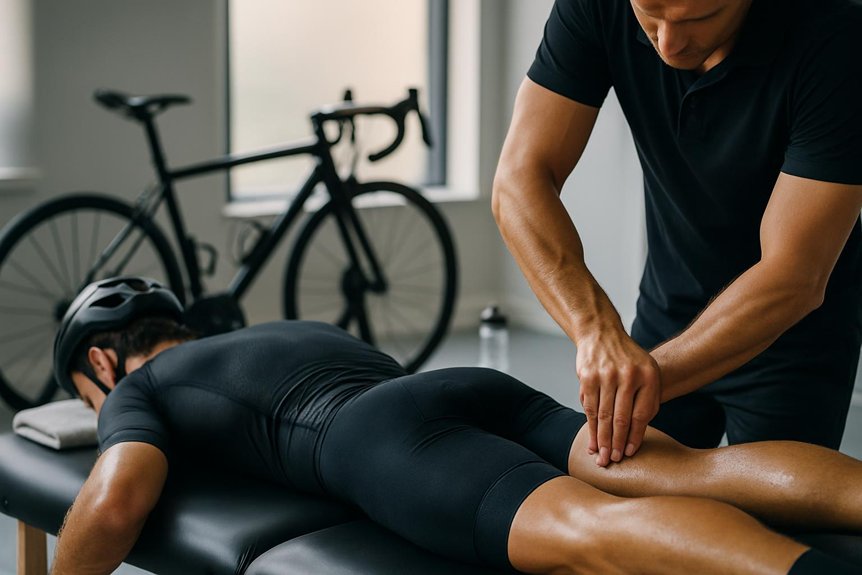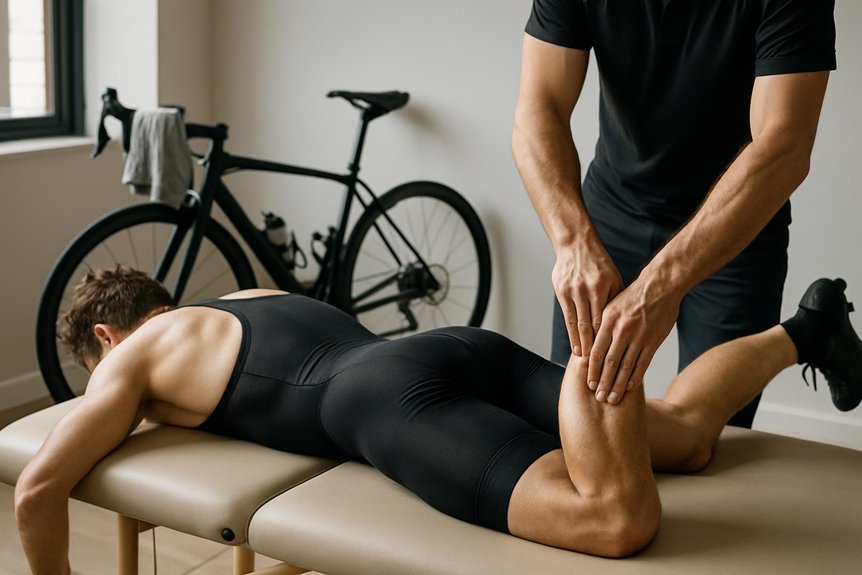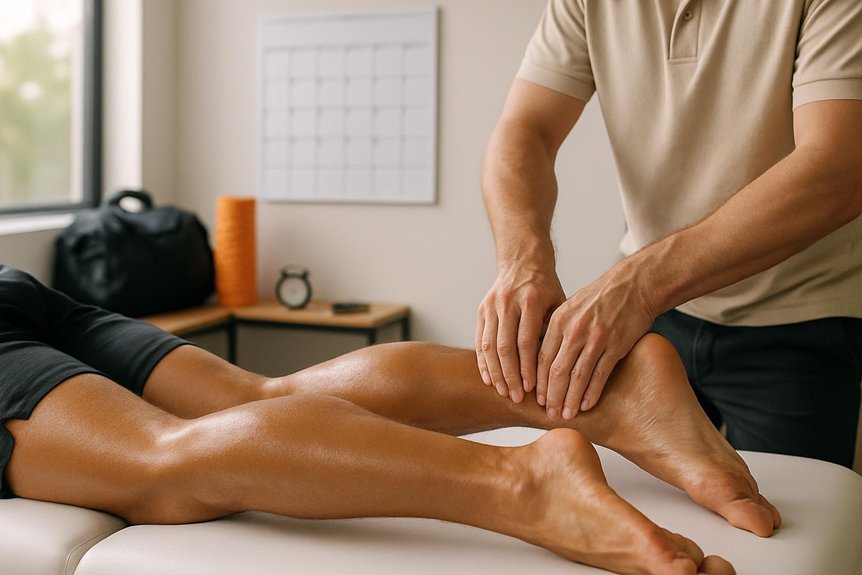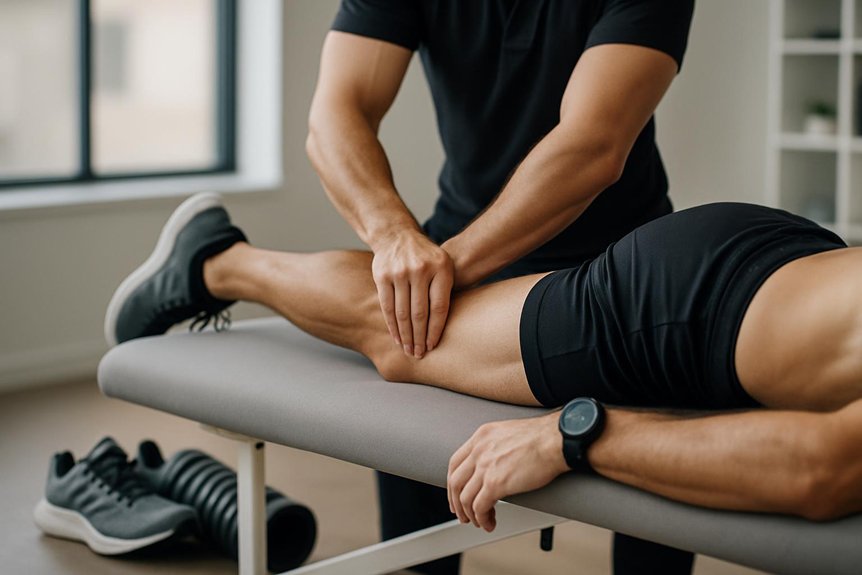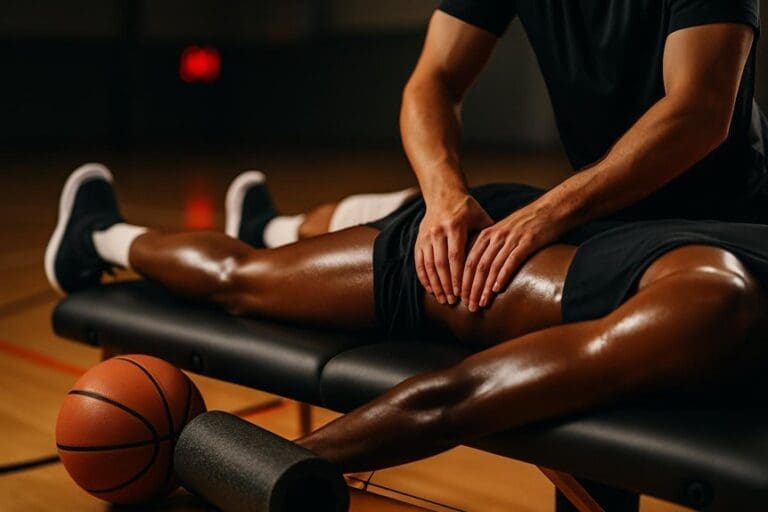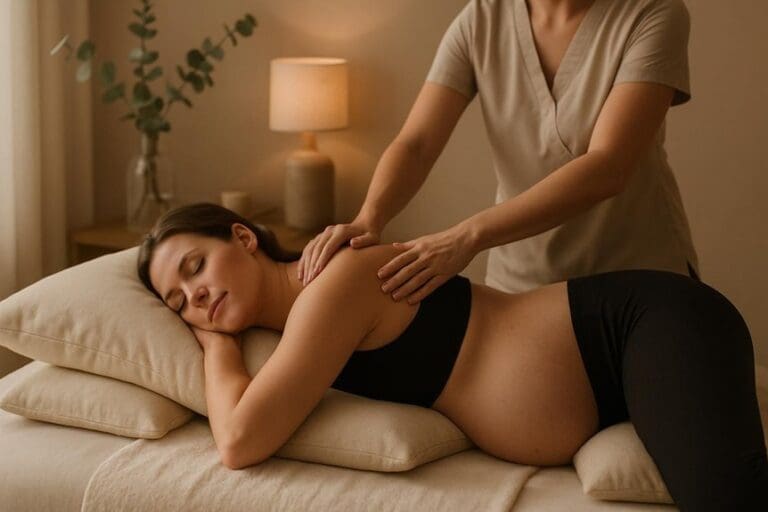
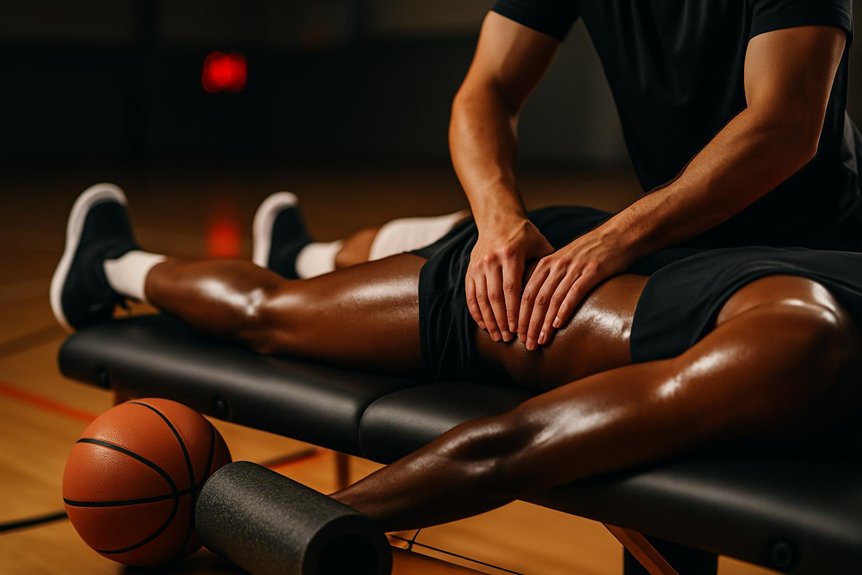
Most basketball players benefit from performance massage every 1–2 weeks during the season to manage recurring tightness in calves, hamstrings, hip flexors, and shoulders. Frequency often increases to weekly during congested fixtures, heavy strength blocks, or early overuse signs such as Achilles/calf stiffness, patellar tendon irritation, or reduced range of motion. Sessions are typically shorter and lighter near games, with deeper work saved for lower-load periods. Further guidance depends on symptoms, timing, and recovery markers.
How Often Should Basketball Players Get a Performance Massage?
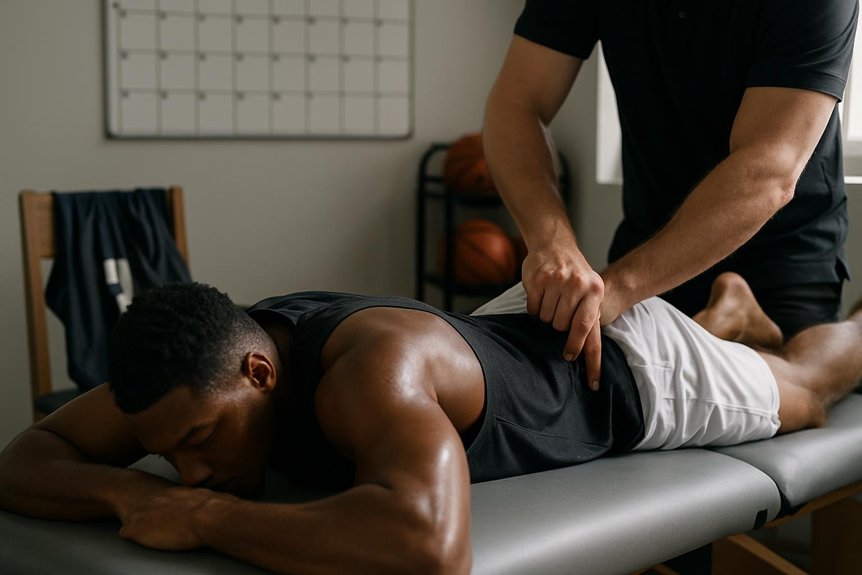
Although the ideal schedule varies with training load, injury history, and match frequency, most basketball players benefit from a performance massage every 1–2 weeks during the season, increasing to weekly sessions in periods of congested fixtures, heavy strength work, or early signs of overuse (for example, calf/Achilles tightness, patellar tendon irritation, or hip flexor and low-back overload).
At Spa & Massage clinics across London, therapists time sessions to support tissue tolerance, not “flush” soreness: targeted work can reduce perceived muscle tightness, improve short-term range of motion, and help monitor developing hotspots before they become time‑loss injuries.
For athletes, sports massage benefits can include improved recovery and performance support when used consistently alongside training.
Players with previous ankle sprains, tendinopathy, or recurrent back pain often do best with regular check-ins. Pressure is kept athlete-led, respectful, and precisely focused.
How Does Training Load Change Massage Frequency?
Massage frequency should adjust with training load, as higher-volume or higher-intensity phases typically increase muscle soreness and soft-tissue strain risk for basketball players.
In-season demands, game-heavy weeks, and tournament schedules often warrant more regular performance massage to support recovery and help manage overuse issues, whereas off-season phases may suit less frequent, maintenance-focused sessions.
At Spa & Massage, therapists also use athlete-reported recovery signs—persistent tightness, reduced range of motion, sleep disruption, and lingering fatigue—to guide timing and pressure so treatment matches readiness rather than a fixed calendar.
In-Season Vs Off-Season
Training load typically shifts markedly between the basketball in-season and off-season, and performance massage frequency should adjust accordingly to reduce injury risk and support performance.
In-season, cumulative fatigue, travel, and contact raise soft-tissue irritability, so shorter, more regular sessions (often weekly or fortnightly) can help manage calf, hamstring, hip-flexor, and shoulder tightness while preserving freshness.
Off-season, volume and strength work often rise, creating delayed soreness and higher tolerance for deeper work; massage may be less frequent overall, or clustered around heavy blocks to support tissue capacity and movement quality.
At Spa & Massage clinics in London, therapists tailor pressure, pacing, and recovery advice to each athlete’s sleep, soreness, and training diary, prioritising comfort, consent, and precise work over intensity.
Game Weeks And Tournaments
During congested game weeks and tournament blocks, external load spikes while recovery time compresses, so performance massage is typically shifted toward shorter, more frequent sessions aimed at reducing soft-tissue irritability and preserving joint range rather than chasing deep change.
Evidence-informed practice prioritises 15–30 minute tune-ups between games, with gentle flushing, targeted compressions, and calf, hip-flexor, adductor, and foot work to support sprinting and landing mechanics.
Within 24 hours pre-game, pressure is usually kept moderate to avoid residual soreness, focusing on feel, warmth, and glide.
Post-game, brief down-regulation and lymphatic-style strokes may help manage stiffness and maintain mobility.
At Spa & Massage clinics across London, therapists tailor frequency to minutes played, travel, and positional demands, keeping treatment athlete-led and consent-based.
Recovery Signs And Fatigue
Often, the clearest driver of performance massage frequency is the athlete’s recovery status rather than the calendar: when sleep quality drops, resting heart rate trends upward, DOMS lingers beyond 48 hours, or jump/sprint outputs and joint range (especially ankle dorsiflexion and hip extension) decline, treatment is typically increased in short, targeted sessions to reduce protective tone and maintain pain-free movement.
In heavier training blocks, Spa & Massage therapists favour 20–40 minute focus work on calves, quads, glutes, hip flexors, and thoracolumbar fascia, using slower deep-tissue strokes and gentle pin-and-stretch to support tissue tolerance without leaving the athlete “flat” for practice.
When recovery markers normalise, frequency can taper to maintenance every 7–14 days.
Persistent fatigue, night pain, swelling, or sharp tendon pain warrants reduced load and clinical referral.
What’s the Best In-Season Massage Schedule for Basketball?
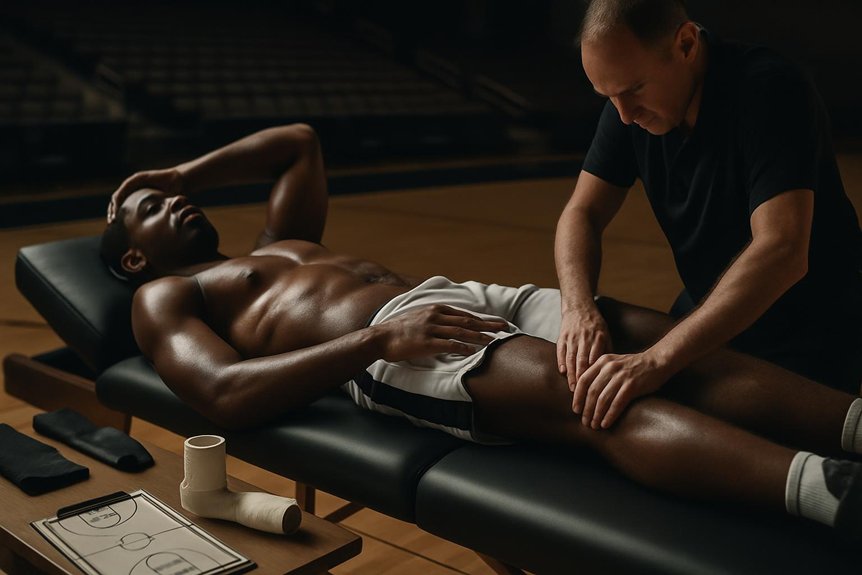
In most cases, an in-season massage schedule for basketball works best when it is built around injury risk, cumulative game load, and individual tissue response rather than a fixed weekly rule.
Many athletes benefit from one 45–60 minute performance massage every 7–14 days, then shorter 20–30 minute top-ups during congested weeks to reduce calf, hamstring, hip-flexor, and adductor tightness that can precede strains.
Evidence-informed practice prioritises symptom-led care: increase frequency when soreness lingers beyond 48 hours, sleep quality dips, or unilateral heaviness appears; decrease when tissues feel calm and performance is stable.
At Spa & Massage clinics in London, therapists tailor pressure and tempo, blending deep tissue with gentle flushing to keep muscles responsive without leaving them tender.
When Should You Book a Pre-Game Massage?
For most basketball players, a pre-game performance massage is best scheduled about 24–48 hours before tip-off to support readiness without provoking next-day soreness, while same-day work is typically kept to a brief 10–20 minutes.
Evidence-informed practice favours light-to-moderate pressure focused on circulation and neuromuscular activation rather than deep tissue techniques, which Spa & Massage therapists generally reserve for recovery sessions.
Athletes with an acute strain, suspected tear, significant inflammation/bruising, or a history of massage-triggered symptom flare-ups should avoid pre-game massage and instead seek an injury assessment and modified warm-up plan.
Ideal Timing Before Tip-Off
Typically, a pre-game performance massage is best scheduled around 24–48 hours before tip-off to reduce residual soreness while still improving tissue readiness, especially for athletes managing tight calves, hip flexors, or lumbar fatigue from training and travel. This window supports circulation and neuromuscular coordination without leaving tissues tender on game day.
If the athlete is carrying a minor strain history, booking earlier in the week allows time to monitor any delayed sensitivity and adjust training load. For tournaments or back-to-backs, a shorter, earlier session the morning before travel can help reduce stiffness from sitting and flights.
At Spa & Massage London clinics, therapists coordinate timing with the athlete’s practice schedule so the body feels supple, settled, and confidently connected at warm-up.
Best Massage Intensity Pre-Game
Often, the most effective pre-game performance massage intensity is light-to-moderate rather than deep, aiming to downshift protective muscle guarding and improve glide through key basketball tissues (calves, quads, hip flexors, glutes, thoracolumbar fascia) without provoking next-day tenderness.
Evidence suggests lighter pressure supports short-term range of motion and perceived readiness, while heavy, slow stripping can temporarily reduce force output and leave micro-soreness that blunts speed and spring.
At Spa & Massage clinics, therapists typically use brisk effleurage, compressions, and targeted friction around ankles, knees, and hips, then finish with stimulating tapotement only if it feels crisp, not bruising.
The goal is a warm, connected body and confident footwork—never a “worked over” feeling before tip-off.
Who Should Avoid Pre-Game
When should a basketball player skip a pre-game performance massage and book at a different time? They should avoid it with an acute injury (new sprain, strain, or sharp pain), suspected fracture, concussion symptoms, significant swelling, redness, or heat, because increased circulation and pressure can aggravate tissue and delay accurate assessment.
Pre-game work is also unwise with fever, flu, skin infection, open wounds, or uncontrolled asthma, as symptoms may worsen under exertion.
Players taking blood thinners, with easy bruising, varicose flare-ups, or recent injections should choose a gentler, earlier session.
In Spa & Massage clinics, therapists screen for these red flags and may recommend a same-day post-game recovery massage instead.
Intimacy comes from safety: comfort, consent, and attentive touch.
Post-Game Massage: How Soon Is Best?
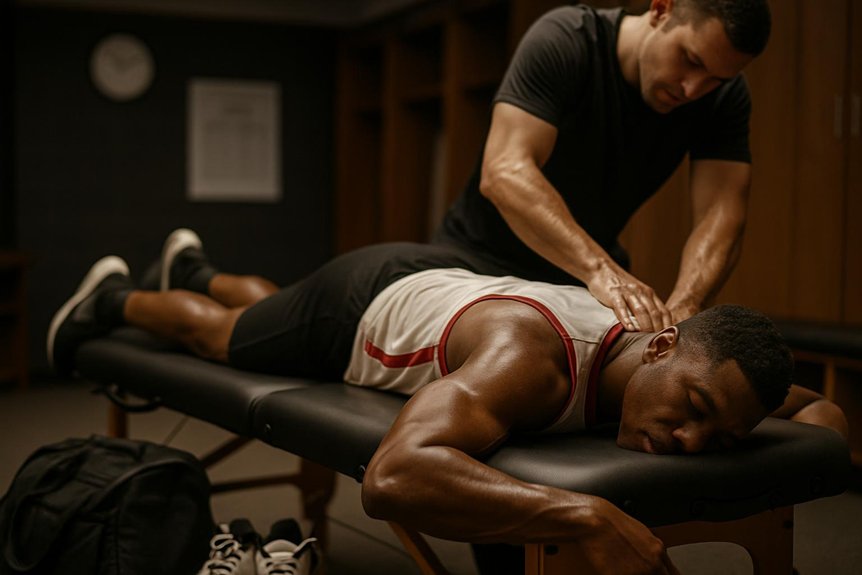
Within the first 6–24 hours after a basketball game, a light, recovery-focused performance massage is generally the safest and most useful window for reducing protective muscle tension and supporting circulation without aggravating acute soreness or minor tissue irritation.
At Spa & Massage clinics across London, therapists keep pressure moderate, favouring flushing strokes, gentle compressions, and slow myofascial work around calves, quads, hip flexors, and the low back.
Immediate, deep work is avoided if there is sharp pain, swelling, bruising, or suspected strain; those signs warrant medical assessment first.
When timed well, post-game massage can ease DOMS, restore range, and calm the nervous system so an athlete feels grounded, held, and ready to sleep.
Hydration and a warm shower support recovery.
How Should Massage Change in Pre-Season and Off-Season?
Typically, massage should shift with the training load: pre-season work prioritises deeper, performance-oriented performance massage to address predictable overuse hotspots (calves, quads, hip flexors, glutes, and lumbar spine) and maintain range of motion as intensity and volume rise, while off-season sessions become less frequent and more restorative, focusing on resolving lingering niggles, improving tissue quality, and downregulating the nervous system.
In pre-season, Spa & Massage therapists often blend slow stripping, targeted trigger-point work, and active stretching to keep tissue pliable and joints moving freely, while monitoring tenderness to avoid excessive post-treatment soreness that could blunt training quality.
In the off-season, longer strokes, gentle myofascial release, and breath-led pacing support recovery and sleep, with time spent on scar adhesions and load-tolerant strengthening advice for common basketball tendons.
Signs You Need Performance Massage More Often (or Less)
Often, the clearest indicator that performance massage frequency should change is a mismatch between training load and tissue tolerance—seen as lingering DOMS beyond 48–72 hours, progressive tightness or reduced range of motion (especially in calves, quads, hip flexors, glutes, and lumbar spine), or early tendon warning signs such as morning stiffness, focal tenderness, and pain that escalates with jumping and deceleration.
At Spa & Massage, these patterns often justify weekly sessions until symptoms settle and movement feels smooth again. Needing less is signalled by stable sleep, consistent warm-ups, no “grabbing” on first steps, and recovery that matches workloads.
Red flags for reducing intensity or pausing include bruising, sharp pain, swelling, nerve symptoms, or symptoms worsening after treatment. Athletes should prefer gentle, specific work and reassess within 24–48 hours.
Conclusion
Performance massage frequency for basketball is best guided by training load, match density, and injury history rather than habit. In-season, many players benefit from brief weekly or fortnightly sessions, with lighter pre-game work and deeper treatment reserved for recovery windows. Pre-season may warrant more regular maintenance, while off-season can shift toward corrective care. When tightness, asymmetry, or lingering soreness feels like it could topple a skyscraper, scheduling should be adjusted accordingly.