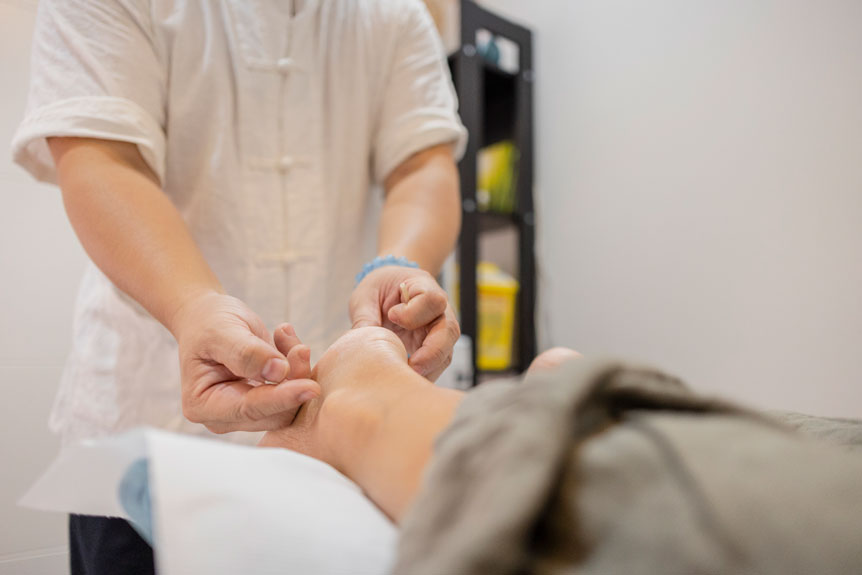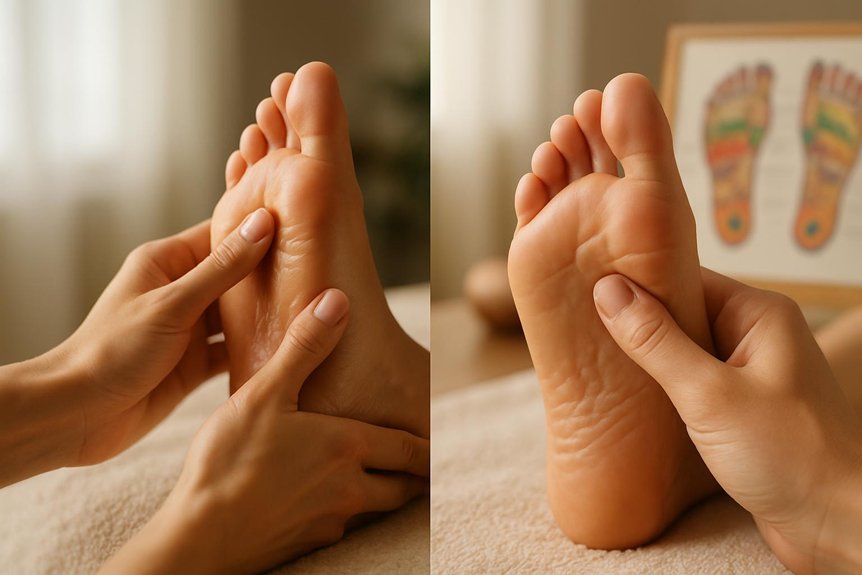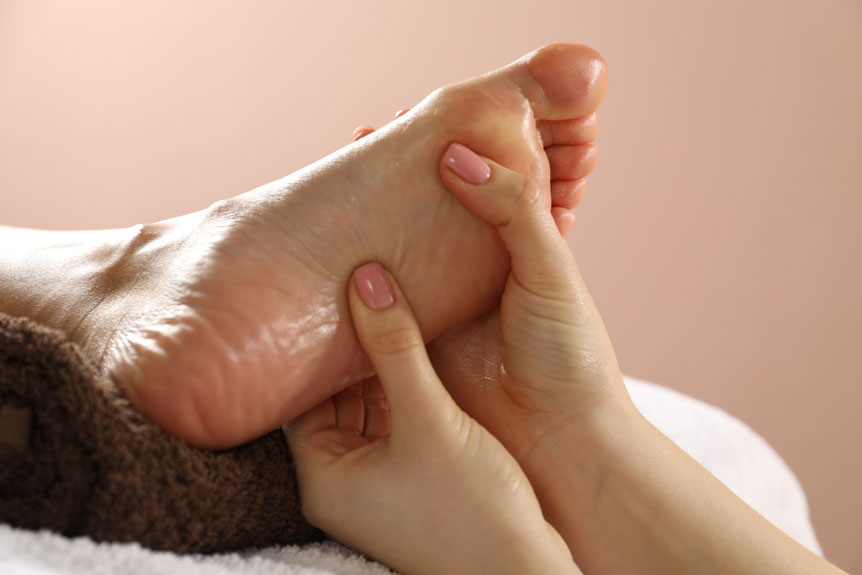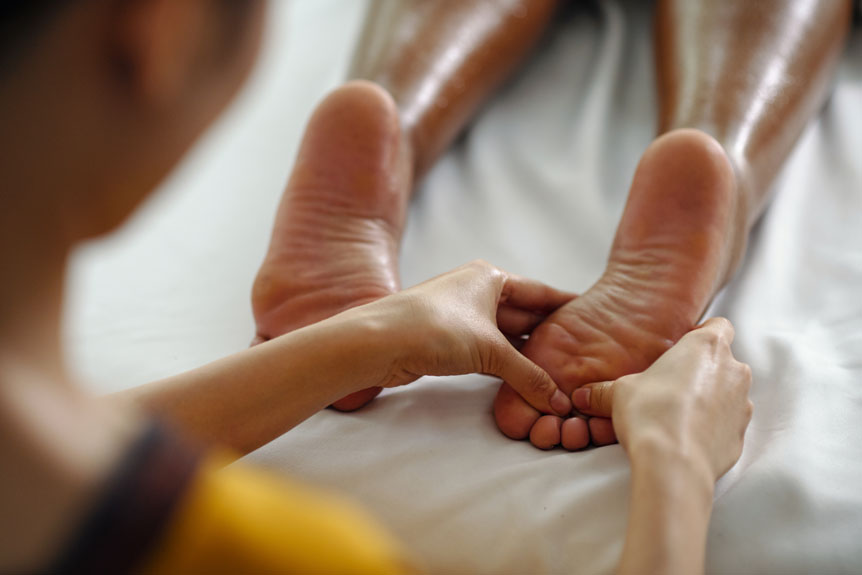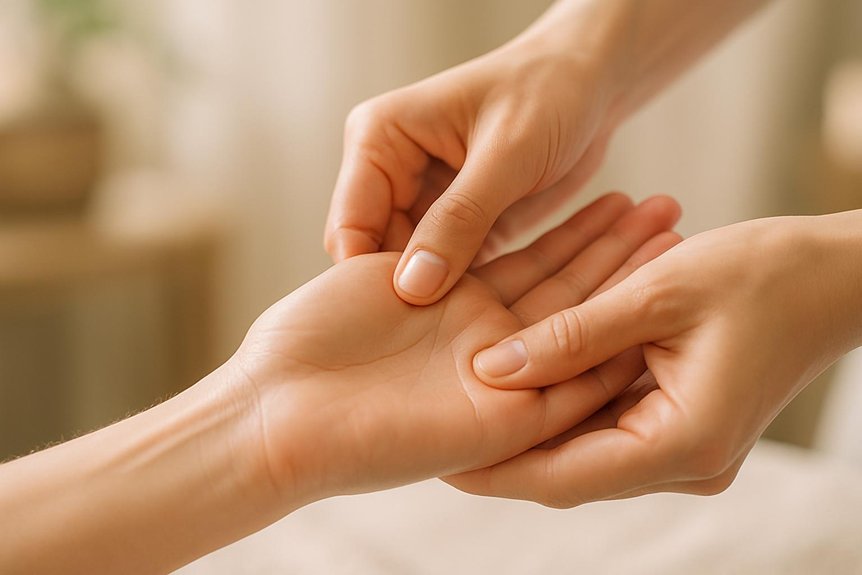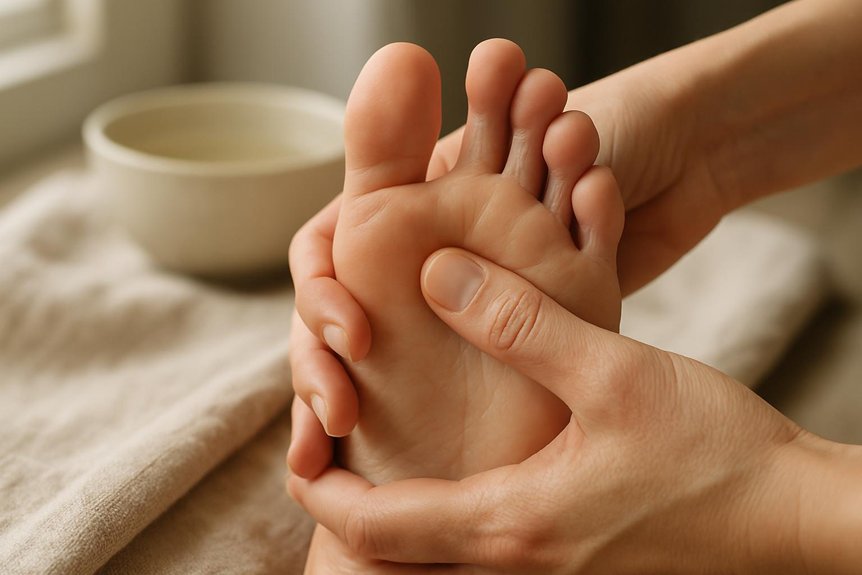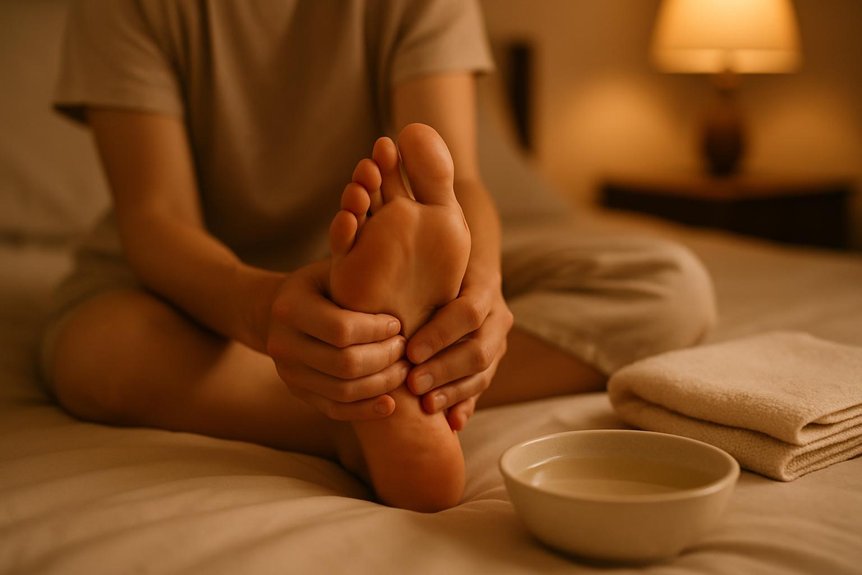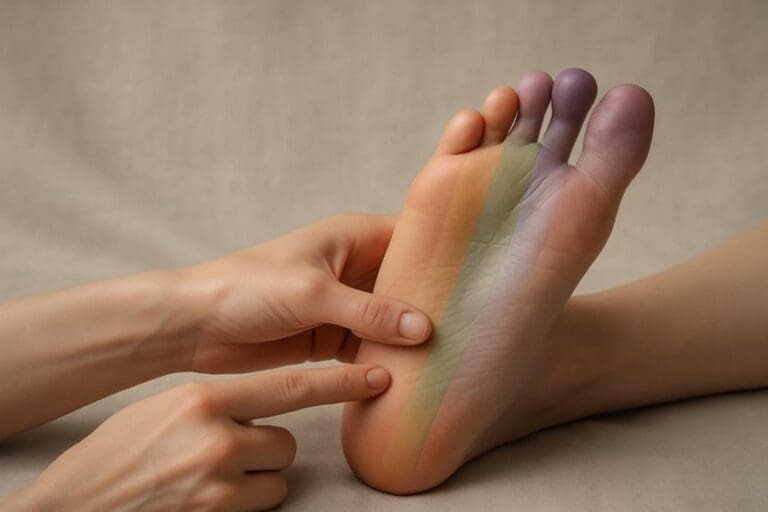
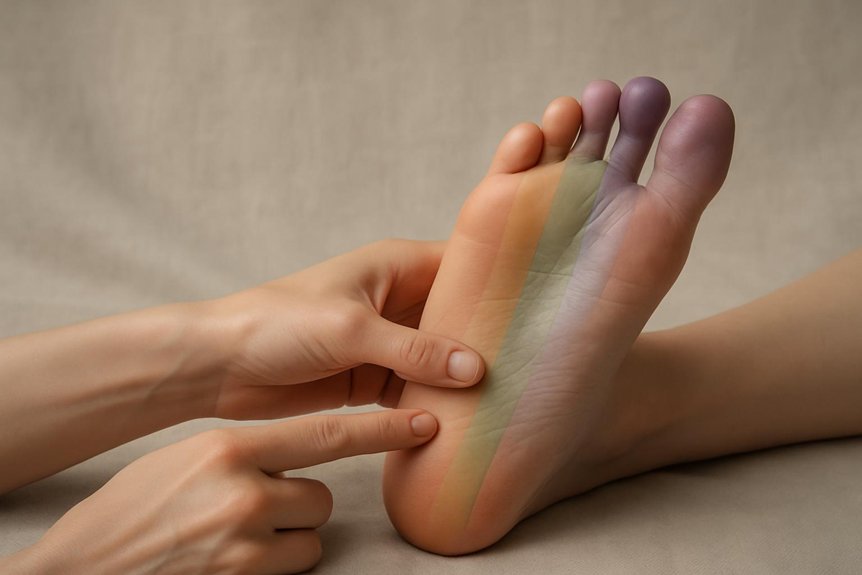
The five zones are longitudinal reference bands on each side of the body that run from head and neck to the toes and guide location of reflex points on the feet and hands. Zone 1 follows the midline to the hallux and relates to central structures. Zone 2 runs just beside it along the second-toe line. Zones 3–5 progress laterally toward the outer border. Further detail clarifies assessment and application.
What Are the Five Reflexology Zones?
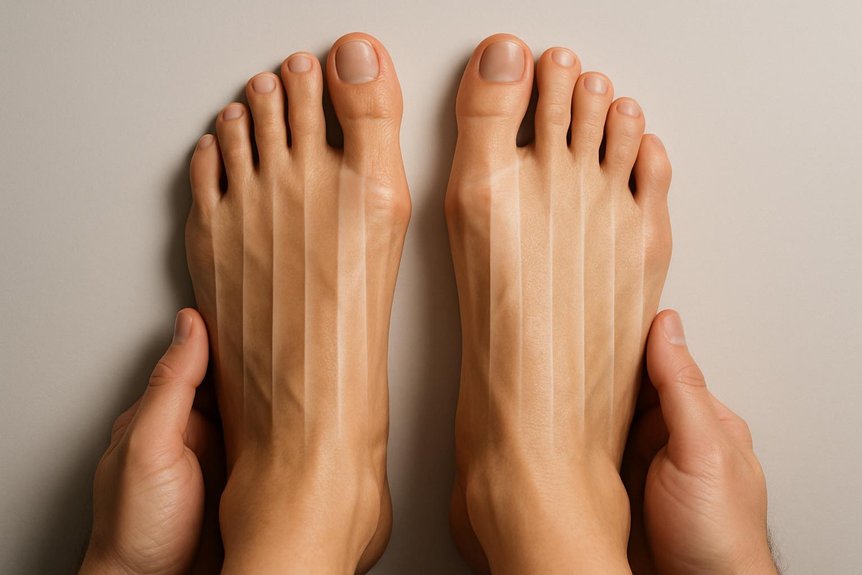
The body is typically mapped into five longitudinal zones on each side, running from the head and neck through the torso and down to the toes. Each zone functions as a clinical reference line linking specific anatomical regions with corresponding reflex points, most commonly on the feet and hands. Zones are numbered from the medial aspect outward, supporting structured assessment and consistent pressure application.
At Spa & Massage, therapists use this framework to guide client-centred sessions: palpation identifies tenderness, tissue density, or temperature variation within a zone, then precise, graded thumb-walking is applied to modulate comfort and promote relaxation. Clients often report a sense of whole-body coherence, as attention within one zone can feel intimately connected from scalp to sole. It is often valued for its healing power and its ability to support relaxation and wellbeing. Consent, pacing, and breath cues remain integral throughout.
Reflex Point Massage Zone 1: The Centre Line (Head to Toe)
At the midline of the reflex point massage map, Zone 1 runs longitudinally from the crown of the head through the cervical spine, sternum, and umbilical region to the pelvic floor, then continues down the medial line of the lower limb to the hallux (big toe). In reflex point massage, this centre-line zone is associated with midline structures and functions, including central balance, diaphragmatic rhythm, and pelvic support.
In Spa & Massage clinics, therapists assess tenderness, temperature, and tissue density along Zone 1 reflexes, then apply sustained, measured pressure and gentle thumb-walking to encourage softening without provoking discomfort. Clients often describe a grounded, private sense of ease, particularly when breath is coordinated with slower holds.
Aftercare typically includes hydration, unhurried walking, and quiet rest to support integration and calm.
Reflex Point Massage Zone 2: Just Beside the Centre Line
Alongside the midline, Reflex Point Massage Zone 2 tracks longitudinally on either side of Zone 1, corresponding on the feet to the medial-adjacent band from the second toe line through the inner ball, arch, and heel.
Clinically, this zone is approached as a paired pathway, treated with balanced pressure and slow pacing to support a client’s sense of steadiness and bodily safety.
In Spa & Massage clinics, therapists typically work Zone 2 with controlled thumb-walking and sustained, comfortable holds, staying just off the central ridge to avoid over-stimulation.
Sensations are monitored closely; tenderness, temperature change, or subtle guarding can guide adjustments in depth and rhythm.
Many clients who prefer quiet closeness respond well to this zone when the touch remains consistent, warm, and clearly consented, inviting ease without forcing release.
Reflex Point Massage Zones 3–5: Middle to Outer Edge (Left and Right)
Moving laterally from the centre line, Reflex Point Massage Zones 3–5 progress in evenly spaced vertical bands toward the outer edge on both the left and right feet, mapping from the middle metatarsal region through the lateral arch to the heel margin.
Zone 3 typically spans the central-lateral forefoot and midfoot; Zone 4 tracks closer to the fifth metatarsal line; Zone 5 aligns with the lateral border, from the little-toe side to the outer heel.
In clinical zone therapy terminology, these bands are used to orient observation and palpation, noting tissue texture, temperature shifts, and client-reported tenderness.
At Spa & Massage, therapists keep pressure measured and respectful, supporting comfort, breath, and a sense of secure closeness throughout the session.
How We Use Reflex Point Massage Zones in a Treatment
How are zone therapy zones applied in a structured treatment? At Spa & Massage, the therapist begins with a brief consultation and observation of tissue tone, then maps the five longitudinal zones to prioritise areas relevant to the client’s goals.
Gentle warming strokes prepare the feet, followed by controlled thumb-walking and finger pressure along Zone 1–5 pathways to assess sensitivity and guide dosage.
Work proceeds systematically, balancing left and right feet and progressing from proximal to distal reflexes to support regulation and comfort.
Pressure is titrated to the client’s breath and feedback, maintaining a steady, intimate rhythm without abrupt shifts.
Specific reflex points are held or mobilised when tenderness indicates congestion.
The session ends with soothing effleurage and practical aftercare guidance.
Conclusion
Understanding the five longitudinal zone therapy zones supports structured, client-centred treatment planning by linking foot, hand, or ear findings to whole-body patterns. In practice, therapists in London clinics apply zone mapping to sequence work, monitor tenderness, and titrate pressure for comfort. One illustrative statistic: each foot contains 5 zones, giving 10 bilateral pathways to assess and treat, which helps visualise symmetrical coverage. Aftercare (hydration, rest, symptom monitoring) can optimise post-session comfort.