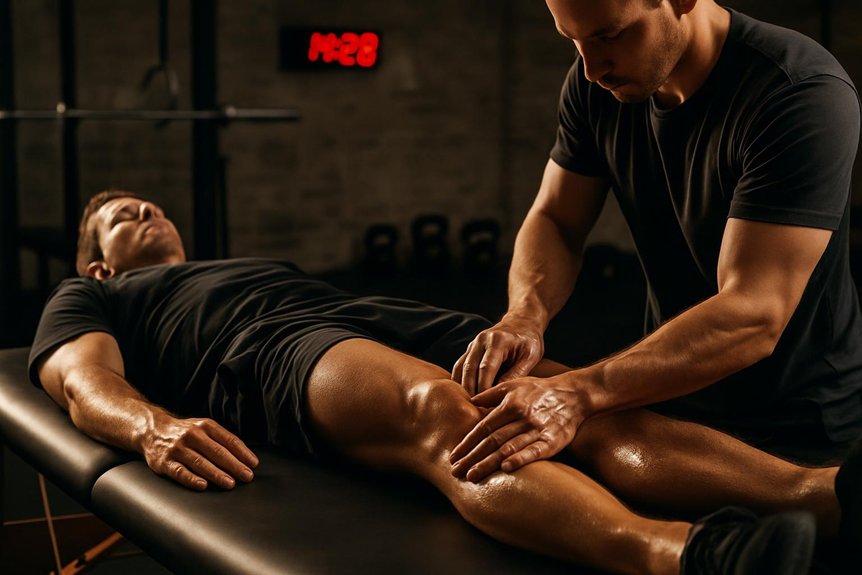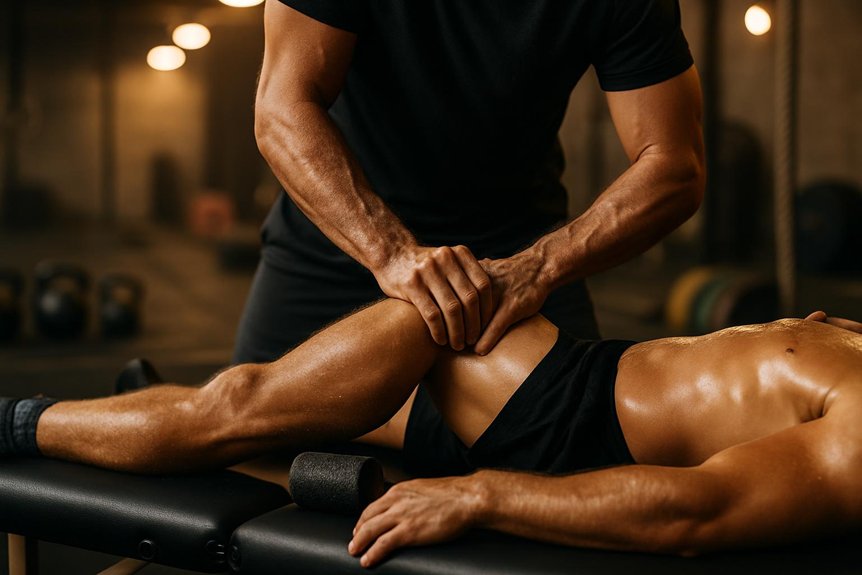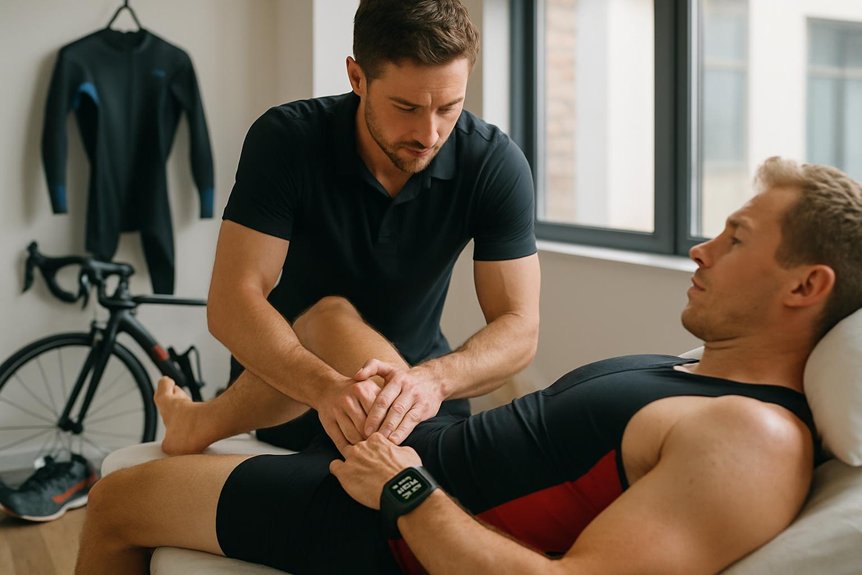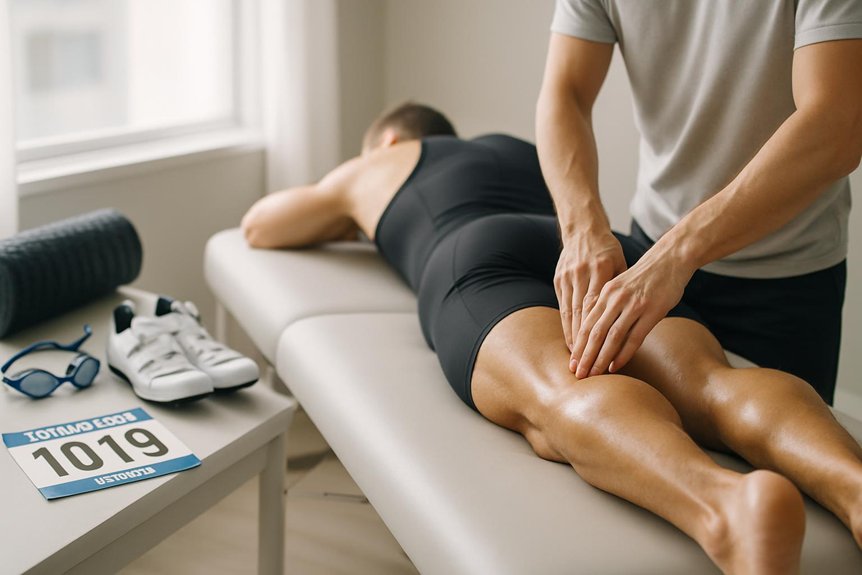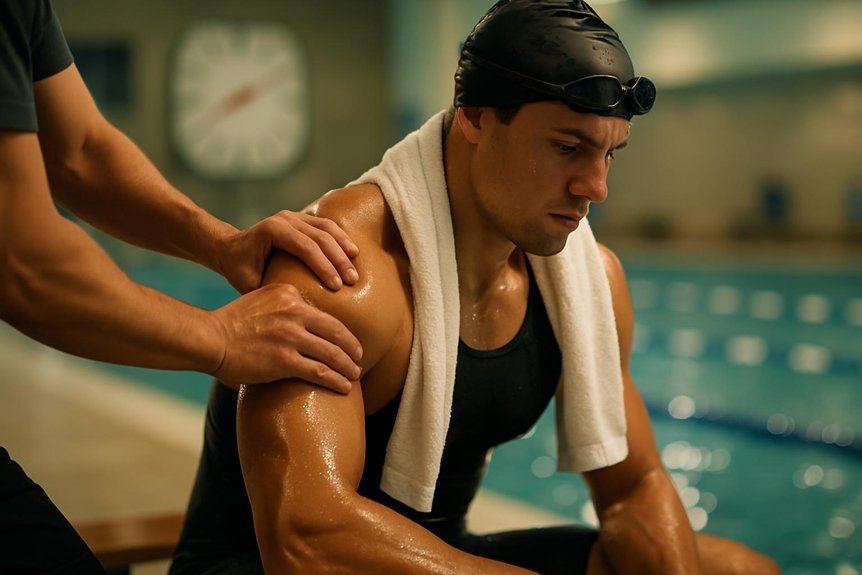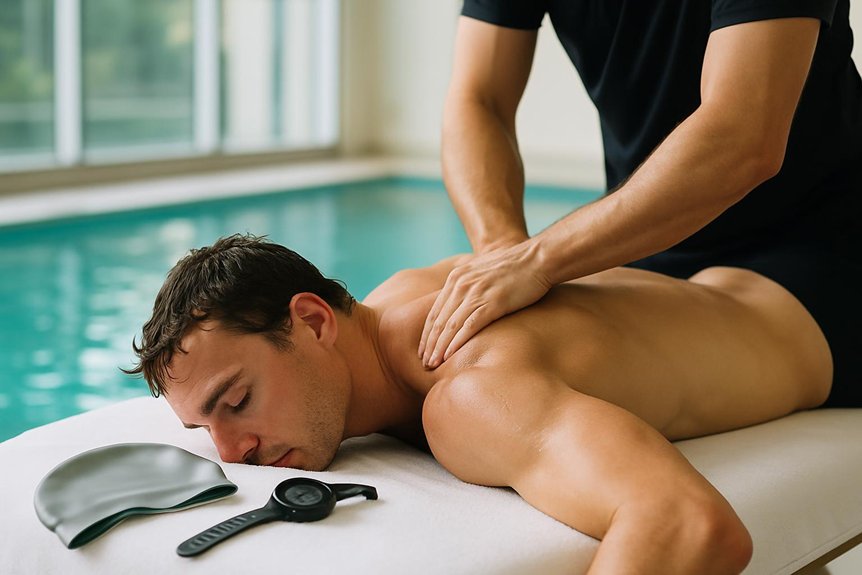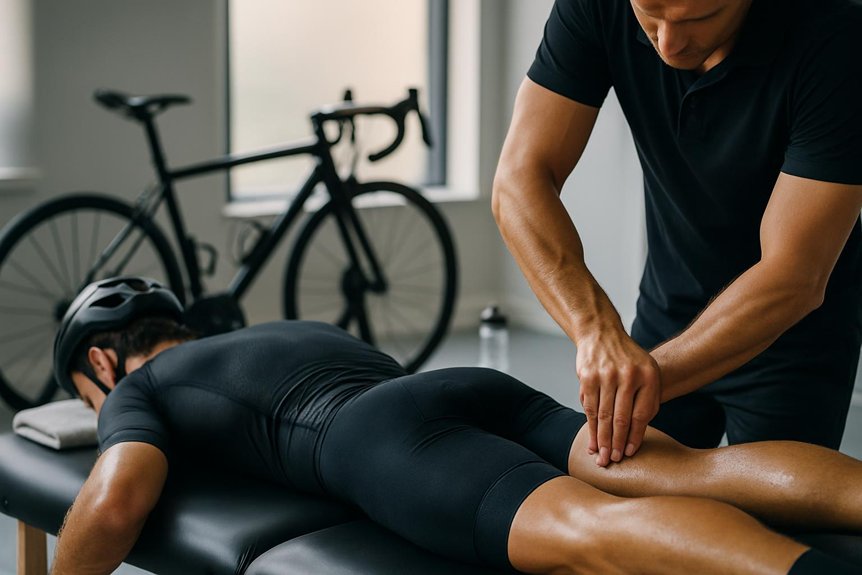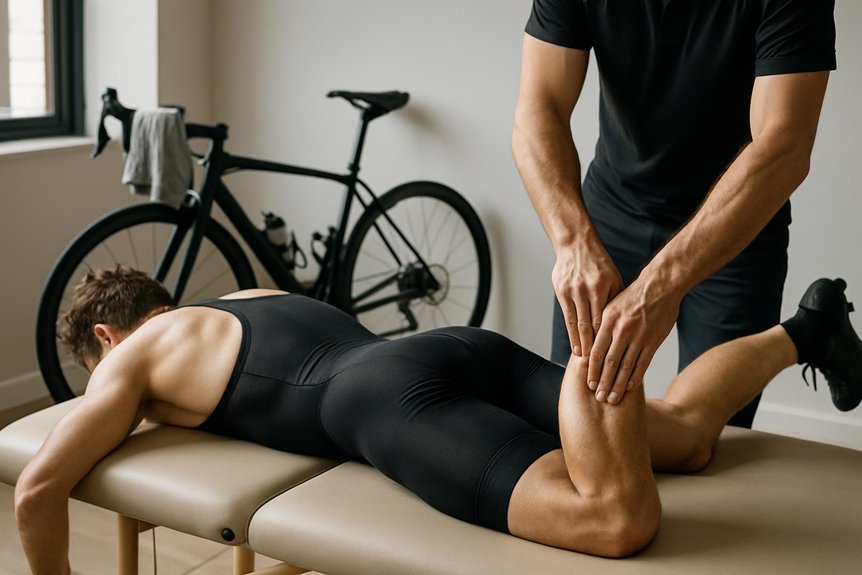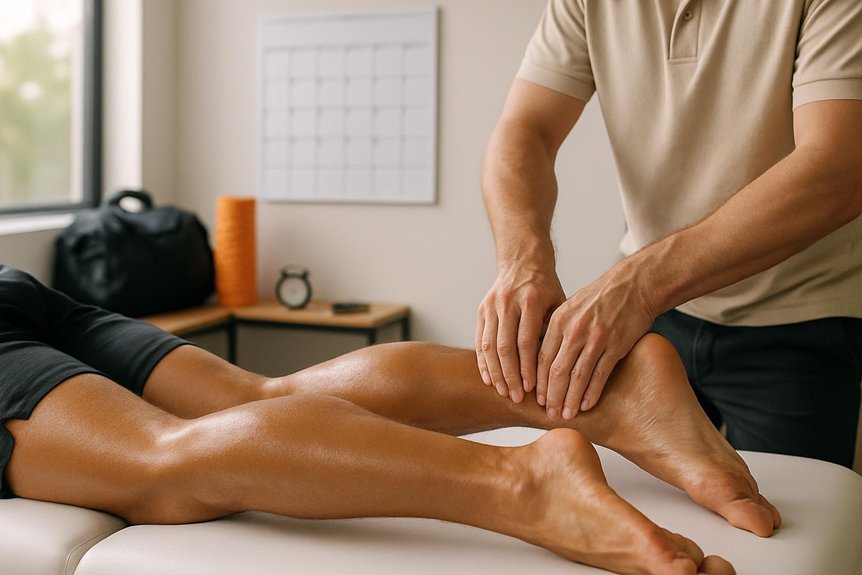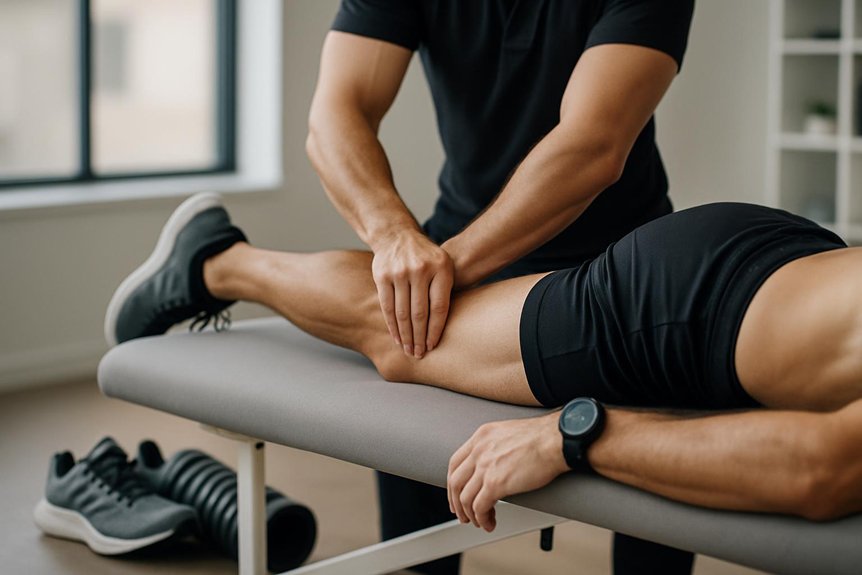
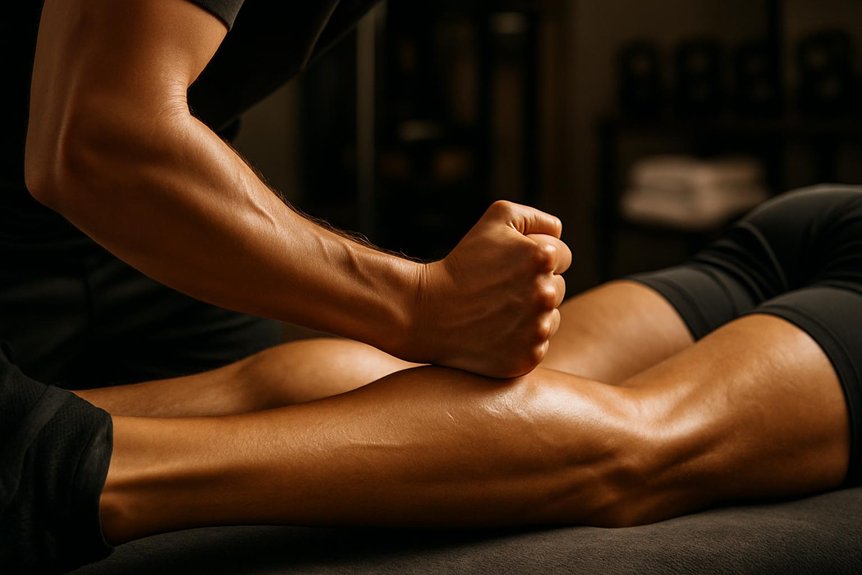
Athletic massage typically uses firm, adjustable pressure that feels “strong but safe,” often around a 5–7/10 discomfort level, without sharp, burning, numb, or withdrawal-triggering sensations. Therapists start with broad, slow strokes and progressive compression to warm tissue, then increase depth only as guarding drops and movement improves. Pressure is continuously calibrated using feedback, breathing, facial tension, and tissue response, with focused thumb or elbow work reserved for specific restrictions. More guidance follows on choosing and requesting depth.
What Should Athletic Massage Pressure Feel Like?
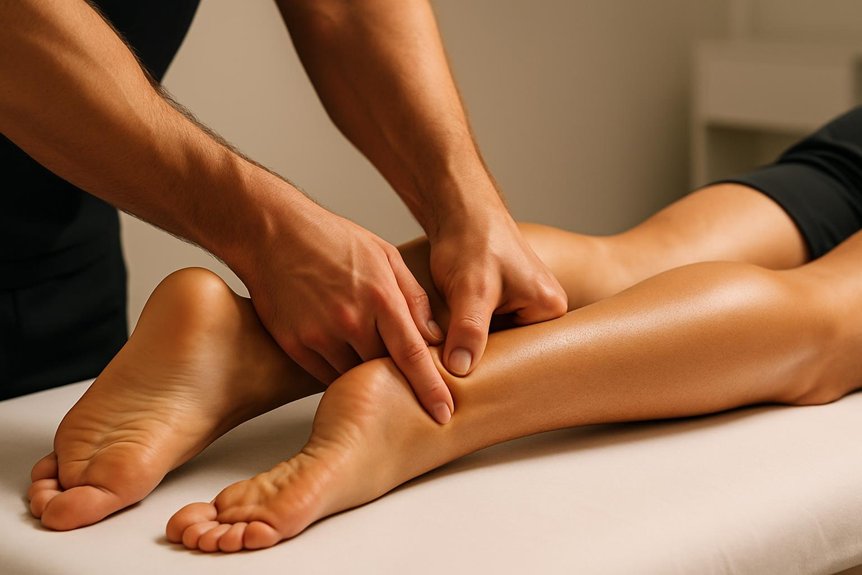
How should athletic massage pressure feel? It should register as “strong but safe”: a clear, satisfying intensity that stays within a 5–7/10 discomfort range, never sharp, burning, or numb.
At Spa & Massage clinics, pressure is expected to soften guarded tissue through slow, sustained strokes and targeted compression, while allowing steady breathing and relaxed jaw and shoulders.
Sensation may shift from tender to warm release as circulation increases and tone drops.
Productive pressure feels specific, not overwhelming; it does not trigger withdrawal, breath-holding, or lingering pain afterward.
Clients seeking closeness often prefer continuous contact and paced depth that feels attentive and controlled, with frequent check-ins to keep sensation therapeutic and comfortable.
Brief post-session ache can occur, but should fade within 24 hours.
For athletes, appropriately applied pressure can support sports performance by promoting recovery and keeping tissues working efficiently.
How Your Therapist Chooses Sports Massage Pressure
In practice, athletic massage pressure is selected through an ongoing clinical-style assessment rather than a fixed “deep” setting.
At Spa & Massage, the therapist begins with brief history, goals, and palpation to map tenderness, tone, heat, and movement restriction, then tests response with gradual loading and slow strokes.
Pressure is adjusted by observing breath, guarding, facial tension, and postural changes, and by checking in with simple scales for comfort and therapeutic intensity.
Technique also guides choice: broad forearm compression may be used to warm tissue, while focused thumb or elbow work is reserved for specific bands once the area softens.
Throughout, the therapist re-assesses range of motion and sensation, keeping pressure firm yet safe, personal, and reassuring.
Light vs Medium vs Deep Athletic Massage Pressure
From a clinical standpoint, “light,” “medium,” and “deep” athletic massage pressure describe distinct loading ranges used to achieve different tissue and nervous-system effects, rather than a simple preference for “harder is better.”
Light pressure is typically used to introduce touch, warm superficial fascia, and reduce guarding without provoking pain; medium pressure targets broader muscular layers with slow compressions and longitudinal strokes to improve tissue glide and comfort while maintaining relaxed breathing; deep pressure is reserved for specific, well-assessed restrictions and trigger points, applied gradually with stable body mechanics (often forearm or elbow) to influence deeper muscle bands while staying within a tolerable, non-defensive response.
At Spa & Massage, therapists calibrate depth using continuous feedback, skin tone, and breath, aiming for a “comfortably intense” sensation that feels safe, connected, and respectful of recovery.
When to Choose Lighter Athletic Massage Pressure
When might lighter athletic massage pressure be the most effective choice? It suits acute tenderness, early post-event soreness, or when tissues feel guarded and reactive. Evidence-informed practice suggests excessive depth can increase pain sensitivity and protective muscle tone, limiting change. Lighter work supports circulation, parasympathetic settling, and comfortable access to superficial fascia before deeper layers are considered.
At Spa & Massage, therapists often begin with gentle effleurage, slow myofascial glides, and compressions that stay within a “good pain” window, tracking breath, skin tone, and micro-flinching. This approach is also preferred for clients new to athletic massage, those with bruising risk, high stress load, or during deload weeks. The goal is intimate safety: feeling held, not forced, while function improves.
How to Ask for Athletic Massage Pressure in Clinic
Lighter athletic massage pressure can be the right clinical choice, but its benefits depend on clear communication so the therapist can calibrate depth to the tissue response on the day.
At Spa & Massage clinics across London, clients are encouraged to request pressure using a 0–10 comfort scale, aiming for “productive” sensation (about 5–7) without sharp pain, guarding, or breath-holding.
Before work begins, it helps to name the goal (recovery, mobility, pre-event, post-event), the area, and any sensitivity, bruising, nerve symptoms, or recent training load.
During strokes, clients can ask for “20% lighter,” “more slow and broad,” or “deeper only on the knot.” Therapists then adjust angle, pace, and sustained compression, checking feedback and warmth.
Conclusion
Athletic massage pressure should feel purposeful rather than punishing, shifting from light warming strokes to targeted, firmer work as tissue response allows. A common objection is that “deeper is always better”; evidence-informed practice treats depth as a dial, not a target, using breath, muscle tone, and feedback to stay within tolerable limits. Visualise a volume knob: the therapist adjusts intensity moment by moment to match goals, load, and area, improving outcomes and safety.